For about three years, states across the U.S., including South Carolina, have been adopting new reading legislation. This recent movement has been driven by a media fascination with the “science of reading.”
Proponents of the “science of reading” have made some dramatic claims: teachers are not teaching reading based on the current research base because teacher educators have failed to prepare those teachers, and students are struggling to read because of those failures.
The “science of reading” movement has also taken aim at popular reading programs—notably those by Lucy Calkins and Fountas and Pinnell—arguing that they lack the support of research.
As a result, we are now in the midst of yet another Reading War, pitting systematic intensive phonics (supported by the “science of reading” advocates) against balanced literacy (which has its roots in the whole language movement).
While public education certainly has an obligation to focus on literacy for all students, especially students living in poverty as well as those struggling to read, the “science of reading” movement is causing far more harm than good.
Reading Wars and debates over the proper place of systematic intensive phonics happen in English-speaking countries all over the world, including England where a shift to systematic intensive phonics occurred almost two decades ago. Dominic Wyse and Alice Bradbury detail the transition:
Prior to 2006 the teaching of reading in most classrooms in England is best described as balanced instruction, in which some phonics teaching has always been part of the teaching of reading typically for children in the infant years (aged five to seven) although not necessarily ‘systematic phonics’ instruction…. However in 2006 the Rose Report recommended that there should be even more emphasis on phonics teaching….
This was followed by the increased emphasis on discrete teaching of phonics recommended by the Rose Report and the PNS from 2006 onwards. Further intensification of synthetic phonics teaching was seen in England’s national curriculum of 2014, along with a range of other measures to ensure teacher compliance with the prescribed method of teaching reading, including the use of the PSC; the vetting of phonics teaching schemes; and the use of the inspectorate to focus on outcomes in statutory reading assessments as a prime focus in school inspections.
In other words, England shifted away from balanced literacy and toward systematic intensive phonics—the goal of the “science of reading” movement—about 16 years ago.
Therefore, Wyse and Bradbury’s analysis of this shift is a powerful message for the current call to drop balanced literacy for systematic intensive phonics (what advocates call the “science of reading”).
Wyse and Bradbury use a meta-synthesis of experimental research (the “science of reading”) and a survey of 2205 teachers to draw the following conclusions: “Our findings from analysis of tertiary reviews, systematic reviews and from the SQMS do not support a synthetic phonics orientation to the teaching of reading: they suggest that a balanced instruction approach is most likely to be successful.”
The “science of reading,” in fact, supports balanced literacy and not prioritizing systematic intensive phonics.
Further, Wyse and Bradbury offer important recommendations:
In addition to the importance of contextualised reading teaching as an evidence-based orientation to the teaching of reading we hypothesise the following pedagogical features that are likely to be effective. Phonics teaching is most likely to be effective for children aged five to six. Phonics teaching with children younger than this is not likely to be effective. A focus on whole texts and reading for meaning, to contextualise the teaching of other skills and knowledge, should drive pedagogy. Classroom teachers using their professional judgement to ensure coherence of the approach to teaching phonics and reading with other relevant teaching in their classroom is most likely to be effective. Insistence on particular schemes/ basals, scripted lessons, and other inflexible approaches is unlikely to be optimal. Well-trained classroom assistants, working in collaboration with their class teachers, could be a very important contribution to children’s reading development.
Another key problem with the “science of reading” movement is state’s adopting prescriptive phonics training for teachers (such as LETRS), a move doomed to failure as this study confirms.
Although too many states have jumped on the “science of reading” bandwagon already, this important research from England is an opportunity to pause, readjust, and not waste another decade or two making the same mistake England made in 2006.
At first, this seems like a really simple question: Do you believe in Santa Claus?
But scholars and researchers know that this question is actually a mine field of problems.
“Believe” is a problematic verb, and before anyone can answer or anyone can interpret the answers, we must all agree on what “Santa Claus” means.
Does “Santa Claus” mean a literal man who travels the world and crawls down chimneys to deliver toys? Or does it mean some historical “Santa Claus” who has become mythologized and represents a spirit of Christmas?
In other words, especially in polling designed to uncover better understanding of an issue or phenomenon, the questions asked and how the terms in those questions are defined (if at all) create the answers and thus shape the conclusions drawn from those answers.
This poll gathers data on several aspects of the Critical Race Theory debates driven by Republicans and conservatives across the U.S. But the framing skews (and likely distorts) what people know, what people think, and what people believe about CRT and white privilege. Consider the following:
Two problems are created by the framing above. First, note how “white privilege” is defined for the respondents: “White people in the U.S. have certain advantages [emphasis added] because of the color of their skin.”
Notably during the Trump era, certain segments of white people who support Trump have been very vocal about rejecting the concept of “white privilege.” Typically, these white people point to white poverty and white failure to reject—with evidence, they think—the concept of “advantage.”
The question defining “white privilege” as an “advantage” very likely reduces the number of respondents expressing support for or nuanced understanding of the concept. And that framing is inaccurate.
“White privilege” is better defined as the lack of barriers that are race-based for white people.
When white people find themselves in poverty, it is rarely because they are white; when white people fail, it is rarely because they are white.
There is not pop culture rhetoric about “driving while white” or “jogging while white” because race is rarely the key factor in negative interactions for white people, notably interacting with police or other authority figures (or other white people).
Systemic racism manifests itself in pervasive ways for Black people in that being Black is often the key factor in life experiences for Black people. Black people do fail and suffer primarily because they are Black, and not because of their behavior or character.
White privilege is about an absence (lack of race-based barriers) and about being allowed to exist as if your race doesn’t define you. Black people do not have that opportunity; being Black is a state of perpetual awareness of being Black.
Unlike white people, then, Black people do experience existentially and systematically barriers that are race-based.
Describing “white privilege” as an advantage suggests guarantees of wealth or success that simply are not true—and thus easy to reject.
Framing “white privilege” as the absence of race-based barriers both better defines the concept and increases the likelihood that respondents can acknowledge that reality.
The second problem is the use of the word “beliefs” with CRT, which distorts and misrepresents CRT as a “theory.”
Similar to the jumbled discourse around evolution (people often claim “I don’t believe in evolution”), respondents are likely misled by the word “beliefs” since it implies the lack of empirical data and suggests CRT is simply someone’s beliefs—and not a carefully formulated theory based on rigorous scholarship.
CRT, as a scholarly theory, has a set of claims, or principles. The use of those words, “claims” or “principles,” provides, again, a fairer framing and should provide more valid data.
Together, these examples show how research erodes the validity (do the data and conclusions drawn reflect what they claim to reflect?) of a poll by the questions asked, the framing and defining of the key terms.
In the “CRT beliefs” data also note that the “white privilege” framing as an “advantage” is reinforced by the use of “enjoy”: “Whites Enjoy Certain Privileges.”
Creating a set of questions for polling requires statistical expertise, but also scholarly knowledge and experience. In this case, the poll itself seems poorly reviewed for framing in terms of fully understanding either “white privilege” or “CRT.”
Since the entire cultural debate around race, racism, white privilege, and CRT is being driven by dishonest actors and misinformed media, politicians, and members of the public, a valid poll of those topics requires accurate and nuanced clarity on the questions being asked and definitions of the terms being examined.
This poll is ambitious, but it is likely doing more harm than good for that debate.
Republicans and conservatives have been depending for a long time on a truism with an ambiguous source: “A lie can travel halfway around the world while the truth is still putting on its shoes.”
The anti-Critical Race Theory movement has fully committed to this strategy; just lie quickly and then spend most of your time ranting as if the lie is true.
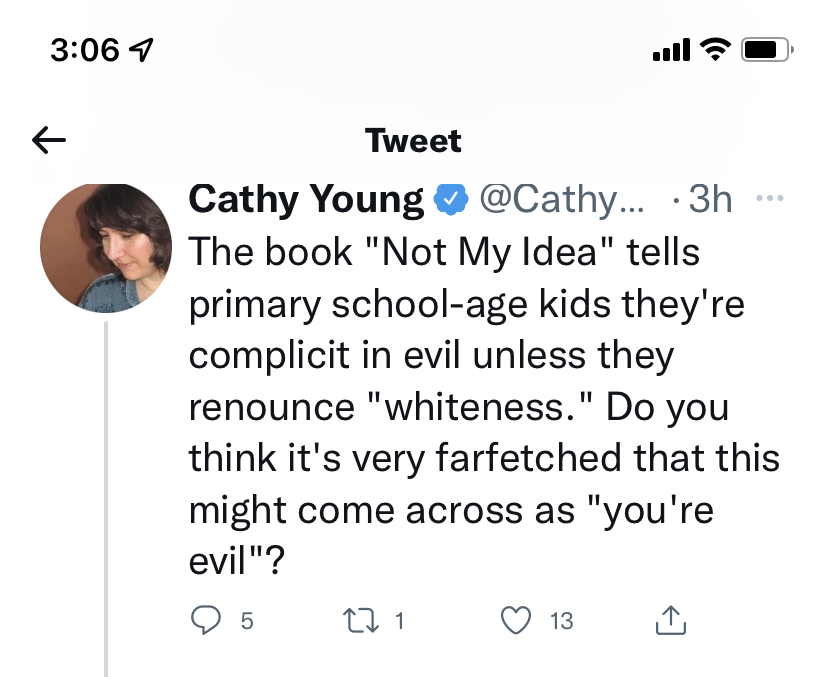
Here is but one of many examples:
While the claim here is a blatant lie, we should note that anti-CRT advocates are the ones who repeatedly conflate “whiteness” with “racism.”
Not My Idea, by Anastasia Higginbotham, in fact, goes to great lengths to recognize white people throughout history who have stood firm against racism; in other words, one of the strongest messages of the book is “not all white people.” The title and motif of the book is that white children are not the ones who created racism, “not my idea”—“Racism was not your idea. You don’t need to defend it.”
And here is the real issue: The book makes a strong case not for rejecting whiteness, but for rejecting racism when you are white.
As is the case is almost all efforts to censor, people have likely never read the book. So here you are, listen and hear the truth:
If you have to advance your beliefs through lies, you should interrogate those beliefs.
I am deeply skeptical about two things—criticism of “young people today” as if this younger generation is somehow significantly less capable than older generations and student evaluations of teaching (SETs).
So nothing would be worse, in my opinion, than launching into a “young people today” screed based on SETs. Therefore, what follows is intended as an evidence-based observation toward understanding, not a criticism, grounded in both recent SETs and my 20 years teaching at a selective liberal arts university (after teaching 18 years at a rural high school).
My almost four decades of teaching have been in two contexts with significant social class differences. My high school students were mostly working class and poor; my university students are quite privileged in terms of social class but also in terms of the quality of education they received before entering high education (many are from private school backgrounds).
Across both populations, I often am perceived (at first) as extremely demanding, and even harsh (or “mean”).
My high school students, many working class as I was (and I also attended the school where I taught), within a few weeks tended to flip in their opinion of my courses and even me. Many years later, I have very warm relationships with many of those students; and even those who still openly express that they aren’t fans of me as a person confirm that they appreciate the work I did as a teacher.
Achieving that level of connection and warmth with my university students has been rare to mostly absent. My university students, overwhelmingly privileged in many ways, are quite unlike me, having grown up working class and receiving my BA, MEd, and EdD from state universities.
I just reviewed my fall 2021 SETs, and despite efforts to address the negativity (and even antagonism) in my spring 2021 SETs, I once again read a significant amount of negative, angry, and harsh responses to my courses.
A few things are going on, I think. First, I believe the Covid-era has in many ways inflated student stress, which is reflected in the increase of negative comments (a point I am making not to criticize students, but to acknowledge the larger forces at work and how SET data are rarely about teacher quality).
Second, while I reject the credibility and validity of SETs (as reflected in research on the practice), I do think the data say less about teacher quality and more about the students themselves.
Now, putting those two points together allows me to draw some important conclusions about privilege as a barrier to learning.
Before I explore that thought, let me offer a few caveats.
Socioeconomic status is the strongest correlation to measurable student achievement; therefore, wealthy and white students disproportionately are labeled as “good” or “excellent” students.
However, if you dig deeper in that data, you discover that eduction is not the “great equalizer” but a marker for privilege; privilege itself actually trumps having more and so-called better education (extensive research supports that claim); for one example, see the following data:
People born into socioeconomic and/or race privilege tend to navigate and achieve advanced education degrees, but the privilege itself is the primary driver of their “success” (attaining high-paying jobs), not the education.
My university students often have backgrounds in selective private schools, and almost all of them have completed high school as top students (many having made As throughout their schooling).
When I examine the types of things students are critical of and even angry about, I am increasingly concerned that privilege is a barrier to learning even as these students successfully navigate college and continue to earn high grades.
Here are the types of things privileged students are critical of in my courses recently (again, I am not criticizing these students but offering this as a way to describe and understand why they are struggling):
Privileged students are disproportionately offended by feedback and requirements for revision*. Living in privilege that contributes to years of praise and success have created students who are very thin-skinned and frail. As I have examined before, many students perceive all feedback as negative. Many of these students want to submit work once and have it immediately praised, and assigned an A. Being show ways to revise and improve, being asked to revise—these approaches trigger students of privilege.
Privileged students have a “banking” concept of teaching and learning (that Paulo Freire criticized). In other words, my privileged students view my job as dispensing for them knowledge as capital; I, however, reject the “banking” concept of teaching and see the role of teacher as facilitator. Privileged students tend to resist having their autonomy as learners increased, viewing a teacher-as-facilitator as negligent or even lazy (not doing their job).
Privileged students are very skeptical of and often paralyzed by de-grading practices. Grades for privileged students have been positive experiences that confirm their belief that they are “good” students who have earned those grades. People in privilege often interpret success as mostly a reflection of their effort—and not their privilege. Removing grades removes their safety blanket. (One student from last fall claimed they were reduced to crying often in my course due to my non-grading practices.)
Privileged students prefer knowledge-based courses to process-and-product-based courses. Although certainly not exclusively so, privileged students seem to view knowledge as “objective” and process/product as “subjective”; therefore, the latter creates anxiety in them that they will not be successful (not make an A).
Privileged students perceive “being smart” as something you achieve and not a journey. Since they have often been told they are smart, they can misinterpret “smart” as their being “finished”; being challenged to learn more or, especially, to re-think their learning is perceived as an attack on their Selves.
Privileged students are hyper-sensitive to decorum, formality, and tone. While I recognize some of this point is grounded in my personality, I am increasingly aware that some of the tone tension between my students and me is class-based. I despise formality and do my work at a very high level of efficiency; my emails and my written feedback are terse and direct. Privileged students tend to interpret that style as mean, harsh, and discouraging. This issue with tone overlaps, I think, with my efforts to shift responsibility away from me doing work for students and toward students taking agency over their own learning (many students dislike my use of highlighting when I return written work, for example). As one of the most unexpected examples from my fall SETs, a student recommended I start using “Hi” to start my emails.
Privileged students cling desperately to playing school and performing as students. Tests, grades, assignment rubrics and grade scales/weights, lectures, etc., are the environment where they have flourished; anything that deviates from these traditional practices creates anxiety—and skepticism about the teacher.
Privileged students (like their conservative parents) fear radical ideas and change. This is basic human nature; when the world works for you, you fear change to that system. I am a critical educator and scholar so my approach to ideas and the world are perceived as not just radical, but threatening to their way of life.
In the grand scheme of my career as a teacher, I realize the folly in SETs because, once again, my fall SETs included dramatically contradictory responses side-by-side—praise for my feedback and willingness to help students learn followed by claims that my feedback is “vague” and “mean,” ultimately discouraging the student to learn.
Again, the feedback says far more about the students than my work as a teacher.
None the less, I believe I have turned a corner in my understanding of the complex nature of privilege in the teaching/learning dynamic.
Yes, on balance, of course, privilege is an incredible advantage, but like being labeled gifted, privilege can also be a barrier to learning—and being happy.
I was born in Woodruff, South Carolina, and spent some of my childhood in nearby Enoree. Both were very small (Enoree was essentially a cross roads, not far from even smaller Cross Anchor); both were mill towns that had not quite begun to crumble in the 1960s and 1970s.
Woodruff seems like parody now, an ugly parody since the town had literal racial divisions with the Black neighborhood, Pine Ridge, on the other side of the railroad tracks dividing the town.
Racism and a bitter fundamentalism were the norm among white people, although most of these cancers remained unspoken and carefully navigated.
What I heard and witnessed in white-only spaces, including my home, contrasted disturbingly with what I heard and witnessed in mixed-race spaces—notably the vibrant high school sports arenas that much of my hometown worshipped. Yes, my hometown was a high school Friday night football sort of world that, again, almost seems like parody now.
Tradition and authority governed schooling and parenting. Conservative ideology was so pervasive there was little to no evidence any other way of thinking was possible.
There was a bitterness and fatalism among white people, among my family members, that I am deeply aware of now. I see it in the far-right Trump movement, reminding me of my parents railing against Muhammad Ali and blaming Dan Rather for the fall of Richard Nixon.
A darkness of empty minds. Irrational and certain.
By some inexplicable twist of fate, the paradox, I found myself in a series of events that allowed me to rise above that emptiness, allowed me the freedom of the human mind that quite literally saved my life.
I wasn’t quite bookish as a child, but I grew up surrounded by books and reading; my mother was a very bright woman with sparse formal education, a natural teacher with a tendency toward nurturing and mothering (she spent a good bit of her life running an in-home daycare and raised my sister’s three sons).
The secular miracle of my life was that for some odd reason my parents never censored my world, especially my intellectual life. By the time I was a teenager, I had graduated from relentlessly watching science fiction B-movies with my mother to reading covertly hundreds of comic books and novels by Arthur C. Clarke, Larry Niven and Jerry Purnell, and other science fiction not assigned in school (and there were several assigned novels in school I simply did not read, like Charles Dickens, even though I fell in love with Thomas Wolfe’s You Can’t Go Home Again, which I read in a literal fever while home sick).
In tenth grade, the miracle of miracles, I entered Lynn Harrill’s English class. Lynn was a fairly new teacher, a kind and passionate educator who eventually became a mentor and the primary impetus for my life as a teacher, scholar, and writer.
Lynn was perceptive, and bold. I spent many days hanging out in Lynn’s room when I wasn’t in class (a kindness I learned and mimicked when I became a teacher, the first years in the exact room where Lynn taught me).
His perception was recognizing my proclivities and how traditional schooling wasn’t serving me fully. His boldness was whispering to me one day when I was taking up his valuable time that I should read D.H. Lawrence (he added that since he knew my parents the recommendation would be fine but Lawrence was a controversial writer).
Lynn was right about the recommendation and my parents.
By high school, in fact, my mother patiently wrote checks each month for my subscription to a few comic books and Playboy, delivered to my home as if this sort of thing was completely normal in 1970s SC.
Of course, as a teen, Playboy and Lawrence spoke to my sexual curiosity of adolescence, but that was a very small fraction of my intellectual life that they both spurred. I recall to this day several interviews I read in Playboy by thoughtful people dramatically unlike the adults of my hometown.
Lawrence became my first literary crush (Clark as well as Niven and Purnell was my first nerd-reading crush). Over the next few years, I read everything by Lawrence. In college as I drifted toward education and English, I gathered as much literary analysis of Lawrence as I could.
Hovering beneath all this, of course, was my comic book collecting. For almost 50 years, I have been a collector of some kind. When I discover a writer, I plow through all their work, proudly buying and displaying all their books.
From that first affair with Lawrence to the more recent obsessions with Haruki Murakami, there have been too many love affairs with authors’ works to list them all—Kurt Vonnegut, Milan Kundera, Margaret Atwood, James Baldwin, and on and on.
And as I noted many times, one of the pivotal moments of my life was finding a used copy of the non-economic writing of Karl Marx, including the foundational pieces that turned me on to being an educator.
Yes, Karl Marx inspired me to a life of service and a commitment as a teacher to foster in students a vibrant mind of possibilities and ideas—and a robust, unyielding repulsion for indoctrination, and even authority.
Many years later, I discovered Paulo Freire and bell hooks. Freire gave me an important framing—the choice of being authoritative (earning the respect of students and readers because I demonstrate authority over content) instead of authoritarian (demanding compliance because of my status).
It is 2022 and I am terrified.
That terror isn’t grounded in the never-ending threat of Covid (although that is certainly terrifying), but in the spreading threat from Republicans determined to censor and control curriculum and what books anyone has access too.
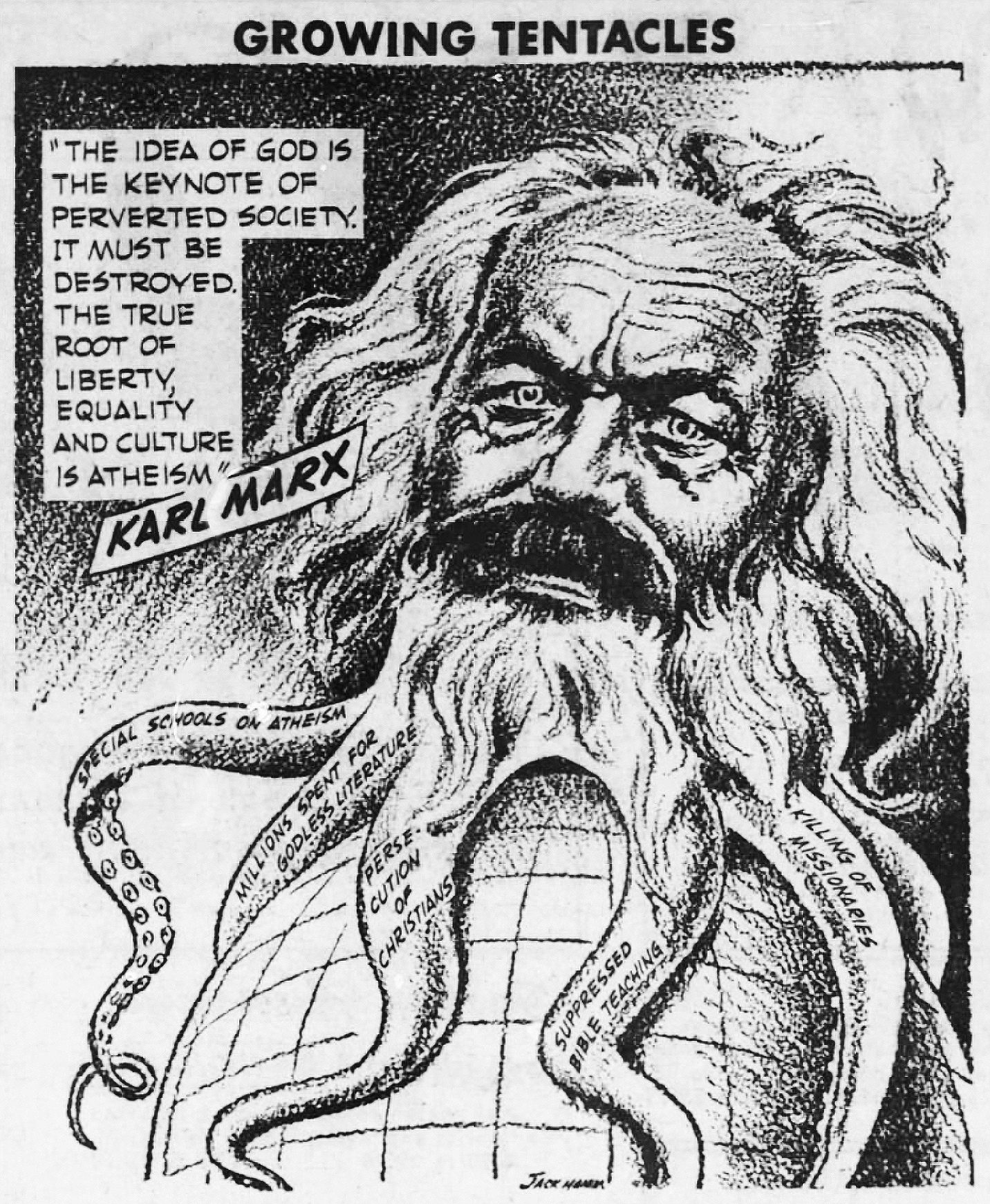
Notice the second tentacle from the left: “Millions spent for Godless literature.”
I was born about 6 months before this editorial cartoon, and today read the following from Judd Legum:
In Indiana, State Senator Scott Baldwin (R) has introduced sweeping legislation that Baldwin says is designed to ban Critical Race Theory (CRT) and related concepts in K-12 education. During a committee hearing on the bill earlier this month, Baldwin told a high school English teacher that he should be “impartial” when discussing Nazism. It is a case study about how the frantic efforts to ban CRT can quickly lead to absurd outcomes.
Republicans all across the U.S. are introducing and passing legislation censoring curriculum (targeting anti-racism content) and banning books from classrooms, school libraries, and public libraries (focusing on LGBTQ+ authors and works); some school board members have even called for book burnings.
My home state of SC is following the lead of other Republican-led states (notably Texas) by proposing guidelines that allow anyone to censor books for others.
It is incredibly important to emphasize that Republicans are actively removing books from school and public libraries—using government to decide what books and ideas people have access to.
These actions are tyranny. The antithesis of being free people.
There is no individual freedom without intellectual freedom.
No one should be held hostage to a life of an empty mind. Everyone deserves the accidental great fortune of my youth, including the kindness and boldness of my teacher, Lynn Harrill.
But none of this should be done in whispers, or with fear.
Republicans are calling for the eternal darkness of the empty mind, and we must resist because censorship erodes both American freedom and human dignity.
Also in 1961, Lou LaBrant recognized the failure of education as conformity:
Throughout our country today we have great pressure to improve our schools. By far too much of that pressure tends toward a uniformity, a conformity, a lock-step which precludes the very excellence we claim to desire….Only a teacher who thinks about his work can think in class; only a thinking teacher can stimulate as they should be stimulated the minds with which he works. Freedom of any sort is a precious thing; but freedom to be our best, in the sense of our highest, is not only our right but our moral responsibility. “They”—the public, the administrators, the critics—have no right to take freedom from us, the teachers; but freedom is not something one wins and then possesses; freedom is something we rewin every day, as much a quality of ourselves as it is a concession from others. Speaking and writing and exploring the books of the world are prime fields for freedom. (pp. 390-391)
While watching (re-watching for me) Marvel’s The Punisher (Netflix), my partner noted, “He is a really good actor,” about Jon Bernthal who plays Frank Castle (The Punisher).
This is something we all do in our daily lives, declare “good” and “bad” as we navigate the world. In the so-called real world, we rarely interrogate those evaluations—what makes something “good” or “bad”?
However, in academia, not only do we bristle at the low terms themselves, but also we are in a nearly constant state of unpacking exactly what constitutes quality.
The comment about Bernthal (who is a captivating actor) came just after I had spent more time than I wanted addressing the Aaron Rodgers/Ayn Rand moment trending on social media. Any time Rand is mentioned, “Rand is a bad writer/philosopher” is not far behind.
For example, I found Adam Weiner’s How Bad Writing Destroyed the World, an analysis of Rand’s harmful influence on real-world politics in the U.S.
Also concurrent with people debating Rand’s quality as a novelist (since Rodger’s pointed to her Atlas Shrugged), I noticed Neil Gaiman (and Bill Sienkiewicz [1] in the comments) post the following on Facebook:
Gaiman’s comment: “The thing that makes me sad is that the incorrect apostrophe destroys the joke.”
So in those contexts, I want to consider exactly what we mean about whether or not a writer is “good” or “bad”—notably as a framing for students who are themselves trying to become good writers.
A first-level problem with considering the quality of writing is distinguishing whether we are focusing on the content of the writing or the actual composing itself. What does that mean?
When people blast Rand as a “bad” writer, they almost always are attacking the content of her novels, how she uses narrative to propagandize about her philosophical and ideological commitments.
If you look carefully, some who proclaim her a “bad” writer also concede that Rand crafted engaging stories and constructed those stories in purposeful ways (her craft as a writer).
By contrast, although Gaiman suffered some appropriate challenges, Gaiman is targeting how the credibility of any writer is inextricable from many elements of craft (diction, tone, grammar, syntax, sentence and paragraph formation, etc.).
While the field of rhetoric has a long history of debating medium versus message, for students learning to write better, I emphasize that it is nearly impossible to separate the two. To reach the Holy Grail of “good,” then, I think anyone learning to write must focus on purpose and authority (internal v. external authority).
All writers are seeking ways to establish and develop their authority (convincing readers of their credibility so that their writing is read and considered seriously). And that authority is impacted by the purposefulness of the writing (both in terms of content and craft).
Gaiman’s Facebook post represents how the credibility of a text (the humor of the eatery’s sidewalk advertisement ) is impacted by surface features (in this example, confusing the use of the apostrophe for possessive versus plural)—a seasonal debate often when people send out Christmas cards and can’t navigate how to pluralize their family names.
As a writing teacher, I would use Gaiman’s post to note that, first, we should resist shaming anyone for surface features, and, second, we can interrogate the text of the ad to note that “dogs” and “human’s” is not about correctness, but a sort of lack of purpose.
I would note that a student essay having these usages would be a signal of lack of control of language (and thus, an erosion of authority), and not about “correctness.”
Here, especially when working with students and developing writers, we must be very careful about how we explain the relationship between medium and message since Gaiman is triggering the urge toward correctness as an absolute marker of quality [2].
Since most students have come through formal education that uncritically fosters an unhealthy attitude about grammar and usage (correctness), teachers of writing are often confronted with how to unpack correctness and shift students toward purpose.
The characteristics that distinguish African-American English from standard American English include the pronunciation of consonant clusters at the ends of words (“desks” and “tests” become “desses” and “tesses,” for example), the elimination of some third-person singular verb inflections (“He throw the ball.” “She write the book.” “He vote for the candidate.”), and certain distinctive uses of the verb “to be.” Among the latter, perhaps the most emblematic is the frequently misunderstood construction that linguists refer to as the “habitual be.” When speakers of standard American English hear the statement “He be reading,” they generally take it to mean “He is reading.” But that’s not what it means to a speaker of Black English, for whom “He is reading” refers to what the reader is doing at this moment. “He be reading” refers to what he does habitually, whether or not he’s doing it right now.
The marginalized dialect (often referred to as Black English, Ebonics, or AAVE) is in fact nuanced, complex, and powerful—as the unpacking concludes:
Only by moving beyond the deeply ingrained negative attitudes of the past, the speech researchers agree, is it possible to appreciate the multi-faceted subtleties of all human language. “Language is not just a matter of words and sounds and syntax,” says Seymour. “It’s an identity issue, it’s a social issue. It’s very complicated.”
Beyond fostering an unhealthy understanding of language, focusing on correctness often leads to students practicing an imbalance in the relationship between medium and message; many students have received high grades on writing that conforms to correctness but expresses very little, offers jumbled thinking, and/or simply misrepresents a topic.
Too often, as well, students have been rewarded for conforming to prescriptions that are neither good writing nor good thinking (five-paragraph essays that force all topic into 3 points).
Ironically, students spend so much energy confirming to scripts and correctness that they become bad writers.
Although there certainly is some wiggle room in spelling and punctuation, students must be aware that surface features in writing trigger assumptions about their credibility, the authority of the writer; in other words, purposeful writing and writer authority work together, are symbiotic.
Again, in the real world, there are far too many examples of public writing that shows how a writer’s established authority allows that writer to express some really careless and false ideas (let me note David Brooks, for example, who certainly can craft words and sentences in all the so-called correct ways while saying nothing or, more often, expressing simplistic thinking).
Students are in a very difficult position since they are almost always less authoritative on their topics than their professors/teachers as well as still on their journey to being “good” writers (in terms of having control of the language they craft).
We are left then with a journey, helping students develop their sense of purpose with composing that establishes their internal authority (the authority grounded in the essay itself) in order to create their external authority (the authority associated with them as people/students/scholars; again, see Brooks or Rand, who many recognize as people who think and write with some established authority).
Students must move away from correctness (the learned belief in rules such as “Don’t write fragments”) and toward purposefulness (crafting and choosing sentence forms, medium, that reinforce the message of their writing).
To be a good writer is a paradox, then. Good writers have a healthy understanding of writing (as Baldwin advocates for) while also being aware of the consequences of norms (see Gaiman’s somewhat petty lament).
When my partner praised Bernthal as a “good actor,” I agreed and noted several of the Marvel series on Netflix benefitted from many good actors, often allowing rather bad elements of superhero narratives to slip by (although several of the series also have good writing).
For students learning to write, we must do much more than say writing is “good” or “bad,” however, by helping students recognize and practice the elements of purpose and authority that lead to those evaluations.
[1] Sienkiewicz notes his own parody of misspellings on business signs from his run on Elektra: Assassin:
Public and media debate as well as public policy driven by those debates is too often driven by misuse and misunderstanding of key terms and concepts, especially for the field of education.
Two such terms—Critical Race Theory and the “science of reading” (SoR)—have demonstrated that phenomenon over the past few years.
With reading and literacy a high-priority focus of the media and state-level legislation, understanding and using terms and concepts around reading and literacy correctly and clearly are urgently needed. Therefore, I strongly recommend a new volume, Language of Literacy Education, edited by Vicki S. Collet, Associate Director, NWA Writing Project, and Associate Professor, CIED, University of Arkansas.
The volume offers research-based explanations for literacy terms [1], such as SoR, the simple view of reading, etc., that often contrast with the way these terms are used in public and media discourse as well as in state-level legislation debates and policy.
For example, the volume’s definition for SoR is how the term should be used and understood:
Science of reading, broadly defined, is research results from a variety of fields and methodologies, including basic and applied science, related to reading and reading instruction. The science of reading is supported by ongoing research with a “dynamic interplay among methods, theories, and findings” (Pearson, 2020). Examining this full range of science “can be a helpful policy guide to initiatives that seek to improve students’ reading ability and appetite” (Collet et al., 2021)….
Because of the complexity of reading and the differences among learners and contexts, no single instructional approach has been found to be effective in teaching all students to read (Compton-Lily et al, 2020; International Dyslexia Association, 2018; Malloy et al., 2019).
While I strongly endorse the full definition provided here for a nuanced and robust understanding of SoR and how people learn to read over their entire lifetime, I find the inclusion of the current problems with the misuse of SoR as compelling:
Some instantiations of the “science of reading” are narrowly construed to emphasize basic research from cognitive psychology, neuroscience, and linguistics that describe how the brain learns to read in the early years. Public discourse sometimes focuses on the alphabet principle (Liberman et al., 1989) and a simple view of reading (Gough & Tunmer, 1986). This overly-restrictive view “is being used to shape public policy and silence other perspectives” (Hoffman et al., 2020, p. S258) and to narrow curricula (Compton-Lily et al., 2020; Vaughn et al., 2020) and should not be confused with the body of scientific studies of reading, which includes an interdisciplinary store of knowledge about “reading-related skills, processes, antecedents, and outcomes” (Alexander, 2020, p. S90). A “cautionary disposition to avoid drawing unwarranted inferences about the efficacy of pedagogical alternatives that have not themselves been rigorously examined” (Cervetti et al., 2020, p. S168) is needed. In contrast, research on reading instruction and the preparation of literacy teachers is robust, extensive, and useful for guiding reform efforts (Hoffman et. al, 2020).
Ultimately, Collett reaches an important conclusion that should be driving our understanding of reading, teaching reading, and reading policy: “At times controversial, the science of reading is an ongoing body of research, ‘an area for inquiry rather than a foregone conclusion’ (Woulfin et al., 2020, p. S111).”
Parents, the media, politicians, and anyone advocating for better literacy instruction must have this volume at their side in order to navigate this debate in ways that could benefit our teachers and their students.
Misinformation and misusing terms result in harmful debates and ultimately extremely harmful educational policy.
Annotation Argumentative Writing Assessment Background Knowledge Biliteracy Close Reading Comprehension Comprehension Strategies Comprehensive Literacy Instruction Construction-Integration (CI) Model Context Contextual Reading Model Critical Literacy and Critical Media Literacy Cueing Systems Culturally Responsive Instruction Decoding Diffferentiation Digital Literacies Direct Instruction Disciplinary Literacy Discourse Analysis Discussion Dyslexia Embodied Literacies Emergent Literacy Fluency Four-Part Mental Processor Genre Gradual Release of Responsibility Grammar and Mechanics Graphic Organizers Guided Reading/Writing Independent Reading/Writing Informational text Integrated Instruction Intervention Language Development Learning Progressions Literacy/Literacies Literary Devices Mentor Texts Miscue Analysis Modeling Morphology Motivation Multicultural Literature Multimodality Narrative Text New Literacies Peer Response Perspective and Point of View Phonics Phonological and Phonemic Awareness Pragmatic Knowledge Question Answer Relationship Read Aloud Readability Reading Recovery Reading-Writing Relationships Reciprocal Teaching Rhetorical Factors and Devices Running Record Scafffolding Science of Reading Semantics Sentence Frames Shared Reading/Writing Sight Words Simple View of Reading Small-Group Instruction Sociocultural Perspective Standards Story Elements/Story Grammar Text Structures and Text Features Theme Thesis Think Aloud Transactional Theory Translanguaging Understanding Vocabulary Instruction Voice Workshop (Reading & Writing) Writing Process Zone of Proximal Development
If you want to fully understand mainstream journalism in the U.S., Twitter provided a few excellent examples recently.
The examples often come from the New York Times, a publication either viewed as the paper of record or a liberal rag, but mainstream journalism is consistently equally hollow regardless of outlet.
In a post from December 23, 2021, Twitter exposed the NYT’s use of passive voice, shading the public’s view of police killings by focusing on bullets:
Refusing to acknowledge that the Critical Race Theory attacks are driven by white parents and white politics is distorting the public’s perception of this manufactured crisis in a similar way to the NYT’s coverage of police shootings.
But the primary go-to of the NYT and most mainstream journalism is reducing all coverage to “both sides” false equivalence:
In Enid, both sides in the mask debate believed they were standing up for what was right. Both cared deeply for their city — and their country — and believed that, in their own way, they were working to save it. And it all started as an argument over a simple piece of cloth.
Of course, advocating for health and safety based on medical evidence is exactly the same as advocating for endangering people based on nonsense—as long as “both sides” are passionate.
While, as I noted above, people tend either to oversell the NYT as having the “best” journalism or to demonize the NYT as absurdly “liberal,” the truth is that the NYT and most mainstream journalism are consistently hollow; “[t]here’s just nothing in there.”
If you pay attention to mainstream journalism, for example, you discover U.S. public schools suck, teachers don’t know what they are doing because teacher educators are clueless (especially when teaching reading), and , of course, poor people are incredibly lazy and horrible with money (notable is the NYT apparently cribbing from The Onion).
Why such baseless and hollow criticism of education and people trapped in poverty? My guess is the mainstream journalism is using deflection to cover for the essential hollowness of mainstream journalism.
And coincidentally, since my fields of experience and expertise include both education and writing (I taught and have written journalism), I believe journalism suffers a similar fate to education, especially elementary education.
Let me emphasize here that I strongly believe journalism and education are robust and credible fields of study, worthy of scholarship and suitable as majors for undergraduate and graduate students. However, when journalism and education are reduced to skills only, the problems noted above occur.
Being well versed in how to conduct journalism or how to teach is important, but not adequate.
Having been a so-called serious writer for about 40 years, I am certain I have the rhetorical skills to write authoritatively about any topic. But those skills would prove to be a mirage, a veneer with quite a few subjects about which I have no expertise.
As I have noted repeatedly about the “science of reading” movement, media coverage of how to teach reading is reductive and worst of all lacking historical context. The SoR problems are examples of Christopher Columbus journalism, a journalist approaching a topic as if they are the first to discover the topic while running roughshod over an existing field.
Being an experienced journalist and having a degree in journalism are of little real value if the journalist doesn’t also have the extensive knowledge of a topic that scholars have.
Ironically, the “both sides” approach, I think, comes in part from admitting a lack of knowledge by the journalist, who then reaches out to people who know the field. The mistake comes when the journalist has no knowledge that would allow them to evaluate who they cite—resulting in far too often journalism that is nothing more than false equivalence.
I was invited once to debate corporal punishment, and the people organizing the debate were perplexed they couldn’t find anyone who was pro-corporal punishment to participate, to which I noted that some topics do not have two sides. The person I was interacting with, a journalist, was completely disoriented by that concept.
People who are anti-racist are not morally or ethically equal to white nationalists or people who oppose anti-racism education; that “both sides” are passionate is a silly equivalence, a hollow equivalence.
Finally, let’s circle back to the Todd/Hannah-Jones exchange. Journalism and education have something else in common—disproportionate whiteness. Journalists are about 70% white (and incredibly under-representative of Black journalists at just over 5%), and educators are about 80% white (also under-representing Black educators at 7%).
Just as mainstream journalism defaults to passive constructions around police shootings, mainstream journalism rarely utters “white” because most journalists cannot see whiteness; whiteness perpetuates itself because it blinds white people to the facts of race.
The manufactured attacks on CRT as a subset of Trumpism are reinforced by mainstream media’s refusal to delineate for readers between credible and false claims. In the early days of Trump, we watched mainstream journalism struggle to call Trump’s lies “lies.”
The simplistic “objective/neutral” pose of journalists is one of the foundational flawed skills of journalism that stands in place of actual expertise.
Mainstream journalism does not suffer from a liberal bias, but mainstream journalism does suffer from a hollowness that is reflected in journalists defaulting to passive constructions and erasing the most essential elements of the topics they are covering.
Unlike Jerry on Seinfeld, journalists have yet to come to the awareness that when you confront their reporting “[t]here’s just nothing in there,” like, as the many Black folk I follow on Twitter noted, the meals white folk prepared at Thanksgiving.
[1] Updated coverage; note the passive voice in the subtitle:
Surveillance video showed the suspect attacking two women, including one who fell to the floor before he dragged her by her feet through the store’s aisles as she tried to crawl away.
Multiple people including store employees called police to report a man striking customers with a bike lock at the store in the North Hollywood area of the San Fernando Valley. One caller told a 911 dispatcher that the man had a gun. No firearm — only the bike lock — was recovered at the scene….
In bodycam video, armed officers entered the store and approached the suspect. The victim was seen on the blood-stained floor and the suspect was on the other side of the aisle. At least one officer opened fire, striking the man.
The 24-year-old suspect, Daniel Elena Lopez, died at the scene. Also killed was Valentina Orellana-Peralta, 14, who was hiding with her mother inside a dressing room….
LAPD officers have shot […] 38 people — 18 of them fatally, including the shooting Sunday of a man with a knife — in 2021, according to the Los Angeles Times.
Those figures mark a dramatic rise in cases where officers shot or killed people in either of the last two years — 27 people were shot and 7 of them killed by LA police in all of 2020. In 2019, officers shot 26 people, killing 12.
As nearly daily reporting highlights, the manufactured anger over Critical Race Theory (CRT) continues to influence directly and indirectly both public discourse as well as teaching and learning in U.S. schools.
Books are being banned, and state legislation is restricting curriculum and teaching (see here), often in response to outcries against the non-existent influence of CRT on education.
The anti-CRT movement is mostly a political event grounded in misinformation. The essential misinformation includes how CRT is defined and the misunderstanding that CRT is taught in K-12 curriculum.
Let me offer an analogy for understanding what CRT is and why “teaching CRT” is mostly a misrepresentation of the scholarly theory.
For scientists, particularly in the field of medicine, seeking ways to understand disease, an initial challenge was not being able to see microscopic viruses and bacteria. Those scientist had come to the conclusion that the illness being confronted could not be explained by the visible and assumed causes of that disease and its transmission.
In other words, they needed a different way to see the disease. Enter the microscope, a tool for seeing differently in order to understand a complex phenomenon (a disease and its transmission).
CRT is the microscope; in short, CRT is a theoretical lens that scholars use to focus on race and racism as a tool for better understanding a phenomenon that traditional explanations have not adequately explained.
To clarify, then, CRT is a scholarly tool (a set of claims about race and racism) that helps examine phenomena, typically related to institutional dynamics (U.S. legal system, policing, public education). CRT has its origin in legal studies, and at its core, CRT examines phenomenon under the assumption that racial inequities cannot often be understood by simplistic explanations such as individual racism.
As Adrienne Dixon explains for NEPC, CRT does influence some elements of legal and educational scholarship:
CRT is a theoretical framework that originated in legal scholarship in the late 1980s. The founding CRT scholars were dissatisfied with anti-discrimination laws and the legal scholarship that informed it because they felt it didn’t adequately address the role of race and racism and relied too heavily on incremental change. CRT was introduced to education in the 1990s to address similar dissatisfaction with research in education that scholars believed did not fully account for race and racism. Moreover, scholars felt that multicultural education had become co-opted and no longer had the potential to adequately address inequities in education writ large.
CRT is a theoretical lens used by scholars to understand phenomenon impacted by race; CRT is not taught in K-12 education (or undergraduate education), and may or may not have influenced any text or curriculum that addresses systemic racism.
CRT centers race in the spectrum of theories that fall under the label “CRT,” and thus, since Marxism centers social class (and often takes a color-blind stance), CRT and Marxist theoretical lenses are in tension. In short, calling CRT “Marxist” is misleading at best, and simply false as worst. [1]
Very few students, even graduate students, are assigned readings and lessons that examine what CRT is and how to use it in research. Most students will only ever experience CRT examined formally in graduate courses (law school, graduate education), and even then, CRT remains mostly in elective courses. [2]
Now, let me explore why the attacks on CRT by white conservatives is ironic.
Let’s start with Ta-Nehisi Coates, whose writing is at the center of one of the most dramatic consequences of anti-CRT legislation—a teacher in Tennessee being fired for teaching an essay by Coates.
Coates gained much of his fame as a contemporary writer on race while working at The Atlantic; one of his most powerful pieces examined the Donald Sterling controversy, an NBA owner who lost his ownership because of documented racist behavior.
Sterling represents, according to Coates, oafish racists, individuals who express and act on explicit racism (think David Duke). The oafish racist, the individual racist, as Coates explains, is likely far less common in the U.S., but also far easier to identify and address.
As a CRT scholar would acknowledge, oafish racists pose no problem to scholars; however, racism and racial inequity persist in ways that cannot be linked to individual racist behavior (more below). CRT, then, would be a useful framework for trying to explain what Coates labels as “elegant racism”:
Elegant racism is invisible, supple, and enduring. It disguises itself in the national vocabulary, avoids epithets and didacticism. Grace is the singular marker of elegant racism. One should never underestimate the touch needed to, say, injure the voting rights of black people without ever saying their names. Elegant racism lives at the border of white shame. Elegant racism was the poll tax. Elegant racism is voter-ID laws.
Here are a few examples of just exactly how CRT is useful and even necessary for understanding situations exposing racial inequity.
First, consider the death of Tamir Rice, a 12-year-old who was identified by a police officer as a “‘Black male, maybe 20, black revolver, black handgun by him.'” Rice was shot and killed in just seconds by that officer.
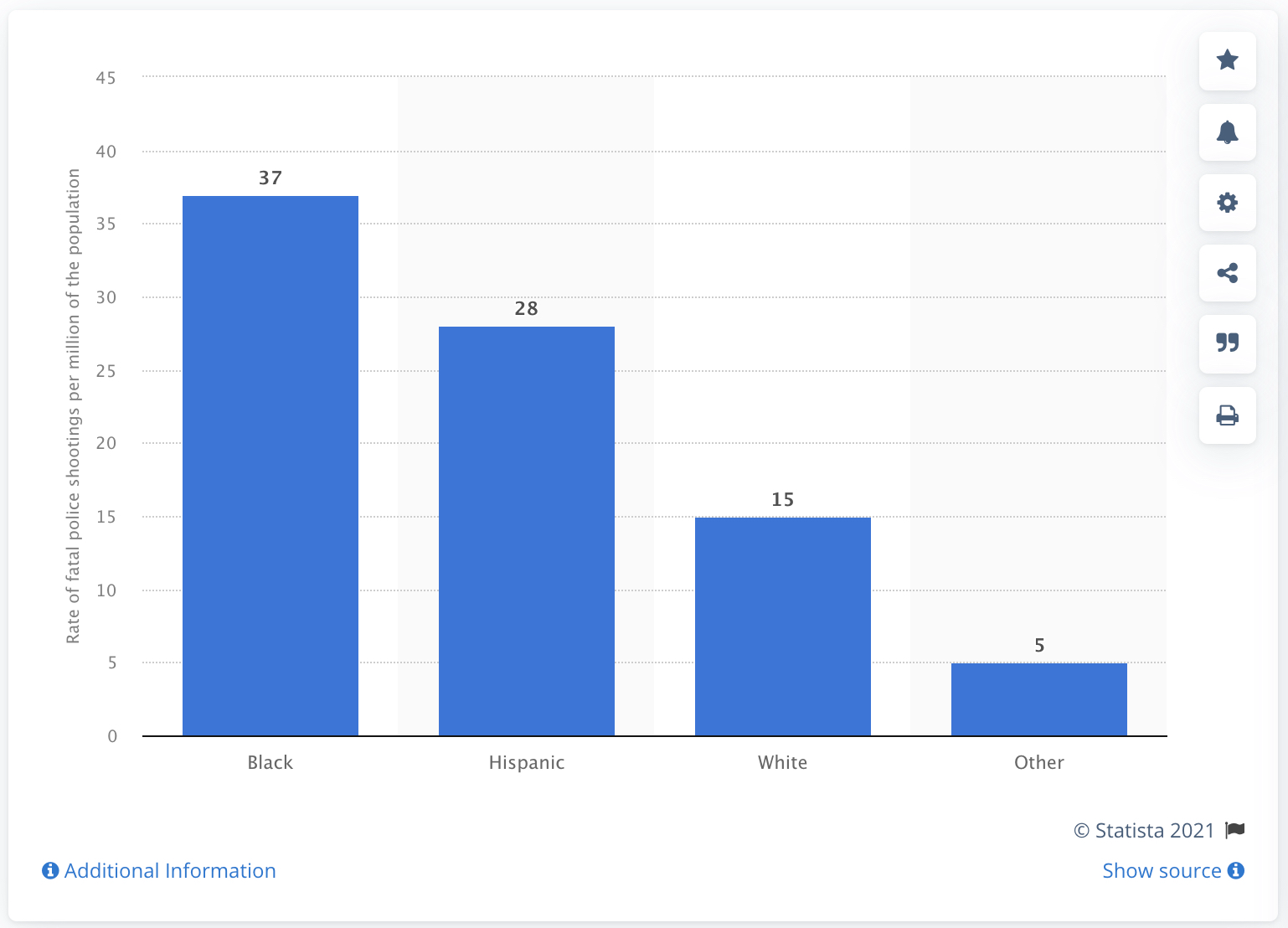
The shooting and killing of Rice fits into a large body of research showing that Black people are shot and killed at much higher rates than other races (for example, Black people shot 2.5 x more often than White people):
For legal scholars who have concluded that this racial rate inequity cannot be explained by simply identifying individual police officers as racists, CRT provides a process for understanding how and why the police officer shot and killed 12-year-old Rice.
Part of that explanation is systemic racism that influences everyone (regardless of race); Black children are viewed as older than their biological ages:
The social category “children” defines a group of individuals who are perceived to be distinct, with essential characteristics including innocence and the need for protection (Haslam, Rothschild, & Ernst, 2000). The present research examined whether Black boys are given the protections of childhood equally to their peers. We tested 3 hypotheses: (a) that Black boys are seen as less “childlike” than their White peers, (b) that the characteristics associated with childhood will be applied less when thinking specifically about Black boys relative to White boys, and (c) that these trends would be exacerbated in contexts where Black males are dehumanized by associating them (implicitly) with apes (Goff, Eberhardt, Williams, & Jackson, 2008). We expected, derivative of these 3 principal hypotheses, that individuals would perceive Black boys as being more responsible for their actions and as being more appropriate targets for police violence. We find support for these hypotheses across 4 studies using laboratory, field, and translational (mixed laboratory/field) methods. We find converging evidence that Black boys are seen as older and less innocent and that they prompt a less essential conception of childhood than do their White same-age peers. Further, our findings demonstrate that the Black/ape association predicted actual racial disparities in police violence toward children. These data represent the first attitude/behavior matching of its kind in a policing context. Taken together, this research suggests that dehumanization is a uniquely dangerous intergroup attitude, that intergroup perception of children is underexplored, and that both topics should be research priorities.
So here is our first example of irony: While anti-CRT advocates attack CRT as itself racist and argue CRT labels all White people as racist, CRT actually poses that the killing of Rice is not dependent on a racist police offer, but unexamined and unaddressed systemic biases against Black children.
Again, ironically, training for police officers informed by CRT is the most effective mechanism for helping police officers recognize unconscious bias (viewing Black children as adults) and then change their behavior (resulting in fewer lives taken).
Finally, consider a couple more phenomenon and the need for CRT as a tool to understand and address these inequities.
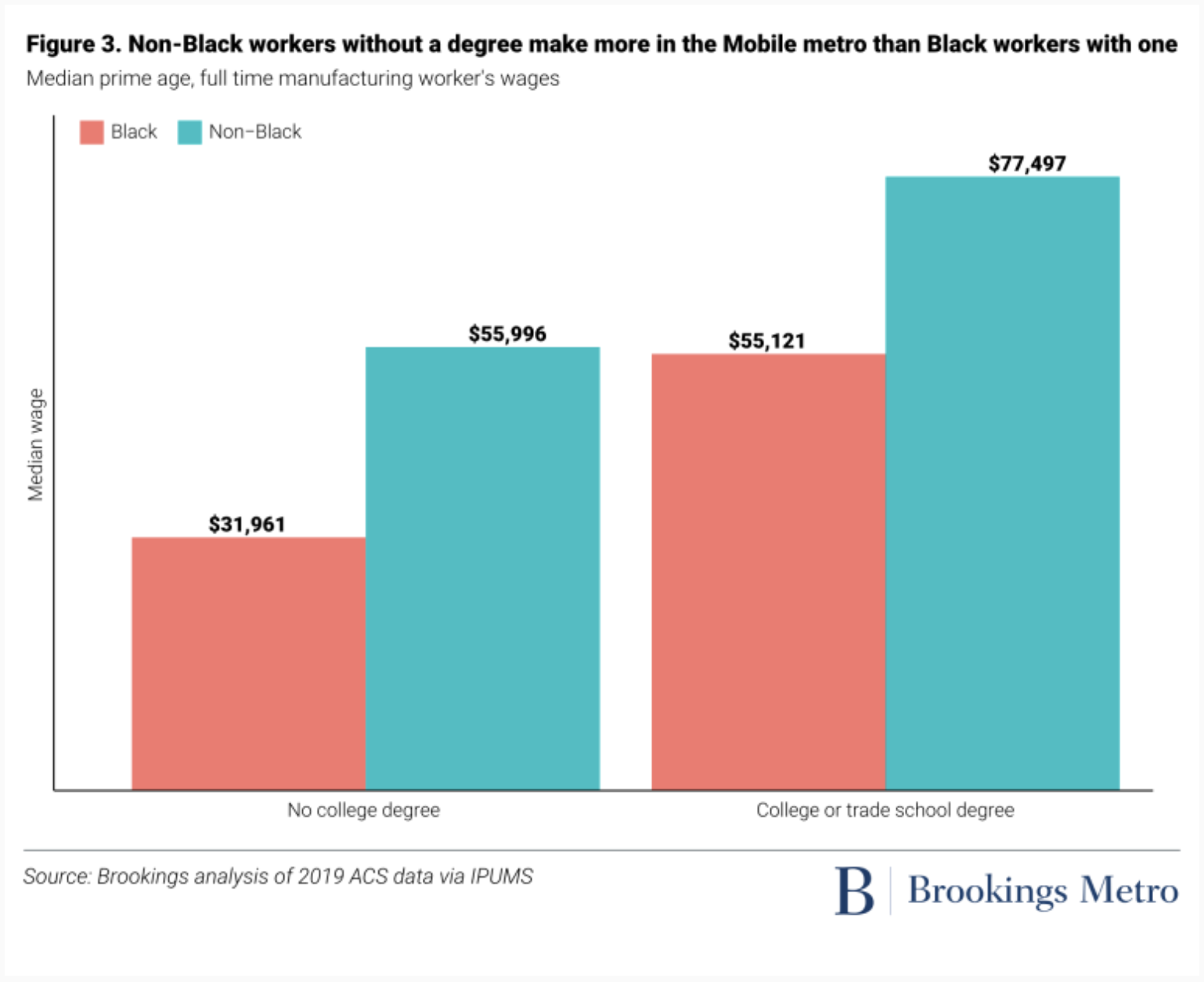
Consider this report from Brookings that identifies racial inequities between education and income (a racial gap identified in a large body of research):
Perry, Barr, and Romer, then, confront a problem that cannot be explained simply by the impact of individual racists on income:
Our research reveals that the median earnings for Black workers in the manufacturing industry are a staggering $25,629 less than the median for non-Black workers. This racial earnings gap is so large that it is even more pronounced than the earnings gap between workers with degrees versus without. And education does not make up for the racial income gap [emphasis added]; our analysis shows that the median Black worker with a college or trade school degree in the manufacturing industry still makes $875 less than the median white worker with no degree.
Black students are more likely to attend schools that have high percentages of novice teachers in almost every state across the country. For example:
• In Mississippi, about 25% of Black students attend schools with high percentages of novice teachers, compared to 7% of non-Black students.
• In Maryland, nearly 40% of Black students attend schools with high percentages of novice teachers, compared to about 20% of non-Black students.
• And in eight states (Arizona, Florida, Kentucky, Louisiana, Maryland, Oklahoma, Pennsylvania, and Texas), 30% or more of Black students attend schools with high percentages (greater than 20%) of novice teachers.
Not only do Black students have more novice teachers, but they also have more first-year teachers. On nationwide average, schools serving the highest percentages of Black students have 8% first-year teachers; whereas, schools serving the lowest percentages of Black students have 5% first-year teachers. In 25% of states, schools serving the greatest percentages of Black students have at least twice the percentage of first-year teachers as schools serving the fewest.
• In Louisiana and Mississippi, for example, schools serving the greatest percentages of Black students have almost three times the percentage of first-year teachers as schools serving the fewest.
The Education Trust finds a similar disparity for Latino students.
In all three phenomena above—racial inequities in police shootings, income, and access to non-novice teachers—CRT allows a tool for examining and addressing these problems that begins with the claim they are not the result from individual racism, but from systemic (and complicated) dynamics that everyone participates in.
For White people, then, CRT informed research on racial inequity that can unpack and identify the dynamics creating systemic racism can then be translated into policy and practices that eradicate those inequities—all without blaming individuals as racists.
Understanding and incorporating CRT as a tool for research and policy, then, is not a process for condemning all White people as racist, but a pathway to racial harmony.
Being White is not a self-condemning status, then; however, refusing to acknowledge systemic racism and the need to find policies that create equity is a choice, one that perpetuates racism regardless of anyone’s beliefs about race.
The ultimate and ugly irony is that White refusal to understand and embrace CRT is self-defeating, harmful to everyone regardless of race.
[2] As a critical scholar who identifies with Marxist educational theory, I must emphasize that although I have completed every level of formal education through a doctorate, I have never once been assigned any CRT text or lesson. Further, my understanding and study of Marxism have primarily been on my own, beginning with Marx’s non-economic writings (which I read by choice as an undergraduate after finding the book at a used book sale).
Robert Pondiscio and Frederick Hess, both from the conservative American Enterprise Institute, are about as credible as a paper towel, a wet paper towel.
Not Bounty, of course, but those other paper towels.
Yet, here is an interesting fact.
The so-called “liberal” mainstream media love to provide inordinate space to Pondiscio and Hess, particularly when the topic is even remotely about education.
For example, The New York Times allows them to hold forth on book censorship in Texas. Hess offers a flippant comment that captures the veneer of being reasonable at the core of conservative wet-paper-towel commentary:
“It’s just enormously problematic to rule out particular works,” said Frederick Hess of the American Enterprise Institute, who has written favorably of the battles against critical race theory. “I happen to think ‘1619’ is a shoddy work, but so what? Let kids read critiques and wrestle with it.”
Gosh, that’s mighty kind of Hess to allow “kids” to read some “shoddy” history!
But Pondiscio is granted the last word, and again, he takes the pose of moderation, although like Hess, it is couched in a nasty little swipe: “He sees antiracist education, such as grouping students in racial affinity groups, as lapsing into parody.”
Ah, yes, what a joke antiracist education is!
From Pondiscio to Hess and the entire array of high-profile know-nothing conservative pundits, like David Brooks, mainstream media is awash in wet-paper-towel commentary from conservative (mostly male, mostly white) pundits who benefit from presenting as harmless “experts” who remind us of Ward Clever or Ronald Reagan (actor, not politician).
But don’t let the reasonable pose fool you. These wet paper towels not only don’t hold water very well, but also don’t place a coffee cup on them or you’re going to have a mess on your hands.
Behind the smiles and the hair cuts, however, is something insidious, and the only real way to identify that is to admit conservative commentary is mostly built on lies.
First, note that his commentary is allowed a very reasonable headline, as if the censorship movement across the U.S.—and even calls for book burnings—are merely about misunderstanding a very reasonable issue facing our schools, age appropriateness (glossing over, of course, the implication that teachers and administrators don’t already consider age appropriateness).
Next, as the comments above in the NYT show, Pondiscio proceeds to weave a puppet show of reasonableness that isn’t reasonable at all [1].
Early in his commentary, Pondiscio assures us he is bored with the canon war (apparently itself a bit of a joke like antiracism education!). Where does his concern lie?:
The more challenging front in the censorship wars is over new and comparatively obscure works targeted at readers, from small children to young adults, which cannot claim canonical status. These new works are being published, promoted and defended on grounds of “authenticity and inclusivity.” To question them — to draw a line — is to risk a charge of ignorance, bigotry or worse.
“Obscure works”? “Targeted at readers”? (Side question: Are there books not targeted at readers? Those readerless books?)
It gets even more fun:
Publishers of young adult novels have been falling over one another in recent years to bring out controversial texts on themes of sexual abuse, racism, domestic violence, gang life, school shootings and other “realistic” subjects, in widely read books such “The Hate U Give,” “Thirteen Reasons Why,” and “The Absolutely True Diary of a Part-Time Indian.”
Picture books for little kids are even more discomfiting. I’m old enough to remember the controversies that attended “Heather Has Two Mommies” (1989) “And Tango Makes Three” (2005), which sought to normalize gay and lesbian family structures.
“Falling over one another”? “Discomforting”? “Normalize gay and lesbian family structures”?
Pondiscio seems to think he is Ward Clever surrounded by his doting and clueless family.
And, boy, things suddenly stopped being a joke, right? To Pondiscio, antiracism education is “parody,” but the real problem (not racism!) is “[t]hat normalizing impulse now goes to lengths that give pause on grounds of age appropriateness even to parents who think of themselves as progressive.”
Jesus, how did the U.S. fall under the spell of “normalizing”? And why are these “progressive”parents confiding in a senior fellow at the American Enterprise Institute?
You see, Pondiscio is playing a slightly softer version of the conservative Red Herring strategy behind attacks on Critical Race Theory: Make an outlandish and unsubstantiated claim, and then quickly shift to attacking that claim with more outlandish extremism:
Instead, we must reaffirm that you’re not a homophobe if you don’t want your child exposed to an explicit illustration of oral sex as in the graphic novel “Gender Queer.” Neither are you a closet white supremacist if you question the wisdom of exposing young children to the racially charged picture book “Not My Idea. A Book About Whiteness,” which concludes, “Whiteness is a bad deal. It always was.”
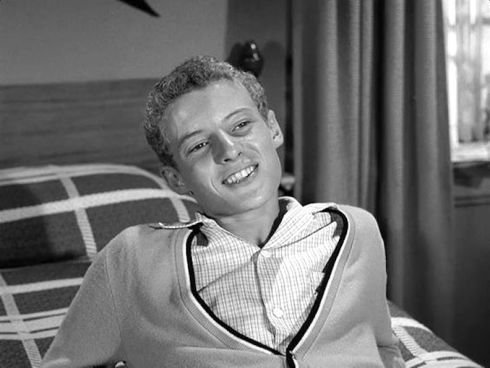
The Big Reveal is that Pondiscio isn’t Ward Clever; he is Eddie Haskell.
Here is the essential problem with both the conservative/Republican attack on books and curriculum, and conservative wet-paper-towel commentary trying to justify erasing free speech and academic freedom.
Including Texas, but all across mostly red states, books are being banned (not checked for age appropriateness), removed from classrooms and libraries so that no one has access to them. These attacks are not about assigning books, but about deciding for parents and students what books can be read.
These attacks are not concerns about age appropriateness (legitimate) or parental rights (debatable). This is fear-mongering around “normalizing” (remember, that thing more dangerous than racism!).
Access to books in children’s homes, classrooms, and schools is one the most important aspects of developing literacy, and limiting access to books in classrooms and schools will disproportionately and negatively impact children living in poverty.
The real parodies—ones so dark they aren’t funny—are Pondiscio, Hess, Brooks, et al., who, like Eddie Haskell, are allowed to offer their veneer of reasonableness in mainstream “liberal” media to promote their wet-paper-towel commentary.
There isn’t enough Bounty in the world to clean up that mess.
[1] As a frame of reference, here is an actual reasonable claim in my own commentary on book censorship (published in The Greenville News, SC):
While there is certainly a place for examinations of age-appropriate texts being taught in public schools, and parents have the right to offer input about the books their own children read, book banning is an act of removing everyone’s opportunity to choose what they read and what they learn.
The current purge happening across the U.S. is not limited to individual student and parent choice, but banning books from school libraries, while targeting the most vulnerable students and authors.












 dr. p.l. (paul) thomas