We are now in Year 4 of the “science of reading” (SoR) movement.
The SoR movement has directly influenced many states introducing new or revising existing reading legislation. However, the SoR movement is characterized by mostly misinformed, misleading, and over-simplified claims.
Similar to the larger accountability movement begun in the 1980s, the SoR influence on reading legislation and instruction is doomed to fail because it misidentifies the problems with teaching reading and learning to read.
Here, then, briefly, I outline the real problems with teaching reading and reading achievement among students in the U.S.:
The greatest barriers to all formal learning are out-of-school (OOS) factors such as household poverty, parental job security, food security, access to healthcare, and access to books/texts in the home. Decades of research have shown that about 60%-80+% of measurable student achievement is casually related to OOS factors; this holds true for reading achievement as well.
In-school barriers to reading achievement include teaching/learning conditions (class size, teacher expertise and experience) and inequitable access to learning (tracking, gate-keeping for so-called advanced programs—gifted and talented, Advanced Placement, International Baccalaureate, etc.).
Teacher education being bound to accountability mandates for accreditation and then teachers being held accountable for standards and high-stakes test scores are powerful barriers to individual student reading achievement.
The most important negative instructional barrier to reading achievement is holding teachers accountable for implementing reading programs instead of providing teachers support for addressing individual student needs.
Because of many of the barriers noted above, reading instruction is standards- and program-centered, not student-centered, and thus, many unique and complex needs of students are not addressed (special needs such as dyslexia, for example).
A significant cultural barrier to reading achievement is the ahistorical “crisis” rhetoric around student reading achievement; for well over a century, media, public, and political narratives have claimed that students are failing to read. We have never paused to ask why there is not one single year in which we declared reading achievement adequate.
Another conceptual barrier to reading achievement is a blind faith in grade-level reading. We have failed to recognize that decades of flat high-stakes test scores and a wide variety of rates among students for reading development refute a narrow technocratic view of reading development occurring in a prescribed sequence and conforming to biological age.
Similar to several Reading War movements reaching back to the 1940s, the current SoR movement is misidentifying barrier to teaching reading and reading achievement, and thus, the proposed changes to instruction and legislation are misguided, ultimately causing far more harm than good.
For about three years, states across the U.S., including South Carolina, have been adopting new reading legislation. This recent movement has been driven by a media fascination with the “science of reading.”
Proponents of the “science of reading” have made some dramatic claims: teachers are not teaching reading based on the current research base because teacher educators have failed to prepare those teachers, and students are struggling to read because of those failures.
The “science of reading” movement has also taken aim at popular reading programs—notably those by Lucy Calkins and Fountas and Pinnell—arguing that they lack the support of research.
As a result, we are now in the midst of yet another Reading War, pitting systematic intensive phonics (supported by the “science of reading” advocates) against balanced literacy (which has its roots in the whole language movement).
While public education certainly has an obligation to focus on literacy for all students, especially students living in poverty as well as those struggling to read, the “science of reading” movement is causing far more harm than good.
Reading Wars and debates over the proper place of systematic intensive phonics happen in English-speaking countries all over the world, including England where a shift to systematic intensive phonics occurred almost two decades ago. Dominic Wyse and Alice Bradbury detail the transition:
Prior to 2006 the teaching of reading in most classrooms in England is best described as balanced instruction, in which some phonics teaching has always been part of the teaching of reading typically for children in the infant years (aged five to seven) although not necessarily ‘systematic phonics’ instruction…. However in 2006 the Rose Report recommended that there should be even more emphasis on phonics teaching….
This was followed by the increased emphasis on discrete teaching of phonics recommended by the Rose Report and the PNS from 2006 onwards. Further intensification of synthetic phonics teaching was seen in England’s national curriculum of 2014, along with a range of other measures to ensure teacher compliance with the prescribed method of teaching reading, including the use of the PSC; the vetting of phonics teaching schemes; and the use of the inspectorate to focus on outcomes in statutory reading assessments as a prime focus in school inspections.
In other words, England shifted away from balanced literacy and toward systematic intensive phonics—the goal of the “science of reading” movement—about 16 years ago.
Therefore, Wyse and Bradbury’s analysis of this shift is a powerful message for the current call to drop balanced literacy for systematic intensive phonics (what advocates call the “science of reading”).
Wyse and Bradbury use a meta-synthesis of experimental research (the “science of reading”) and a survey of 2205 teachers to draw the following conclusions: “Our findings from analysis of tertiary reviews, systematic reviews and from the SQMS do not support a synthetic phonics orientation to the teaching of reading: they suggest that a balanced instruction approach is most likely to be successful.”
The “science of reading,” in fact, supports balanced literacy and not prioritizing systematic intensive phonics.
Further, Wyse and Bradbury offer important recommendations:
In addition to the importance of contextualised reading teaching as an evidence-based orientation to the teaching of reading we hypothesise the following pedagogical features that are likely to be effective. Phonics teaching is most likely to be effective for children aged five to six. Phonics teaching with children younger than this is not likely to be effective. A focus on whole texts and reading for meaning, to contextualise the teaching of other skills and knowledge, should drive pedagogy. Classroom teachers using their professional judgement to ensure coherence of the approach to teaching phonics and reading with other relevant teaching in their classroom is most likely to be effective. Insistence on particular schemes/ basals, scripted lessons, and other inflexible approaches is unlikely to be optimal. Well-trained classroom assistants, working in collaboration with their class teachers, could be a very important contribution to children’s reading development.
Another key problem with the “science of reading” movement is state’s adopting prescriptive phonics training for teachers (such as LETRS), a move doomed to failure as this study confirms.
Although too many states have jumped on the “science of reading” bandwagon already, this important research from England is an opportunity to pause, readjust, and not waste another decade or two making the same mistake England made in 2006.
Public and media debate as well as public policy driven by those debates is too often driven by misuse and misunderstanding of key terms and concepts, especially for the field of education.
Two such terms—Critical Race Theory and the “science of reading” (SoR)—have demonstrated that phenomenon over the past few years.
With reading and literacy a high-priority focus of the media and state-level legislation, understanding and using terms and concepts around reading and literacy correctly and clearly are urgently needed. Therefore, I strongly recommend a new volume, Language of Literacy Education, edited by Vicki S. Collet, Associate Director, NWA Writing Project, and Associate Professor, CIED, University of Arkansas.
The volume offers research-based explanations for literacy terms [1], such as SoR, the simple view of reading, etc., that often contrast with the way these terms are used in public and media discourse as well as in state-level legislation debates and policy.
For example, the volume’s definition for SoR is how the term should be used and understood:
Science of reading, broadly defined, is research results from a variety of fields and methodologies, including basic and applied science, related to reading and reading instruction. The science of reading is supported by ongoing research with a “dynamic interplay among methods, theories, and findings” (Pearson, 2020). Examining this full range of science “can be a helpful policy guide to initiatives that seek to improve students’ reading ability and appetite” (Collet et al., 2021)….
Because of the complexity of reading and the differences among learners and contexts, no single instructional approach has been found to be effective in teaching all students to read (Compton-Lily et al, 2020; International Dyslexia Association, 2018; Malloy et al., 2019).
While I strongly endorse the full definition provided here for a nuanced and robust understanding of SoR and how people learn to read over their entire lifetime, I find the inclusion of the current problems with the misuse of SoR as compelling:
Some instantiations of the “science of reading” are narrowly construed to emphasize basic research from cognitive psychology, neuroscience, and linguistics that describe how the brain learns to read in the early years. Public discourse sometimes focuses on the alphabet principle (Liberman et al., 1989) and a simple view of reading (Gough & Tunmer, 1986). This overly-restrictive view “is being used to shape public policy and silence other perspectives” (Hoffman et al., 2020, p. S258) and to narrow curricula (Compton-Lily et al., 2020; Vaughn et al., 2020) and should not be confused with the body of scientific studies of reading, which includes an interdisciplinary store of knowledge about “reading-related skills, processes, antecedents, and outcomes” (Alexander, 2020, p. S90). A “cautionary disposition to avoid drawing unwarranted inferences about the efficacy of pedagogical alternatives that have not themselves been rigorously examined” (Cervetti et al., 2020, p. S168) is needed. In contrast, research on reading instruction and the preparation of literacy teachers is robust, extensive, and useful for guiding reform efforts (Hoffman et. al, 2020).
Ultimately, Collett reaches an important conclusion that should be driving our understanding of reading, teaching reading, and reading policy: “At times controversial, the science of reading is an ongoing body of research, ‘an area for inquiry rather than a foregone conclusion’ (Woulfin et al., 2020, p. S111).”
Parents, the media, politicians, and anyone advocating for better literacy instruction must have this volume at their side in order to navigate this debate in ways that could benefit our teachers and their students.
Misinformation and misusing terms result in harmful debates and ultimately extremely harmful educational policy.
Annotation Argumentative Writing Assessment Background Knowledge Biliteracy Close Reading Comprehension Comprehension Strategies Comprehensive Literacy Instruction Construction-Integration (CI) Model Context Contextual Reading Model Critical Literacy and Critical Media Literacy Cueing Systems Culturally Responsive Instruction Decoding Diffferentiation Digital Literacies Direct Instruction Disciplinary Literacy Discourse Analysis Discussion Dyslexia Embodied Literacies Emergent Literacy Fluency Four-Part Mental Processor Genre Gradual Release of Responsibility Grammar and Mechanics Graphic Organizers Guided Reading/Writing Independent Reading/Writing Informational text Integrated Instruction Intervention Language Development Learning Progressions Literacy/Literacies Literary Devices Mentor Texts Miscue Analysis Modeling Morphology Motivation Multicultural Literature Multimodality Narrative Text New Literacies Peer Response Perspective and Point of View Phonics Phonological and Phonemic Awareness Pragmatic Knowledge Question Answer Relationship Read Aloud Readability Reading Recovery Reading-Writing Relationships Reciprocal Teaching Rhetorical Factors and Devices Running Record Scafffolding Science of Reading Semantics Sentence Frames Shared Reading/Writing Sight Words Simple View of Reading Small-Group Instruction Sociocultural Perspective Standards Story Elements/Story Grammar Text Structures and Text Features Theme Thesis Think Aloud Transactional Theory Translanguaging Understanding Vocabulary Instruction Voice Workshop (Reading & Writing) Writing Process Zone of Proximal Development
The Tennessee General Assembly has banned the teaching of critical race theory, passing a law at the very end of the legislative session to withhold funding from public schools that teach about white privilege.
Republicans in the House made the legislation a last-minute priority, introducing provisions that ban schools from instructing students that one race bears responsibility for the past actions against another, that the United States is fundamentally racist or that a person is inherently privileged or oppressive due to their race.
As Allison reported in May, several states across the U.S. have filed or passed copy-cat legislation aimed at banning the teaching of Critical Race Theory.
By October and November, the consequences of Tennessee’s law have moved from silencing and canceling teachers to attempts to cancel curriculum [1]:
The Tennessee Department of Education recently declined to investigate a complaint filed under a new state law prohibiting the teaching of certain topics regarding race and bias.
The 11-page complaint alleged that the literacy curriculum, Wit and Wisdom, used by Williamson County Schools and at least 30 other districts, has a “heavily biased agenda” that makes children “hate their country, each other and/or themselves.”
Although the complaint was rejected, Mangrum noted, “The group detailed concerns with four specific books on subjects like the Rev. Martin Luther King Jr.’s March on Washington, the integration of California schools by advocate Sylvia Mendez and her family, and the autobiography of Ruby Bridges, adapted for younger learners.”
A teacher fired for teaching Ta-Nehisi Coates, parents calling for bans on MLK and teaching about Ruby Bridges—these events are not unique to Tennessee, but they reflect a pattern of efforts to control not only teachers, but what students are allowed to learn and read.
Notable in these examples is that many of the consequences of legislation are canceling Black writers and key aspects of Black history; additionally, legislation and calls for book banning are targeting LGBTQ+ writers and topics.
Teaching and curriculum in the U.S. are being systematically and politically whitewashed.
One aspect not being addressed often is that political dynamic. Parents, politicalactivists, and politicians are impacting who teaches and what is being taught in the context of a historical and current demand that teachers themselves remain apolitical, both in their classrooms and their lives beyond school.
For teachers, then, we must recognize that calls for teachers to be objective, neutral, and apolitical are themselves political acts. Currently, laws being passed and parents/activists confronting school boards are exercising their political power at the expense of teachers and schools—both of which are required to remain somehow politically neutral.
From historian/activist Howard Zinn to critical scholars such as Joe Kincheloe and to poet Adrienne Rich, we have ample evidence that taking a neutral stance is a political act that passively endorses the status quo and that silencing words is an act of canceling thought, eradicating ideas.
Zinn’s commitment to transparency as a teacher and activist is hauntingly relevant to the current political attack on teachers and curriculum:
This mixing of activism and teaching, this insistence that education cannot be neutral on the critical issues of our time, this movement back and forth from the classroom to the struggles outside by teachers who hope their students will do the same, has always frightened the guardians of traditional education. They prefer that education simply prepare the new generation to take its proper place in the old order, not to question that order [emphasis added]….
From the start, my teaching was infused with my own history. I would try to be fair to other points of view, but I wanted more than “objectivity”; I wanted students to leave my classes not just better informed, but more prepared to relinquish the safety of silence, more prepared to speak up, to act against injustice wherever they saw it. This, of course, was a recipe for trouble.
And Kincheloe confronted not only who is actually indoctrinating students but the imperative that teachers recognize teaching as inherently political:
Thus, proponents of critical pedagogy understand that every dimension of schooling and every form of educational practice are politically contested spaces. Shaped by history and challenged by a wide range of interest groups, educational practice is a fuzzy concept as it takes place in numerous settings, is shaped by a plethora of often-invisible forces, and can operate even in the name of democracy and justice to be totalitarian and oppressive [emphasis added].
The great irony is that critical educators (often smeared as “Marxists”) are committed, as Kincheloe asserts, to a foundational concern: “Critical pedagogy wants to know who’s indoctrinating whom.”
The Orwellian named “Moms for LIberty,” then, by calling for canceling curriculum are in fact being “totalitarian and oppressive,” calling for not education, but indoctrination. To ban words and ideas is to ban the possibility of thinking, of learning:
The study of silence has long engrossed me. The matrix of a poet’s work consists not only of what is there [emphasis in original] to be absorbed and worked on, but also of what is missing, desaparecido [emphasis in original], rendered unspeakable, thus unthinkable.
A final powerful point is that many of these political acts to silence teachers and cancel curriculum are occurring in right-to-work states controlled by Republicans. Teachers not only are expected to be neutral, objective, and apolitical, but also work with a distinct awareness they have almost no job security.
Hawn fired in Tennessee simply taught a text and now is fighting for his career; the text in most ways just a year ago was considered non-controversial and even celebrated as Coates had attained recognition as one of the country’s leading Black voices.
During this holiday season at the end of 2021, teachers honestly have no decision about whether or not to be political. We are faced with only two political choices: conform to the demand that we take a neutral pose, resulting in endorsing whatever status quo legislators and parents/activist impose on schools; or recognize and embrace the essential political nature of being a teacher by actively opposing efforts to cancel teachers and curriculum.
[1] Twitter thread:
A Tennessee chapter of "Moms for Liberty" filed a complaint with the Tennessee Department of Education alleging that assigning 2nd Graders a book about MLK Jr's March on Washington violated the state's new law banning Critical Race Theory pic.twitter.com/STDiPY48jH
The Tennessee Department of Education declined to "investigate" but for a technical reason. The complaint dealt with curriculum during the 2020-21 school year and not the current school year. https://t.co/gWfsn6rhLB
So Moms for Liberty could refile the complaint and they might be successful next time. Their issue with the MLK book are two images that are historically accurate.
Moms for liberty also objects to the TEACHERS MANUAL suggesting that notorious segregationist Eugene "Bull" Connor was not a nice guy pic.twitter.com/UN8ybP9LVu
Polonius: I mean, the matter that you read, my lord.
Hamlet: Slanders, sir: for the satirical rogue says here that old men have grey beards….
Polonius: [Aside] Though this be madness, yet there is method in’t.
–Hamlet, Act II, Scene ii.
Reading matters.
I imagine you would be hard pressed to find anyone who would disagree with those two simple words. But the reality is that those two words have dramatically different meanings among people advocating for teaching children to read in schools.
The problem in McWhorter’s words, of course, is that “right way.”
Since early 2018, the U.S. has once again lifted the Reading War into public consciousness with a misleading refrain, “the science of reading” (SoR). The media has maintained a steady beat claiming that teacher education and practicing teachers have failed to embrace the SoR, and as a result, children are failing to learn to read.
The SoR media movement has merged with some aggressive parent advocacy groups, notably related to dyslexia, and the result is copy-cat SoR reading legislation being passed throughout the country. Ironically, and disturbingly, that legislation often codifies policies and practices that are strongly refuted by scientific research—grade retention, universal screening for and oversimplification of dyslexia [1], systematic intensive phonics programs for all students [2], bans on popular reading programs, and efforts to mimic policies implemented in Mississippi [3] (after one round of improved NAEP scores in reading at grade 4).
While I am certain that people advocating for improved reading instruction in our schools all have mostly good intentions (except for a powerful lobby for phonics programs and some media/journalists seeing an opportunity to cash in on SoR), the problem remains with what anyone means by “reading matters.”
We must acknowledge two contexts here.
One context is approaching a common term but a rare case that it may be accurate—crisis.
Since the SoR movement and advocates such as McWhorter are speaking into a conservative and traditional ideology about language, reading, and literature (used broadly to mean any texts students reading), the SoR movement has been swept into a concurrent movement against public education broadly begun under Trump with the purposeful and orchestrated attacks on the 1619 Project and Critical Race Theory (McWhorter’s “right way” comment sits inside his joining the anti-woke movement).
What merges the anti-woke education movement and the SoR movement is the focus on parental rights to monitor and control what students learn and how students learn.
The crisis we are approaching, I think, is the ironically disturbing part. The merging of the SoR movement with the anti-woke movement means that so-called advocates for better reading instruction have joined forces with a new rise in censorship that includes book banning, removing books from libraries (lists of 850+ books identified in Texas), proposing bans on terms deemed “woke,” and even calls for burn burnings.
A significant but less powerful group of literacy advocates, teachers, scholars, and writers have noted the problem with emphasizing the need for children to learn to read while simultaneously reducing what they can read, and even what those students are allowed to consider or think.
A second context is the contradiction between the narrow demands of the SoR movement and the likelihood that policies and practices being implemented in the name of SoR are likely to inhibit and even discourage children from reading.
I have detailed several times that I grew up in a racist and deeply conservative community and household. The conditions that saved my life, my mind, and my soul include the coincidence that my very misguided parents happened to respect intellectual freedom; I was allowed to read anything throughout my childhood and teen years.
Once I moved beyond my home and community—college—I was then liberated by reading Black authors assigned and recommended by wonderful professors, again a context that respected intellectual freedom and my mind.
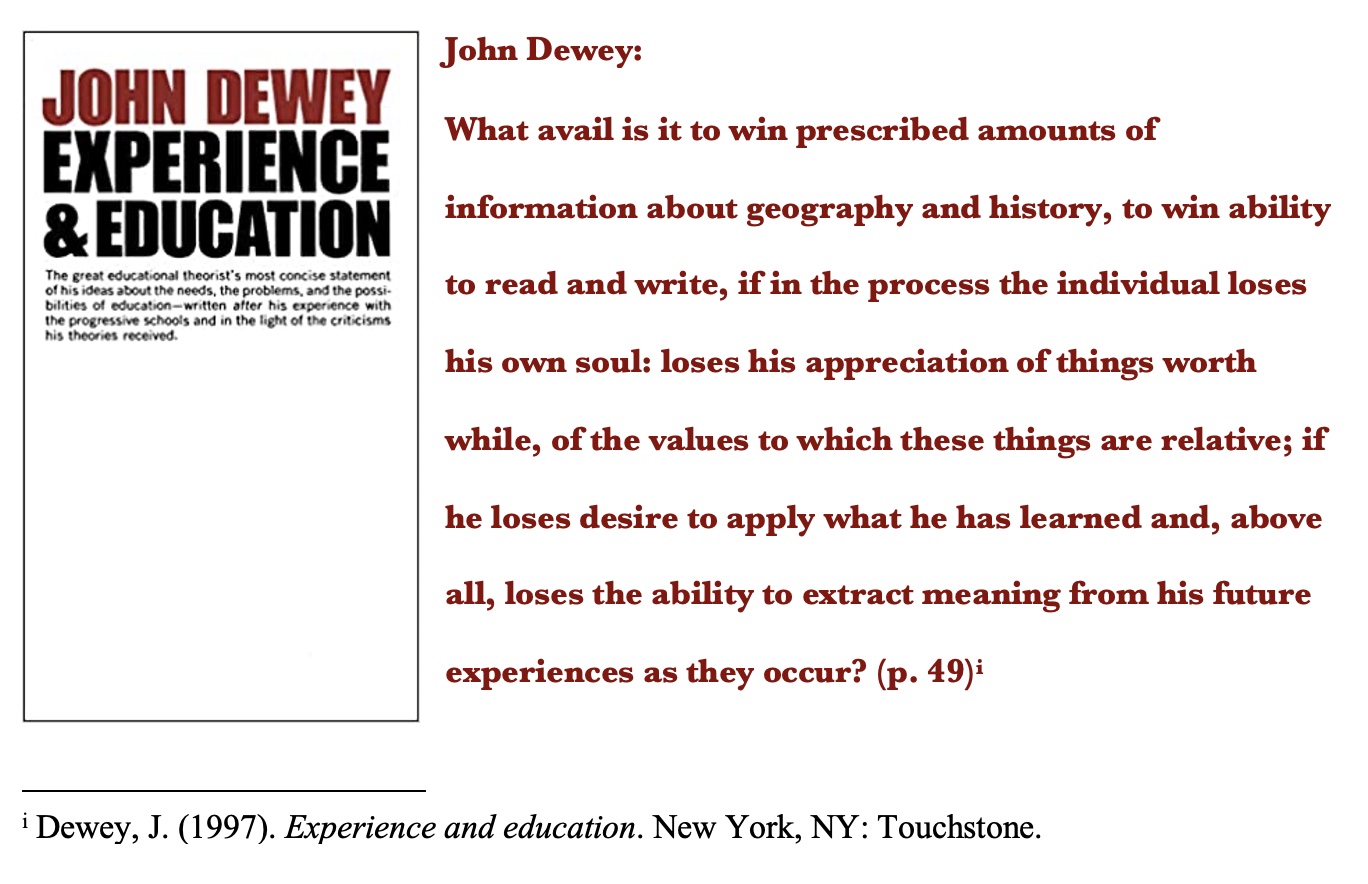
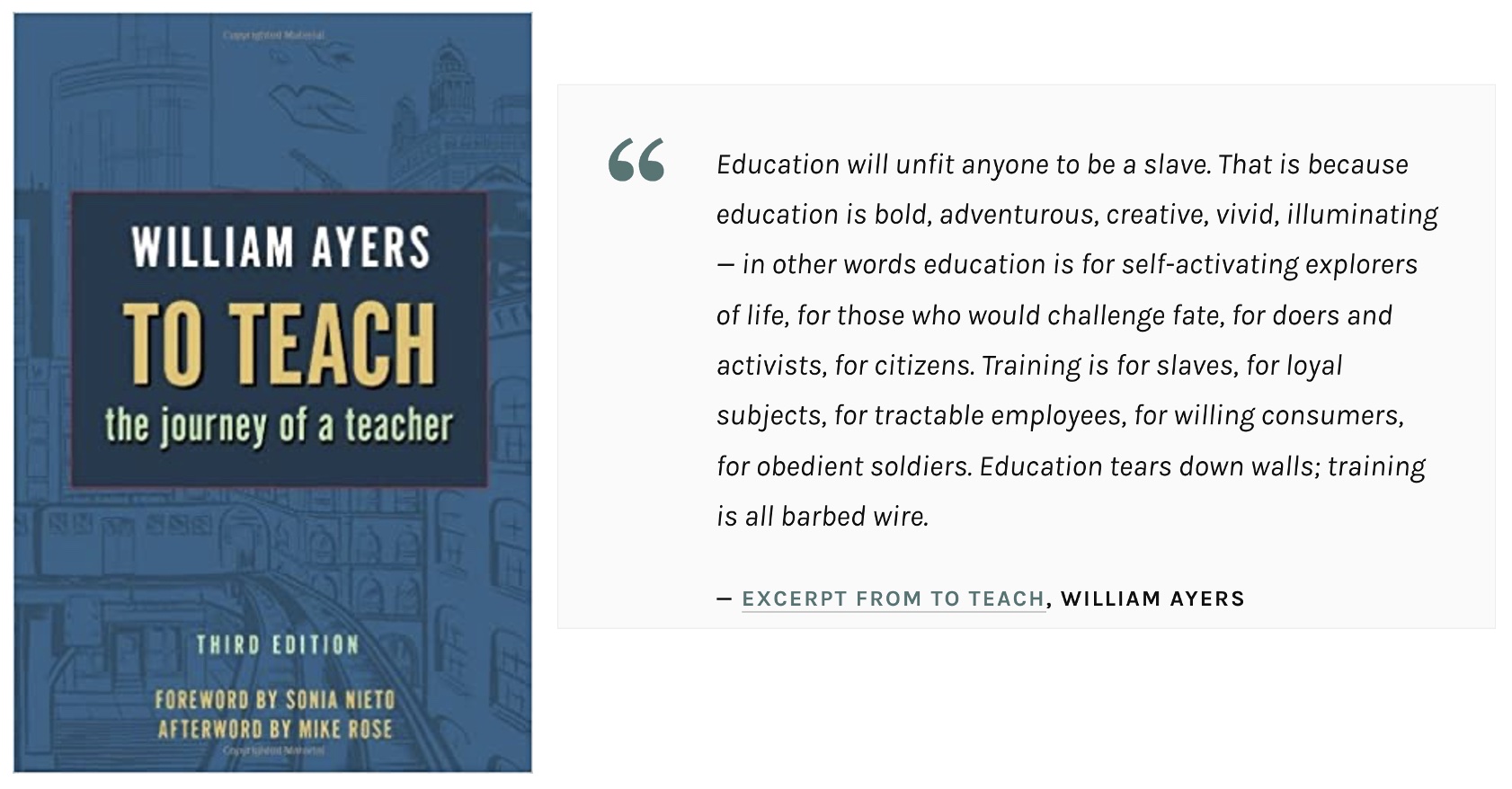
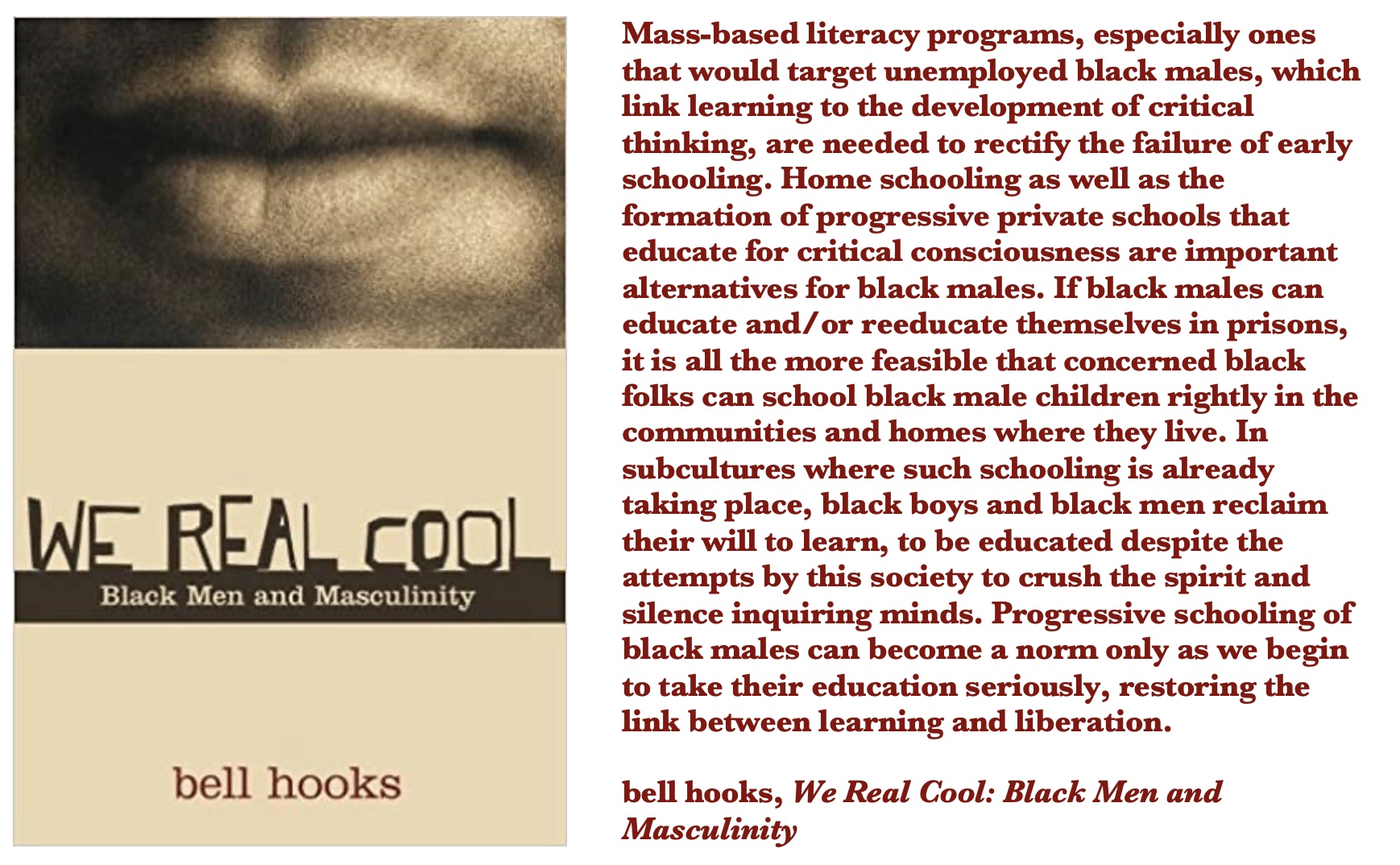
Not an exhaustive list, but for me, someone who has spent almost 40 years as a literacy educator, I want to offer some reasons reading matters for me, highlighting John Dewey, William Ayers, bell hooks, and Audre Lorde:
The allure of SoR for the media, parents, and politicians is grounded in silver-bullet “all students must” thinking that is antithetical to the reasons I believe reading matters.
At the core of the tension in debates about teaching reading and what texts students are assigned or allowed to read is those embracing indoctrination (“teaching everybody to read the right way”) versus those embracing education as liberation (from Dewey to Ayers to hooks and to Lorde).
Indoctrination depends on someone not only controlling what people read, hear, and think, but also erasing what people read, hear, and think.
The SoR movement ultimately fails because it resists being student centered and allows far too often for reading to be reduced to decoding (systematic intensive phonics for all); further, while SoR advocates often demonize popular reading programs (and I am a strong critic of all reading programs), they make the same essential mistake by simply choosing different programs to endorse as rigid expectations for students and teachers (LETRS, DIBLES).
Reading matters, but if we become distracted by raising reading test scores, our practices are likely to produce non-readers (Dewey).
Reading matters, but if we fail to distinguish between indoctrination and education for liberation (hooks), we reduce reading instruction to training (Ayers).
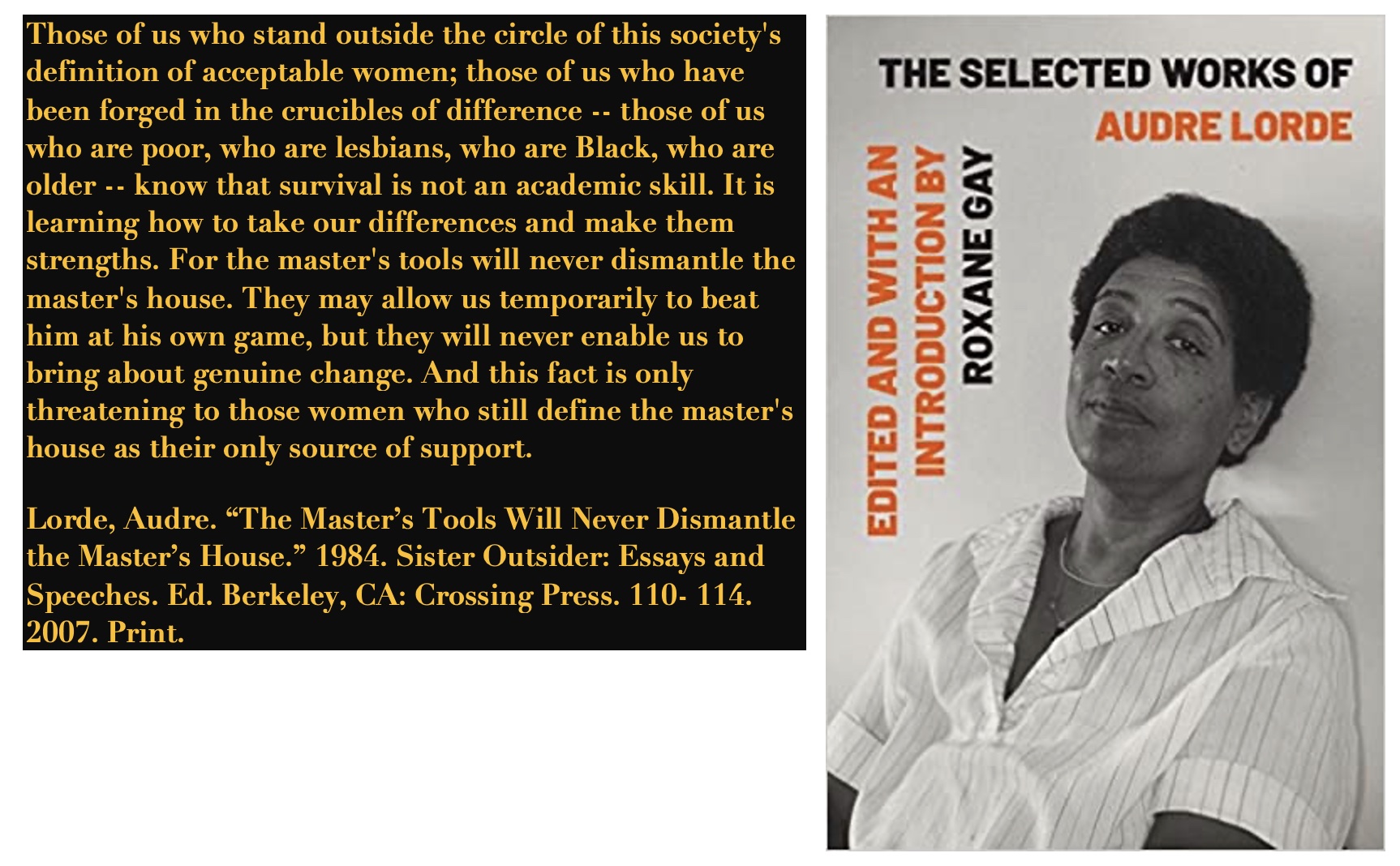
Reading matters, but our commitments must be to how reading matters for the individual, especially for those “who stand outside the circle of this society’s definition of acceptable” (Lorde).
If we truly believe every person deserves the human dignity of intellectual freedom, as my parents and teachers afforded me, then reading matters only if we refuse silver-bullet scripts, only if we protect all the books and ideas available to free people.
“the simple view of reading does not comprehensively explain all skills that influence reading comprehension, nor does it inform what comprehension instruction requires.”
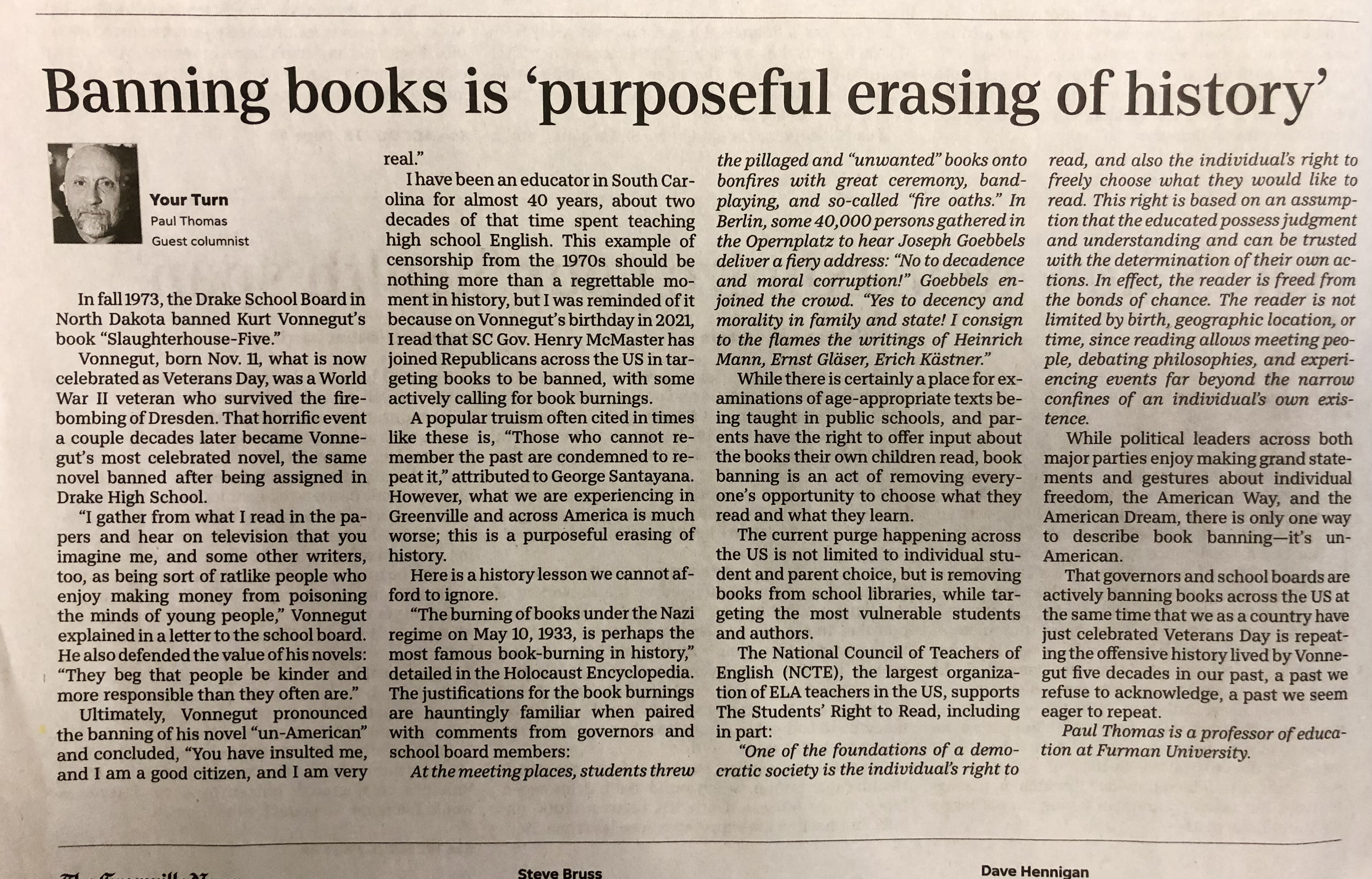
In the fall of 1973, the Drake School Board in North Dakota banned Kurt Vonnegut’s Slaughterhouse-Five.
Vonnegut, born November 11, what is now celebrated as Veterans Day, was a World War II veteran who survived the firebombing of Dresden. That horrific event a couple decades later became Vonnegut’s most celebrated novel, the same novel banned after being assigned in Drake High School.
“I gather from what I read in the papers and hear on television that you imagine me, and some other writers, too, as being sort of ratlike people who enjoy making money from poisoning the minds of young people,” Vonnegut explained in a letter to the school board. There he also defended the value of his novels: “They beg that people be kinder and more responsible than they often are.”
Ultimately, Vonnegut pronounced the banning of his novel “un-American” and concluded, “you have insulted me, and I am a good citizen, and I am very real.”
I have been an educator in South Carolina for almost 40 years, about two decades of that time spent teaching high school English. This example of censorship from the 1970s should be nothing more than a regrettable moment in history, but I was reminded of it because on Vonnegut’s birthday in 2021 I read that SC Governor Henry McMaster has joined Republicans across the U.S. who are not only banning books, but actively calling for book burnings.
A popular truism often cited in times like these is “Those who cannot remember the past are condemned to repeat it,” attributed to George Santayana. However, what we are experiencing in Greenville, SC and across America is much worse; this is a purposeful erasing of history.
Here is a history lesson we cannot afford to ignore.
“The burning of books under the Nazi regime on May 10, 1933, is perhaps the most famous book burning in history,” detailed at the Holocaust Encyclopedia. The justifications for the book burnings are hauntingly familiar when paired with comments from governors and school board members:
At the meeting places, students threw the pillaged and “unwanted” books onto bonfires with great ceremony, band-playing, and so-called “fire oaths.” In Berlin, some 40,000 persons gathered in the Opernplatz to hear Joseph Goebbels deliver a fiery address: “No to decadence and moral corruption!” Goebbels enjoined the crowd. “Yes to decency and morality in family and state! I consign to the flames the writings of Heinrich Mann, Ernst Gläser, Erich Kästner.”
While there is certainly a place for examinations of age-appropriate texts being taught in public schools, and parents have the right to offer input about the books their own children read, book banning is an act of removing everyone’s opportunity to choose what they read and what they learn.
The current purge happening across the U.S. is not limited to individual student and parent choice, but banning books from school libraries, while targeting the most vulnerable students and authors.
The National Council of Teachers of English (NCTE), the largest organization of ELA teachers in the U.S., supports The Students’ Right to Read, including in part:
One of the foundations of a democratic society is the individual’s right to read, and also the individual’s right to freely choose what they would like to read. This right is based on an assumption that the educated possess judgment and understanding and can be trusted with the determination of their own actions. In effect, the reader is freed from the bonds of chance. The reader is not limited by birth, geographic location, or time, since reading allows meeting people, debating philosophies, and experiencing events far beyond the narrow confines of an individual’s own existence.
While political leaders across both major parties enjoy making grand statements and gestures about individual freedom, the American Way, and the American Dream, there is only one way to describe book banning—un-American.
That governors and school boards are actively banning books across the U.S. at the same time that we as a country were celebrating Veterans Day is repeating the offensive history lived by Vonnegut five decades in our past, a past we refuse to acknowledge, a past we seem eager to repeat.
The matrix of a poet’s work consists not only of what is there to be absorbed and worked on, but also of what is missing, desaparecido, rendered unspeakable, thus unthinkable. It is through these invisible holes in reality that poetry makes it way—certainly for women and other marginalized subjects and for disempowered and colonized peoples generally, but ultimately for all who practice art at any deep levels. The impulse to create begins—often terribly and fearfully—in a tunnel of silence.
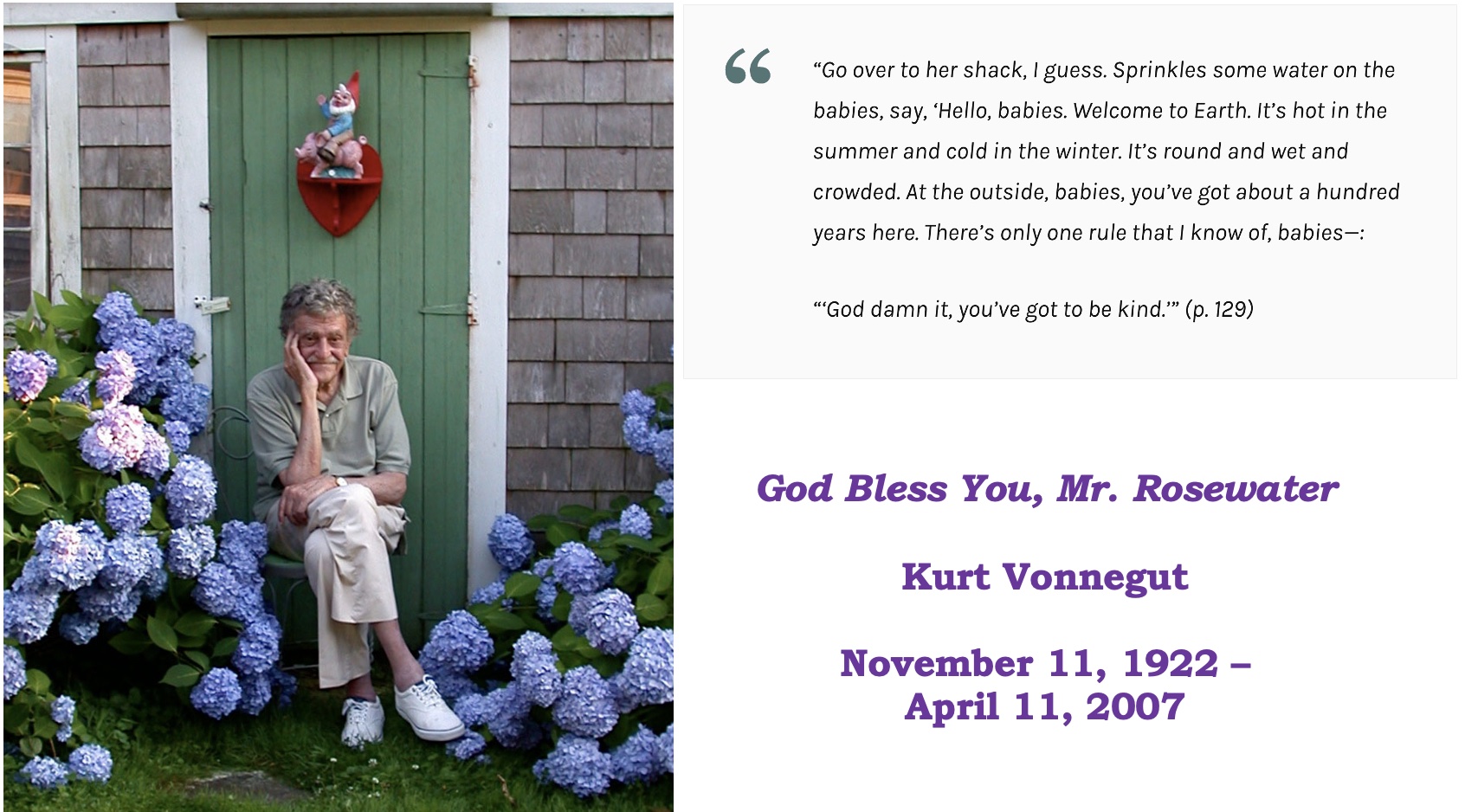
It is the morning of November 11, 2021, and I spend some of that time creating gentle memes to post in honor of Kurt Vonnegut’s day of birth:
I wanted to highlight Vonnegut’s career-long plea for a secular kindness, rooted in his faith in humanism, and I have long admired Vonnegut as an anti-war crusader.
Celebrating the birthday of a person after their death is always bittersweet, but on this morning, the act was awash in a very ugly sort of irony. As I loaded The State (Columbia, SC) web page, I saw this as the lead story:
My home state of South Carolina is heavily conservative—first to secede and uniformly conservative in politics throughout the decades of Democratic control of the South and then Republican in the wake of Strom Thurmond changing parties and later Ronald Reagan leading a conservative Christian shift in the South.
Gov. McMaster is not often “first to” about anything, but he is an uncritical and resolute soldier in the Republican culture war regardless of what that means.
Vonnegut—while alive and since his death—has often had his works challenged and even banned; one of the most enduring things he ever wrote, in fact, was a response to censorship:
In October of 1973, Bruce Severy — a 26-year-old English teacher at Drake High School, North Dakota — decided to use Kurt Vonnegut‘s novel, Slaughterhouse-Five, as a teaching aid in his classroom. The next month, on November 7th, the head of the school board, Charles McCarthy, demanded that all 32 copies be burned in the school’s furnace as a result of its “obscene language.” Other books soon met with the same fate. On the 16th of November, Kurt Vonnegut sent McCarthy the following letter. He didn’t receive a reply.
Certain members of your community have suggested that my work is evil. This is extraordinarily insulting to me. The news from Drake indicates to me that books and writers are very unreal to you people. I am writing this letter to let you know how real I am.
I want you to know, too, that my publisher and I have done absolutely nothing to exploit the disgusting news from Drake. We are not clapping each other on the back, crowing about all the books we will sell because of the news. We have declined to go on television, have written no fiery letters to editorial pages, have granted no lengthy interviews. We are angered and sickened and saddened. And no copies of this letter have been sent to anybody else. You now hold the only copy in your hands. It is a strictly private letter from me to the people of Drake, who have done so much to damage my reputation in the eyes of their children and then in the eyes of the world. Do you have the courage and ordinary decency to show this letter to the people, or will it, too, be consigned to the fires of your furnace?…
If you were to bother to read my books, to behave as educated persons would, you would learn that they are not sexy, and do not argue in favor of wildness of any kind. They beg that people be kinder and more responsible than they often are. It is true that some of the characters speak coarsely. That is because people speak coarsely in real life. Especially soldiers and hardworking men speak coarsely, and even our most sheltered children know that. And we all know, too, that those words really don’t damage children much. They didn’t damage us when we were young. It was evil deeds and lying that hurt us….
If you are an American, you must allow all ideas to circulate freely in your community, not merely your own.
Reading about the censorship wildfire spreading to SC on Vonnegut’s birthday adds insult to injury, but this is not mere partisan politics, not something as innocuous or abstract as a “culture war.”
Just as Vonnegut ends his letter with “I am very real,” I want to stress that the missionary zeal behind removing and burning books from school libraries is also “very real”:
Calls for censorship, book removal from school libraries, and book burning are the logical next step in the Republican/conservative assault on Critical Race Theory and the 1619 Project; at the core of this movement is a misguided demand for parental rights that grows beyond any parents’ children to all children.
Some parents and political leaders on the Right have mistaken Ray Bradbury’s Fahrenheit 451 as a manual for partisan politics instead of, as Neil Gaiman (born a day before Vonnegut 38 years later) explains in the 60th anniversary edition of the novel:
This is a book of warning. It is a reminder that what we have is valuable, and that sometimes we take what we value for granted….
People think—wrongly—that speculative fiction is about predicting the future, but it isn’t; or if it is, it tends to do a rotten job of it….
What speculative fiction is really good at is not the future but the present—taking an aspect of it that troubles or is dangerous, and extending and extrapolating that aspect into something that allows the people of that time to see what they are doing from a different angle and from a different place. It’s cautionary.
Fahrenheit 451 is speculative fiction. It’s an “If this goes on…” story. Ray Bradbury was writing about his present, which is our past.
In my early days as a public high school English teacher, I had a book challenge targeting John Gardner’s Grendel, but it was clearly mostly about attacking me as a young teacher. While I think we are careless and even cavalier in the U.S. about any parents’ right to control what their children read and learn, I experienced first-hand the power of a few parents to determine what all students read and learn.
I must return to Vonnegut here and stress, “If you are an American, you must allow all ideas to circulate freely in your community, not merely your own.”
Removing books from libraries, banning books from schools, and book burnings are never justified; these are acts of tyranny, of fascism—and not in any way a gesture of what we like to call “American.”
There is no individual freedom without the freedom of the mind. Banning a book is closing the mind.
Six o’clock, TV hour, don’t get caught in foreign tower Slash and burn, return, listen to yourself churn Lock him in uniform, book burning, blood letting Every motive escalate, automotive incinerate Light a candle, light a votive, step down, step down Watch your heel crush, crushed, uh-oh This means no fear, cavalier renegade and steering clear A tournament, a tournament, a tournament of lies Offer me solutions, offer me alternatives, and I decline
The “science of reading” movement has direct roots in a U.S. media narrative starting about 2018, but the Science of Reading now drives reading and education decisions in many states and provinces. The decisions and legislation often includes policies and practices not supported by research (for example, grade retention) and further de-professionalizes teachers. This session places the Science of Reading movement in historical context and disrupts the “evidence-based” claims of Science of Reading advocates. The goal of the session is to provide teachers the evidence and support needed to assert their professional autonomy in support of their students’ needs and agency.
In my current trends in literacy course for our MAT program, I have 7 students across several content areas. Our discussion yesterday confronted how too often teachers (notably ELA teachers) assign texts and reading that discourage students as readers.
One candidate in ELA shared a story of a teacher who declared that most of their students “can’t read Shakespeare” so that teacher has the class listen to an audio recording of the play Macbeth.
I noted that required reading lists often do more harm than good for students as readers and added if I had to choose between required texts that students don’t read or choice texts that students actually read, I always want the latter.
Further, this example triggered a pet peeve of mine about how we teach different forms and genres of writing.
I asked the class what type of text Macbeth is, and they all identified it as a play. I followed up with asking how plays/drama are intended to be experienced, and again, they all noted that plays are written to be viewed, preferably as live performances.
Next, I shared with them recurring experiences I have with my first-year writing students (high-achieving students—disproportionately white and affluent—admitted to a selective liberals arts college).
Often on the first day of class, I ask students what novels they read in high school English, and several students will say A Raisin in the Sun, Hamlet, and such. I then point out that these are plays, and not novels. But the students have mostly read these plays in bound books that look identical to the novels they were assigned.
Also in the first few days, I have students do a writing exercise where they write a mimic passage from a chapter in Sandra Cisneros’s The House on Mango Street, “A House of My Own.” Students are told to mimic the grammar and style of the chapter exactly while changing the content.
The assignment is designed as a first transition to reading like a writer [1] (as opposed to reading text for literary analysis) so that students develop the skills needed to compose and revise with attention to not just what they express but also how they express their messages.
Invariably, several students email me their piece and identify it as their “poem,” despite my noting in class that they are mimicking a prose chapter from a novel.
In other words, very bright and often “A” students demonstrate over and over that they have garbled and often inaccurate knowledge about genre and form—and they learn these flawed lessons in school, typically in English, because of careless approaches to text like the one above concerning Macbeth.
I want to focus here on two aspects, interconnected, about how we teach text to students, particularly in high school.
First, concerning having students listen to or read plays, I always see lessons involving text as essentially lessons in genre awareness, a concept endorsed by Ann Johns instead of genre acquisition (her discussion forefronts composition, but this applies to reading as well):
Russell [and] Fisher (in press) distinguish between two approaches to genre pedagogy, two basic goals for a course or tutorial. The first is GENRE ACQUISITION, a goal that focuses upon the students’ ability to reproduce a text type, often from a template, that is organized, or ‘staged’ in a predictable way. The Five Paragraph Essay pedagogies, so common in North America, present a highly structured version of this genre acquisition approach. …
A quite different goal is GENRE AWARENESS, which is realized in a course designed to assist students in developing the rhetorical flexibility necessary for adapting their socio-cognitive genre knowledge to ever-evolving contexts. …I have concluded that raising genre awareness and encouraging the abilities to research and negotiate texts in academic classrooms should be the principal goals for a novice literacy curriculum (Johns 1997).
This juxtaposition of two quite different goals, genre acquisition and genre awareness, is reminiscent of another pedagogical contrast mentioned by Henry Widdowson years ago (1984) and, later, by Flowerdew (1993): that pedagogies are designed to either TRAIN for specific tasks (i.e., text types) or EDUCATE, to cope with an almost unpredictable future. It is my argument here that education should, in the end, be our goal for novice academic literacy courses, for a genre awareness education will prepare students for the academic challenges that lie ahead. (pp. 238-239)
Johns, A.M. (2008). Genre awareness for the novice academic student: An on-going quest. Language Teaching, 41(2), 237-252.
Therefore, when I teach a genre or form, I typically invite students to ask questions and develop or refine their internalized rubric for what constitutes that genre or form (or medium): What makes a poem, a poem? What makes a comic book, a comic book? What makes a film, a film? What makes an essay, an essay? etc.
Reading and critical literacy require that the reader come to a text with some awareness of form and genre, and that awareness helps the reader navigate the text for meaning.
Sitting down to read Naomi Shihab Nye’s “Gate A-4,” for example, often challenges people since I have seen it identified and heard students refer to the work as a poem, a story, and a non-fiction essay (it is a prose passage, fictional, in Nye’s Honeybee: Poems & Short Prose).
Finally, we must confront why Macbeth was taught to these students through an audio recording—the conclusion that high school students couldn’t read Shakespeare.
I am deeply skeptical of the rush to identify high school students as struggling readers for several reasons:
Many high school students are non-readers and it is too easy to conflate non-readers with struggling readers.
Often, even in ELA courses, lessons and assessments are designed in ways that allow students to pass or even excel in a course without having to read [2] (students can access information on novels and plays or simply depend on the teacher to cover everything to be assessed in class, which most teachers do).
Students who are non-readers are not necessarily demonstrating they have decoding, vocabulary, or comprehension problems, but that they lack motivation to read texts assigned to them and to perform in ways that are not authentic. Many non-readers in the classroom go home and perform complex and advanced literacy that teachers do not see and traditional schooling does not acknowledge (video and board gaming, binge-watching TV, reading and collecting comic books, reading novels they choose such as YA lit or science fiction and fantasy).
Students who “struggle” with assigned texts and performing in ways that are often required in school (narrow analysis and multiple choice testing) may be struggling due to those expectations as well as lacking adequate experience reading (since they have passed courses without reading). I think “struggling” is a misnomer for that phenomenon.
Lou LaBrant warned in 1949, “We should not, under the guise of developing literary standards, merely pass along adult weariness” (p. 276).
And LaBrant (1937) held that belief because “the adolescent has much greater power to read and to think intelligently about reading than the results of our conventional program have led us to believe” (p. 34).
We ask too little of students when we fail to honor the fidelity of genre, form, and medium, but we ultimately fail students when we assume their lack of reading lies in a fault with them (“struggling”) instead of interrogating what we require them to read (or not read) and our reductive approaches to text and literacy.
[2] I saw a former students several years after he was a marginal and combative AP Literature student of mine. He smiled and announced that he expected I would be surprised to know he earn a degree in English in college. Then, he added that he did so without ever reading a book assigned to him.
Sources
LaBrant, L. (1949, May). Analysis of clichés and abstractions. English Journal, 38(5), 275-278. Stable URL: http://www.jstor.org/stable/807545
LaBrant, L. (1937, February 17). The content of a free reading program. Educational Research Bulletin, 16(2), 29–34. Stable URL: http://www.jstor.org/stable/1471836
I have also continued to blog about the movement, and in all of these experiences, I am forced to rethink and think more complexly through what I know and understand about the SoR movement as well as how to teach reading and literacy.
The most recent interview, by literacy expert Sam Bommarito, proved to be an enlightening experience on several levels.
First, Sam’s experience and expertise in the field of literacy were a welcomed change from being interviewed by generalists and journalists because his questions dove directly into the core of the issues surrounding SoR and those questions challenged me to think more deeply and carefully.
Our exchange between people with similar levels of expertise on the subject allowed (or even required) us to focus on how best to offer any viewers nuanced but clear explanations of a deeply complex topic; as I noted (and emphasize often now), the evidence on teaching reading is not simple, and not settled.
But the larger take-away for me after the interview was that Sam’s third question—Does it make any sense to effectively ban selected practices found in balanced approaches to reading, e.g., reading recovery, workshop teaching or guided reading?—prompted me to explain in greater detail a core concept that grounds a fundamental reason I reject the SoR movement.
Whether I am addressing literacy specifically or teaching pedagogy broadly, I have relied for many years on the best practice concepts expressed by Zemelman, Daniels, and Hyde.
Each chapter in their book (now in its fourth edition) ends with a chart that suggests instructional practices that teachers should increase or decrease; for example, on writing instruction (download sample here):
Key to note is that best practice is grounded in broad and diverse bodies of research on teaching and learning, and that best practice philosophy neither requires nor bans any specific instructional approach; whether a teacher uses any pedagogy is directly linked to student need (not a prescription form some authority such as standards or an adopted program).
When SoR advocates call for “all students must” (for example, systematic intensive phonics for all students and universal screening for dyslexia), they are misrepresenting what we know about teaching and learning: There is no universal silver bullet for “all students.”
Best practice structures promote research and evidence as a spectrum, a range of practices for every teacher’s toolbox; best practice also recommends that instruction begin with individual students, their demonstrated known, unknown, and misconceptions.
If we think carefully about decoding and direct instruction in phonics and phonemic awareness, teachers will face a wide diversity of students in any class in terms of where they are in their reading development; in short, there simply is no situation where “all students must” serves students well.
Literacy is not simple, and literacy development is not linear, sequential, or systematic.
For example, most people do not accumulate vocabulary in order to be able to read, but develop their vocabulary by reading.
Context (in terms of so-called literacy skills) and engagement are extremely important when students are developing their literacy; regretfully, many misguided movements during the history of the Reading War have eroded an essential aspect of literacy that must be honored—literacy as holistic.
Here, we must address a fundamental paradox in the SoR movement.
Several different kinds of advocacy are fueling the SoR movement—from parents advocating for greater awareness of dyslexia to Black and poor parents advocating for under-/un-served populations of students to advocates for the needs of emerging bilingual students.
The common denominator here is a genuine concern for the under-/un-served student, a pervasive belief that for a number of reasons, too many students are being failed by the system itself (although some elements of the SoR movement are also directly blaming teachers and teacher educators for those failures).
The paradox is that the aggressive advocacy behind the SoR movement is driving an all-or-nothing silver-bullet approach to teaching reading, which will mis-serve students as much or more than the current conditions of teaching and learning in U.S. public schools.
So this leads me to Sam’s effort to bridge the divisions in the Reading War (something I am far more skeptical about, as I address in Sam’s question 5: Cambourne and Crouch recently said we should stop using the Reading Wars metaphor and replace it with the metaphor of the Reading Quilt- with different “sides” adding different pieces to the quilt. Do you see any hope for that point of view? Do you see hope for an end to the divisive discourse? Do you see hope for ending the reading wars? [13:20]).
I am no fan of compromise (as I explain in the interview) but I think we do have common ground in terms of two beliefs: (1) Far too many students are being under-/un-served in our current K-12 public school system (notably in their literacy), and (2) the under-/un-served are disproportionately marginalized and vulnerable populations of students (Black students, poor students, emerging bilinguals, students with special needs).
Not a compromise, but my modest proposal is that all of us concerned with reading and literacy among K-12 students need to set aside the “all students must” mandate and commit instead to “each student deserves.”
“All students must” be screened for dyslexia is a guaranteed disaster for students (consider the over-diagnosing of ADHD as one example), but “each student deserves” access to ample books and other texts in their homes and schools fulfills what we know about literacy development without being overly simplistic or harmful.
Each student deserves whatever teaching and learning experiences they need and want in order to grow and develop at the rate unique to them (not some manufactured and artificial “grade level” proficiency).
This commitment shifts our instruction and assessment gaze away from compliance to a reading program or to a set of prescribed standards and toward the demonstrated needs and wants of each student who enters any classroom.
The ultimate irony here is that the whole language (WL), reading/writing workshop, and balanced literacy (BL) movements (all falsely demonized since the 1990s) offer that exact commitment along with very high standards for teacher expertise (each of us in charge of any student must have a very complex toolbox for teaching and also must be prepared to individualized instruction).
Again, as I stated in the interview, WL, workshops, and BL did not fail our students, but we have certainly failed the core commitment of those movements—serving the learning needs of each student.
What we know about teaching reading is not simple or settled, but I think we can and must all agree that instead of falling prey to the overly simplistic and harmful “all students must,” a better way forward is a resolute commitment to “each student deserves.”
educator, public scholar, poet&writer – academic freedom isn't free