Category Archives: reading
LitCon 2022: The State of the Reading War: Not Simple, Not Settled [UPDATE]
Announcement
LitCon: National K-8 Literacy & Reading Recovery Conference (January 29 – February 5, 2022, Columbus, OH)
Session Type: Spotlight Continued Engagement Session
Schedule: Thurday, February 3, 2022, 4:00 pm – 4:45 pm est
Session Strand: Reading Recovery
Session Title: TBD
Description:
Topics:
Presenters: Sam Bommarito and Paul Thomas
Featured Speaker
The State of the Reading War: Not Simple, Not Settled
Download PP HERE
P.L. Thomas
Session Type: Featured Session
Schedule: Thursday, February 3, 2022, 5:00 pm – 6:00 pm est
Session Strand: Leadership in Literacy
Session Title: FS21 – The State of the Reading War: Not Simple, Not Settled
Description: A new round of the Reading War embraces the “simple” view of reading, arguing that the “science of reading” is settled. This session interrogates the “science of reading” movement by placing it in historical context and refuting its central claims based on a more complex view of reading and science.
Topics: Equity in Education, Literacy Leadership, Reading
Presenters: Paul Thomas
Recommended Reading
Science Supports Balance, Not Intensive Phonics, for Teaching Reading
Fact Checking the “Science of Reading”: A Quick Guide for Teachers [Updated]
How to Navigate Social Media Debates about the “Science of Reading”
Reading as Comprehension and Engagement: On the Limitations of Decoding
Podcast: Educational Movements and Trends
Talking Points: A Conversation with Paul Thomas
The “Science of Reading”: A Reader for Educators
How Do We Know?: Not Simple, Not Settled
Dismantling the “Science of Reading” and the Harmful Reading Policies in its Wake [UPDATED]
Understanding the “Science of Reading” Movement and Its Consequences: A Reader
Policy Statement on the “Science of Reading” (NEPC)
How to End the Reading War and Serve the Literacy Needs of All Students
Reading as Comprehension and Engagement: On the Limitations of Decoding
About a year ago, a friend and I introduced my grandchildren to gaming; soon after I bought them a Nintendo Switch.
My granddaughter, Skylar, was immediately drawn to Animal Crossing because she loved that the game allows players to visit each other’s world. But the game also requires a great deal of reading so her initial experiences meant she had to play with someone who could read with comprehension to help and guide her.
Today, Skylar is starting second grade.

Recently, when Skylar was visiting, she immediately wanted to play Animal Crossing with my friend. As they played, Skylar was reading aloud incredibly well, only occasionally stumbling over words that would typically be classified as “above her grade level” (a concept I reject).
Despite Skylar’s ability to decode with speed and accuracy, we noticed something really important.
After reading through the text, Skylar would pause and ask my friend what she was supposed to do. Of course, the text in the game is designed to guide what the player does so my friend patiently explained that Skylar needed to re-read but pay attention to meaning (comprehension).
With that guidance and attention to the need to decode with comprehension and purpose, Skylar began to play the game with more agency (a few days later, she Facetimed my friend to continue having someone to mentor and guide her; in other words, she didn’t magically become an independent reader).
Skylar is 7 years old, my grandson, Brees, is 4 (about to turn 5 in a few weeks).
Watching them navigate gaming as well as learning to read is fascinating for several reasons.
First, Skylar clearly prefers communal gaming. Even as she is developing the ability to read with comprehension and engagement independently, she desperately wants to play the game with someone else.
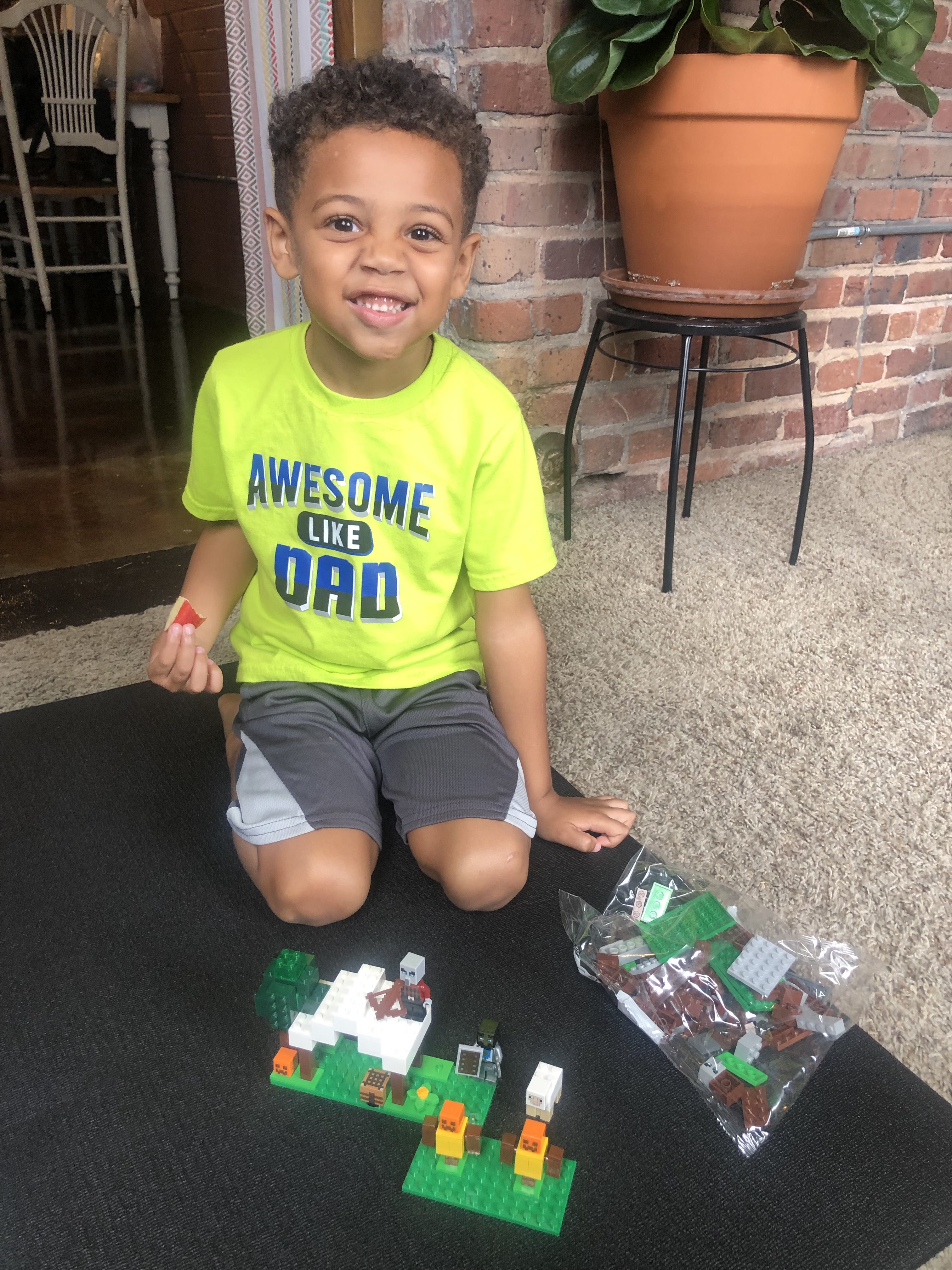
Brees, who has chosen Minecraft [1] as his go-to gaming, is a solitary gamer. While they were over for a pool day, Brees took a break and happily lay on a lounge chair playing Minecraft on his iPad.
Second, Skylar’s gaming and reading journey dramatically reveals the limitations of decoding—notably the danger of assuming that proficiency at reading aloud (words pronounced quickly and clearly) results in comprehension and engagement.
Here I want to stress that without Animal Crossing and an expert mentor (both at the game and reading), Skylar could well have remained at the level of “going through the motions” of reading aloud.
She didn’t hesitate to re-read and work toward comprehension so that she could fully engage in the game.
In other words, literacy is ultimately about autonomy, but it is also a profoundly important aspect of community.
During the Facetime session, Skylar was seeking a mentor to confirm the decisions she was making. Even though she was decoding with comprehension, she kept asking for confirmation that she was navigating the game the right way (or more accurately, a right way).
Before I go further, I want to stress that Skylar clearly has acquired some very powerful decoding strategies based in what most people call “phonics,” but when she is in the real world of gaming, she often comes to situations when those blunt decoding skills are not only inadequate but distracting from the flow of the complicated act of reading and acting on the comprehension.
I also want to stress that watching a 7-year-old play a reading-intensive video game complicates the simplistic and misleading faith placed in “grade level” texts. Like almost all real-world texts, Animal Crossing simply uses words (no concern for “grade level” and no “context clues”), often very common words mixed in with exact vocabulary that is uncommon.
Overly simplistic views of reading and vocabulary tend to conflate the “easy/hard” binary for vocabulary with “common/uncommon.”
Uncommon words that Skylar could not decode, and often has never encountered before, were not “hard” since with a mentor to pronounce and explain the word, Skylar very quickly adapted and with repetition in the game, those words became common to her (and thus, “easy”).
Finally, this experience with my grandchildren, at different stages of development and reading, helps personify some of the significant problems with the “science of reading” (SoR) movement that advocates for the “simple view” of reading and for systematic intensive phonics for all students.
Decoding is a necessary but small aspect of the reading, which ultimately must be an act of comprehension with engagement.
But the SoR movement also will fail our students because it centers systematic programs, silver-bullet thinking, and a misguided emphasis on decoding (and blunt decoding strategies).
However, what all students need and deserve are real-world experiences with and reasons to read.
Those experiences include activities too many people still stigmatize as “bad” for children—comic books, gaming, and even Lego.
Skylar as an emerging independent reader has had some wonderful traditional school experiences, and loving teachers. But her journey to reading is much larger than that, including her current fascination with Animal Crossing.
My beautiful and eager grandchildren are powerful examples that when it comes to teaching reading, nothing is settled and nothing is simple.
Reading is comprehensions and engagement, and as Skylar demonstrates, reading is about community, a shared purpose that is filled with pleasure and the joy of creating without a finish line.
by Cassie J. Brownell – 2021
Background/Context: Educators have considered how Minecraft supports language and literacy practices in the game and in the spaces and circumstances immediately surrounding gameplay. However, it is still necessary to develop additional conceptualizations of how children and youth’s online and offline worlds and experiences are blurred by and through the games. In this study, I take up this call and examine how the boundaries of the digital were blurred by one child as he wrote in response to a standardized writing prompt within his urban fourth-grade classroom.
Purpose/Objective/Research Question/Focus of Study: Through snapshots of Jairo’s writing, I illuminate how he muddled the lines between his physical play experiences and those he had in the virtual world of Minecraft. In doing so, I argue that he carried over his personal interest as a fan of Minecraft into the writing curriculum through creative language play. As Jairo “borrowed” his physical play experiences in the virtual world of Minecraft to complete an assigned writing task, he exemplified how children blur playworlds of physical and digital play in the elementary ELA classroom.
Research Design: Drawing on data generated in an 18-week case study, I examine how one child, Jairo, playfully incorporated his lived experiences in the virtual world of Minecraft into mandated writing tasks.
Conclusions/Recommendations: My examination of his writing is meant to challenge writing scholars, scholars of play, and those engaged in rethinking media’s relation to literacy. I encourage a rethinking of what it means for adults to maintain clear lines of what is digital play and what is not. I suggest adults might have too heavy a hand in bringing play into classrooms. Children already have experiences with play—both physical and digital. We must cultivate a space for children to build on what was previously familiar to them by offering scaffolds to bridge these experiences between what we, as adults, understand as binaries. Children do not necessarily see distinctions between “reality” and play worlds, or between digital and physical play. For children, play worlds and digital worlds are perhaps simply worlds; it is we as adults who harbor a desire for clear boundaries.
Teachers College Record Volume 123 Number 3, 2021, p. –
https://www.tcrecord.org ID Number: 23622, Date Accessed: 9/18/2021 7:46:35 AM
See Also
Talking Points: A Conversation with Paul Thomas
The “Science of Reading”: A Reader for Educators
Fact Checking the “Science of Reading”: A Quick Guide for Teachers
Historical Context
What Shall We Do About Reading Today?: A Symposium ( November 1942, The Elementary English Review, National Council of Teachers of English)
LaBrant, L. (1947, January). Research in language. Elementary English, 24(1), 86-94. Stable URL: http://www.jstor.org/stable/41383425
Doing What Matters Most: Investing in Quality Teaching, Linda Darling Hammond (1997)
Whole Language and the Great Plummet of 1987-92: An Urban Legend from California, Stephen Krashen
Silver Bullets, Babies, and Bath Water: Literature Response Groups in a Balanced Literacy Program, Dixie Lee Spiegel (The Reading Teacher, 1998)
Literacy Crises: False Claims and Real Solutions, Jeff McQuillan
National Reading Panel (NRP)
The Federal Government Wants Me to Teach What?: A Teacher’s Guide to the National Reading Panel Report, Diane Stephens (NCTE, 2008)
Beyond the Smoke and Mirrors: A Critique of the National Reading Panel Report on Phonics, Elaine M. Garan (2001) https://journals.sagepub.com/doi/abs/10.1177/003172170108200705
Babes in the Woods: The Wanderings of the National Reading Panel, Joanne Yatvin, The Phi Delta Kappan, Vol. 83, No. 5 (Jan., 2002), pp. 364-369 https://www.jstor.org/stable/20440142
I Told You So! The Misinterpretation and Misuse of The National Reading Panel Report, Joanne Yatvin (Education Week)
My Experiences in Teaching Reading and Being a Member of the National Reading Panel
“Science of Reading”
Policy Statement on the “Science of Reading” (NEPC)
Perspective | Is there really a ‘science of reading’ that tells us exactly how to teach kids to read?
The Trouble With Binaries: A Perspective on the Science of Reading, David B. Yaden Jr., David Reinking, and Peter Smagorinsky
Where Is the Evidence? Looking Back to Jeanne Chall and Enduring Debates About the Science of Reading, Peggy Semingson and William Kerns
The Sciences of Reading Instruction, Rachael Gabriel (Educational Leadership)
The Science of Reading Progresses: Communicating Advances Beyond the Simple View of Reading, Nell Duke and Kelly B. Cartwright
Science of Reading Advocates Have a Messaging Problem, Claude Goldenberg (Education Week)
MacPhee, D., Handsfield, L.J., & Paugh, P. (2021). Conflict or conversation? Media portrayals of the science of reading. Reading Research Quarterly, TBD. https://doi.org/10.1002/rrq.384
Bowers, J. S., & Bowers, P. N. (2021, January 22). The science of reading provides little or no support for the widespread claim that systematic phonics should be part of initial reading instruction: A response to Buckingham. https://doi.org/10.31234/osf.io/f5qyu
Reading Policy
Red Flags, Red Herrings, and Common Ground: An Expert Study in Response to State Reading Policy
Phonics
Phoney Phonics: How Decoding Came to Rule and Reading Lost Meaning (TCR)
The Phonics Debate: 2004, Stephen Krashen
Defending Whole Language: The Limits of Phonics Instruction and the Efficacy of Whole Language Instruction, Stephen Krashen
Does Phonics Deserve the Credit for Improvement in PIRLS?, Stephen Krashen
Reconsidering the Evidence That Systematic Phonics Is More Effective Than Alternative Methods of Reading Instruction, Jeffrey S. Bowers (2020)
To read or not to read: decoding Synthetic Phonics, Andrew Davis
Cryonics Phonics: Inequality’s Little Helper, Gerald Coles
Grade Retention
UPDATED: Grade Retention Research https://radicalscholarship.wordpress.com/2014/09/04/grade-retention-research/
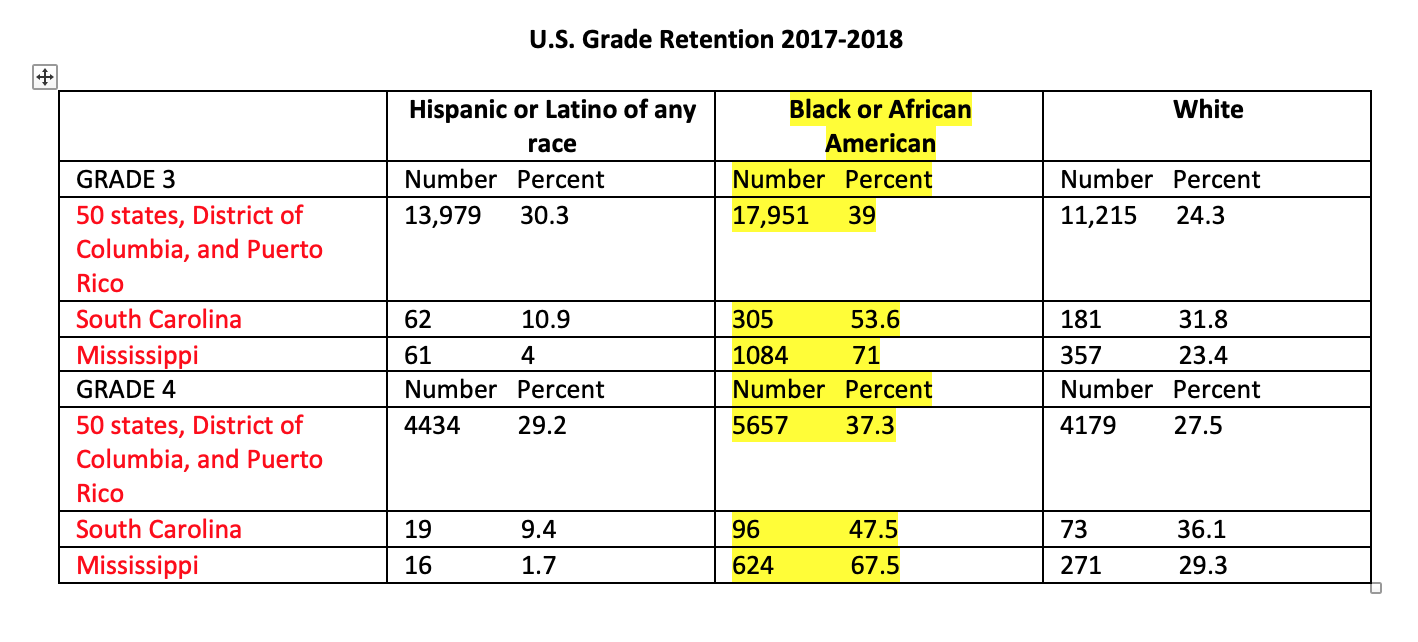
Grade Retention:
Black students disproportionately retained (grades 3 and 4)
(USDOE/Office of Civil Rights) – Data 2017-2018
Dyslexia
An Examination of Dyslexia Research and Instruction, with Policy Implications, Peter Johnston and Donna Scanlon
Research Advisory: Dyslexia (ILA) (2016)
Emerging Bilinguals
Caught in the Crosshairs: Emerging Bilinguals and the Reading Wars (NEPC)
NCTQ
NCTQ on States’ Teacher Evaluation Systems’ Failures, Again
Mississippi
UPDATED: Mississippi Miracle or Mirage?: 2019 NAEP Reading Scores Prompt Questions, Not Answers
Mississippi rising? A partial explanation for its NAEP improvement is that it holds students back
How Do We Know?: Not Simple, Not Settled
In the early to mid-1980s, I entered the world of serious recreational cycling. I had been an athlete throughout my childhood and teen years, but found myself sedentary and out of shape in the first few years of my career as a high school English teacher.
Road cycling wasn’t the most inviting of sports, being both an individual and group endeavor. I quickly discovered, in fact, that cycling is deeply tradition-bound and steeped in ritual and conformity.
Ultimately, it is also an orchestra of Social Darwinism; you must be strong enough and skilled enough to ride with a group regardless of anything else (such as the right bicycle or the proper kit).
Early on, I had to focus on fitness—riding more often and longer, but always alone—and finding ways I could afford ever-better bicycles (see Rule 12). Gradually, I began shaving my legs and made the most daunting commitment facing me, using toe clips on my pedals.

Toe clips were a must among serious cyclists, but they involved literally reaching down and tightening a leather or nylon strap around your feet. The monumental learning curve was reaching down to tighten the straps and always reaching down to flick the release when coming to a stop.
At the time, I lived only a couple miles from my bicycle shop so I rode my bicycle there to buy my first toe clips. They installed the clips to my pedals and went over how to tighten and release.
Filled with glee about my next step toward being a real cyclist, I rolled out of the shop parking lot and promptly came to a stop at a red light where I fell over fairly dramatically beside several cars—having completely forgotten to reach down to loosen the straps.
Just as I had to learn how to shift gears (old-school down-tube friction shifting), I learned to tighten and release the toe clips along with dozens of other behaviors necessary to ride in tight packs of cyclists at high intensity and to near exhaustion.
High-paced group cycling is a mix of many precise behaviors in incredibly tense contexts—from being dropped from the group to being in or causing a serious accident.
That was three decades ago, and today (after many changes to pedals and shifting) I function on a bicycle in ways that seem entirely natural, requiring essentially no thought.

Cycling for me is automatic behavior; I also have acquired an incredible amount of knowledge about bicycles (I do bicycle maintenance and build bicycles) and the history of the sport.
I often think of this journey in learning of mine, which was again prompted by a few exchanges on Twitter:
These comments about what we know and how we know it are common, but, I think, trapped in a misunderstanding about, for example, “rote memorization.”
Memorization and automatic behavior are not about “bad” or “good.” In fact, memorization and automatic behavior are inevitable for most humans, even essential.
The trap can be exposed by considering a behavior most of us have in common—assembling something from parts such as a TV stand or entertainment unit, or a children’s toy.
Do you recall opening the box, spreading out the parts, laying out the directions, and then beginning to assemble? Was there a moment (or several) while assembling when you turned from the directions to look on the box at the image of the fully assembled item?
So here is my point: The Twitter exchange above is trapped in viewing learning in a reductive way based on part-to-whole, easier-to-harder, sequential perceptions of learning.
This singular and reductive view is the trap.
Since most of the items we assemble are a one-time event, that assembly is both learning to assemble and assembling at the same time. (I once assembled a TV stand, badly, and then my in-laws wanted the same stand. The second assembly was a near-euphoric experience since I was able to apply what I had learned from doing the whole thing one time before.)
My journey in cycling and my assembly example here reveal that learning resulting in memorization and automatic behavior is extremely complex and is in fact an interplay between part and whole, not a step-by-step journey from part to whole.
“Breaking it down” is not always easier or clearer for some students, in some learning activities.
Many people learning to use toe straps, for example, would go into a grass field, strap in, and (as I did publicly) fall down repeatedly. Learning the real thing required doing the whole and real thing relatively badly until they improved (motivated by real consequences).
There is no debate, then, about the good or bad in memorization or automatic behavior. The real tension is about how and why we come to memorize or behave automatically.
Despite misleading claims that memorization is a foundation, we often come to know something, have it memorized, after (not before) we have rich and complex experiences with the knowledge or behavior.
In my doctoral program, I had to perform from memory in two intense settings—written comps and dissertation defense. I studied for neither because I had engaged with the material for so long and in such intense situations (course work, numerous papers, a full dissertation) that I had much of the material in recall.
Twenty-five-plus years later, much of that dissertation work remains in recall for me.
Like with cycling, my final doctoral work felt natural, as much a part of me as pedaling with my hands off the handlebars while I remove my cycling vest and stuff it into a rear pocket while sitting at the back of a high-paced group.
The quests for silver-bullets and simple step-by-step paths to learning and automatic behavior are at the core of many educational debates, in fact, including the incessant reading debate.
The complexity of cycling reminds me of the complexity in reading—the many interconnected behaviors and knowledge required to do both automatically and well.
Reading, learning to read, and teaching someone to read—like all learning—are not simple and how we come to know is just not settled.
In fact, learning will never be simple or settled because human beings are far too complex.
The paradox, of course, is that how we know is simple to explain: It is some type of interplay between doing the whole thing we want to learn and coming to know the many intricate parts that make up that whole thing.
How do we know?
It is a journey—not simple, not settled.
Reimagining the Teaching of English
Published in The High School Journal (May 1951) by Dorothy McCuskey, a review of Lou LaBrant‘s most comprehensive work on teaching English, We Teach English, concluded: “In short, this is no ‘how to teach’ book. Rather, it is a book which will cause the reader to re-examine the bases of his [sic] teaching methods and the content of his [sic] courses.”
LaBrant was a demanding teacher and scholar with a career as a teacher of English from 1906 until 1971. And one of the defining features of that career was her persistent challenges to how teachers taught the field labeled, then, as “English.”
The field traditionally called “English” has evolved over the years, often at the K-12 level being envisioned as English/Language Arts (ELA) or simply Language Arts.
Nelson Flores, at The Educational Linguist, recently confronted “Language Arts” as a descriptor or teaching English:
Schools often teaches courses called Language Arts. Yet, little actual art happens in most of these classrooms. Instead, language is often treated as a static set of prescriptivist rules that children are expected to master and mimic back to their teacher. This is not an exploration of the art of language. This is linguistic oppression.
How about we actually bring the art of language into Language Arts?
Concurrent with this post from Flores, I argued that students must unlearn to write in order to write well at the college level and shared on Twitter the baggage students bring to college, what they must unlearn:
Having been a high school English teacher for almost two decades and then a teacher educator focusing on ELA and a first-year composition professor for an additional two decades, I carry on LaBrant’s tradition of mostly swimming against the tide of tradition in terms of what counts as “teaching English.”
Students majoring in the humanities, specifically English, has declined significantly—”History is down about 45 percent from its 2007 peak, while the number of English majors has fallen by nearly half since the late 1990s”—prompting many colleges and universities to reconsider and even cut those majors and departments.
We are well past time, I think, the need to reimagine the teaching and fields of English/ELA for K-16.
At one level, English/ELA includes a complex challenge since teachers and professors in that singular field/discipline are often tasked with addressing a wide range of content included in literature and literacy (reading/writing). Bluntly put, teaching English/ELA is a herculean, nearly impossible task.
If we teachers of English/ELA are to be successful in covering literature and literacy K-16, any success found in our students is necessarily cumulative over many, many years. This is no trivial point, and not mere metaphor, but when teaching or learning literature and literacy, there is no finish line.
While I firmly believe we must distinguish between the teaching of literature and literacy, specifically between teaching literature and composition/writing, I also recognize that the myriad aspects of literacy are inherently recursive, symbiotic: learning to read is learning to write; learning to write is learning to read.
For people learning to teach, for example, high school English/ELA (courses that are designed to address both literature and literacy [reading/writing]), majoring in English often proves to be inadequate since English as a discipline at the university level tends to be literature based, often very narrow in course content (an entire semester on William Butler Yeats, for example).
Yes, English majors tends to write a great deal, but writing literary analysis or even so-called creative writing does not prepare a person to teach writing. In higher education, English (literature) and composition are distinct and separate fields.
To emphasize my point, when I was teaching American literature for high school students and as I teach first-year writing at my university, bringing texts into class has completely different purposes; it isn’t that both sets of students aren’t learning reading and writing in the courses, but that we are interrogating texts for significantly distinct purposes.
Literary analysis and reading like a writer are complex but different behaviors for students with different purposes and outcomes.
In fact, literary analysis is a discipline-based type of writing that demands unique moves and conventions than other discipline-based writing, such as in history, psychology, or the sciences.
I spent 18 years teaching high school English and have spent a bit longer now preparing candidates to teach high school English/ELA. I can attest without hesitation that expectations for K-12 English/ELA are excessive, inherently impossible.
While I don’t want to linger on the problems with teaching math, I do want to note that math tends to acknowledge the unique aspects within the field since students take sequences and more clearly delineated courses (geometry, Algebra I, Algebra II, calculus, etc.) that have mathematical principles in common throughout while maintaining the distinct features of each course.
With math (and the sciences), we recognize that a geometry teacher may be ill equipped to teach algebra (or a chemistry teacher, ill equipped to teach biology), but we tend to see English/ELA teachers as a monolithic monstrosity.
Somehow, with only a bachelors degree and at the tender age of 22, I was deemed capable of teaching American and British literature as well as writing to my high school students, but college professors several years older than that and armed with doctoral degrees are hired in English departments to teach Elizabethan drama (and such candidates often wave off requests that they take on first-year composition as well since, well, they aren’t trained to do that).
Sure, professors at the college level teach outside their specialities, but this is seen as a stretch, and not the norm or ideal. And when professors are tasked to work outside their areas of specialization, outcomes are often disappointing (my university decided years ago any professor could teach first-year writing—until it became abundantly clear that that is certainly not true).
Since a significant percentage of my college teaching load is now first-year and upper-level writing, I witness the harm done to students at the K-12 level and the inadequacies at the university level for writing instruction, historically a shunned cousin of the field of English since, I think, composition is viewed as mere teaching (and we all know the status of the field of education in academia).
Students need and deserve in K-16 schooling courses and teachers/professors properly equipped to teach both literature and literacy (specifically writing), but not simultaneously.
English/ELA must be reimagined as a complex field with symbiotic but distinct elements that require time and patience for both teaching and learning—and a much greater respect for the complexity and difficulty involved in teaching any of those different areas.
Writing in 1939 about the experimental program at the Ohio State University High School, LaBrant posed a similar argument:
That not all teachers are, however, equally skilled in assisting with all phases of language experiences, as, for example with personal or creative writing or with leisure reading; and consequently that students need a so-called “English” teacher who will assume certain specialized responsibilities and who will, in addition, study the general language growth of individual students and classes, and see that, as far as possible, adequate and balanced growth takes place. (p. 269)
An English Program Based on Present Needs
At OSU, the University School recognized that a team of teachers with unique training and strengths needed to work together in order to address that “language growth and study are to be expected in all phases of school experience”—not simply laid at the feet of the English teacher.
It’s 2021, and “we teach English” needs to mean something more complex than it does currently, something similar to a nearly forgotten experiment in the early twentieth century where LaBrant practiced what she preached.

Dismantling the “Science of Reading” and the Harmful Reading Policies in its Wake [UPDATED]
[Header Photo by Nick Fewings on Unsplash]
After emailing me about new reading legislation being proposed in North Carolina—next door to my home state of South Carolina that also has jumped on the “science of reading” bandwagon—Ann Doss Helms of WFAE (NPR, Charlotte, NC) interviewed me by phone.
I have given dozens of interviews about education over the last 15 to 20 years, and they all have a similar pattern; the journalist tosses out predictable questions and then becomes somewhat disoriented by my answers. Typically, the journalist at some point notes they didn’t know or had never heard the information I offered, the context and complications I raised about the topic.
My conversation with Helms was no different as we gradually peeled back the layers of the onion that is the “science of reading” as well as the very harmful reading policies that are being proposed and adopted in its wake.
Over the past couple years, I have blogged almost nonstop and written a book on the “science of reading” media narrative and how it is oversimplified and misleading but very compelling and harmful since state after state is adopting deeply flawed reading legislation (often, as Helms noted, to mimic Mississippi).
As I explained, the “science of reading” movement is grounded in the media and parent advocacy (specifically focusing on dyslexia)—advocates who have no expertise or background in literacy—but is essentially a thinly veiled resurrection of the tired intensive phonics versus holistic approaches to teaching reading.
Part of our conversation also confronted the contradiction in the “science of reading” movement that forefronts the debunked claim of “settled science” around how to teach reading and then supports actions and policies that have no scientific support—notably grade retention and using Mississippi as a justification for polices absent any research behind the claimed NAEP improvements by that state.
Further, the “science of reading” movement and those using the “science of reading” to promote state-level reading policy also rely on discredited (read “bad science”) sources such as NCTQ or misrepresent contested sources such as the National Reading Panel (see here).
The “science of reading” movement is deja vu all over again since the movement looks essentially like many other education reform patterns that have all failed (as many of us said they would) because they misunderstand the problem and grasp for silver-bullet solutions—all wrapped in a media and political frenzy that is almost impossible to stop. The trash heap of failure includes Teach for America, charter schools, accountability driven by standards and high-stakes testing, the NRP and Reading First, value-added methods of teacher evaluation and merit pay, and many others.
States adopting truly awful reading policy driven by the “science of reading” slogan will not change reading in the U.S., and in time, very soon, in fact, the media and political leaders will be, once again, lamenting a reading crisis.
While it may be too little, too late since states are racing to pass essentially the same reading legislation across the U.S., many scholars are carefully dismantling the “science of reading” movement in ways that support my claims over the past two years.
Here, then, are three I recommend for anyone needing further proof that the “science of reading” is yet another bandwagon we should avoid:
An Examination of Dyslexia Research and Instruction, with Policy Implications, Peter Johnston and Donna Scanlon
Currently, there is a well-organized and active contingent of concerned parents and educators (and others) who argue that dyslexia is a frequent cause of reading difficulties, affecting approximately 20 percent of the population, and that there is a widely-accepted treatment for such difficulties: an instructional approach relying almost exclusively on intensive phonics instruction. Proponents argue that it is based on “settled science” which they refer to as “the science of reading” (SOR). The approach is based on a narrow view of science, and a restricted range of research, focused on word learning and, more recently, neurobiology, but paying little attention to aspects of literacy like comprehension and writing, or dimensions of classroom learning and teacher preparation. Because the dyslexia and instructional arguments are inextricably linked, in this report, we explore both while adopting a more comprehensive perspective on relevant theory and research.
Johnston, P., & Scanlon, D. (2021). An Examination of Dyslexia Research and Instruction With Policy Implications. Literacy Research: Theory, Method, and Practice, 70(1), 107–128. https://doi.org/10.1177/23813377211024625
Johnston and Scanlon answer 12 questions and then offer these important policy implications (quoted below):
- There is no consistent and widely accepted basis – biological, cognitive, behavioral, or academic – for determining whether an individual experiencing difficulty with developing word reading skill should be classified as dyslexic. (Questions 1 and 10).
- Although there are likely heritable and biological dimensions to reading and language difficulties, there is no way to translate them into implications for instructional practice. (Questions 2 and 11).
- Good first instruction and early intervention for children with a slow start in the word reading aspect of literacy, reduces the likelihood they will encounter serious difficulty. Thus, early screening with assessments that can inform instruction, is important. Screening for dyslexia, particularly with instructionally irrelevant assessments offers no additional advantage. (Questions 5 and 6).
- Research supports instruction that purposely develops children’s ability to analyze speech sounds (phonological/phonemic awareness), and to relate those sounds to patterns of print (phonics and orthographics), in combination with instruction to develop comprehension, vocabulary, fluency, and a strong positive and agentive relationship with literacy. (Questions 7 and 12).
- Evidence does not justify the use of a heavy and near-exclusive focus on phonics instruction, either in regular classrooms, or for children experiencing difficulty learning to read (including those classified as dyslexic). (Questions 7, 8 and 12).
- Legislation (and district policies) aligned with the SOR perspectives on dyslexia will necessarily require tradeoffs in the allocation of resources for teacher development and among children having literacy learning difficulties. These tradeoffs have the potential to privilege students experiencing some types of literacy learning difficulties while limiting instructional resources for and attention available to students whose literacy difficulties are not due (exclusively) to word reading difficulties. (Question 12).
The Trouble With Binaries: A Perspective on the Science of Reading, David B. Yaden Jr., David Reinking, and Peter Smagorinsky
In this article, we critique the science of reading when it is positioned within the reading wars as settling disagreements about reading and how it should be taught. We frame our argument in terms of troublesome binaries, specifically between nature and nurture. We interpret that binary in relation to Overton’s distinction between split and relational metatheories, with the latter suggesting a more integrative view of nature and nurture. Focusing on the nature side of the binary, which predominates when the science of reading is promoted in the reading wars, we argue that its singular focus limits the range of scientific inquiry, interpretation, and application to practice. Specifically, we address limitations of the science of reading as characterized by a narrow theoretical lens, an abstracted empiricism, and uncritical inductive generalizations derived from brain‐imaging and eye movement data sources. Finally, we call for a relational metatheoretical stance and offer emulative examples of that stance in the field.
Yaden, D.B., Reinking, D., & Smagorinsky, P. (2021). The Trouble With Binaries: A Perspective on the Science of Reading. Read Res Q, 56(S1), S119– S129. https://doi.org/10.1002/rrq.402
Note the strong conclusion to this piece:
Unfortunately, we believe that in many cases, the cloak of science has been employed to elevate the stature of SOR work and to promote the certainty and force of its advocates’ preferred explanations for what reading is and how it should be taught (e.g., Gentry & Ouellette, 2019; Schwartz & Sparks, 2019). What we suggested in this article is that the SOR, when so used in the reading wars, is not science at all in its fullest sense. It neglects an entire domain that influences and shapes human experience. It does so with an unmitigated confidence that evidence from one side of a binary can establish a final truth and that such a truth creates a single prescription for all instruction. Taking that stance, however, is outside the pale of science and dismisses work that has both merit on its own terms and a critical role in advancing the aims motivating reading research and instruction.
Where Is the Evidence? Looking Back to Jeanne Chall and Enduring Debates About the Science of Reading, Peggy Semingson and William Kerns
In this historical analysis, we examine the context of debates over the role of phonics in literacy and current debates about the science of reading, with a focus on the work and impact of the late literacy scholar Jeanne Chall. We open by briefly tracing the roots of the enduring debates from the 19th and 20th centuries, focusing on beginning reading, decoding, and phonics. Next, we explore insights drawn from the whole language movement as understood by Kenneth Goodman and Yetta Goodman, as well as a synthesis of key ideas from Chall’s critique of the whole language approach. We then analyze the shifts across the three editions of Chall’s Learning to Read: The Great Debate and summarize major ideas from her body of work, such as the stage model of reading development. We suggest that reading instruction should be informed by a broader historical lens in looking at the “science of reading” debates and should draw on a developmental stage model to teaching reading, such as the six‐stage model provided by Chall. We describe implications for educators, textbook publishers, researchers, and policymakers that address the current reading debates and provide considerations of what Chall might say about learning to read in a digital era given the pressures on teacher educators and teachers to align their practice with what is deemed to be the science of reading.
Semingson, P., & Kerns, W. (2021). Where Is the Evidence? Looking Back to Jeanne Chall and Enduring Debates About the Science of Reading. Read Res Q, 56(S1), S157– S169. https://doi.org/10.1002/rrq.405
UPDATE 1
From the very beginning of the “science of reading” movement, media coverage, parental advocacy, and political policy have been misleading and grounded in misunderstanding. As the examples above show, there continues to be a steady dismantling of all that even as policy has been adopted and is being considered, policy that is fundamentally not “scientific” and will prove to be ineffective and even harmful.
Below are some additional examples of the dismantling that I highly recommend:
Some NC Leaders Say Mississippi’s Model Charts The Way To Helping Kids Read, Ann Doss Helms (WFAE)
The Sciences of Reading Instruction, Rachael Gabriel (Educational Leadership)
When it comes to reading instruction, an “all or nothing” approach is actually unscientific.
Every January, my social media feeds fill with ads, free trials, and coupons from the diet and wellness industry, promising to help me with my (presumed) resolutions to be better, faster, leaner, and healthier. Every diet program claims some type of relationship to science.
The same is true with reading instruction. Most programs or approaches claim to be based on “science.” But consider the many possible meanings of this claim. Some approaches to reading instruction are developed as part of rigorous, peer-reviewed research and are continuously evaluated and refined. Others are designed by practitioners who draw on experience, and whose insights are validated by inquiry after development. Many are based on well-known principles from research or assumptions about learning in general, but haven’t themselves been tested. Some “research-based” instructional tools and practices have been shared, explained, interpreted, misinterpreted, and re-shared so many times that they bear little resemblance to the research on which they were based (Gabriel, 2020). Others rack up positive evidence no matter how many times they’re studied. Then there are practices that have no evidence behind them but are thought to be scientific—because they’ve always been assumed to be true.
The Sciences of Reading Instruction – Educational Leadership May 2021, pp. 58-64
The Science of Reading Progresses: Communicating Advances Beyond the Simple View of Reading, Nell Duke and Kelly B. Cartwright
ABSTRACT
The simple view of reading is commonly presented to educators in professional development about the science of reading. The simple view is a useful tool for conveying the undeniable importance—in fact, the necessity—of both decoding and linguistic comprehension for reading. Research in the 35 years since the theory was proposed has revealed additional understandings about reading. In this article, we synthesize research documenting three of these advances: (1) Reading difficulties have a number of causes, not all of which fall under decoding and/or listening comprehension as posited in the simple view; (2) rather than influencing reading solely independently, as conceived in the simple view, decoding and listening comprehension (or in terms more commonly used in reference to the simple view today, word recognition and language comprehension) overlap in important ways; and (3) there are many contributors to reading not named in the simple view, such as active, self-regulatory processes, that play a substantial role in reading. We point to research showing that instruction aligned with these advances can improve students’ reading. We present a theory, which we call the active view of reading, that is an expansion of the simple view and can be used to convey these important advances to current and future educators. We discuss the need to lift up updated theories and models to guide practitioners’ work in supporting students’ reading development in classrooms and interventions.
Duke, N.K., & Cartwright, K.B. (2021). The Science of Reading Progresses: Communicating Advances Beyond the Simple View of Reading. Read Res Q, 56(S1), S25– S44. https://doi.org/10.1002/rrq.411
NOTE: The short version of the Duke and Cartwright essay should be: The “science of reading” is not so simple and not so settled.
Science of Reading Advocates Have a Messaging Problem, Claude Goldenberg (Education Week)
What is happening in this new stage of the reading wars is there for all to see in North Carolina’s and others’ use of the phrase. Instead of spelling out what they mean, “science of reading” advocates wrap themselves in the protective mantel of science, as if invoking science is all that anyone needs to be credible and persuade others to join them. Anyone disagreeing is anti-science, i.e., ignorant.
This is not a great persuasion strategy. Not surprisingly, those from a different vantage point argue that no one has a right to define science in a way that conveniently fits their perspective.
The Politics of Phonics: How a skill becomes a law, David Waters
UPDATE 2
VI. Recommendations
The “Read to Succeed” Act ultimately did not pass during Kentucky’s 2021 legislative session. However, given that state legislators have introduced early literacy bills multiple times in recent years, it is likely that the state may see similar proposals in coming years. Further, given the rapid spread of these policies across states in recent decades, the considerations discussed here will be relevant to policymakers in other states interested in third-grade literacy legislation. Though many states have already enacted early literacy legislation, policymakers need not adhere to a one-size-fits-all approach to improving third-grade literacy achievement. State policymakers can learn from the research, described above, that has been conducted to this point about these policies. I offer three specific recommendations for policymakers to consider as they strive to ensure the efficacy of third-grade literacy policies moving forward:
• Instead of limiting the legislation to the “Big Five” components of reading, include a set of instructional best practices in literacy.
• Ensure initial, ongoing, and targeted professional development in literacy for K-3 teachers.
• Show educators that their expertise is valued by involving them in the development of the policy. This can be done by soliciting feedback through an open online comment period, conducting focus groups with a representative group of K-3 educators, and/or involving educators in the creation of various components of the policy.
Cummings, A.. (2021). Making early literacy policy work in Kentucky: Three considerations for policymakers on the “Read to Succeed” act. Boulder, CO: National Education Policy Center. https://nepc.colorado.edu/publication/literacy
Red Flags, Red Herrings, and Common Ground: An Expert Study in Response to State Reading Policy
Abstract
In many U.S. states, legislation seeks to define effective instruction for beginning readers, creating an urgent need to turn to scholars who are knowledgeable about ongoing reading research. This mixed-methods study considers the extent to which recognized literacy experts agreed with recommendations about instruction that were included on a state’s reading initiative website. Our purpose was to guide implementation and inform policy-makers. In alignment with the initiative, experts agreed reading aloud, comprehension, vocabulary, fluency, phonological awareness, and phonics all deserve a place in early literacy instruction. Additionally, they agreed some components not included on the website warranted attention, such as motivation, oral language, reading volume, writing, and needs-based instruction. Further, experts cautioned against extremes in describing aspects of early reading instruction. Findings suggest that experts’ knowledge of the vast body of ongoing research about reading can be a helpful guide to policy formation and implementation.
Collet, Vicki S.; Penaflorida, Jennifer; French, Seth; Allred, Jonathan; Greiner, Angelia; and Chen, Jingshu (2021) “Red Flags, Red Herrings, and Common Ground: An Expert Study in Response to State Reading Policy,” Educational Considerations: Vol. 47: No. 1. https://doi.org/10.4148/0146-9282.2241
UPDATE 3
Marissa J. Filderman, Christy R. Austin, Alexis N. Boucher, Katherine O’Donnell, Elizabeth A. Swanson
Abstract
Informed by theories of reading comprehension and prior reviews of reading comprehension intervention, this meta-analysis uniquely contributes to the literature because it describes the relative effects of various approaches to comprehension intervention for struggling readers in Grades 3 through 12. Findings from 64 studies demonstrate significant positive effects of reading comprehension intervention on comprehension outcomes (g = .59, p < .001, 95% confidence interval [CI] [0.47, 0.74], τ2 = .31). A metaregression model indicated significantly higher effects associated with researcher-developed measures, background knowledge instruction, and strategy instruction, and significantly lower effects associated with instructional enhancements. Grade level, metacognitive approaches, and study quality did not moderate effects. Findings support the use of background knowledge instruction and strategy instruction to support comprehension of struggling readers in upper elementary and beyond.
Theoretical models, such as the simple view of reading (Gough & Tunmer, 1986), the direct and inferential mediation (DIME) model (Cromley et al., 2010; Cromley & Azevedo, 2007), and the cognitive model (McKenna & Stahl, 2009) inform the constructs and skills that contribute to reading comprehension. The simple view of reading (Gough & Tunmer, 1986) describes reading comprehension as the product of decoding and language comprehension. The simple view of reading is often used to underscore the critical importance of decoding on reading comprehension; however, evidence suggests that the relative importance of decoding and language comprehension changes based on students’ level of reading development and text complexity (Lonigan et al., 2018). Cross-sectional and longitudinal studies demonstrate that decoding has the largest influence on reading comprehension for novice readers, whereas language comprehension becomes increasingly important as students’ decoding skills develop and text becomes more complex (e.g., Catts et al., 2005; Gough et al., 1996; Hoover & Gough, 1990; Proctor et al., 2005; Tilstra et al., 2009). However, the simple view of reading does not comprehensively explain all skills that influence reading comprehension, nor does it inform what comprehension instruction requires.
The DIME model of reading (Cromley et al., 2011; Cromley & Azevedo, 2007) and cognitive model (McKenna & Stahl, 2009) build upon the simple view of reading as component-based models. The relationship between five variables—background knowledge, inference, strategies, vocabulary, and word reading—are hypothesized to result in reading comprehension according to the DIME model. Word reading, vocabulary, and background knowledge each have direct effects on reading comprehension. However, the effect of word reading, vocabulary, and background knowledge on reading comprehension is also mediated by other variables. Indirectly, background knowledge and vocabulary are needed to use comprehension strategies or to draw inferences (Ahmed et al., 2016). The cognitive model (McKenna & Stahl, 2009) also breaks reading comprehension into its component parts. According to the cognitive model, reading comprehension is made possible by automatic word recognition, language comprehension, and strategic knowledge. The model further delineates specific skills contributing to each of these components of reading comprehension. For successful language comprehension to occur, vocabulary, background knowledge, and knowledge of text structures are needed. General purposes for reading, specific purposes for reading, and knowledge of strategies contribute to strategic knowledge. In summary, both the DIME model and the cognitive model provide greater insight into specific constructs and skills required for reading comprehension that can be targeted instructionally in comprehension intervention.
Filderman, M. J., Austin, C. R., Boucher, A. N., O’Donnell, K., & Swanson, E. A. (2022). A Meta-Analysis of the Effects of Reading Comprehension Interventions on the Reading Comprehension Outcomes of Struggling Readers in Third Through 12th Grades. Exceptional Children, 88(2), 163–184. https://doi.org/10.1177/00144029211050860
UPDATE 4
Focus on phonics to teach reading is ‘failing children’, says landmark study
Reading wars or reading reconciliation? A critical examination of robust research evidence, curriculum policy and teachers’ practices for teaching phonics and reading, Dominic Wyse and Alice Bradbury
Abstract
Teaching children to read is one of the most fundamental goals of early years and primary education worldwide, and as such has attracted a large amount of research from a range of academic disciplines. The aims of this paper are: (a) to provide a new critical examination of research evidence relevant to effective teaching of phonics and reading in the con-text of national curricula internationally; (b) to report new empirical findings relating to phonics teaching in England; and (c) examine some implications for policy and practice. The paper reports new empirical findings from two sources: (1) a systematic qualitative meta-synthesis of 55 experimental trials that included longitudinal designs; (2) a survey of 2205 teachers. The paper concludes that phonics and reading teach-ing in primary schools in England has changed significantly for the first time in modern history, and that compared to other English dominant regions England represents an outlier. The most robust research evidence, from randomised control trials with longitudinal designs, shows that the approach to phonics and reading teaching in England is not sufficiently under-pinned by research evidence. It is recommended that national curriculum policy is changed and that the locus of political control over curriculum, pedagogy and assessment should be re-evaluated.
Wyse, D., & Bradbury, A. (2022). Reading wars or reading reconciliation? A critical examination of robust research evidence, curriculum policy and teachers’ practices for teaching phonics and reading. Review of Education, 10, e3314. https://doi.org/10.1002/rev3.3314
Key points:
The key question that we address in this paper is whether robust research evidence sup-ports this historically significant change in reading pedagogy. Our findings from analysis of tertiary reviews, systematic reviews and from the SQMS do not support a synthetic phonics orientation to the teaching of reading: they suggest that a balanced instruction approach is most likely to be successful. They also suggest the need for a new more careful consideration of the strengths and weaknesses of whole language as an orientation to teaching reading. The reading wars have often resulted in some very dismissive attitudes to whole language, a position that is not underpinned by the research. Although there remains no doubt that phonics teaching in general is one important component in the teaching of reading, the research certainly does not suggest the complete exclusion of whole language teaching….
In addition to the importance of contextualised reading teaching as an evidence-based orientation to the teaching of reading we hypothesise the following pedagogical features that are likely to be effective. Phonics teaching is most likely to be effective for children aged five to six. Phonics teaching with children younger than this is not likely to be effective. A focus on whole texts and reading for meaning, to contextualise the teaching of other skills and knowledge, should drive pedagogy. Classroom teachers using their professional judgement to ensure coherence of the approach to teaching phonics and reading with other relevant teaching in their classroom is most likely to be effective. Insistence on particular schemes/basals, scripted lessons, and other inflexible approaches is unlikely to be optimal. Well-trained classroom assistants, working in collaboration with their class teachers, could be a very important contribution to children’s reading development. Although the most relevant studies in the SQMS showed approaches that were effective usually from between 9.1 h and 60 h of teaching time, we hypothesise that effective teaching of the alphabetic code could be delivered in 30 h or less of instruction time. If so, this would mean that greater emphasis on aspects such as reading comprehension could begin much earlier in England’s national curriculum programmes of study than in the current national curriculum of 2014.
DOI: 10.1002/rev3.3314
Is Synthetic Phonics Instruction Working in England? (Updated)

Letter to the Editor: Tennessee Poised to Fail Students
In response to Third grade retention law causing suburban superintendents angst, I submitted the following letter to the editor (published HERE):
While it is increasingly popular across the US to pass third-grade retention laws as part of larger reading policies, often under the guise of the “science of reading,” there are decades of research showing that grade retention is extremely harmful to children, especially minoritized students and students living in poverty.
The National Council of Teachers of English (NCTE), the largest organization of English teachers in the US, “oppose[s] legislation mandating that children, in any grade level, who do not meet criteria in reading be retained” and “oppose[s] the use of high-stakes test performance in reading as the criterion for student retention.”
As well, the National Education Policy Center (Boulder, CO) has issued a policy brief warning that states “[s]hould not adopt ‘ends justify the means’ policies aimed at raising reading test scores in the short term that have longer-term harms (for example, third-grade retention policies).” Further, states “[s]hould not prescribe a narrow definition of ‘scientific’ or ‘evidence-based’ that elevates one part of the research base while ignoring contradictory high-quality research.”
Tennessee must not fall prey to trendy political gimmicks that harm children and do not address the needs of those children learning to read.
Correcting Course on Correctness in English/ELA
My granddaughter is six, in the first grade, and currently in the throes of learning to read—as commanded by formal schooling. Recently, she has shown some of those typical bursts of improvement I have witnessed in learning by young children; those moments give meaning to the word “marvelous.”
In an effort to inject some joy into my granddaughter’s reading journey, I have given her some comic books (a medium that was central to my own journey to being a voracious reader and writer). I was concerned that the text and format of a comic book would be beyond her, but she loves to make her own books, which are heavily picture-oriented to tell stories, so I thought even if she couldn’t read comic books, they would be very appealing to her own hobby.
But what surprised me was when she picked up a graphic novel of Marvel’s Spider-Gwen, she immediately began reading quite well—until she hit very commonly used wording and words that aren’t served well by structured phonics; she stumbled over “gonna” and “wanna,” but was really thrown by “MJ” as the way characters refer to Mary Jane Watson.
Having been taught formally how to read in an environment grounded in correctness, my granddaughter stumbles over the far more prevalent language usage in the real world.
This tension is represented well by the fate of the pronoun “they” (and its forms); “they” for centuries has served in the real-world of speaking English as a gender-neutral singular pronoun even as so-called standard English has persisted in tossing that usage into the “incorrect” bin (although this nonsense is finally losing momentum in formal formats).
For more than a century, the field of English/ELA has resisted real-world language usage and awareness and preferred training children in language acquisition through systems of correctness (phonics rules and grammar rules). Teaching that is grounded in rules and correctness appears to be easier because that approach contributes to control and simplistic forms of assessment and grading, but approaching language through correctness is a dis-service to children and language.
Even though there are increasingly important calls for de-emphasizing correctness in English/ELA, such as the Conference on College Composition and Communication (CCCC)’s call for Black linguistic justice, those of us who teach reading, literature, or writing face an incredibly complex paradox—the challenge of fostering in students a healthy and valid view of language while also raising their awareness of the politics of language (that dialects such as so-called standard English, for example, do carry political weight in the real world even though it shouldn’t).
Boland and Queen address the tyranny of correctness in the real world in their Why grammar mistakes in a short email could make some people judge you. Here they investigate why “readers judged strangers harshly simply because of writing errors”—themselves using language of “correctness” (“errors”).
Every semester when I once again address issues surround formatting (citation styles, submitting assignments), I must confront the tyranny of correctness in terms of not wanting to perpetuate the unhealthy culture of correctness while also wanting my students to be aware of the power of correctness so that they have power over their language use instead of being victims of the “error hunt.”
Here, then, are some of the ever-evolving ways I am trying to navigate the tensions in teaching language against the tyranny of correctness:
- De-grade correctness and formatting related to language. Removing grades and punishment allows a teacher still to address language use and shifts the focus to editing and away from correcting.
- Change the language we use about language. I avoid “correct/incorrect,” “right/wrong,” and any reference to “fixing” or “correcting” when I mean “revising” or “editing.”
- Use minimum expectations that move issues of correctness and formatting outside the more substantive elements of language usage. I often have students submit early drafts to address formatting (such as the working references list for a cited essay) well before submitting the essay for my feedback.
- Examine all dialects and forms of language as powerful and complex language while also interrogating the politics of dialects, including that “standard English” exists and why it exists. Student awareness about the growing debate to de-center standard English is the least we can do in English/ELA on the path to actually de-centering it.
- Foster a culture of purposefulness instead of a culture of rules. When we examine, for example, the arcane formatting guidelines involved in formal citation, I try to emphasize not that this or that format is “right,” but that formal writing needs to exhibit purposefulness by the writer as part of their credibility and authority. A submitted essay with two or three fonts and font sizes appears careless, for example, and diminishes the reader’s trust in the purposefulness of the writer.
- Shift all explorations of language to discovery instead of complying with correctness. This, as I noted about my ploy with my granddaughter, is about the joy and wonder of language usage. Once we set aside corrupted and debasing beliefs about “good” or “bad” language (especially that one dialect is more or less rich than another), we allow students to engage with all language in healthy and complex ways.
I became a reader and writer vey heavily influenced by collecting and reading comic books, where the text is not simply formatted on the page and where artwork provides a substantial percentage of the textual meaning. My granddaughter has been zipping through reading aloud from children’s books or her homework worksheets (often designed to match the culture of correctness). But comic books and even signage have proven that correctness falters in the real world.
For far too long English/ELA classes and teachers have been associated with a hostility toward language (and students) because of a culture of correctness; our fields have also been too often disengaged with the real world, where WandaVision is more compelling than Shakespeare.
If we love language and our students, we must correct course on correctness in English/ELA.