

[Header Photo by CDC on Unsplash]
Note
I entered the classroom as a high school English teacher somewhat ominously in 1984, an academic year when Orwell’s classic was increasingly assigned but also when in South Carolina, where I taught, the high-stakes accountability era began with a vengeance.
From 1995 until 1998, I completed an EdD in Curriculum and Instruction while teaching full-time and even taking on some adjunct work at local colleges. Unlike most of those in my EdD cohort, I have no plans to leave K-12 teaching once I graduated from the program.
However in 2002, my former high school English teacher, Lynn Harrill (whose position I had taken where I was teaching English), left his position at Furman University, which was within driving distance for me. In a flurry of a few weeks, I was offered the job, and frankly, I had almost no idea what committing to teacher education would entail.
To be blunt, teacher education was incredibly frustrating and disappointing because much of my work was bureaucracy—nearly endless cycles of new standards and documenting that we were addressing those standards. Accreditation and certification rendered the quality of teaching pre-service teacher to teach a mere ghost of what we wanted to do, what we were capable of doing.
I have written before about how and why teacher education struggles both to foster new teachers and to challenge misleading and inaccurate (mostly by politicians, media, and pundits) attacks about the failures of teacher education, teachers, students, and public schools (see more HERE).
The piece below represents my uncomfortable position in teacher education because I believe in teacher education as a field and degree but am at least skeptical if not cynical about accreditation/certification.
It seems my time in teacher education has come to a close (my department is transitioning away from teacher certification toward education studies), and since the piece below failed to find a journal home, I am offering it here (and I also prefer open-access).
This is a complicated topic, but I hope this does a fair job because I do love teachers of all kinds and find the “bad teacher” myth one of the most misguided narratives in the US.
Teacher Education in (Another) Era of the “Bad Teacher” Myth
P.L. Thomas, Furman University
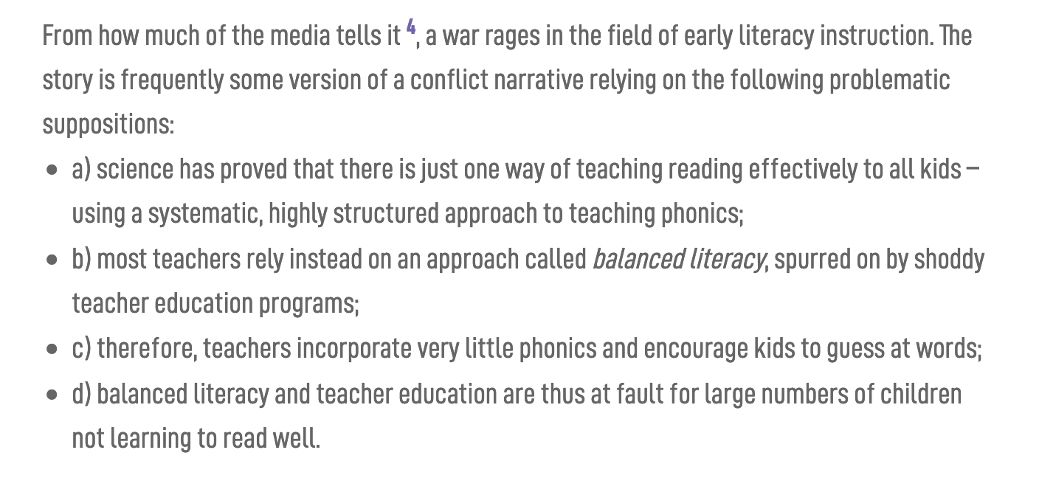
In 2018, a simplistic but compelling story was established: Teachers do not know how to teach children to read because teacher educators have failed to teach the “science of reading” (SOR) in teacher preparation programs (Aukerman, 2022a, 2022b, 2022c). These misleading narratives about teacher education, National Assessment of Educational Progress (NAEP) data, and reading have gained momentum and now drive reading policy and legislation in practically every state in the US (Aydarova, 2023, 2024; Reinking, Hruby, & Risko, 2023).
There is an ironic truism—“a lie can travel halfway around the world while the truth is still putting on its shoes”—most often incorrectly attributed to Mark Twain that describes the misguided SOR movement’s central claims wrapped in the initial mantra that SOR is both simple and settled. Here, though, are two more nuanced and evidenced-based counter-points to the SOR story being sold (Thomas, 2024b, 2024c, 2024d):
- Reading instruction can and should be significantly reformed (in the context of addressing wider systemic inequities), but the SOR version of causes and solutions are false.
- Teacher education can and should be significantly reformed, but the SOR version of causes and solutions are false.
I have been a strong advocate for education reform, beginning when I entered the field in 1984, and subsequently a strong advocate for teacher education reform, starting with entering higher education and teacher education in 2002. Writing about Maxine Greene over a decade ago, I noted about teacher education: “As teacher educators, we are trapped between the expectations of a traditional and mechanistic field and the contrasting expectations of best practice guided by critical pedagogy” (Thomas, 2010).
Further, critical pedagogy acknowledges that all teaching and learning are political acts (Kincheloe, 2005), which require teachers and teacher educator to reject the norms of teaching being apolitical. The current SOR movement and concurrent re-emergence of the “bad teacher” myth have created a hostile environment for teachers at all levels, and thus, the time is now for re-imagining being teacher educators as well as K-12 teachers who advocate for teacher professionalism and the individual needs of all students.
The Anti-Teacher (and Sexist) Roots of Rejecting Teacher Autonomy
Over the past few years, both traditional and social media have uncritically reanimated the “bad teacher” myth (Bessie, 2010; Thomas, 2023b) with the following stories:
- Elementary teachers are failing to teach reading effectively to US students.
- That failure is “because many deans and faculty in colleges of education either don’t know the science or dismiss it,” according to Hanford (2018).
- Elementary, literature/ELA teachers, and history teachers are brainwashing students with CRT (Pollock & Rogers, 2022).
- Elementary and literature/ELA teachers are grooming children to be gay or transgender by forcing them to read diverse books and stories.
Except for teachers themselves and some education scholars, these new “bad teacher” myths are both extremely compelling and almost entirely false. Writing more than a decade ago during a peak “bad teacher” movement in the US, Adam Bessie (2010) explains about the bad teacher stories represented then by Michelle Rhee and perpetuated by the Obama administration and Bill Gates:
The myth is now the truth.
The Bad Teacher myth, [Bill] Ayers admits, is appealing, which is why it’s spread so far and become so commonly accepted. Who can, after all, disagree that we “need to get the lazy, incompetent teachers out of the classroom?” Even Ayers agrees that he, like all of us, “nods stupidly” along with this notion. As a professor at a community college and former high school teacher, I nod stupidly as well: I don’t want my students held back, alienated, or abused by these Bad Teachers.
This myth is also seductive in its simplicity. It’s much easier to have a concrete villain to blame for problems school systems face. The fix seems easy, as well: all we need to do is fire the Bad Teachers, as controversial Washington, DC, school chancellor superstar Michelle Rhee has, and hire good ones, and students will learn. In this light, Gates’ effort to “fix” the bug-riddled public school operating system by focusing on teacher development makes perfect sense. The logic feels hard to argue with: who would argue against making teachers better? And if, as a teacher, you do dare to, you must be “anti-student,” a Bad Teacher who is resistant to “reforms,” who is resistant to improvements and, thus, must be out for himself, rather than the students.
Bessie (2010) concludes, “The only problem with the Bad Teacher myth, as anyone involved with education is intimately aware of, is that problems in education are anything but simple,” and ultimately, these myths are not supported by the evidence.
One challenge of doing public work and advocacy addressing education, education reform, and teachers/teaching is framing clear and accessible messages that avoid being simplistic and misleading. Since I have spent years of challenging the overly simplistic and misleading SOR movement (Thomas, 2022), I have attempted to carefully craft some direct and brief messages, including “not simple, not settled,” “teach readers, not reading” (Afflerbach, 2022), and my core commitments to teacher autonomy and the individual needs of all students.
One would think that these core commitments attract support even among those who disagree on other aspects of teaching and education policy. Yet, I face a persistent resistance to supporting teacher autonomy, grounded in a fundamental distrust of all teachers. Teacher autonomy is essential for teaching to be a profession (Kraft & Lyon, 2024), but autonomy is also essential because education is a high-accountability field. One of the historical and current mechanisms to reduce or eliminate teacher autonomy is the norm of teaching as apolitical, discouraging teachers at all levels from advocating for themselves or their students.
The problematic tension in education is that teachers are routinely held accountable for mandates (not their professional decisions and practices) and how well they comply with the mandates, repeated currently in the SOR movement. Since many education mandates are flawed (such as current SOR reading legislation) and for decades have failed, teachers are then blamed for that failure even though they didn’t impose the mandates and were simply the mechanisms for required practices.
Most education crisis rhetoric and education reform have been grounded for decades in anti-teacher sentiments. Currently, the reading crisis movement blames reading teachers for being ill-equipped to teach reading (failing children) and teacher educators for not preparing those teachers, for example (Aukerman, 2022a). One of the strongest elements of rejecting teacher autonomy, in fact, is among SOR advocates who promote structured literacy, often scripted curriculum (Compton-Lily, et al., 2020) that reduces teachers to technicians and perpetuates holding teachers accountable for fidelity to programs instead of supporting teacher expertise to address individual student needs.
Let me be clear that all professions with practitioner autonomy have a range of quality in that profession (yes, there are some weak and flawed teachers just as there are weak and flawed medical doctors). To reject teacher autonomy because a few teachers may not deserve it is a standard not applied in other fields. But the heightened resistance to teacher autonomy is likely grounded in gender bias.
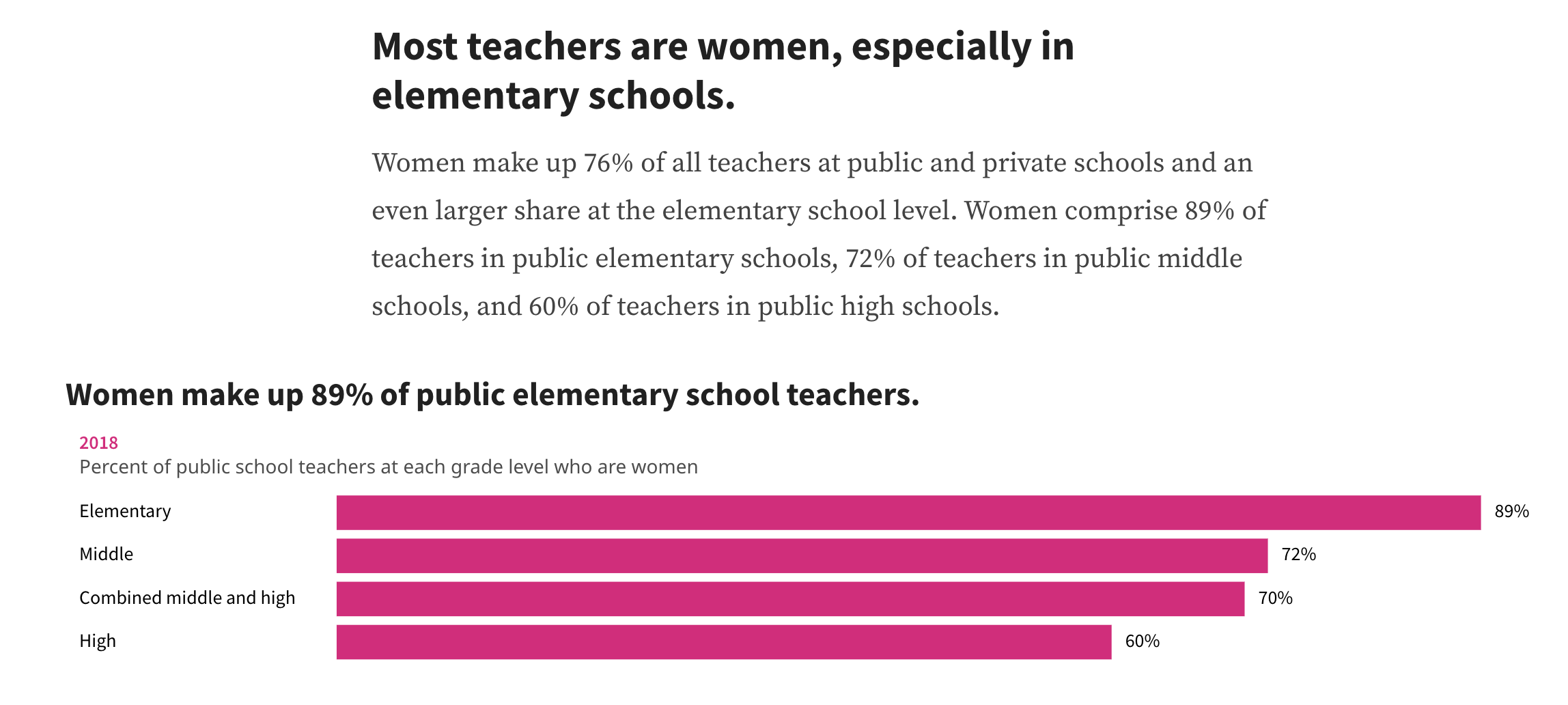
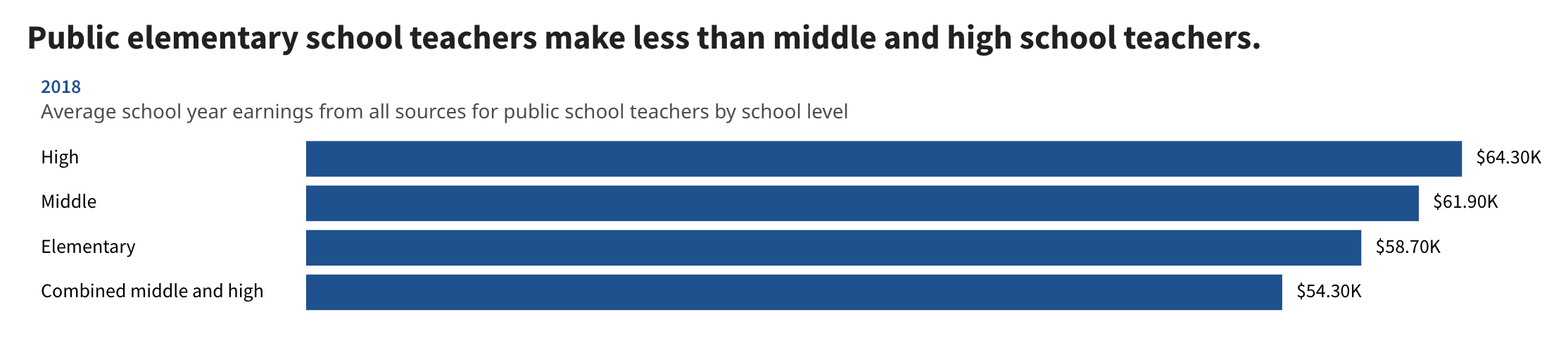
K-12 teaching (especially elementary teaching) is disproportionately a woman’s career since about 8 in 10 public school teachers are women. And while teacher pay is low compared to other professions, the pay inequity is more pronounced in areas where the proportion of women is even higher at the elementary level (Will, 2022). As a frame of reference, a more respected and better rewarded teaching profession is in higher education where professor have professional autonomy, except the gender imbalance exposes a similar sexist pattern. While the gender balance is better in higher education than K-12, the pay and security of being a professor increases where men are a higher proportion of the field (Quinn, 2023).
Autonomy, pay, and respect track positively for men and negatively for women in teaching, and the resistance to autonomy for K-12 teachers strongly correlates with the field being primarily women. A key but ignored element of education reform must include better pay for all K-12 teachers and supporting teacher autonomy so that individual student needs can be met. The historical and current resistance to teacher autonomy exposes the lingering sexism in how we view, treat, and reward educators.
Therefore, at its core, the “bad teacher” myth and requiring teachers to remain apolitical, objective, or neutral serve indirectly to further de-professionalize teachers at both the K-12 level and in teacher education. This leads to the role of science in de-professionalizing teachers when examined as part of the SOR movement.
“Science of Reading” Playing Numbers Games Not Supported by Science
One of the most effective elements of the SOR movement that helps reinforce the “bad teacher” myth is the rhetorical power of “science” in the claims. It appears that the use of “science” has reinvigorated the push to impose scripted curriculum on schools, a central effort of George W. Bush while governor of Texas. While that wave of scripted curriculum failed, in the 2020s, many advocates and legislators have completely caved on teacher autonomy as state after state is mandating scripted reading programs based on stories in the media that misrepresent teacher expertise about reading, teacher educators, and a reading crisis.
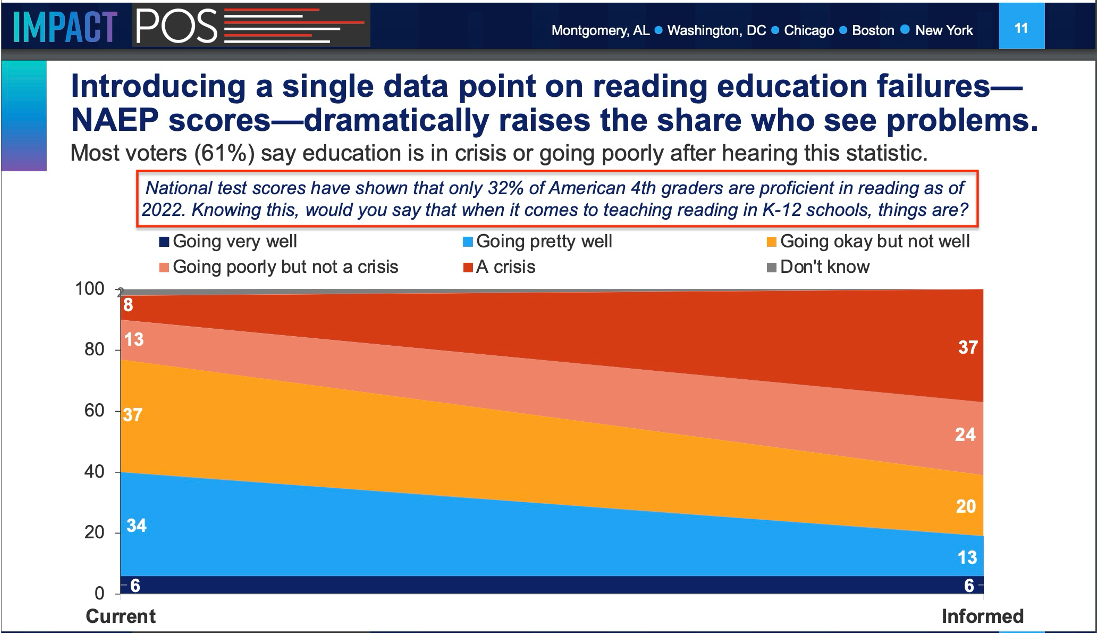
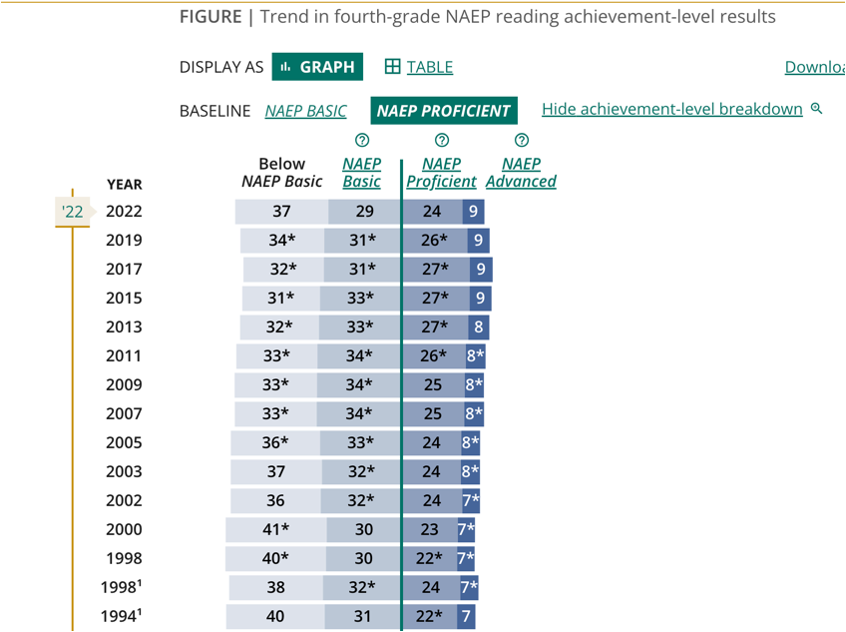
At the core of the SOR movement, then, is the pernicious use of numbers games within the rhetoric of “science.” A foundational example is the misrepresentation of NAEP reading scores to declare that 60% or 2/3 of students are not proficient readers and/or not reading at grade level (Hanford, 2018; Kristof, 2023). This numbers shell game is based in the misleading use of “proficient” by NAEP as well as the combination of ignorance about those achievement levels and willful ignorance about those achievement levels (Loveless, 2016, 2023; Thomas, 2025). The NAEP numbers game is frustrating because the claim shuffles “not proficient” and “not on grade level” while literally inverting the valid claim based on NAEP. In fact, for 30 years, NAEP grade 4 reading data show that about 60%+ of students are reading at grade level and above since NAEP “basic” (not “proficient”) is equivalent to grade level reading (See NAEP National Achievement-Level Results, n.d.).
Further, and even more frustrating, is that this numbers game distracts us from the real issues: (1) The US has no standard for “grade level” reading, (2) we have never fully interrogated the need for a standard “age level” instead of “grade level” metric, and most importantly, (3) the real challenge (even failure) is the disproportionate number of marginalized and minoritized students in the below grade level data pool.
Along with the misleading NAEP story, as well, is a numbers game that hasn’t been fully unpacked—the claim that 90-95% students can be proficient if we simply implement SOR. As a side note, those SOR advocates making this shifting claim (sometimes it is 90%, sometimes it is 95% or 96%) have not, along with most of mainstream media, clarified how this claim is based in scientific research while also avoiding a compelling example of the possibility that the 90-95% proficiency is achievable: Department of Defense (DoDEA) schools have close to that rate of achievement (see below).
Now as the SOR movement has grown over the past 6 years, the 90-95% claim has been repeated more and more although that numbers game still has less traction than the 2/3 not proficient claim. However, when I began my review of a recent National Council on Teacher Quality (NCTQ) report (Thomas, 2023a), I took the time to interrogate the 90% claim by the anti-teacher education think tank: “With effective reading instruction, we could take that [student reading proficiency] to more than 90%” (Teacher Prep Review, 2023, p. 4)
That claim by NCTQ has a footnote to a few studies, but the most interesting evidence is the final citation to a blog post by Nathaniel Hansford (2023) who admits at the beginning, “it has always stuck out to me as a strange figure” because:
First, most academic research does not typically use percentages in this sort of manner. Second, I often see this figure unaccompanied by a citation. And third, it seems low; I find it hard to believe that 5% of students just cannot learn how to read.
When Hansford (2023) asked for scientific evidence for the claim, this is what he discovered:
Some of the citations I was sent were policy papers, by authors and institutions that used this claim. However, these papers were not experimental and usually cited popular Science of Reading books, not experimental research. There was also, interestingly, one research paper sent to me from the 1980s, that made the claim, but did not cite any evidence to support it. So it appears that this claim has been in circulation for a long time. The most common source listed for this claim seemed to be Louisa Moats, who has written about this rule on numerous occasions. However, she does not claim that 95% of students can reach grade level, based on just core instruction, but rather in totality. Louisa Moats cites 4 sources in support for this rule. In Kilpatrick’s book Essentials of Assessing, Preventing, and Overcoming Reading Difficulties; a 2009 paper by Lim, et al. on students with Down Syndrome; a 2005 paper by Mathes, et al, examining the rate of risk reduction for struggling reading, with intensive intervention instruction, and a literature review of risk reduction, by Joseph Torgersen. In my opinion, the last two citations provide some experimental evidence to support this claim.
I have found no better conclusion about the 90-95% claim than the one offered by Hansford (2023); there is scarce and dated scientific evidence to support, at best, that the 90-95% claim is a valid aspirational goal of reading proficiency: “This all said, it does seem there is some level of support for 96% being a benchmark goal [emphasis added], for reading proficiency rates.”
Key here is that like the NAEP misrepresentation, the 90-95% claim is in no way a scientific claim being used by a movement that has used “scientific” as a rhetorical lever to promote their ideological (not scientific) agenda targeting K-12 teachers and teacher educators. The SOR numbers games are essentially distractions. Regretfully, we certainly need to address reading proficiency in students, especially for marginalized and minoritized students.
But the real problems and achievable solutions are likely not to make the education marketers money but will require a different way to view education, one that acknowledges the key number that education reformers and SOR advocates ignore. That number is 60+%.
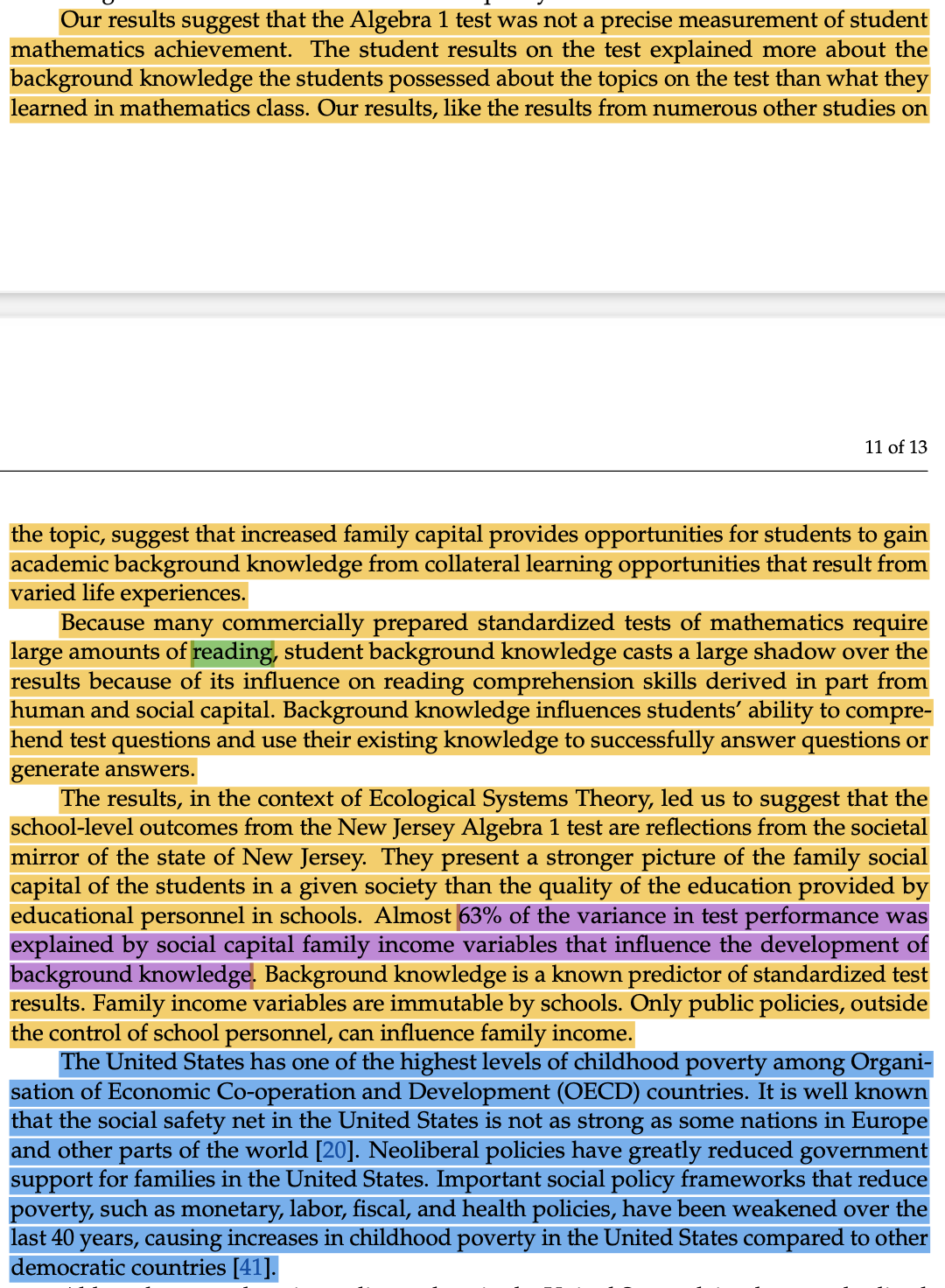
A recent study confirms a statistic that has been repeated by scientific research for decades—about 60+% of measurable student achievement is causally linked to out-of-school (OOS) factors (not reading programs, not instructional practices, not teacher quality, not teacher education): “Almost 63% of the variance in test performance was explained by social capital family income variables that influence the development of background knowledge” (Maroun & Tienken, 2024).
That fact of measurable student achievement discredits claims that reading proficiency, for example, is mostly a problem of reading programs and reading instructional practices. Reading reform for decades has simply shuffled programs and reading theory, which amounts to rearranging chairs on the deck of the Titanic. Yet as I noted above, there is credible evidence that something approaching 90% reading proficiency is achievable; this evidence does not rely on the “bad teacher” myth but does require addressing those OOS factors. Notable, yet mostly ignored, the reading achievement of DoDEA students on NAEP in 2022 are impressive—79% at or above grade level in grade 4 and 91% at or above grade level in grade 8 (See State achievement-level results, n.d.).
The DoDEA story isn’t one of reading programs, reading theory, or teacher/teacher educator bashing; in fact, there is a compelling story here that demonstrates the importance of addressing living as well as teacher and learning conditions so that students and teachers can be successful:
How does the military do it? In large part by operating a school system that is insulated from many of the problems plaguing American education.
Defense Department schools are well-funded, socioeconomically and racially integrated, and have a centralized structure that is not subject to the whims of school boards or mayors….
But there are key differences.
For starters, families have access to housing and health care through the military, and at least one parent has a job.
“Having as many of those basic needs met does help set the scene for learning to occur ,” said Jessica Thorne, the principal at E.A. White Elementary, a school of about 350 students.
Her teachers are also well paid, supported by a Pentagon budget that allocates $3 billion to its schools each year, far more than comparably sized school districts. While much of the money goes toward the complicated logistics of operating schools internationally, the Defense Department estimates that it spends about $25,000 per student, on par with the highest-spending states like New York, and far more than states like Arizona, where spending per student is about $10,000 a year .
“I doubled my income,” said Heather Ryan, a White Elementary teacher . Starting her career in Florida, she said she made $31,900; after transferring to the military, she earned $65,000. With more years of experience, she now pulls in $88,000.
Competitive salaries — scaled to education and experience levels — help retain teachers at a time when many are leaving the profession. At White Elementary, teachers typically have 10 to 15 years of experience, Ms. Thorne said. (Mervosh, 2023)
The SOR movement is playing a harmful and duplicitous numbers game that fits into decades of ineffective and harmful education reform. But the SOR movement is also following the corrosive playbook of using “science” as a rhetorical veneer for ideological agendas. Like scientific racism, the SOR movement is disturbingly absent science for many of their foundational claims, and the collateral damage is not just students but teaching as a profession.
Numbers games have consequences, and ironically, the research emerging from SOR policies is beginning to show that SOR legislation is whitewashing the curriculum (Rigell, et al., 2022) and de-professionalizing teachers (Blaushild, 2023). While there are several shifting numbers in the SOR movement, no science supports the foundational claims. And the numbers that are being ignored are the huge taxpayers’ costs for shuffling reading programs to line the pockets of many of the people promoting those numbers games. Unless teacher educators and K-12 teachers use their political voices to reject and resist the false stories and numbers games, the teaching profession will continue to be eroded.
If Teacher Education Is Failing Reading, Where Is the Blame?
The current SOR climate surrounding public education in the U.S. has its roots, ironically, in misreading (or at least reading uncritically) A Nation at Risk, a report during the Ronald Reagan administration that was widely reported by mainstream media. The politically driven and deeply flawed report also prompted the accountability movement in the U.S.—state standards and high-stakes testing—that eventually enveloped the entire country by the 1990s.
The report established a false but compelling cultural truism that is too rarely interrogated: Public schools in the U.S. are failing. Since the early 1980s, political leadership has decided that the failure is due to a lack of accountability, but accountability of whom or what has shifted over the past 40 years.
The first blame narrative focused on students and schools, ushering in high-stakes testing at 3rd grade, 8th grade, and high school (exit exams) as well as school and district report cards. Eventually high-stakes accountability of students and schools seemed not to change the measurable outcomes that advocates had promised; there were also unintended consequences such as exit exams increasing the number of students not completing high school.
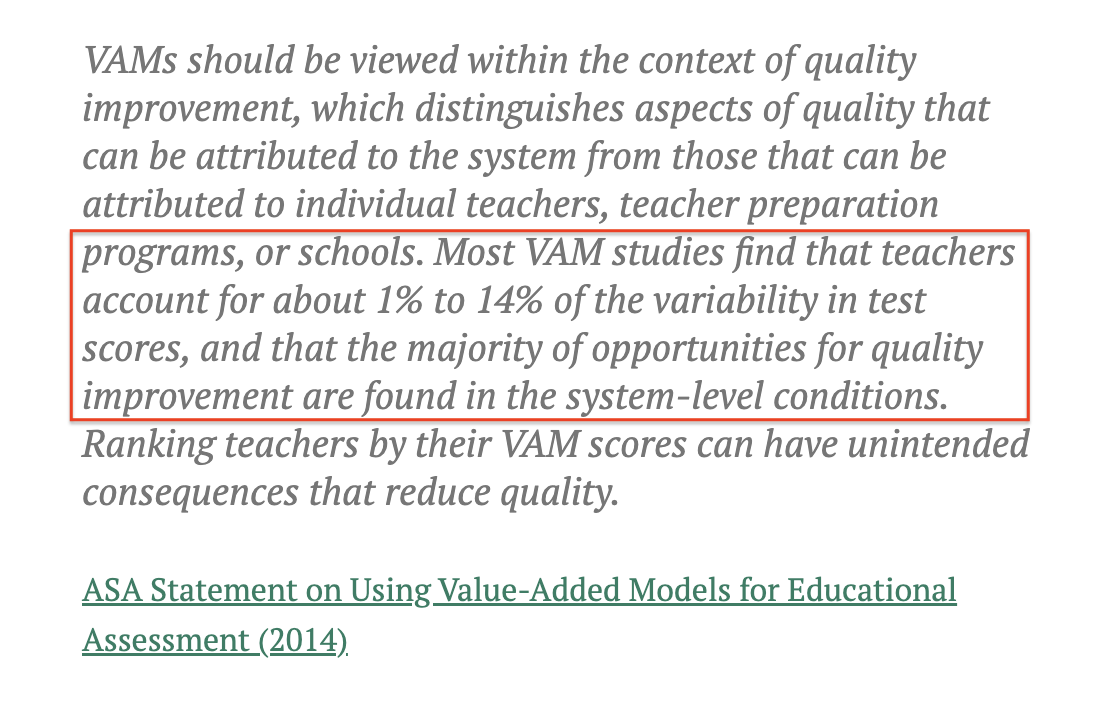
Gradually after No Child Left Behind (NCLB), the blame narrative moved to teachers, in part driven by George W. Bush’s popularizing the slogan “soft bigotry of low expectations,” the rise of charter schools embracing “no excuses,” and the same messages and buy-in for Bush era education policy by Barack Obama’s administration and Department of Education. For about a decade the blame narrative focused on teachers, and political leaders rushed to intensify teacher evaluation, notably the use of value-added methods (VAM). Once again, the outcomes promised by advocates did not come to fruition. Eventually, in fact, the tide turned against the use of VAM and other types of punitive teacher evaluations (ASA, 2014).
The vacuum left in the blame narrative did not remain long. Concurrent with the SOR movement that claims public school teachers are not teaching reading guided by the SOR is the next round of blame—teacher education. The blame narrative makes for strange bedfellows. While mainstream media have begun to blame teacher education consistently, a leading literacy professional organization, the International Literacy Association (ILA), reinforced the story as well. Education Week has led this charge; for example, Madeline Will (2020):
Decades of research have shown that teaching explicit, systematic phonics is the most reliable way to make sure that young students learn how to read words. Yet an Education Week analysis of nationally representative survey results found that professors who teach early-reading courses are introducing the work of researchers and authors whose findings and theories often conflict with one another, including some that may not be aligned with the greater body of scientific research.
EdWeek‘s survey data were confirmed, it seemed, by ILA’s survey data: 60% of respondents claim their teacher education programs did not prepare them well to teach reading (Top takes, 2020).
First, we should pause at media and professional organizations citing survey data while also embracing a very rigid and narrow demand for SOR. Survey data have many problems, and in this case, we may want to know if disgruntled teachers (and disgruntled for many valid reasons unrelated to teacher preparation or literacy) were disproportionately motivated to reply. None the less, it is quite a different thing to say “60% of respondents claimed X” than “60% of teachers claimed X.” Are these survey data representative of all teachers of reading?
Let’s assume this is true, that more than half of teachers charged with reading instruction believe they are not properly prepared to teach reading. But let’s also unpack how that came to be, and ultimately answer in a fair way, where the blame rests.
For the past 30-40 years, teachers and teacher educators have had less and less professional autonomy; or stated a different way, the professional autonomy of teachers and teacher educators has been reduced to how well they can address mandated standards and produce measurable outcomes that prove those standards were addressed and effective. In the high-stakes accountability era, then, if we are going to accept that 60% of teachers were not well prepared in their teacher education programs, we must be willing to acknowledge that those programs were governed most often by the accreditation process. Organizations such as NCATE and CAEP have been holding teacher education accountable along with the coordination of professional organizations (often generating tensions between accountability and teacher autonomy).
How teacher education approached literacy broadly and reading specifically was grounded in standards designed by ILA (elementary) and the National Council of Teachers of English (NCTE) (secondary), and those programs were periodically monitored by ILA and NCTE for if or how well the programs met those standards. If we currently believe that the teaching of reading in our public schools is failing our students, we must also acknowledge that teachers are implementing state standards of reading and preparing students for state tests of reading; those teachers were also taught how to teach in teacher education programs implementing national standards determined by ILA and NCTE under duress to produce measurable student outcomes linked to state-mandated standards and high-stakes testing.
Accepting the survey data as valid, then, the blame for these failures rests at least in part in the accountability and accreditation process, of which teachers and teacher educators are mere agents. After being a classroom teacher of ELA for 18 years and then a teacher educator for the last 24 years, I believe I have a strong and well-informed view of what is happening. This is a better explanation, but not a simple one that the media would prefer or a politically expedient one that politicians would prefer.
Education has never been the type of failure proclaimed by A Nation at Risk, and a lack of accountability was never the cause of what the true failures in education were then and are today. Formal education reflects and a perpetuates inequity in the U.S. Public schools are not game changers. Therefore, it is true that far too many students are not being taught to read well enough, and that on balance, public education is failing far too many students.
Counter to the story being sold, however, those failures are about inequity—inequity of opportunities both outside and inside schools that disproportionately impacts poor students, Black and brown students, multi-lingual learners, and special needs students (populations the SOR movement has correctly identified as being under-served). And as jumbled as the journey has been, the logic experiment I offer above reaches a credible conclusion: the accountability era has failed and once again disproportionately impacting vulnerable populations of students.
But accreditation has failed just as much. Accountability grounded in standards and high-stakes assessment is not conducive to teaching, learning, or scholarship. As a former K-12 classroom teacher, I can attest to that fact; as a teacher educator, I can confirm that the bureaucracy surrounding compliance with accreditation and certification mandates often dilute my courses and overburden my professional work to the exclusion of scholarship and research as well as teaching. Accountability structures are disproportionately bureaucracy within a political system, and thus can be a distraction from effective teaching, learning, or professional behavior.
While I am frustrated with mainstream media misrepresenting reading and reading instruction, I am concerned with the necessity for professional organizations such as ILA and NCTE to work within and through the political bureaucracy of accountability, accreditation, and certification because of the necessary tensions related to accountability and teacher autonomy. Those professional organizations are put into no-win situations similar to the experiences of K-12 teachers and teacher educators. The result is well intentioned and hard-working professionals often work against our bests interests.
Here, then, is a larger lesson of this entire four-decades mess: Let’s stop looking for people to scapegoat in the blame narrative, and recognize instead that systems are failing us, especially when we are complying to them. Professional autonomy for K-12 teachers and teacher educators is a process we have not tried, but one far more likely to give our schools and our students a better chance if we also acknowledge that social and educational equity need the same financial and administrative focus we have given accountability since the early 1980s.
Teacher Educators and the Politics of Resisting Systemic Failure
Media and political stories have for decades perpetuated a story of student, teacher, and school failure. The current SOR movement has expanded the false story of the “bad teacher” by blaming “bad” teacher educators for producing reading teachers ill equipped to serve the most vulnerable students in our schools. The effectiveness of these myths depends on maintaining the blame gaze on individuals to mask systemic failures and the politics of calling for no politics.
What often appears to be student or teacher failure, however, is the negative consequences of failed systems. Both the larger inequity of society and schooling combined with the inherently flawed accountability paradigm constitutes the cause agents for the outcomes (almost always high-stakes testing data) used to determine student achievement. If we want something to change, then, teacher educators must assume a political stance against systemic failures, and part of that stance must include preparing future (and current) teachers also to assume a political stance.
At mid-twentieth century, Lou LaBrant (1952), who would soon after serve as president of NCTE, wrote on English Journal: “When I finished college my teachers thought I was ‘prepared to teach English’” (p. 345). Yet, what she recognized, and advocated for in this article, was a need for change: “It is time to examine the patched and worn bottles into which we have put this magnificent, live wine of language” (p. 347). I suspect, if LaBrant were still with us today, she would make the same call for how we prepare our teachers in the 2020s, acknowledging that to have different outcomes, we need to change the systems that overwhelmingly cause those outcomes.
Teacher educators, to be change agents, must embrace a new politics of resisting systemic failures, which have been unfairly portrayed as “bad teachers.” We are in the same place of crisis and reform after forty years of accountability linked to standards and testing, all of which has driven repeated cycles of new standards for certification and accreditation. Those systems have not only failed but have distracted from the sort of systemic reform needed to address the inequity of living and schooling that guarantees failure. For all teachers, our only option is a new politics of teacher education and teaching.
References
Afflerbach, P. (2022). Teaching readers (not reading): Moving beyond skills and strategies to reader-focused instruction. Guilford Press.
ASA statement on using value-added models for educational assessment. (2014, April 8). American Statistical Association. https://www.amstat.org/asa/files/pdfs/POL-ASAVAM-Statement.pdf
Aukerman, M. (2022a). The Science of Reading and the media: Is reporting biased? Literacy Research Association Critical Conversations. CC BY 4.0 license. https://literacyresearchassociation.org/stories/the-science-of-reading-and-the-media-is-reporting-biased/
Aukerman, M. (2022b). The Science of Reading and the media: Does the media draw on high-quality reading research? Literacy Research Association Critical Conversations. CC BY 4.0 license. https://literacyresearchassociation.org/stories/the-science-of-reading-and-the-media-does-the-media-draw-on-high-quality-reading-research/
Aukerman, M. (2022c). The Science of Reading and the media: How do current reporting patterns cause damage? Literacy Research Association Critical Conversations. CC BY 4.0 license. https://literacyresearchassociation.org/stories/the-science-of-reading-and-the-media-how-do-current-reporting-patterns-cause-damage/
Aydarova, E. (2024). What you see is not what you get: Science of reading reforms as a guise for standardization, centralization, and privatization. American Journal of Education. https://www.journals.uchicago.edu/doi/10.1086/730991
Aydarova, E. (2023). ‘Whatever you want to call it”: Science of reading mythologies in the education reform movement. Harvard Educational Review, 93(4), 556–581, https://doi.org10.17763/1943-5045-93.4.556
Blaushild, N.L. (2023). “It’s just something that you have to do as a teacher”: Investigating the intersection of educational infrastructure redesign, teacher discretion, and educational equity in the elementary ELA classroom. The Elementary School Journal, 124(2), 219-244.
Compton-Lilly, C.F., Mitra, A., Guay, M., & Spence, L.K. (2020). A confluence of complexity: Intersections among reading theory, neuroscience, and observations of young readers. Reading Research Quarterly, 55(S1), S185-S195. https://doi.org/10.1002/rrq.348
Ellis, V., Gatti, L., & Mansell, W. (2024). The new political economy of teacher education: The enterprise narrative and the shadow state. Policy Press.
Hanford, E. (2018, September 10). Hard words: Why aren’t kids being taught to read? APM Reports. https://www.apmreports.org/episode/2018/09/10/hard-words-why-american-kids-arent-being-taught-to-read
Hansford, N. (2023). Can 95% of children learn to read? [Web log]. Pedagogy Non Grata. https://www.pedagogynongrata.com/the-95-rule
Hoffman, J.V., Hikida, M., & Sailors, M. (2020). Contesting science that silences: Amplifying equity, agency, and design research in literacy teacher preparation. Reading Research Quarterly, 55(S1), S255–S266. https://doi.org/10.1002/rrq.353
Kincheloe, J.L. (2005). Critical pedagogy primer. 2nd ed. Peter Lang USA.
Kraft, M.A., & Lyon, M.A. (2024). The rise and fall of the teaching profession: Prestige, interest, preparation, and satisfaction over the last half century. EdWorkingPaper 22-679. https://doi.org/10.26300/7b1a-vk92
Kristof, N. (2023, February 11). Two-thirds of kids struggle to read, and we know how to fix it. New York Times. https://www.nytimes.com/2023/02/11/opinion/reading-kids-phonics.html
LaBrant, L. (1952, September). New bottles for new wine. The English Journal, 41(7), 341-347. http://www.jstor.org/stable/808950
Loveless, T. (2023, June 11). Literacy and NAEP proficient (blog post). Tom Loveless. https://tomloveless.com/posts/literacy-and-naep-proficient/
Loveless, T. (2016, June 13). The NAEP proficiency myth. Brookings. https://www.brookings.edu/blog/brown-center-chalkboard/2016/06/13/the-naep-proficiency-myth/
Maroun, J., & Tienken, C.H. (2024). The pernicious predictability of state-mandated tests of academic achievement in the United States. Education Sciences, 14(2), 129-142. https://doi.org/10.3390/educsci14020129
Mervosh, S. (2023, December 10). Who runs the best U.S. schools? It may be the Defense Department. The New York Times. https://www.nytimes.com/2023/10/10/us/schools-pandemic-defense-department.html
National achievement-level results. (n.d.). NAEP Report Card: Reading. https://www.nationsreportcard.gov/reading/nation/achievement/?grade=4
Newkirk, T. (2024). The broken logic of “Sold a Story”: A personal response to “The Science of Reading.” Resources section of https://literacyresearchcommons.org/resources/
Pollock, M., & Rogers, J. (2022, January). The conflict campaign: Exploring local experiences of the campaign to ban ‘critical race theory’ in public k–12 education in the u.s., 2020–2021. IDEA. https://idea.gseis.ucla.edu/publications/the-conflict-campaign/
Quinn, R. (2023, September 14). Faculty gender pay disparities persist, even at Vassar. Inside Higher Ed. https://www.insidehighered.com/news/faculty-issues/diversity-equity/2023/09/14/faculty-gender-pay-disparities-persist-even-vassar
Reinking, D., Hruby, G.G., & Risko, V.J. (2023). Legislating phonics: Settle science of political polemic? Teachers College Record. https://doi.org/10.1177/01614681231155688
Rigell, A., Banack, A., Maples, A., Laughter, J., Broemmel, A., Vines, N., & Jordan, J. (2022, November). Overwhelming whiteness: A critical analysis of race in a scripted reading curriculum. Journal of Curriculum Studies, 54(6), 852–870, https://doi.org10.1080/00220272.2022.2030803
State achievement-level results. (n.d.). NAEP Report Card: Reading. https://www.nationsreportcard.gov/reading/states/achievement/?grade=4
Teacher prep review: Strengthening elementary reading instruction. (2023, June). The National Council on Teacher Quality. https://www.nctq.org/dmsView/Teacher_Prep_Review_Strengthening_Elementary_Reading_Instruction
Thomas, P. L. (2010) “Of rocks and hard places—The challenge of Maxine Greene’s mystification in teacher education.” Journal of Educational Controversy 5(1). https://cedar.wwu.edu/jec/vol5/iss1/10
Thomas, P.L. (2024a, March). We teach English in times of perpetual crisis: The long (and tedious) history of reading crisis. English Journal, 113(4), 21-26. https://publicationsncte.org/content/journals/10.58680/ej2024113421
Thomas, P.L. (2024b, May). Teaching English in the “science of reading” era: We teach English in times of perpetual crisis: Selling a story of reading. English Journal, 113(5), 16-22. https://publicationsncte.org/content/journals/10.58680/ej2024113516
Thomas, P.L. (2025, July 28). There is no literacy crisis in the U.S. Here’s what’s really happening. The Washington Post. https://wapo.st/474j758
Thomas, P.L. (2024c, September). We teach English in times of perpetual crisis: The media continue to misread teaching reading and literacy. English Journal, 114(1), 14-19. https://publicationsncte.org/content/journals/10.58680/ej2024114114
Thomas, P.L. (2024d, November). We teach English in times of perpetual crisis: For all ELA teachers, “the time is always now.” English Journal, 114(2), 21-26. https://publicationsncte.org/content/journals/10.58680/ej2024114221
Thomas, P.L. (2023a, September). NEPC review: Teacher prep review: Strengthening elementary reading instruction. Boulder, CO: National Education Policy Center. https://nepc.colorado.edu/review/teacher-prep
Thomas, P.L. (2023b). The Science of Reading era: Seeking the “science” in yet another anti-teacher movement. Journal of Reading Recovery, 22(5), 5-17. https://readingrecovery.org/wp-content/uploads/2023/05/JRR_22-2_spring_2023_thomas.pdf
Thomas, P.L. (2022). The Science of Reading movement: The never-ending debate and the need for a different approach to reading instruction. Boulder, CO: National Education Policy Center. http://nepc.colorado.edu/publication/science-of-reading
Tierney, R.J., & Pearson, P.D. (2024). Fact-checking the Science of Reading: Opening up the conversation. Literacy Research Commons. https://literacyresearchcommons.org
Top takeaways from the 2020: What’s hot in literacy report. (2020). International Literacy Association. https://www.literacyworldwide.org/docs/default-source/resource-documents/whatshottoptakeaways_2020_final.pdf
Will, M. (2022, August 22). The gap between teacher pay and other professions hits a new high. how bad is it? Education Week. https://www.edweek.org/teaching-learning/the-gap-between-teacher-pay-and-other-professions-hits-a-new-high-how-bad-is-it/2022/08
Will, M. (2020). Preservice teachers are getting mixed messages on how to teach reading. Education Week. https://www.edweek.org/teaching-learning/preservice-teachers-are-getting-mixed-messages-on-how-to-teach-reading/2020/01
[1] Sections of this essay are adapted from blog posts by the author.













 dr. p.l. (paul) thomas