Tag Archives: books

A Man’s World (pt. 3): Gaiman Edition

[Header Photo by Museums of History New South Wales on Unsplash]

I am currently reading Haruki Murakami’s newest novel, The City and Its Uncertain Walls. In some ways, the story is not as typical of his other novels (I have read all of his work and co-edited a volume on him).

However, this novel maintains a recurring aspect of his works—men who have lost or been left by women (directly expressed in his short story collection Men Without Women).

Reading this novel comes after I recently submitted a chapter on Murakami expanded from a blog post about his 2017 story collection; in that, I address concerns about whether Murakami’s fiction slips too often into sexism and objectifying women.

While the questions about how Murakami deals with women in his fiction creates tension in me as a reader and scholar, I am more disturbed and struggle much more with the men writers and creators who persist in proving that they mistreat, abuse, and assault women in their (sometimes mostly) secret lives.

My reading and fandom life is littered with men writers I once admired but now find it hard to appreciate their work because of their failings as men, as humans—Woody Allen, J.D. Salinger, e.e. cummings, Cormac McCarthy, and Neil Gaiman (see several posts below addressing these men).

The debate about where the line is between a person’s creative work and their personal lives has a long history—and many people disagree about being able to respect that work while acknowledging or even rejecting the personal flaws (and much worse).

For example, Ryunosuke Hashimoto frets about Murakami: “The negative image that has been associated with Murakami is so frequently spotted on social media as a consequence of the new generational standard that one wrong cancels out all of the good that is contained in a work.”

The recent revelations about McCarthy and Gaiman seem to rise far above “one wrong” into predatory patterns and abhorrent abuse.

Concurrent with reading the seemingly late mainstream coverage of Gaiman in Vulture, I have been watching the series House for the first time (while my partner is re-watching one of her favorite series).

House is challenging us in similar ways, considering how much the problems with the episodes weigh against the compelling aspects of the show.

To me, House tries to be topical but can fall cartoonishly flat, such as Spin (S2E6) about a professional cyclist. The cycling and discussions around cheating (EPO and blood doping) are wildly bad, especially the scene of actual bicycle racing.

But we also had just watch Skin Deep (S2E13) a day before the Gaiman article dropped in Vulture.

Skin Deep, for me, has many of the flaws found in the Spin episode, likely from trying to hard to address then-current controversies.

The episode covers a great deal of controversial topics—sexualizing and objectifying young women (the main character is a 15-year-old supermodel), sexual abuse (the father admits sex with his daughter), and then the disturbing big reveal (the young woman is discovered to be intersex with cancerous testes).

Dr. House’s behavior is glib, offensive, and disturbing, including misinformation and not-so-subtle bigotry.

Re-watching Friends, Seinfeld, and The Office has left us cringing as well.

So from what to do about Gaiman’s work to navigating Murakami and series such as House, I remain troubled about where the line is between the creative works and the flawed to despicable humans, those men.

I also must stress that we are in a political moment where the consequences for being a sexual predator or committing sexual assault are being lessened, even erased. The rights of women are being eroded; yes, it is more and more a man’s world, a world hostile and calloused to the lives of girls and women.

The Gaiman moment is an(other) opportunity to say there is a line, it has been crossed, and there must be consequences.

There are thousands of wonderful creative works by people who do not have these transgressions, these failures to respect the humanity of others, hanging over them and their works.

I’ll keep watching House, and I am pretty comfortable with how I understand and appreciate Murakami (and I could be wrong). But Gaiman deserves consequences of a magnitude from which he will not recover as an artist—and others will (maybe) learn as well.


See Also

“He knows, or thinks he knows”: It’s Still a Man’s (Hostile) World

True Detective: It’s Still a Man’s (Hostile) World, pt. 2

Flawed Men Artists and Their Crumbling Art

The Woody Allen Problem Is Our Problem

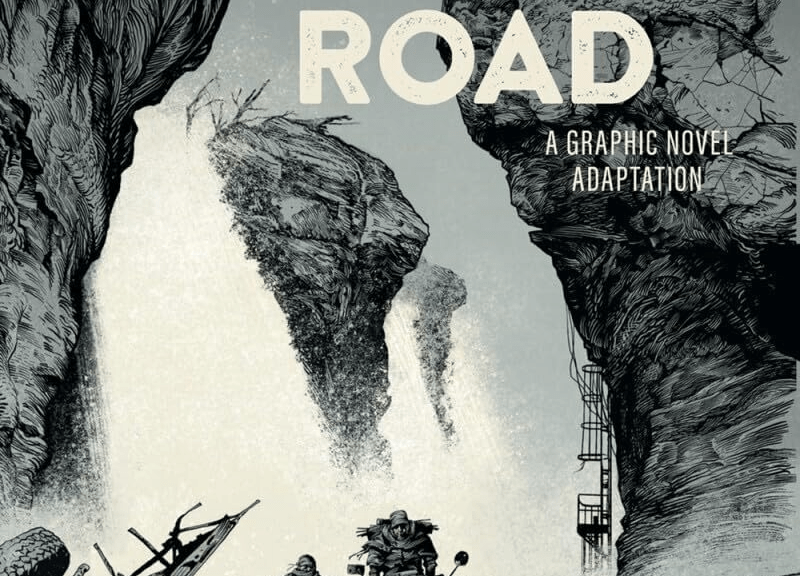
Recommended: Larcenet’s Graphic Adaptation of McCarthy’s The Road

Recommended: Larcenet’s Graphic Adaptation of McCarthy’s The Road

Note

Although a Vanity Fair article has framed Augusta Britt as Cormac McCarthy’s “muse,” Moira Donegan argues in The Guardian that McCarthy, in fact, groomed and took advantage of Britt.

Below, while I discuss positively McCarthy’s work and adaptations of that work, I want to acknowledge the serious concerns being raised about McCarthy as a person. He represents yet another problem with confronting deeply flawed and even abusive people against the context of what many believe are praiseworthy accomplishments.


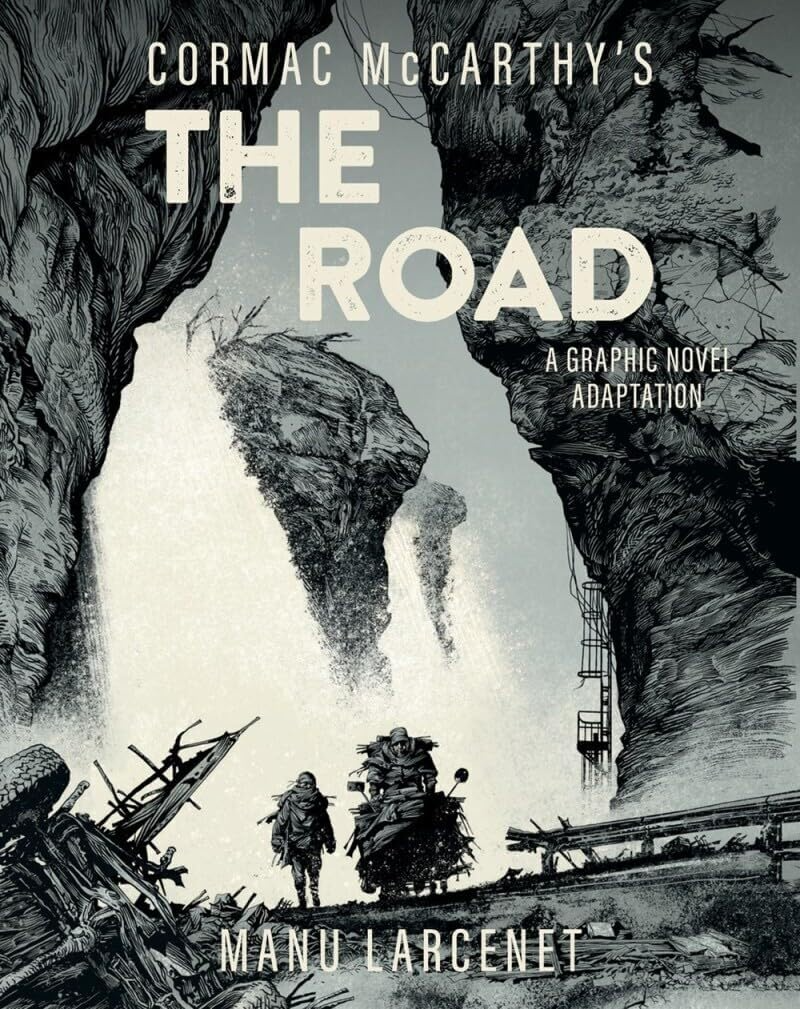
Larcenet’s Graphic Adaptation of McCarthy’s The Road

Cormac McCarthy’s novel The Road won the Pulitzer Prize in 2007. Then in 2009, it was adapted into a major film starring Viggo Mortensen and Charlize Theron.

Now, published in 2024, a third version of the novel is available, Manu Larcenet’s graphic adaptation.

As Mike Roe notes in his review:

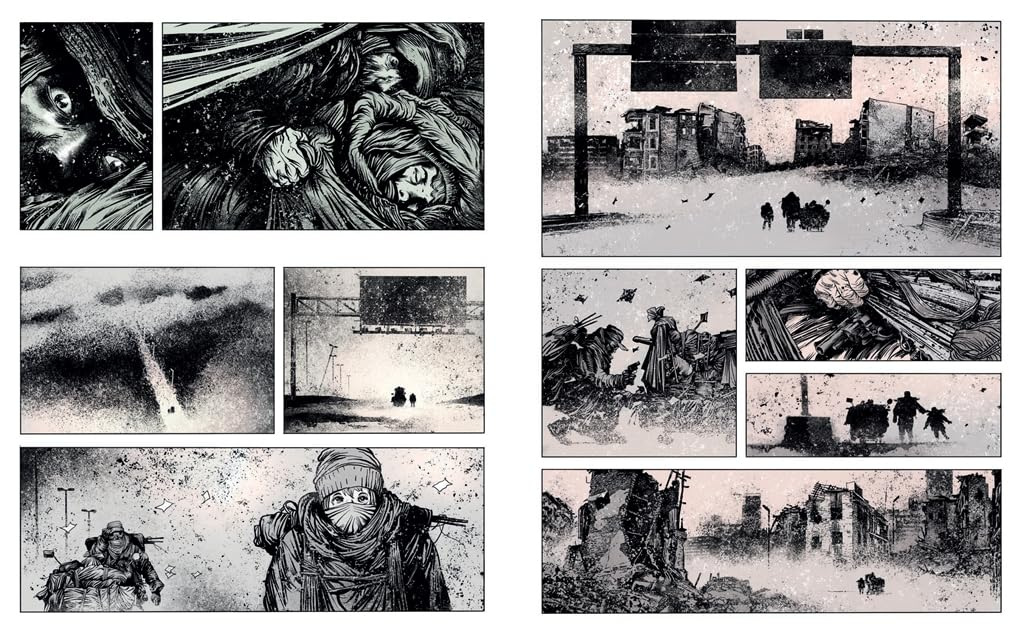
Larcenet made a personal appeal to McCarthy to allow him to adapt “The Road.” Praising its atmosphere, Larcenet wrote, “I enjoy drawing the snow, the chilling winds, the dark clouds, the sizzling rain, tangles and snags, rust, and the damp and the humidity. I draw violence and kindness, wild animals, dirty skin, pits and stagnant water.”

McCarthy’s novel is a stark post-apocalyptic narrative that seemed perfect for both film and now a graphic adaptation. It isn’t that McCarthy’s text isn’t enough; it is that the humanity and inhumanity of this cold barren world become even more painful for the viewer and reader through the different visual media.

Roe adds about the connection between text and graphic depiction:

“I have no other ambitions but to draw your words,” Larcenet wrote. “The magical part of being an illustrator is to find a silent line to draw with every word. These lines could support yours without distorting them. At least, that’s the goal if this project should come to fruition.”

Since The Road has already been made into a film, some may wonder why this graphic novel version is needed:

“On top of that, I’ve been racking my brain to avoid any reference to the movie adaptation,” Larcenet wrote to McCarthy. “I usually write my own comics, one of which (‘Blast’) shares common themes with your book. But I didn’t write ‘The Road’; I really wish I had! I sincerely thank you for allowing me to put my pencil down where your pen went.”

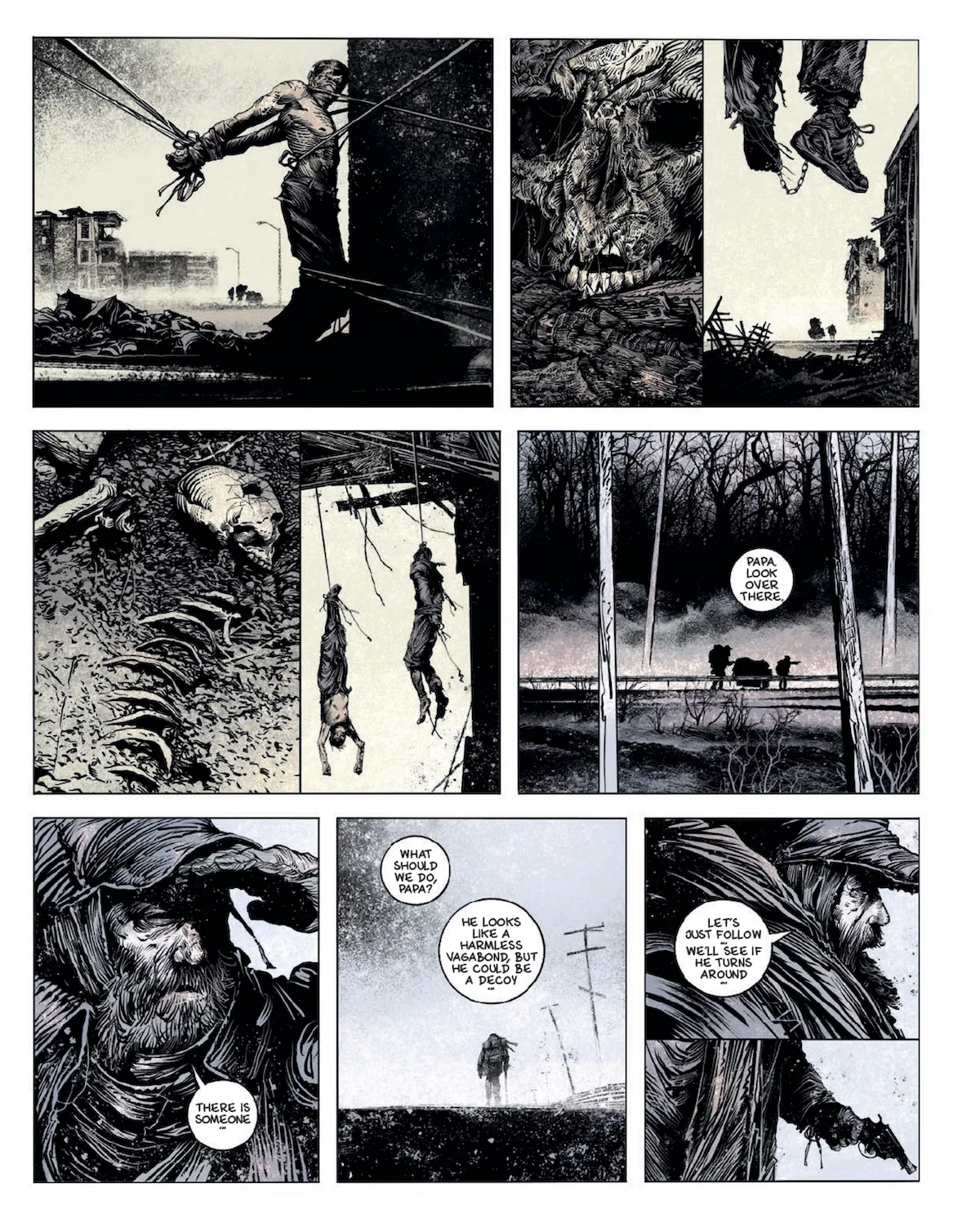
Appropriately, then, Larcenet’s adaptation is sparse in wording (many panels and pages are wordless), yet highly detailed in the mostly black-and-white artwork, augmented with subtle washes of coloring. The result is page after page that is mesmerizing and horrifying:

See Roe’s review at The Wrap for exclusive pages from the adaptation.
See amazon preview for additional pages.

So why do we need yet another version of The Road?

I have read the novel and seen the film, but as a life-long comic book collector, I of course ordered Larcenet’s adaptation. But, frankly, I did so as a collector, thinking I would glance through the book because I do love sequential art.

Then, I found myself reading, lingering on pages and panels. Over a couple sittings, yes, I read the entire adaptation.

I cried. I paused because the story is often overwhelming.

This is the same and a different experience than the novel and the film.

I can’t say we need another version of McCarthy’s novel, but I do say we have been gifted by this beautiful and haunting graphic adaptation.

And since the narrative itself examines the good guys/bad guys dynamic through a child who has had his innocence ripped from him by a calloused world, we too must confront this duality in reality as we try to navigate the flawed artist and the art we love.

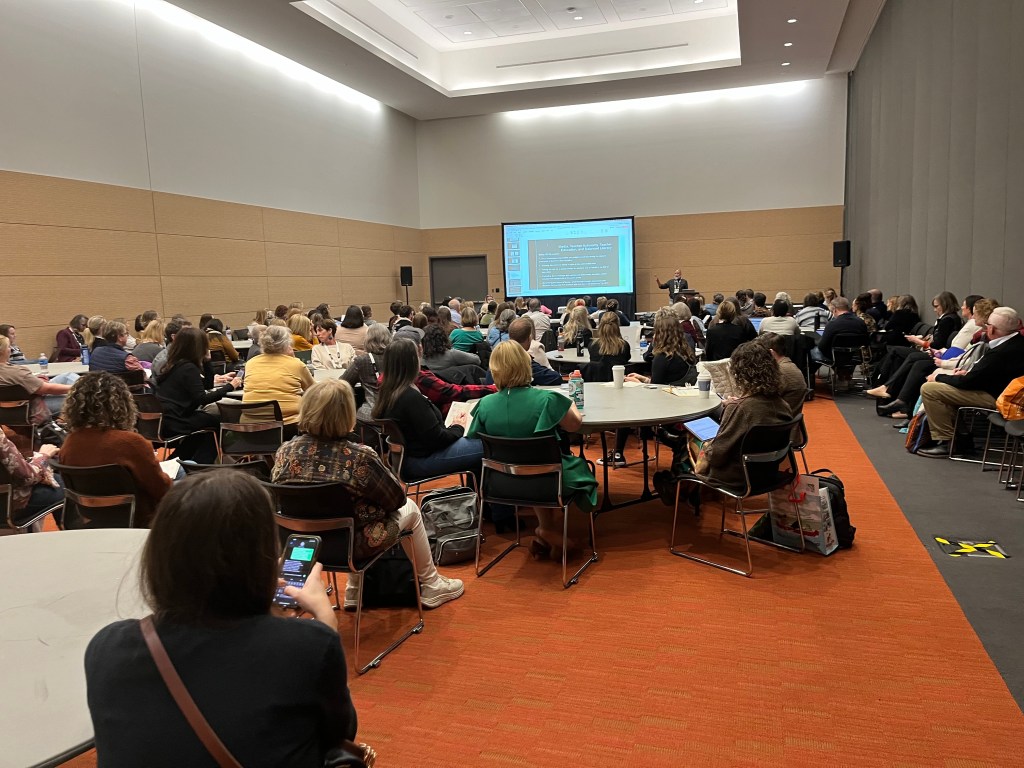
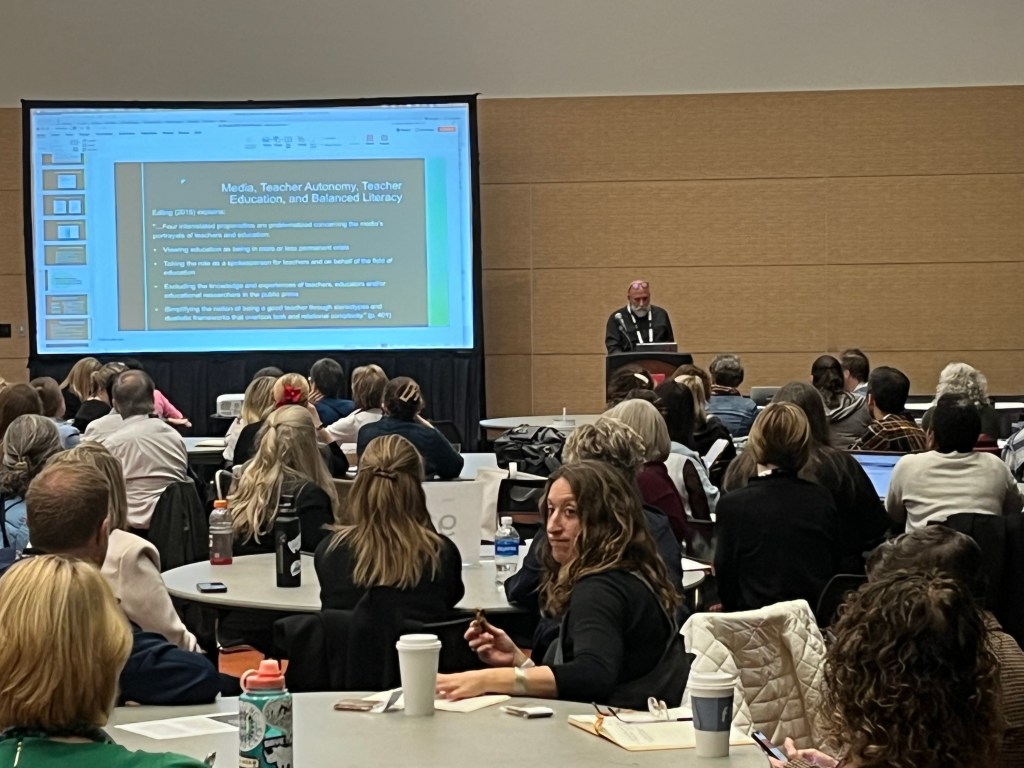
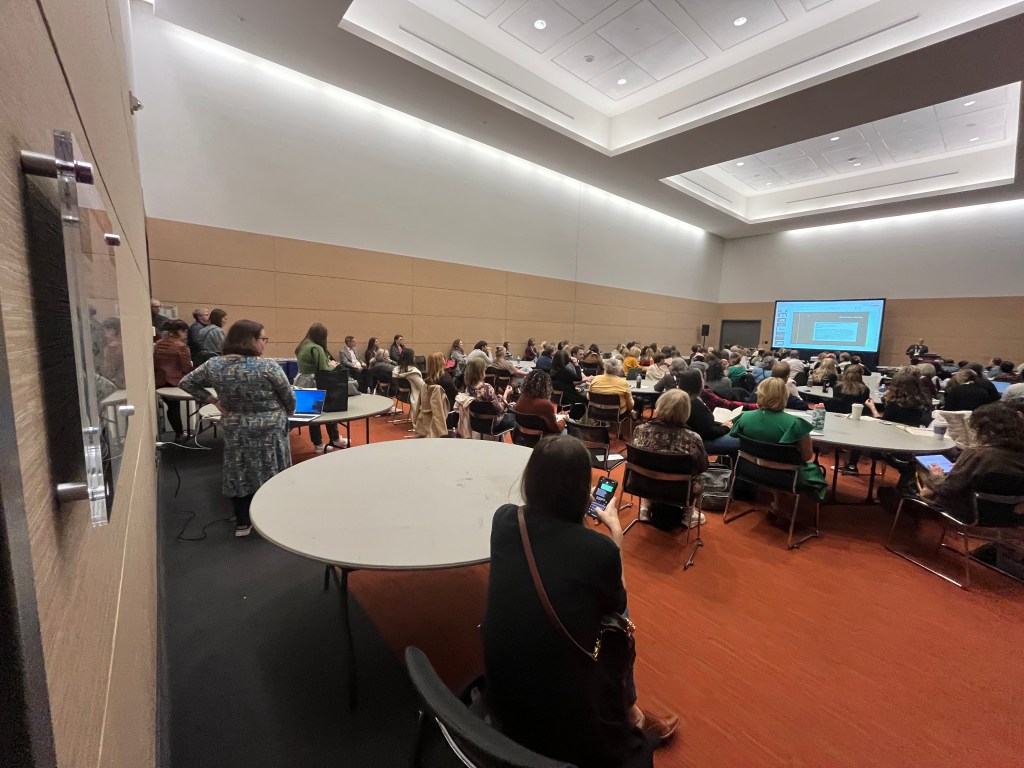
2024 NCTE Annual Convention

2024 NCTE Annual Convention

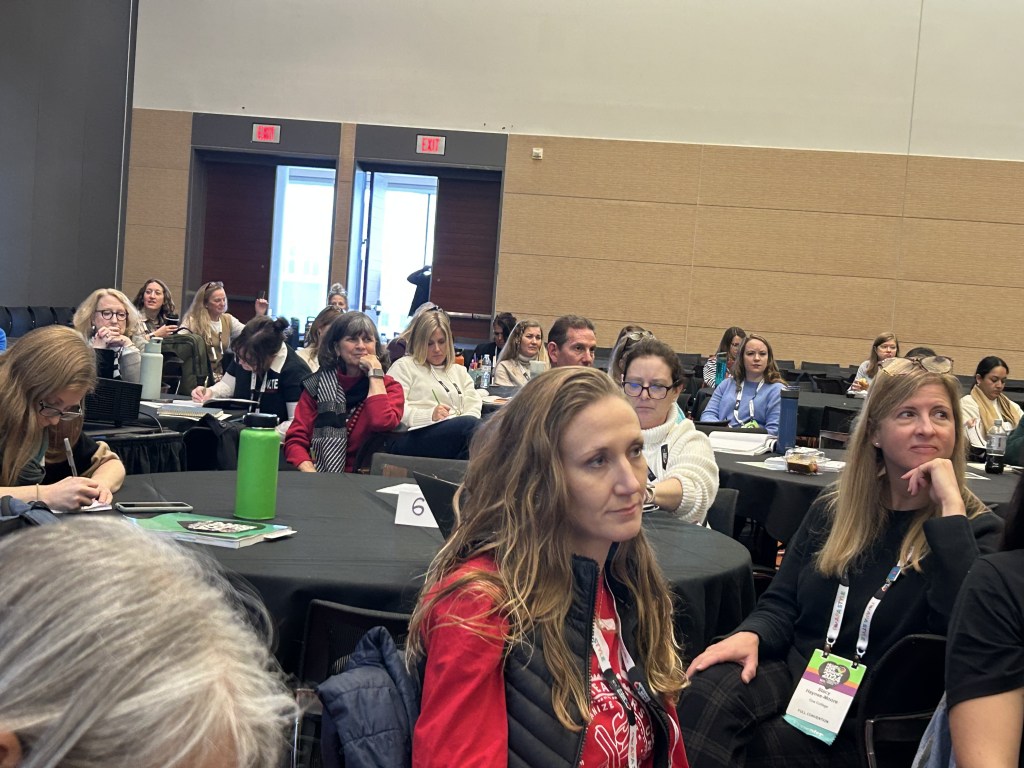
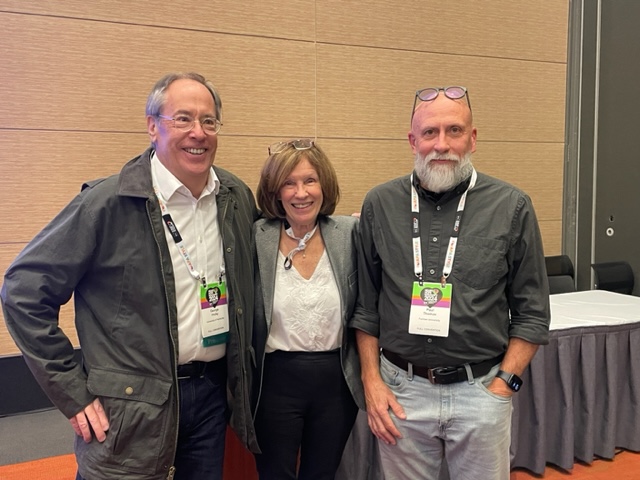
Please join the sessions below.

Also please support Proposed: NCTE Resolution Statement on Teacher Autonomy.

Voting: All NCTE members are invited to attend the Annual Business Meeting, scheduled this year for November 22, 2024, from 5:30–7:00 p.m. ET, and to take part in discussions and vote on resolutions about issues of concern to the profession! Membership must be verified before the start of the meeting.

Sense-of-the-House Motions: These statements reflect the opinion of the majority of members attending the Annual Business Meeting. They may be offered for discussion and action at the Annual Business Meeting. To be considered for deliberation, sense-of-the-house motions must be prepared in writing, must not exceed fifty words, and must be submitted to NCTECommittees@ncte.org, to the attention of the NCTE President or Parliamentarian, by noon ET on the day of the meeting. Such motions, if passed, are advisory to the Executive Committee or other appropriate Council bodies. They do not constitute official Council policy.


Also I am on Bluesky and will be posting there throughout the conference: https://bsky.app/profile/plthomasedd.bsky.social


Recommended

English Journal Series: We Teach English in Times of Perpetual Crisis


11/22/2024

12:30 PM – 1:45 PM EST

Resisting Scripted Curriculum as Erasure: Holding Onto the Heart, Hope, and Humanity of Reading

Room 210 B

Rountables Listing [click for PP]

Roundtable:

Paul Thomas

“Orange: Teaching Reading not Simply Black-and-White” [click HERE for PDF]


11/23/2024

2:45 PM – 4:00 PM EST

Standing for—Indeed, Fighting for—Teacher Professionalism and the Right to Teach Responsively

Room 205 A

Roundtables Listing [click for PP]

Opening Talk:

Paul Thomas

Attacks on Balanced Literacy Are Attacks on Teacher Professionalism [click title to access PP]

The “science of reading” movement has promoted a misleading story about reading through the media—reading proficiency is in crisis because teachers do not know how to teach reading and were not properly prepared by teacher education. This opening talk with argue that attacks on BL are grounded in efforts to deprofessionalize teachers.

Roundtable:

Paul Thomas

Reclaiming BL’s Commitment to Serving Individual Student Needs and Teacher Autonomy [click title to access PP]

Thomas will examine an authentic definition of BL as a reading philosophy that centers serving the individual needs of all students. He will examine also the caricatures of guessing and three cueing (MSV), providing attendees scholarly evidence for accurate characterizations of BL as well as deeper understanding of reading proficiency.

Setting Free the Books: On Stepping Aside as Teaching

While film critics have offered mostly negative reviews of This Is 40, I have watched all and then parts of the film multiple times during its run on cable TV because I am drawn to the scenes that include the children (who in real life are writer/director Judd Apatow’s children with lead actress Leslie Mann).

In one scene, the older daughter, Sadie (Maude Apatow), charges into the kitchen and unleashes a profanity-laced diatribe onto her parents. Many years ago, my daughter did the same to my wife and me, and when the two of us burst into laughter, my daughter stomped upstairs to her room, doubly infuriated at our response.

Maybe This Is 40 isn’t a good film, but I am nearly 53 and my daughter is 24 and carrying her first child. And she and I are quietly emerging from many dark years between us so I admit viewing films and reading books through a sort of middle-aged nostalgia that allows me to appreciate things I probably didn’t recognize when I should have.

The dark years and incessant tensions between my daughter and me often included yelling, first by me and then by my daughter, who enjoyed accusing me of being bi-polar. Today, I recognize that throughout my life I have fumbled almost all of my close relationships because I have struggled with nearly paralyzing anxiety combined with a proclivity toward feeling things deeply, feeling things too deeply.

As a result, my love has often manifested itself as all-consuming, overwhelming, suffocating.

My only child, then, had little choice but to rebel, to seek freedom from the tidal wave that was my love. She is now an adult—working, married, and with child. I have been forced in many ways to set aside the worst parts of how I tend to respond to loving another, and thus, we are re-building now how a father and daughter can be.

While I have struggled with personal love relationships, I have had two other loves that provide different contexts, ones that have confronted me with challenges as well—my love of books and my love for my students. Because of these three arenas of my life, my life loving, I am in the midst of a journey as a teacher that involves stepping aside as teaching.

On Stepping Aside as Teaching

The film The Words presents a multi-layered narrative about writers and their relationships with people as well as words. One story examines a writer that Clay Hammond (Dennis Quaid) creates in his eponymous novel in the film; Hammond explains to Daniella, “You have to choose between life and fiction. The two are very close but they never actually touch. They are two very, very different things.”

In Hammond’s novel, the novel published by Rory Jansen (Bradley Cooper) but actually written by The Old Man (Jeremy Irons) explores a writer who comes to love the words more than the woman who has inspired him to write the words.

I think the film speaks to what happens when anyone begins to covet the extension of what one loves even when that displaced urge corrupts the original love. And thus, this film speaks to parents, lovers, and teachers who are all bound by their passions as essential to who they are.

This brings me to books and teaching—two of my greatest loves— and a foundational question about how books matter in my teaching.

Since I have been an English and writing teacher for most of my 31 years of teaching, books are the lifeblood of my classroom. But I have always been deeply conflicted about the use of books when teaching. Traditional practices such as assigning required books and meticulously analyzing books (from the historical dominance of New Criticism in English courses to the more recent obsession with close reading in the Common Core) have always felt as if the inherent dignity of books was being violated.

I feel much the same way about how traditional teacher-centered instructional and discipline practices deny students autonomy and even their own dignity.

Because I have always sought ways in which I can remain true to my love of books and my students, then, I have struggled in formal educational settings. My only recourse has been to create classes where both my students and the books we read are honored over me and my role as an authority (or realistically as the authority) in the classroom. In other words, I have come to view stepping aside as teaching (much as I have learned to view stepping aside as parenting).

Setting Free the Books*

I have returned recently to Ray Bradbury’s Fahrenheit 451, fascinated by both the enduring power of the novel and Bradbury’s own love affair with books. In the 60th anniversary edition of the novel, Bradbury (in the text of an audio introduction) explains:

I’m a library-educated person; I’ve never made it to college. When I left high school, I began to go to the library every day of my life for five, ten, fifteen years. So the library was my nesting place, it was my birthing place, it was my growing place. And my books are full of libraries and librarians and book people, and booksellers. So my love of books is so intense that I finally have done—what? I have written a book about a man falling in love with books.

Bradbury’s love of books as a learner, a reader, and a writer creates for me even greater tension in my roles as reader, writer, and teacher—especially in the context of  Charles Bingham, Antew Dejene, Alma Krilic, and Emily Sadowski’s “Can the Taught Book Speak?” The authors address three questions:

First, what does the banning, and the unbanning of books have to do with teaching? Second, what is the nature of a book, and do we honor the nature of books when we teach them? And third, is it possible for educators to let books speak for themselves? (p. 199)

Throughout the discussion, the role of the teacher—I would add the corrupting role of the teacher—is confronted:

If a book is banned because it is dangerous as a written text, then a book could only be un banned by letting loose the dangerous potential of such a written text. A book is only unbanned when it is let loose to be read by anyone, anywhere, any time. It is unbanned when it can be read in public or  in private, aloud or  in silence, and finally, and perhaps most importantly, without “a parent to protect” the book. When one teaches a banned book, one falls short of unbanning the book on a number of counts, but primarily on the last count. When one teaches a banned book, one does something different from unbanning the book. One parents the book. One stands against Plato’s fear of writing to be sure, but one also sides with  that same fear. One lets the book be read, but one makes sure there is a parent present at the reading. (p. 201)

Teaching a book, then, is the same as parenting that book—both the teaching and parenting here characterized as intrusive in the ways I have experienced and discussed above as both teacher and parent: “What Derrida thus reminds us is that the very act of teaching is always a parasitical act.”

Teaching and parenting as necessarily “parasitical” and destructive parallels the way writers and the their love of words above people is destructive in The Words:

This figure of the teacher vis-à-vis the book might be formulated as follows: A teacher teaches a book. However, the teacher is not fully a teacher unless the book is not fully a book. That is to say, a teacher needs a book, but she needs a particular kind of book: a book in chains, a banned book, a book that does not speak for itself. If a teacher were to teach a free book, a book unfettered by place, space, or human voice, then the teacher would not be a teacher. A teacher without a book to call her own —without a book to chain in some way, shape, or form — ceases to be , as a teacher.

To put this another way, as soon as a teacher teaches a book, then the book ceases to be a book. (p. 203)

As Bradbury’s own experiences reading in libraries and not attending college show, the book is its own reason for being, as Bingham, et al., explain:

A book, after all, is meant to be free . A book is written. It is written to be read. A book is a book precisely because it is meant to be read, and to be read by anyone. It is meant to be read by anyone who chooses to read the book. If it were not to be read by anyone, then it would not be a book, but would rather be a private communiqué. This bookness of the book signifies something important for educators. Namely, it is not in the nature of a book to be taught. Why? Because a book is, itself, language. It is language that speaks. If the book was not language, if it did not speak, then it would not be a book. A book is not intended to be interpreted into speech. A book does not require that people come to consensus about what it says. A book is itself  consensus. It already says something before any consensus. There is no book that requires or expects a teacher, just as there is no speaking person who requires or expects a teacher. A book speaks in and of itself. It speaks without the need of parasites, chains, or megaphones. (p. 203)

So what are we to do, we who are lovers of books and teachers?

Simply stated, the problem is this: the taught book cannot speak. Indeed, the solution to this problem would seem simple now that the problem has been identified. The problem would be solved if teachers were to leave books alone. (p. 206)

At the intersection of love, books, students, and teaching, I have come to recognize the importance of setting free the books by seeking ways in which I can practice stepping aside as teaching. Just as I had to understand that loving my daughter required me to leave her alone, I must leave books and my students alone—and thus the highest form of respect, the highest form of trust, the highest form of love.

The risks are high in this practice because so few adults trust children, so few adults trust books. And in our paternalistic culture, parenting is viewed as necessary and good—not intrusive and corrupting (in fact, we see books as potentially corrupting and childhood freedom as corrupting).

Ultimately, stepping aside as teaching is a paradox likely to be perceived as not teaching at all—by students, parents, colleagues, and the public.

But risk we must, in the name of those things we love.

* I had a long and wonderful love affair with the novels of John Irving, mostly in my 20s and 30s. Irving’s first novel, Setting Free the Bears, is intentionally alluded to in this subhead.