
[Header Photo by Jansen Yang on Unsplash]
I am currently reading two engaging and often challenging novels—Roberto Bolano’s huge 2666 and Ahmed Saadawi’s Frankenstein in Bagdad.

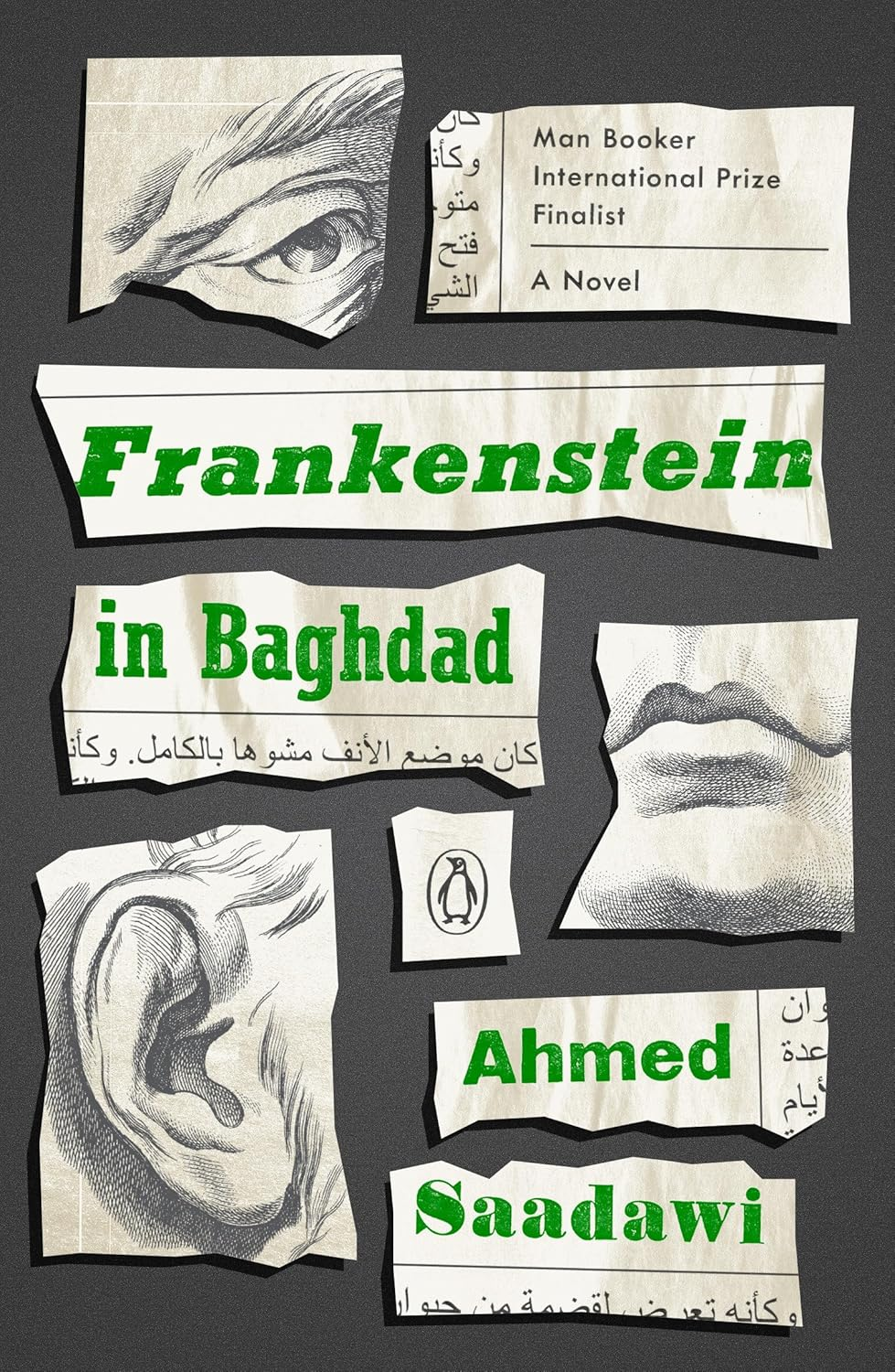
As an avid reader, writer, and teacher of literacy for over 42 years, I am deeply moved by stories, and both of these novels are engaging because they weave stories together while also forcing the reader to critically engage with the act of story telling itself (especially in Saadawi’s monstrous recreation of the Frankenstein myth).
As a writing teacher I seek to foster in my students not only an awareness of the power of story—the importance of vivid details and the narrative mode—but also the ethical implications of the stories we choose to tell as well as the stories we choose to ignore.
In public discourse, however, we are at the mercy of how traditional and social media portray complex and important topics.
Media creators who are successful are vividly aware of the power of story, and my fields of education and literacy, regretfully, suffer the brunt of compelling but misleading stories across all types of media. For media creators, compelling stories often trump accurate and credible stories.
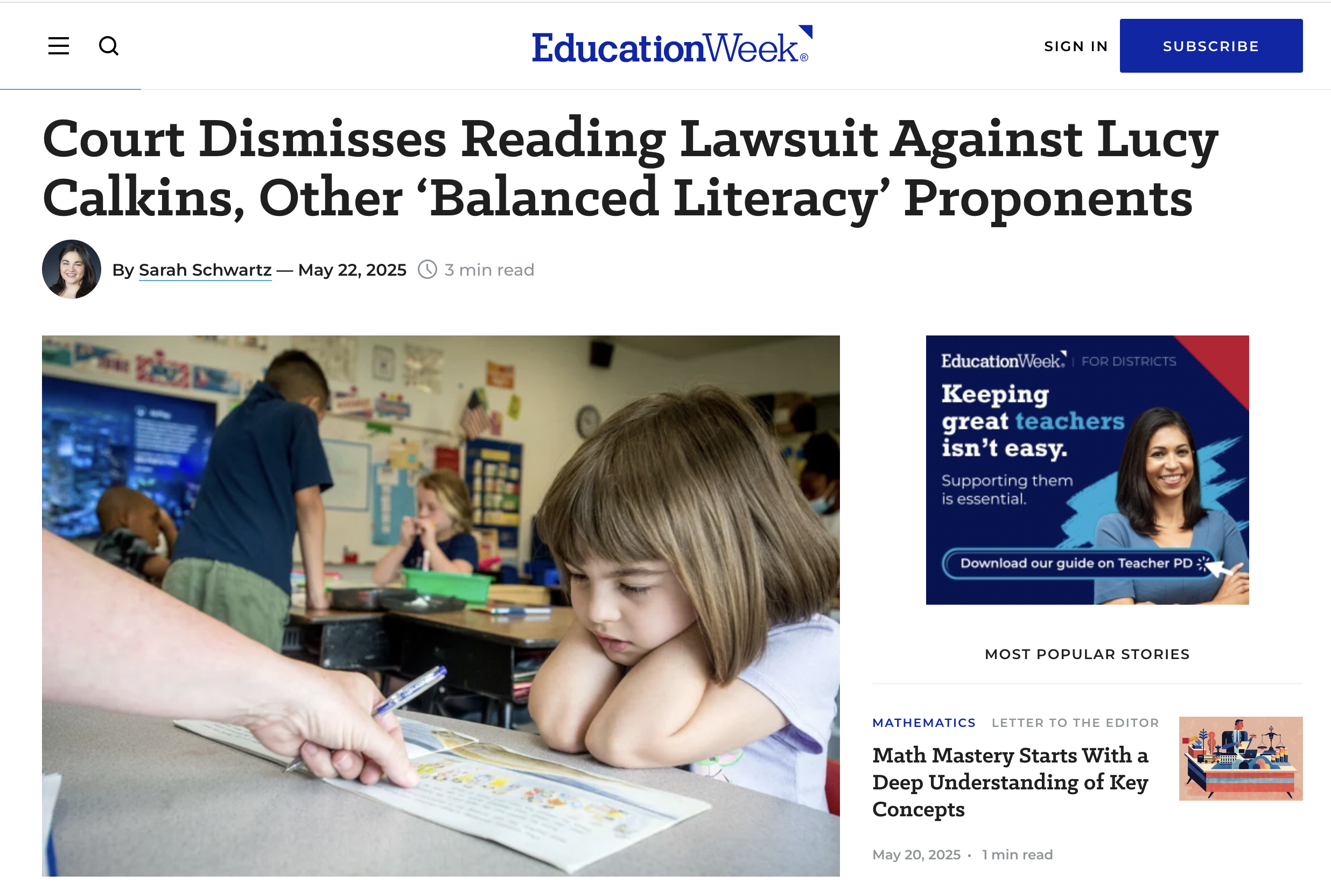
Ironically, at the foundation of the current reading crisis labeled the “science of reading” (SOR) is a podcast, Sold a Story, that research is gradually exposing for being the mechanism for selling a story that is not credible and is in turn causing more harm than good (except for those profiting off the story).
Here are three relatively recent open-access publications that highlight SOR failing equity, teacher autonomy, and social media discourse:
Dimensions of Equity in the Science of Reading Research: A Systematic Review of Actual, Artificial, and Absent Up-Takes of Equity
JaNiece Elzy-Palmer, Alexandra Babino, Tee Hubbard
Abstract
The Science of Reading (SoR) movement is positioned as a pathway to equity in literacy development, yet little is known about how equity is defined and enacted within SoR scholarship. This systematic review examined 36 peer-reviewed studies published between 2014 and 2024 that addressed both SoR and equity. Using a framework of nine equity dimensions, we analyzed how equity was conceptualized and operationalized across this body of research. Findings reveal that only 17% of screened articles (36/211) engaged with equity dimensions in substantive ways. Analysis showed that equity was primarily conceptualized through access (n = 69) and opportunity (n = 83), with most studies giving limited attention to race, power structures, and the systems that uphold inequities. SoR research primarily focused on three student groups: emergent bilinguals, “struggling” readers without disabilities, and students from low socioeconomic backgrounds, while largely employing race-evasive language such as “diverse” or “struggling students.” By contrast, actual uptakes of equity, though limited, were most often found in international contexts where inclusion and representation were embedded through culturally and linguistically responsive adaptations. These findings highlight a persistent disconnect between SoR’s equity claims and its research base, underscoring the need to integrate transformative justice approaches so that equity efforts move beyond access and opportunity toward systemic change in literacy development.
Teacher Autonomy in Text Choices for Elementary Reading Instruction
Allison Ward Parsons, Kristin Conradi Smith, Margaret Vaughn, Holly Klee, Leslie La Croix, Jane Core Yatzeck
Abstract
Reading in elementary school is central to supporting student reading development. However, a gap exists in current research regarding the types of texts that teachers select for reading instruction and the instructional contexts in which that reading occurs. Teachers’ autonomy to select texts and activities for reading instruction is complex and not well understood. In this exploratory study, we surveyed a stratified sample of elementary teachers (n = 1250) in the United States to understand their perceptions of autonomy surrounding text use. Chi-squared analysis results raise questions of autonomy, access, and equity, particularly regarding digital text usage in younger grades and schools with fewer economic resources. Discussion highlights the differences in teacher autonomy regarding text use across school demographics and instructional contexts. Implications for practice and future research are discussed.
The Science of Reading on Social Media: TikTok Content Creators’ Discourse Patterns and Bodies of Knowledge
Lindsey W. Rowe, Sarah Jerasa, Heather Dunham, C. C. Bates, Tobi Pirolla, Meghan J. Malloy
Abstract
The Science of Reading (SOR) has become a public discourse with educational stakeholders, impacting legislative policy, reading content, curricula, and pedagogy across schools. Public engagement in this movement has transpired on social media, including TikTok, where viral content often promotes narrow or binary viewpoints through an authoritative discourse. Using a digital ethnography and walkthrough method, we collected and examined 156 TikTok videos on #ScienceofReading to address the following research questions: (1) What categories of SOR content are present on TikTok? (2) What are the common narrative trends and bodies of knowledge used to promote the SOR conversation on TikTok? Analyses found that SOR-related TikToks fell into four categories: (1) professional content knowledge, (2) direct demonstration, (3) resources and materials, and (4) identity formation. Furthermore, close analysis of all videos related to professional content knowledge gave insight into the narrative trends used by content creators to convey claims (plain speak, stop/start, brain research, rhetorical question, I used to… now I…), as well as the bodies of knowledge content creators drew on to make these claims (research, SOR, theory or scholar, deep personal experience, no source). Finally, implications are discussed for how this public discourse can shape policies that will ultimately impact schools, classrooms, and literacy instruction.
Related
Thomas, P.L. (2025, Spring). Crisis as distraction and erasure: How SOR fails diversity and urban students. Journal of Literacy and Urban Schools (1), 6-23. https://theliteracyandurbanschoolsjournal.com/wp-content/uploads/2025/10/issue-1-journal-of-literacy-and-urban-schools.pdf
Thomas, P.L. (2025). Breaking free of the “war,” “crisis,” and “miracle” cycles of reading policy and practice. In T.A. Price & M. McNulty (eds.), Public spaces, politics, and policy: historical entanglements with irrational momentism (pp. 93-112). Bloomsbury.
Thomas, P.L. (2025, July 28). There is no literacy crisis in the U.S. Here’s what’s really happening. The Washington Post. https://wapo.st/474j758
Thomas, P.L. (2025). Navigating (another) reading crisis as an administrator: Rethinking the “science of reading” movement. Journal of School Administration, Research and Development, 10(1), 38-48. https://ojed.org/JSARD/article/view/6706
Thomas, P.L. (2024, November). We teach English in times of perpetual crisis: For all ELA teachers, “the time is always now.” English Journal, 114(2), 21-26. https://publicationsncte.org/content/journals/10.58680/ej2024114221
Thomas, P.L. (2024, September). We teach English in times of perpetual crisis: The media continue to misread teaching reading and literacy. English Journal, 114(1), 14-19. https://publicationsncte.org/content/journals/10.58680/ej2024114114
Thomas, P.L. (2024, May). Teaching English in the “science of reading” era: We teach English in times of perpetual crisis: Selling a story of reading. English Journal, 113(5), 16-22. https://publicationsncte.org/content/journals/10.58680/ej2024113516
Thomas, P.L. (2024, March). We teach English in times of perpetual crisis: The long (and tedious) history of reading crisis. English Journal, 113(4), 21-26. https://publicationsncte.org/content/journals/10.58680/ej2024113421
Thomas, P.L. (2023, November). Everything you know is wrong: The “science of reading” era of reading legislation. Perspectives and Provocations, (11), 1-17. https://drive.google.com/file/d/12fAfLV1pCh7ZXV-UFsTftFd7y_MLSK-O/view
Compton-Lilly, C., Spence, L.K., Thomas, P.L. & Decker, S.L. (2023). Stories grounded in decades of research: What we truly know about the teaching of reading. Reading Teacher, 77(3), 392-400. https://doi.org/10.1002/trtr.2258















 dr. p.l. (paul) thomas