All posts by plthomasedd

P. L. Thomas, Professor of Education (Furman University, Greenville SC), taught high school English in rural South Carolina before moving to teacher education. He is a former column editor for English Journal (National Council of Teachers of English), current series editor for Critical Literacy Teaching Series: Challenging Authors and Genres (Brill), and author of Teaching Writing as Journey, Not Destination: Essays Exploring What ‘Teaching Writing’ Means (IAP, 2019) and How to End the Reading War and Serve the Literacy Needs of All Students: A Primer for Parents, Policy Makers, and People Who Care (IAP, in press). NCTE named Thomas the 2013 George Orwell Award winner. He co-edited the award-winning (Divergent Book Award for Excellence in 21st Century Literacies Research) volume Critical Media Literacy and Fake News in Post-Truth America (Brill, 2018). Follow his work @plthomasEdD and the becoming radical (https://radicalscholarship.wordpress.com/).

The Big Lie about the “Science of Reading” (Updated)

While too often inordinately dangerous* for the most vulnerable, social media can be a powerful window into how we think about and judge education. Recently, the reading wars have been once again invigorated; this time driven often by parents and advocates for students with special needs and accompanied by a very familiar refrain, the “science of reading.”

One problem with public debate about education is that political and public voices often lack experience and expertise in education as well as any sort of historical context.

First, those who have studied the history of education, and specifically the ever-recurring reading wars, know that there has never been a decade in the last 100+ years absent political and public distress about a reading crisis.

However, one doesn’t need a very long memory to recognize that if we currently are (finally?) having a reading crisis, it comes in the wake of almost two decades (nested in a larger four decades of accountability birthed under Ronald Reagan) dedicated to scientifically-based education policy, specifically reading policy driven by the National Reading Panel (NRP).

The NRP was touted as (finally?) a clearing house of high-quality evidence on teaching children to read (although it proved itself to be partisan hokum).

This is all quite fascinating in the context of the current media blitz about the reading crisis and a need (yes, once again) to focus on the science of reading. Concurrent with that media fail is a move within the academia to shift reading away from literacy experts and into the purview of special needs, treating all reading instruction as something like remediation or a learning disability.

For example, I noticed a very odd dynamic on social media: a post on a community Facebook page for advocates of education that was linked to a dyslexia Facebook page promoting this from Mississippi:

MS gains propaganda

The message included dramatic arguments: Mississippi has somehow found the science of reading and is excelling in ways South Carolina refuses to do.

Knowing standardized test scores, and NAEP specifically, well, I was immediately skeptical of these claims.

Here is the short version: In 2017 NAEP data, MS is slightly ahead of SC in 4th-grade reading (both states remain near the bottom and below the national average), but SC is slightly ahead of MS in 8th-grade reading (again, both near the bottom and below the national average):

4th reading 2017

8th reading 2017

While Mississippi is promoting gains (accurately), the data remain clear that high-poverty states tend to score low on standardized testing while more affluent states tend to score higher.

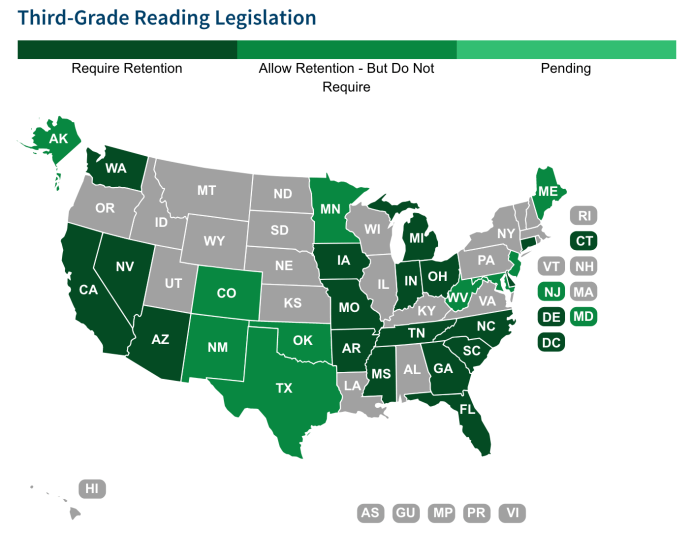
What is extremely important to note is that some traditionally low scoring states have found methods (test-prep, reading programs focused on raising test scores, and grade retention) that increase test scores short term (making for political propaganda), but those gains have proven to be a mirage, disappearing in the span between 3rd/4th- grade tests to 8th-grade tests and then high school (see, for example, research on Florida).

So we sit here with some real problems and questions: Is there a reading crisis in the U.S. and my home state of SC? And if so, is that crisis somehow the result of refusing to implement the science of reading?

Well, first, I need to note that the “science of reading” is code for intensive phonics and is intended as an antidote to the current evil in reading, balanced literacy.

Now, consider this: In the late 1980s and early 1990s, a similar event happened when people started shouting about the reading crisis in California spawned by whole language (now, people claim balanced literacy and whole language are the same thing, and thus, equally evil).

Literacy scholar Stephen Krashen, and others, unmasked that round of the reading wars, noting that although CA claimed whole language as the official reading approach of the state, teachers were almost never practicing whole language.

Further, the reading score plummet of those years did correlate with whole language being the official policy, but the causes of those lower scores were a large influx of non-native speakers of English and significant decreases in educational funding (larger classes specifically negatively impacting achievement).

This isn’t particularly simple or compelling but let’s detail why this recent round of the reading wars is way off base:

  • Standardized tests of reading are only proxies of reading, typically they reduce reading to a series of discrete skills that test designers claim add up to reading. This is at least inadequate, if not misleading. No standardized test measures eagerness and joy for reading, as well; nearly none address critical literacy.
  • Making raising reading test scores your primary or exclusive goal is actually cheating all students. Period. And this is what many states are doing, including MS.
  • Achieving test score gains when you are low scoring is much easier that making gains when you are high achieving.
  • Adopting, implementing, and staying focused on any reading program—these are also very common practices, and completely flawed approaches to literacy. Access to books in the home and choice reading remain the strongest predictors of increased reading and reading achievement.
  • Ultimately, if we insist on using reading test scores to judge the quality of teaching reading in any state or the country, we must acknowledge that how students are being taught is both almost impossible to identify and completely impossible to characterize as one clear practice (teachers are very likely to shut their doors and do as they please, regardless of policies).
  • And most important is the fact that standardized test scores of reading are a reflection of a large number of factors, with teaching practices only one (probably small) causal factor.

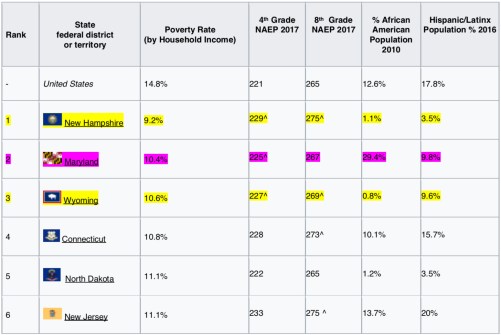
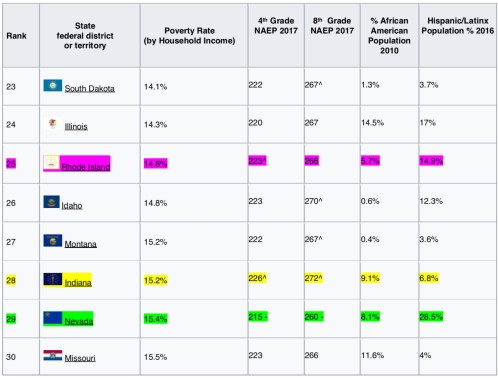
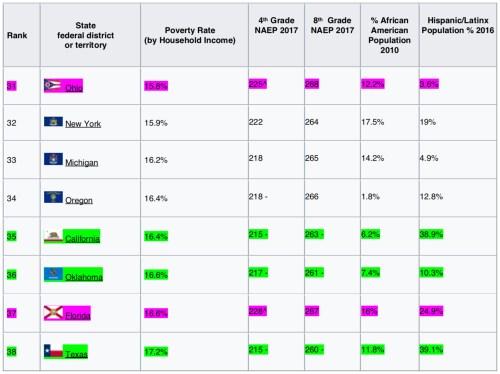
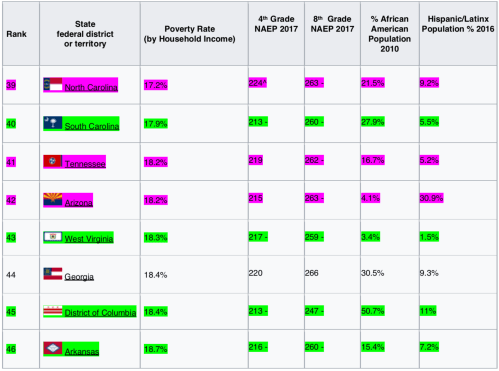
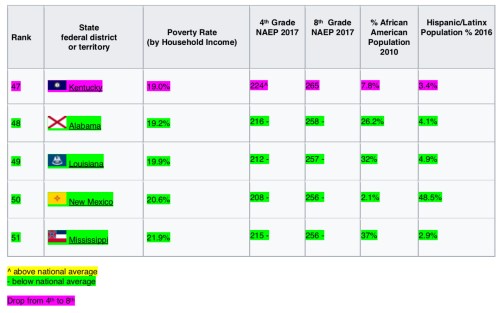
To that last point, consider this matrix of 2017 NAEP reading scores (4th/8th) along with the poverty in each state, the African American population percentage, and the Hispanic/Latinx population percentage. These data portray a much more complex picture of the reading problem, and resist the distraction that how students are being taught reading is cheating students, who could be saved by the “science of reading” (which, by the way, is balanced literacy—o, irony):

[Click links above each chart for expanded charts with grade retention legislation identified.]

Poverty NAEP 4 8 2017 grade retention 1
NAEP reading 2017 1

Poverty NAEP 4 8 2017 grade retention 2

NAEP reading 2017 2

Poverty NAEP 4 8 2017 grade retention 3

NAEP reading 2017 3

Poverty NAEP 4 8 2017 grade retention 4
NAEP reading 2017 4

Poverty NAEP 4 8 2017 grade retention 5
NAEP reading 2017 5

Poverty NAEP 4 8 2017 grade retention 6
NAEP reading 2017 6

Poverty NAEP 4 8 2017 grade retention 7
NAEP reading 2017 7

The “science of reading” mantra is a Big Lie, but it is also a huge and costly distraction from some real problems.

Relatively affluent states still tend to score above average or average on reading tests; relatively poor states tend to score below average on reading tests.

Some states that historically scored low, under the weight of poverty and the consequences of conservative political ideology that refuses to address that poverty, have begun to implement harmful policies to raise test scores (see the magenta highlighting) in the short-term for political points.

It is 2019. There is no reading crisis in the way the “science of reading” advocates are claiming.

It is 2019. Balanced literacy is the science of reading, but it is not the most common way teachers are teaching reading because schools are almost exclusively trying to raise scores, not students who are eager, joyful, and critical readers.

It is 2019. Political and public efforts to do anything—often the wrong thing—so no one addresses poverty remain the American Way.

It is 2019. It is still mostly about poverty when people insist it is about reading and reading policy.


* This opening has been revised because I made a careless error by making an analogy using the “Wild West,” seeking an engaging opening but making a culturally insensitive comparison instead. I regret this use of phrasing, but also appreciate being kindly informed of my carelessness in private. I try to listen to such concerns, and kindness, and am learning every day to be a better person, and writer.


Third-Grade Reading Legislation
3rd grade retention legislation

Evidence v. Advocacy in Teaching Reading: “We Should Not Mistake Zeal for Warrant”

There is a certain karmic irony to the rise of public intellectuals who start to drive outside their lane—actually who take over all the lanes—only to prove that, in fact, they do not know everything.

Current bloviator-know-nothings include Jordan Peterson and Steven Pinker, the latter who has squandered intellectual capital he had built in psycholinguistics.

Both are experts in the field of psychology, a discipline apt to include far too many scholars with delusions of grandeur (only surpassed in arrogance by scholars in economics and about on par with scholars in political science for knowing everything).

Those of us who are scholars, practitioners, or both in the field of education have suffered a long history of being marginalized as both not really an academic discipline (education as “teacher training”) and merely classroom teachers.

As someone with experience and expertise as a practitioner (high school English teacher for 18 years) and researcher in education, I often find I hold no sway in issues related to education in my public work or with my scholarly impact. Imagine if I held forth in book form on psychology, economic, or politics? Think the New York Times would scramble to hang on my every word as they did for a psychologist claiming to be an expert in teaching reading?

(These are rhetorical questions.)

There exists another layer to education that often remains unexamined: K-12 public education is almost exclusively run along partisan political lines through bureaucracy and legislation that is not created by practitioners or educational researchers.

Practitioners who teach literacy/reading and literacy/reading scholars are currently under assault again by a new round of the reading wars. As has been common in these periodic skirmishes, there really is no war because the so-called factions do not have anywhere near equal power.

As a self-proclaimed reading expert, Daniel Willingham, psychology professor, represents what is essentially wrong with the entire framing of debates about teaching reading as a war.

Stated perfectly by Andrew Davis in his careful debunking of intensive/synthetic phonics advocacy, “The zeal with which synthetic phonics is championed by its advocates has been remarkably effective in pushing it to the top of the educational agenda; but we should not mistake zeal for warrant.”

During the current media blitz once again hand-wringing that children are not being taught to read because teachers are not prepared properly in teacher education and students are not receiving intensive phonics instruction, Willingham held forth on his blog to answer: Just how polarized are we about reading instruction?

His post doesn’t answer the question very well, but in another moment of karmic irony, Willingham reveals why “we should not mistake zeal for warrant.”

Affecting a tone of being fair and balanced, Willingham offers 6 positions on reading:

  1. The vast majority of children first learn to read by decoding sound. The extent to which children can learn to read in the absence of systematic phonics instruction varies (probably as a bell curve), depending on their phonemic awareness and other oral language skills when they enter school; the former helps a child to figure out decoding on her own, and the latter to compensate for difficulty in decoding.
  2. Some children—an extremely small percentage, but greater than zero—teach themselves to decode with very minimal input from adults. Many more need just a little support.
  3. The speed with which most children learn to decode will be slower if they receive haphazard instruction in phonics than it would be with systematic instruction. A substantial percentage will make very little progress without systematic phonics instruction.
  4. Phonics instruction is not a literacy program. The lifeblood of a literacy program is real language, as experienced in read-alouds, children’s literature, and opportunities to speak, listen, and to write. Children also need to see teachers and parents take joy in literacy.
  5. Although systematic phonics instruction seems like it might bore children, researchers examining the effect of phonics instruction on reading motivation report no effect.
  6. That said, there’s certainly the potential for reading instruction to tilt too far in the direction of phonics instruction, a concern Jean Chall warned about in her 1967 report. Classrooms should devote much more time to the activities listed in #4 above than to phonics instruction.

He then claims the reading wars problem is that factions take either the side of the even or the odd numbered claims—although he argues “I think all of the six statements above are true.”

The problem is a sneaky one because most of Willingham’s audience, like Willingham, has no literacy expertise or practical experience teaching children to read. For a lay audience, it is unfair to expect anyone to notice that Willingham has misrepresented the so-called factions in the reading war.

One of the leading literacy experts in the U.S. is Stephen Krashen; in his relentless analysis of research on teaching reading, he notes that the pro-phonics research often is deeply flawed because it presents either garbled or false definitions of whole language (or balanced literacy) in order to make claims of intensive phonics being more effective.

Willingham’s claims about reading instruction and the failures of teaching, teachers, and teacher education can only stand on completely misrepresenting the field of literacy and the so-called debate itself.

Let me frame a different approach to understanding the problem pro-phonics advocates fumble.

Here is the real dynamic concerning the teaching of reading in U.S. K-12 education: Teaching reading practices are guided primarily by legislation (with no assurance that legislation is grounded in anything more than zeal at the expense of warrant) and then driven by the combination of textbook companies appealing to that legislation and accountability structures (most significantly the mandate to raise reading test scores without investigating if those scores are credible proxies for reading growth or—god forbid—reading eagerness).

That is almost the entire real-world power structure governing how students are taught to read.

Well outside this dynamic stand teacher education and literacy/reading researchers, practitioners, and advocates—all of whom have almost no power, yet are the scapegoats when psychology-professors-turned-reading-experts hold forth in book form or in the NYT.

I should note, as well, that an even smaller and less powerful group often not acknowledged is literacy experts with a historical perspective, a group that I strongly identify with.

The teaching of reading and the public debate about reading have always been characterized by overblown histrionics and a nearly complete failure to implement what we know about learning to read in K-12 public schools because of partisan political bureaucracy, textbook companies, the massive and growing testing industry, and the misguided influence of non-educators posing as reading and literacy experts.

I realize there is nothing sexy about this—there is no war, or crisis—and this message once again will fall on deaf ears because I do not currently hold a position in a psychology department or an elected position where I could pander to an uninformed electorate.


Recommended

To read or not to read: decoding Synthetic Phonics, Andrew Davis

What is wrong with NPR’s “why millions of children can’t read” (NPR Morning Report, Jan 2 and Feb 6, 2019), Stephen Krashen

Defending Whole Language: The Limits of Phonics Instruction and the Efficacy of Whole Language Instruction, Stephen Krashen

The Dancing Comma, and Other Punctuation High Jinx

Social media are filled with bad political takes and far too much sexism and racism passed off as “It was a joke!”

Often in the same post.

But none of that can stand in the way of some good ol’ grammar, mechanics, and usage snark. Let’s take for example Benjamin Dreyer‘s interactions over Rob Lowe making a multi-level fool of himself on Twitter:

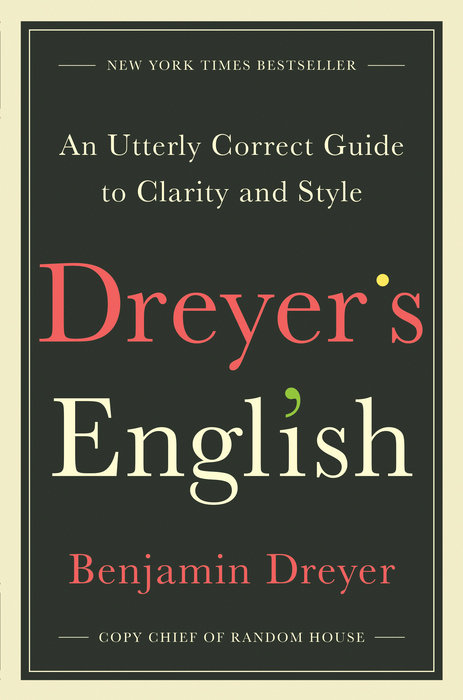
This Twitter discussion fits well into Dreyer’s recent release of Dreyer’s English and the perennial grammar wars (a bit of a misnomer since these wars between prescriptivists and descriptivists span across grammar, mechanics, and usage).

As Dreyer explains, punctuation placement in relationship to quote marks has different conventions in American and British usage:

  • I recommend that students avoid making adverbs into adverbs, such as using “secondly” instead of “second.” (American convention of period inside the closing quote mark.)
  • I recommend that students avoid making adverbs into adverbs, such as using “secondly” instead of “second”. (British convention of period outside the closing quote mark.)

These differences, I think, are excellent entry points into helping students copyedit their own work better, but also into fostering conventional awareness of language use (instead of a rules-based approach).

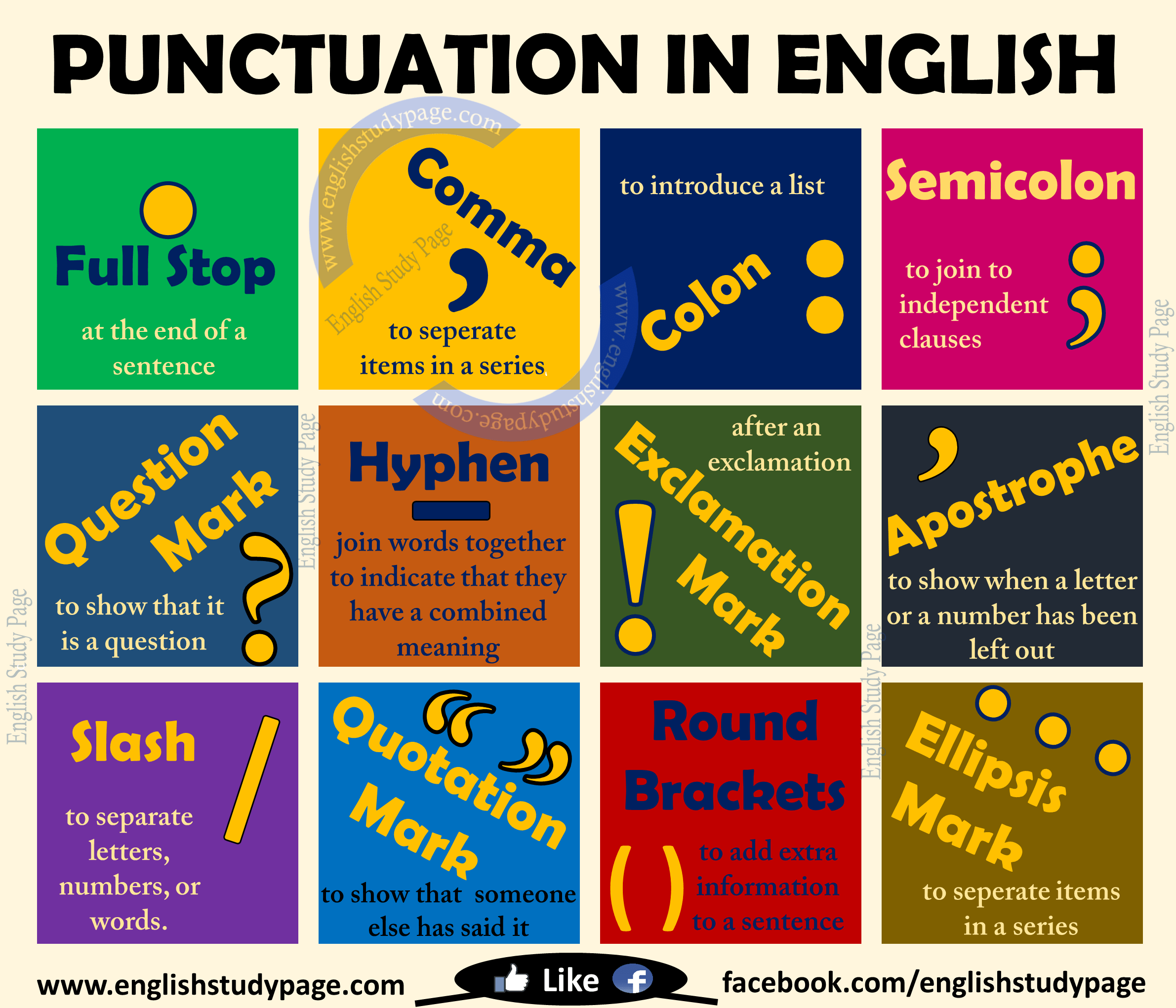
Image result for punctuation

I typically discuss the American/British difference before moving to the placement of punctuation in the context of quote marks as an issue of meaning, for example:

  • Standard English includes puzzling constructions such as, “I am being clear, aren’t I?”
  • Did you say, “My preferred name is Stephen”?

The question mark should remain, as in the first example, inside the closing quote mark to reflect that the quote itself is the question. In the second example, the entire sentence is the question, and the quote a statement; thus the question mark remains outside the closing quote mark.

All in all, these adventures in prescriptive versus descriptive approaches to language conventions may still feel like much ado about nothing to students, who often write because they are required to write and who simply don’t find the distinctions all that important.

The general public communicates moment by moment aloud and in text littered with so-called mistakes while also having almost no loss of communication.

And to be blunt, Rob Lowe’s problems in his Tweets are far less about his lack of understanding punctuation placement—and trying to show off about the Oxford comma but falling flat—and far more about his glib racism.

We descriptivists tend to argue that language conventions are a secondary issue to expression, although, as I explain below, it is nearly impossible to separate expression from conventions.

And so, this Twitter flurry over punctuation and quote marks provides another excellent entry point into helping students understand the role of conventional and purposeful language in establishing your credibility and authority as a writer.

As I have expressed before, some of the best lessons I ever learned about responding to student writing have been grounded in understanding how Advanced Placement graders are trained when scoring written responses.

One convention of writing about the action of fiction is to use present tense verbs—a contrast to using past tense verbs in detailing history.

However, at an AP training session, we were encouraged not to focus on the convention but to look for students being consistent. In other words, verb tense shift (dancing around from present to past without purpose or control) was a reason to lower a score, to identify the writing as less sophisticated.

I thought about this when I read Dreyer’s responses on Twitter because I still stress to my students that understanding punctuation placement in relationship to quote marks is mostly a problem for their credibility and authority as writers when the final punctuation dances around throughout the essay—some times inside, some times outside, with no rhyme or reason.

As a writing teacher who seeks ways to foster my students as autonomous and eager writers who also have a healthy attitude about language (an inclusive and historical awareness of conventions), I seek opportunities like Dreyer’s chastising Lowe as entry points into exploring conventional awareness and how language use cannot be disentangled from writer credibility and authority.

I often come back to again and again to making the case that credibility and authority are driven by writer control and purpose.

The dancing comma implies a lack of control, or purpose.

My argument, then, is not to browbeat students into being correct, but to encourage them to find ways to make their voices heard and appreciated.

And maybe to avoid being called out on social media, and to avoid stepping in the original mess again over and over.

My Journey with the Essay

I believe in coyotes and time as an abstract
Explain the change, the difference between
What you want and what you need, there’s the key

“I Believe,” R.E.M.

I am a writer.

I am a teacher—often and maybe essentially a teacher of writing.

Through no real singular decision, I have become mostly a writer of essays and a poet, and concurrently, when I teach writing, almost exclusively a teacher of essays.

In May of 2018, I submitted a manuscript of a book on teaching writing. Recently, I have been compulsively checking the publisher’s web site because that book has been listed as “in press” for several weeks now.

Today, I checked and saw “published”—somewhat symbolically, I suppose, about a nine-month journey to its born-on date.

Those intervening months mean, as I argue in this collection of essays drawn from several years of blogging about teaching writing, that today I am a different writer and teacher of writing than when that manuscript was compiled and submitted.

Writing and teaching writing as journey, not destination, remains a powerful metaphor that grounds me because both avocations spark powerful and nearly debilitating anxiety in me.

As a regular blogger, I have become more and more skeptical of and terrified by the fixity of published works, especially books.

I like hyperlinks and being my own editor and publisher (although I often fumble these roles quite badly); I feel as if the blog posts are more living documents (I can and do copyedit them whenever I find mistakes or am prompted by a kind reader). And I have some concrete recognition of readers, a readership quantified and displayed daily for me by WordPress.

Yet, to paraphrase Robert Frost, something there is that doesn’t love a book.

books

Frost’s ode to a wall, I think, captures a similar ambiguity about books, especially for those of us enamored by them and for those who spend their lives critiquing and even criticizing them.

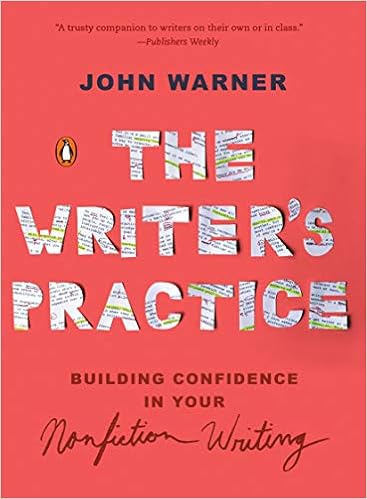
For the past nine months, I have been wading deeply into books about teaching writing—the production of my own book of essays and then reading and reviewing two published volumes by John Warner, Why They Can’t Write and  The Writer’s Practice.

This wading and mulling, nearly constantly thinking and rethinking, however, are nothing new because I exist in a permanent state of feeling compelled to write and teach writing along with being terrified I have no idea how to write or teach writing.

At the center of my compulsions and insecurities lies the essay.

Poets Write Beautiful Essays: On “Coyote” by Chloe Garcia Roberts

Like Warner, as a writer and a teacher of writing, I struggle with how to provide students some structure and guidelines for writing, and specifically writing essays, without reducing their task to templates, prescriptions, and rules that prove often to be false.

This morning as I saw that my book is now published, I read Chloe Garcia Roberts’s “Coyote,” and searched her book title, discovering that she is a poet.

And as I teach my students, I tend to read as a writer.

The essay “Coyote” opens with narrative, immediately engaging the reader with character, plot, and setting. While the first paragraph reads nothing like the introduction/thesis often prescribed to students, it does end by focusing the reader: “But actually what was happening here when the coyote was being seen as a dog was not passing, it was shifting.”

Soon, we realizing that Roberts is exploring ideas and words, “passing,” “shifting,” among others. But this isn’t some simplistic “definition essay” that may be assigned to high school students.

This essay by a poet is a testament to the power of mode—narration, description, exposition, persuasion—and a model of craft; Roberts offers historical references and literary allusions, and she breaks the narrator/reader wall.

What becomes compelling to me, however, is her diction, this essay as tour de force of seeking not a good word, but the right word, pushing me to google some along the way: liminal, thaumatrope, oscillation, crepuscular, rife.

The voice of the essayist, the poet-as-essayist, speaks through science, through history, through literature; layers here, I think, at the core of the essay speak about being an essayist like a coyote:

The ferryman is never the hero. He is always heartless. If your family cannot pay, you cannot pass. Reviled by both sides, his only purpose, his only function, is to change people from one side to the other. In Western myths, the ferryman sometimes rows alone and sometimes is accompanied by Hermes the trickster, the guider of souls. In American mythology, Coyóte plays all the roles. He is not a note in a larger spiritual pantheon but a full revolution of unraveling and creation, of journey and return.

The essay itself is a journey, and the essayist, then, is the ferryman.

“Coyote” is beautiful, and it meets the broad characteristics I often share with students: essays start somehow, develop some focus briefly and somehow, and then ends somehow—hopefully always compelling.

Now, with my teaching writing book published, I have come yet again to something new, something that will not be in that book about the essay itself as a journey, captured with poetic shape in the last paragraph of “Coyote,” again nothing like a traditional conclusion guided by the worst writing advice ever (restate the introduction in different words):

In English, a siren song is another way to say an alluring deception, a seductive lie. But I ask you: how can a song be deceptive if it is a matter of life or death that it be sung? If our very existence depends on it being sung? And in case you cannot see it, I should inform you I am singing right now.

Roberts ends with questions and her own alluring image of essayist singing, embracing the complexities she has drawn for us and drawn us into.

I, a fellow essayist and poet on a much less successful level, am further ferried along in my journey as writer and writing teacher, awaiting my copies of a book of essays, themselves fixed but just markers in my rearview mirror as I continue on my way.


Published

Teaching Writing as Journey, Not Destination: Essays Exploring What “Teaching Writing” Means (IAP)

RECOMMENDED: John Warner’s “The Writer’s Practice”

One of the most valuable habits I have cultivated as a teacher for 35-plus years is listening to my students in the spaces before and after class time. This is a kind of professional eavesdropping not intended to pry on my students personally but to hear who they are as students when they are relaxed and speaking with each other (not under the teacher’s gaze).

Before class during the start of this semester, I saw one of my students diligently reading and then talking with other students near her. She was reading “They Say/ I Say” for her first-year writing (FYW) seminar.

When I asked her about the text and the course, a floodgate opened; she and other students in the class truly dislike the text and the course using it.

Since I teach two sections of FYW each fall, and held a small administrative role for a few years over our retooled first-year seminar program, I often ask students to talk to me about their FYW experiences. Too often, I continue to hear that our students are in seminars that put writing instruction secondary, although writing is the primary purpose of the courses.

First-year writing for many students remains drudgery, repeating the experiences they have had in high school and throughout their K-12 courses.

As a teacher of writing, first at the secondary level for 18 years before teaching college writing currently, I have fought a long and discouraging battle against template approaches to writing instruction (typified by “They Say/I Say”), the five-paragraph essay, and rubrics.

Seeking authentic practices and teaching writing as a writer have been my guiding principles, but too often, that journey has been over rocky terrain and decidedly uphill. Writing prompts, templates, and rubrics are powerful and often necessary tools for teachers of writing with little or no experiences as writers, and these artificial tools also facilitate some of the most entrenched, and worst, practices in traditional schools—grades, testing, and accountability.

Fortunately, I have discovered an important and engaging (mostly virtual) colleague in the pursuit of effective and authentic writing instruction—writer, public intellectual, and teacher John Warner.

Quickly in the wake of his excellent Why They Can’t Write (see my review here), Warner now offers The Writer’s Practice: Building Confidence in Your Nonfiction Writing.

In the former volume, Warner takes solid aim at the five-paragraph essay and this work appeals primarily to teachers of writing, I think. His Practice serves more as an authoritative guide for anyone who wants to be or grow as a writer.

While I think the title offers an excellent focus for the book and how to become a writer, or better writer, “practice,” Warner’s opening framing is also extremely important: “In this book, rather than ‘assignments’ or ‘essays,’ I want us to consider what we’re doing in terms of ‘experiences.'”

This past Friday and Saturday, I attended the annual convention of the South Carolina Council of Teachers of English (SCCTE). Throughout the sessions, keynotes, and conversations among teachers, I witnessed why Warner’s newest book is so valuable.

Many who teach literacy struggle with the tension between being authoritarian and being authoritative—a foundational teaching decision emphasized in Paulo Freire’s critical pedagogy.

Writing and writing instruction driven by prompts, templates, and rubrics are authoritarian, thus simultaneously inauthentic and effective for control. Writing and writing instruction driven by structure (negotiated between teachers and students) and committed to providing students with many varied opportunities to make and practice the decisions writers make are authoritative, thus authentic but prone to uncertainty and unpredictability.

The authoritative teacher must have expertise and the ability to teach on the fly, regardless of the lesson plan.

Formal schooling tends toward the former because of the perceived need for control. However, writing is a complex behavior, and teaching writing often requires a teacher who is also a writer, who can guide novice writers through practiced experiences.

Practice, then, Warner explains, offers an authoritative text:

The goal is to provide a non-prescriptive alternative to a text like They Say/I Say while still honoring the kind of critical thinking we’re supposed to value in academia. I want that thinking to be fun, and engaging, and empowering, rather than intimidating, or something performed by rote to please a disembodied authority like a teacher, or worse, a faceless, unknowable “assessor.”

As I listened and discussed with friends and others at SCCTE, I once again recognized how many of us have failed writing instruction, allowed writing workshop and student choice to flounder because these practices have been confused with class time and student assignments devolving into unstructured and unguided license.

Writing workshop and student choice, however, are not about allowing students (who have little experience or expertise as writers) to do anything they please, but about an expert teacher providing purposeful structures within which students as novices can practice, revise, and grow as writers against their rich reading lives.

And thus, Warner’s Practice, which offers excellent opportunities for writers and teachers of writing to experiment with his framing in search of the practice that works best for them.

The volumes sections—skills drills, analytical writing, research and argument, other writing experiences (including a broad range from jokes to thinking about sentences)—are ideal for K-12 and post-secondary writing instruction that is primarily aimed at all students (not just those who want to be writers) and seeks a variety of essay writing grounded in the academic disciplines (more so than writing fiction and poetry).

Finally, a real gift of this volume is the Appendix where Warner offers some possible weekly structures for using this as a text in first-year writing.

As I did with Why They Can’t Write, I highly recommend Practice, especially for those who teach writing. It is a needed and compelling argument that writing requires structure and practice, but too often is muted by prompts, templates, and rubrics that serve an authoritarian goal but not the needs of students who could be writers.


Coming Soon (Shameless Plug Edition)

Teaching Writing as Journey, Not Destination: Essays Exploring What “Teaching Writing” Means (IAP), P.L. Thomas

The NFL and the Politics of Lies

Much Gesture, from the Pulpit –
Strong Hallelujahs roll –

“This World is not Conclusion” (373), Emily Dickinson

I taught throughout the 1980s and 1990s in my small rural hometown in Upstate South Carolina. That town literally had a railroad track separating the black and white sides of town.

The very small school district includes only four schools—primary, elementary, middle (junior, when I attended), and high—that encircled the largest church in town, Woodruff First Baptist, its steeple looming prominently over the schools and the town.

white church near trees at daytime
Photo by Aaron Burden on Unsplash

Many of my students attended that church, and for a time, virginity pledges became a thing. Sunday morning services included girls and young women coming forward to pledge their virginity until marriage.

These young women received praise and recognition throughout the town and at school. At one point when this trend was at a peak, a group of young women came to me upset that, as they explained, most of their peers taking the virginity pledge were far from virgins, before the pledge or after.

These young women taking the pledge were playing a powerful game of making public displays that gave them social capital but required in no way that they practice what they proclaimed.

The young women who had not pledged, were mostly not sexually active, and felt a great deal of resentment also informed me that one of the young women who had recently been praised in front of the student body, and was also a very popular student and cheerleader, was among a secret group of young women who helped each other pay for and acquire abortions.

I have dozens and dozens of these stories, since I grew up in the deep South and am well acquainted with the power and hypocrisy of the Christian veneer.

While I have mostly stopped watching all organized sports, college or professional, I was wrangled last night into viewing the 2019 Super Bowl. What resonated with me above the lackluster game itself and the disappointment of another success story for the New England Patriots (with a coach and quarterback who personify all that is wrong with the NFL and the U.S.) was the clear drumbeat throughout the event by the NFL that the organization is deeply committed to social justice.

Over the past few years, the NFL has ostracized Colin Kaepernick for political protests and perpetuated the vapid notion that some of the athletes have sullied the game with their politics.

This same NFL began the most recent Super Bowl, as usual, with nothing except politics, the National Anthem and a military flyover. But most disgusting of all was the use of Martin Luther King Jr., ostensibly since the game was played in Atlanta, GA, to associate billionaire owners and the league with social justice.

I have never seen anyone look more out of place than the images of Commissioner Roger Goodell touring Atlanta and marking great places and moments in civil rights.

The NFL is a master of the politics of lies, playing up its own brand while simultaneously beating down any millionaire worker who has the audacity to be anything other than a player-drone for the billionaires who own them.

I understand how many NFL players feel compelled to remain stooges for the corporation that pays many of them well, even as the evidence is mounting that almost all of them are being physically and mentally maimed, that virtually all of them are just cogs, expendable. None the less, I cringed when Marshawn Lynch showed up in one of the most popular feel-good spots portraying the NFL as all that is good and happy:

There is a world unlike this one in which I imagine Marshawn Lynch as the hero and not bent by the great burdening weight of the NFL.

But that is not this world.

Concurrent with the Super Bowl has been a brewing controversy about the governor of Virginia, which Chris Emdin confronts broadly:

Today, as everyone indicts the governor for his racism and everyone professes to stew in anger at how he has let down his constituents, I am most disturbed by the ways that we allow folks to construct progressive public personas that are allowed to mask a problematic past even as the country endorses the past and the masking. WE have allowed people to use buzzwords like equity and social justice to mask their racism. WE have allowed sitting next to the right people or hanging the right painting to erase things they have done that cause pain. WE have failed to allow folks to face their history and the part they play in what they profess to fight against. It is easy to advocate for something without acknowledging that you are part of what caused it. It is easy for the governor to denounce the hatred in Charlottesville without acknowledging that he is a branch of the tree that the hate there grew from.

Emdin unmasks the progressive veneer that works like the Christian veneer—for some. Mostly for the privileged who use that veneer to maintain a death-grip on their unearned power.

In this age of Trump politics, we must recognize that billionaire NFL owners are no more committed to social justice than Trump is to Christianity.

Billionaires have been afforded their billions because of inequity, and the only real threat to their egregious wealth is equity, the cleansing sunshine of social justice.

The NFL exists on lies, it needs lies. The NFL is a microcosm of U.S. capitalism that exists on poverty, that needs poverty.

Kaepernick was sacrificed exactly because he was the Truth, unadulterated because the banishment was swift and seemingly invisible, silent. Allowed to return to the NFL, like Lynch, Kapernick likely and excusably would have merged into the fold in some uncomfortable way—like Jim Brown’s face if the commercial above is paused just right.

The NFL’s lie is just another Great America Myth, another cultural lie. The Super Bowl was its crowning act of this year’s season of lies.

The perfect team, the Patriots, now sit on that throne of duplicity like an arrogant middle finger to all that is decent and humane.

Like the church steeple ringed by my home town’s only schools.

Netflix’s Daredevil Adaptation: Miller Lite

The origin story for superhero comic books rests in the 1930s and 1940s, but those creators remained in relative obscurity, often with little or no financial reward. However, the 1980s and 1990s ushered in an era of comic book creators as superstars.

One of the most iconic and influential superstars from that period was Frank Miller, who built his comic book capital on a staple of the industry—the reboot.

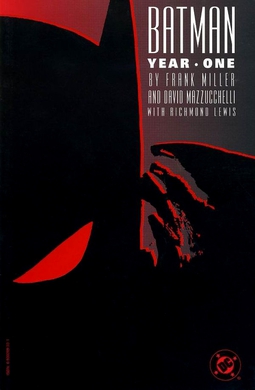
Miller reimagined the canon for and resurrected Daredevil (Marvel) as well as Batman (DC). Some argue that his work on Batman: Year One (with David Mazzucchelli) and The Dark Knight Returns (with Klaus Janson and Lynn Varley) is among the best in the history of superhero comic books.

Batman-Year One (cover).jpg

Miller’s artwork also proved to be a visually impressive source for film—notably his Sin City and 300.

Superstardom for Miller hasn’t avoided stumbles (his script for RoboCop 2) or controversy, as Sean Howe detailed in 2014:

But, as if Miller were one of his own antiheroes, his stark individualist philosophy has also led him down some lonely corridors. He’s written graphic novels that many of his fans recoil from—including one that WIRED called “one of the most appalling, offensive, and vindictive comics of all time.” And he followed that up with ferocious online musings that provoked an outcry, even from some of his most stalwart supporters. In recent years, he’s withdrawn from the public eye.

One of the newest renditions of  Miller’s work has itself been mostly hidden from the public eye: Miller’s The Man without Fear and his “Born Again” arc as source material for Netflix’s now cancelled Daredevil series.

Charlie Cox in Daredevil (2015)

The Many Universes of Superheroes: Netflix’s Miller Lite Adaptation

While rebooting characters and entire universes became a standard convention of comic books at Marvel and DC, the adaptation of superheroes from print to film sputtered throughout the 1970s, 1980s, and into the 1990s.

Marvel has mastered the film adaptation, and many in the public are far more familiar with the film Marvel Universe than the many universes of the comic books. Concurrent with the feature film success of Marvel and struggles with DC-based films other than Batman, Netflix launched serialized superhero adaptations in conjunction with Marvel: Jessica Jones, Daredevil, Luke Cage, Iron Fist, The Defenders, and The Punisher.

These adaptations, I thought, held much greater potential than feature films; they matched the current generation’s lust for binge watching, but they also maintained one of the most compelling features of comic books, extended serialization.

The Netflix approach was well-suited to Jessica Jones since the adaptations downplay some of the main conventions of superhero comic books, such as elaborate and identifiable superhero costumes.

To their credit, Netflix adaptations have been character driven, often as much about the everyday person as the superhero alter-ego.

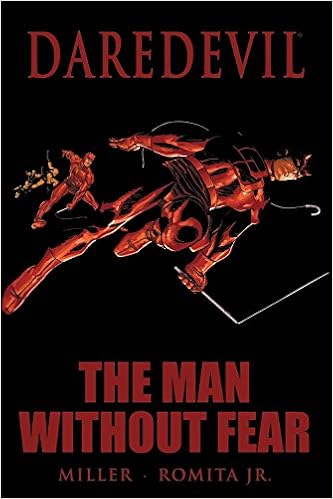
Season 1 of Daredevil traveled that muted approach to superheroes, and found the perfect source in Miller’s arc, later published as a graphic novel, The Man without Fear, written by Miller with dynamic artwork from John Romita Jr. (pencils) and Al Williamson (inks).

This first season follows a softened and tweaked Miller narrative and draws significantly from Romita Jr.’s art, notably the black non-costume Matt Murdock dons in most of the season:

Daredevil: The Man without Fear 5 (John Romita Jr. and Al Williamson)

While I have examined The Man without Fear and its relationship with the Netflix series [1], I want below to look at Season 3 and the use of the “Born Again” arc as more Miller Lite.

Daredevil Born Again, and Again

The “Born Again” arc (Daredevil vol. 1, issues 227-231, and often including 232-233) features Miller and Mazzucchelli, who also paired on Batman: Year One. This storyline builds on the rebooted Daredevil fashioned by Miller and includes some powerful religious imagery and themes.

Daredevil Born Again.jpg

Daredevil as a mythology and narrative has survived, I think, like other major superheroes because in its essence that mythology has compelling elements—structural justice versus vigilante justice, tensions surrounding the idea that “justice is blind,” etc. However, the serial rebooting of the character and the adaptations of the comic book medium into feature films and serialized filmed formats suggest at least that these essential elements have not in some real way been fulfilled.

This is where the differences between the source material and the adaptation come into play. Netflix’s S3 of Daredevil uses “Born Again” as the primary frame, as S1 used The Man without Fear. But S3 also pulls directly and loosely from other sources in the comic book universes as well.

Jesse Schedeen offers 9 changes made in S3 to the comic book sources:

  1. Schedeen focuses on Karen Page’s role in Wilson Fisk/Kingpin discovering Matt Murdock is Daredevil; Karen is manipulated into revealing Murdock’s secret in “Born Again” because Miller has reimagined her as a drug addict and failed-actress-turned-porn-performer. I want to add and emphasize here that the Netflix version of Karen is an important shift from Miller’s trite and reductive Karen. Netflix’s adaptation has clearly sought ways to keep Karen flawed (her backstory revealed in S3 is brutal and dark) but maintain a far more complex and fully human character than Miller has allowed. Like Matt, Karen feels a great deal of guilt and self-loathing in S3, but this adaptation resists a common flaw in comic book narratives to reduce women to one dimension.
  2. Another change involves pulling from a different source, “Guardian Devil” from 1998, as Schedeen notes. This change fits into my point above, I think, in that S3 character Benjamin “Dex” Poindexter (an adaptation of the Marvel character Bullseye) kills Father Lantom instead of Karen. Again, I see these changes allowing a richer and more complex version of Miller’s Karen Page and the wider Daredevil contemporary canon (in this case crafted by Kevin Smith and Joe Quesada).
  3. S3 maintains the “Born Again” reveal of Matt Murdock discovering Sister Maggie is his mother, as Schedeen details, developing more tension in the adaptation version.
  4. The teasing out of Wilson Fisk/ Dex (Bullseye) and another assassin, Nuke, between “Born Again” and S3 demonstrates how the Netflix series often streamlines source narratives and characters while also in many ways blunting superhero elements.
  5. One of the most distinct differences is the use of Dex, and dropping the name “Bullseye” as well as the superhero uniform, in S3. Netflix’s adaptation has chosen to emphasize Dex as mentally unstable, paralleling, I think, in many ways the motif throughout the series concerning childhood trauma (shared by Dex, Fisk, and Murdock) and authority conflicts—the parent/child pattern seen also with Karen.
  6. The paralysis of Bullseye is shared between S3 and the comic book source, and as the Netflix S3 ends, Dex’s surgery clearly was designed to propel the series into another season.
  7. One of the key characters in the Daredevil myth is Foggy, and the Netflix version also develops from the foundational source character into a more complex and even realistic person, a necessary change, I think, in terms of how Foggy parallels Karen as they interact with Matt.
  8. Fisk’s love interest, Vanessa, proves to be another interesting adaptation in S3, much like the changes made with Karen. As Schedeen explains, “In the comics, though, Vanessa has a much more complicated relationship with her husband and his criminal empire.” Here, I think, the viewer of S3 is forced to consider Vanessa as a more fully human and independent character, again in similar ways to how we view Karen. In comic books, as in literature, women are often reduced to being merely symbolic or muses for men as heroes, or villains.
  9. Similar to Dex (Bullseye), Fisk (Kingpin) is essentially drawn from the comic book Marvel universe, and “Born Again,” but the superhero/villain elements are greatly muted. The “Born Again” Kingpin projects the sort of large ego we see in S3, but the fights and outcome for Fisk vary substantially in the adaptation. Schedeen adds, “Fisk doesn’t suffer quite so resounding a defeat in ‘Born Again.’ He does overplay his hand in his attempts to destroy Matt Murdock, eventually causing the deaths of dozens of Hell’s Kitchen residents when he unleashes the out-of-control Nuke.”

With the Netflix run of Daredevil finished, in midstream, we can see how Miller’s version has provided a powerful and compelling frame for the adaptation. But we should also recognize the potential and purpose of adaptation from one medium to another.

The Netflix series as Miller Lite presents an important argument for the urge in the comic book universe to reboot and retell. Daredevil as a foundational superhero myth has extremely important characters, motifs, and themes, but too often the array of creators positioned to soar with those elements has tended to flutter, falter, and even fail.

S1 of Daredevil was exciting in its potential, even as I found the filming too dark (although the dark tendency of the comic book with some artists, such as Alex Maleev, has been among my favorite qualities). By S3 and the abrupt end, I was increasingly hopeful that this adaptation was working its way in the right direction.

While episode 13 of S3 charged viewers with Matt’s “man without fear” speech at Father Lantom’s funeral, we are left once again with less than we had hoped for.


[1] Thomas, P.L. (2019). From Marvel’s Daredevil to Netflix’s Defenders: Is justice blind? In S. Eckard (ed.), Comic connections: Building character and theme (pp. 81-98). New York, NY: Rowman and Littlefield; Thomas, P.L. (2012). Daredevil: The man without fearElektra lives again; science fiction.  [entries]. In Critical Survey of Graphic Novels: Heroes and Superheroes. Pasadena, CA: Salem Press.

Domestic Tuesday

My life as a voracious reader began in childhood, but matured at some point in early adolescence as obsessive. That early obsession was grounded in collecting and reading Marvel comic books as well as science fiction novels—early Michael Crichton, Larry Niven and Jerry Pournelle, and Arthur C. Clarke.

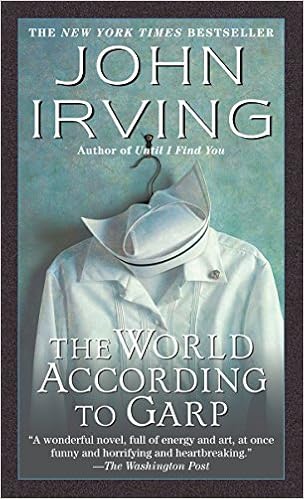
I have steadily plowed through my reading life discovering and then devouring new writers. In my last couple years as an undergraduate English education major, I was in my John Irving phase, spurred by falling madly in love with his The World According to Garp.

Naive and often clueless, I was a twenty-something who hoped to be a writer, and desired more than anything a deep and unique love. My idealizing falling in love and marrying was compounded with idealizing Garp’s life as a stay-home husband/father.

While I have read most of Irving’s novels, and loved quite a few, it has been years since I read Garp and realize I may now find much of the novel, and Garp’s domestic self, far more problematic. However, while I have never become the novelist and fiction writer I had planned, my life as an academic and writer has included domestic elements that I genuinely enjoy.

Since I teach most often on a Monday, Wednesday, Friday schedule, I have for many years remained home to write and work on Tuesdays and Thursdays. Also starting more than four years ago, I have been a caregiver for, first, my granddaughter, and now my grandson on Tuesdays.

Whether I have been home to write and work or to watch my grandchildren, I spend part of my time washing dishes and washing, drying, and folding laundry. Some days I also make a trip to the grocery store.

Laundry, while being a chore, also provides a bit of zen for me. I find a certain peace in folding and hanging up clothing the way I prefer.

As a man, I recognize the absurdity of finding peace in the sort of domestic chores society has imposed onto women, that many marginalize as “women’s work.” It is a sort of absurdity that could easily ignore that women historically and currently often must navigate a professional life as well as their domestic obligations in a way that men can drift into and out of—or even avoid—without much consequence.

One of my favorite, although heavy, units I taught while a high school English teacher included using the film Pleasantville as an entry point (focusing on the TV mother character) into exploring women poets—Adrienne Rich, Sylvia Plath, and Anne Sexton—in terms of how their status as women impeded on their work as poets.

As I have shuffled back and forth between writing and doing the laundry, I have more than once paused against the awareness that Plath’s life overwhelmed her as wife, mother, poet. An awareness of the millions of women who have suffered and now suffer the same fate without the spotlight we shine on the celebrity-tragedy of Plath.

There is a convergence here since my mother was the most important influence on the reader I became, the writer I would become because of that reader life steeped in science fiction and comic books, and since my mother imprinted on me an indelible image of the domestic life of women.

shallow focus photography of brown clothes pins
I will always associate my mother with clothes pins, the bucketful in the laundry room where she hid hundreds of dollars at the bottom. (Photo by Caspar Camille Rubin on Unsplash)

My mother, Rose, was a child of the 1950s, and she spent much of her life caring for her siblings, and then her own children before later running a daycare. Even when she worked outside the home, my mother did the laundry, cooked, and provided the bulk of the childcare; she also handled the bills—and quite frankly it seems did everything.

And as Caralena Peterson explores about women academics, my mother appeared to do everything extremely well and nearly effortlessly.

Today, as my iPhone reminds me, is my father’s birthday and my parents’ anniversary. They died about six months apart less than two years ago.

My parents were very 1950s, very Southern and white. They were also uncritical embodiments of gender stereotypes and obligations.

Hard work matters, I believe because of them, for the sake of making the effort, and I do find some tranquility and sense of accomplishment in doing things the right way, or at least a purposeful way.

Like carefully folding each piece of clothing because each piece of clothing—whether yours or someone else’s—deserves that moment of purpose.

Part of the celebration around Irving’s Garp, which eventually led to a film starring Robin Williams, revolved around his provocative topics, but the novel also spurred a conversation about Garp as domestic husband.

In no small part, the public discussion equated “domesticated” with “emasculated.” A man without a job was no man.

This was a long time ago when I was far less aware, but I don’t really think that conversation interrogated that Garp as a man still had a decision. A decision that women are often not easily allowed.

I often find the sink filled with dirty dishes, and the dishwasher storing clean dishes—from when I started the cycle. Whether late at night before bed or first thing in the morning, I often make that right.

Putting away clean dishes. Filling the dishwasher and starting another cycle.

This seems simple; some would be compelled to compliment my helping out.

But this is not some other person’s chore. This is something I choose to do, in part because it brings me a calm to set things right.

It is, however, a decision I can make. It is my remaining privilege as a man.

Today as my grandson plays, and as I write, do some work, I cycle through washing and drying all the dirty clothes, folding them warm and clean smelling on the day my father was born, the day my parents were married 59 years ago.


Recommended

Stop Assuming That I’m Just Writing About Myself by Kathryn Vandervalk

Cat Person, Kristen Roupenian

Pledge, Anton DiSclafani

Mything Truth

A confrontation in Washington DC this past weekend has introduced yet another image certain to join a disturbing history of white America.

About a year and a half ago, we were asked to confront rage.

As the Covington Catholic student controversy has been unfolding, I felt compelled to add this warning on social media:

Don’t be distracted. Regardless of exact details of the controversy around the private school students and the Native American veteran, stay focused on how this PROVES the ugly power of white/wealth privilege. Every. Time. White/wealthy insures a calvary will rush to protect you, to lie if necessary, but in the end, you will be insulated from your behavior regardless of your innocence or guilt.

And then the predictable occurred: White men inserting themselves into the comments, attacking me and offered the standard “white male privilege is a myth” response.

As a white man with a great deal of social capital and economic slack, I am a first-hand witness to what people say and do when only whites are around, when only men are around. I am not speaking about hypotheticals, but about how this world absolutely functions.

Few lies are more flimsy or toxic than denying white male privilege (skim the evidence). But we must note how it is always white men who rush to deny, and attack.

Simultaneous with the shifting and expanding narrative around the Covington Catholic student confrontation, I watched the newest Coen brothers film, The Ballad of Buster Scruggs.

the-ballad-of-buster-scruggs-final-poster

I have long been an admirer of the craft of the Coen films, but their work also presents a disturbing problem: While there is a high-level of art and craft in the work, we must also acknowledge that the work is very white, and possibly too often uncritically white.

Ballad has received the usual critical praise the Coens enjoy. Richard Brody is effusive:

The Western is the most inherently political genre, and, with “The Ballad of Buster Scruggs,” their two-hour-plus anthology of six short Westerns, Joel and Ethan Coen have made an exemplary political film. (It’s already in limited theatrical release and will launch on Netflix this Friday.) It is a movie put together from bits and pieces of cinematic tropes, conventions, and clichés, including ones borrowed from a range of genres, from ingenious physical comedy to romantic lyricism to Gothic horror. But all are united by a giddy Western revisionism centering upon a common theme: the relentless cruelty, wanton violence, deadly recklessness, and cavalier abuses of unchecked power that prevailed in the thinly and casually governed Wild West. Whether with outrageous antics or metaphysical mysteries, the Coen brothers fill the film with a subtle nose-thumbing; they’re laughing up their sleeve at the long-standing exaltation of the West as a primordial realm of titanic heroes, and at a society that even now consumes Western legends and spits them back in the form of historical verities and political pieties.

Brody gives the Coens one of the usual passes, in fact: “The movie sets up its action with the droll framework of an old, illustrated book of Western stories, further emphasizing that this movie is—like the Western stories that it parodies—a batch of back-constructed tall tales.”

Parody is among the safest refuge for those artists with privilege. “We are just depicting the world as it is, in all its flaws,” they shrug, “so that the audience can draw their own conclusions.”

And Matt Goldberg offers the ultimate stamp of approval by suggesting that this film rises to the level of universal in the final story, “The Mortal Remains,” a tour de force of Coenesque dark humor: excellent acting driven by loquacious characters, each representing a different philosophy:

What these kinds of conversations point out is that we struggle to put everything together, but we can only do the best through our own point of view. We’re extremely confident in that point of view, and as the Englishman notes, “We love hearing about ourselves. As long as the people in the stories are us, but not us. Not us in the end, especially.” We’re all guilty of confirmation bias, and yet that will not save us. The Lady is just as dead as the Frenchman who is just as dead as the Trapper.

It is another story, however, “The Gal Who Got Rattled,” that fits best into the real-world controversy involving private school boys, Black Israelites, and a Native American veteran.

“The Gal” involves some of the most enduring, and problematic, elements of the Western film: a wagon train and the ever-present threat of attacking Indians.

The climax of this story finds one of the wagon train leaders, Mr. Arthur, and the central woman, Alice Longabaugh, trapped in a gun fight with the standard image of Indians appearing menacingly atop a ridge.

Aided by prairie dog holes, the rugged (white male) individual, Mr. Arthur, poises himself against several waves of Indians on horseback; in the balance is Alice’s womanhood-as-assumed-virginity.

Among those of us with at least a modicum of experiences with Western films (John Wayne, spaghetti Westerns/Clint Eastwood), this story triggers thoughts of “circling the wagons” (used uncritically, this is packed with racist stereotypes and erases imbalances of power and Westward expansion as genocide)*  and the calvary.

This brings me back to the confrontation in Washington DC, a confrontation among two marginalized groups—blacks and Native Americans—and the privileged white male students from an expensive private school.

Of those three groups, only one has hired a PR firm, and despite the apologists for the Covington Catholic students shouting that the whole picture absolves, somehow, these young men and the culture that spawned them, that whole story now includes video of the boys in their red MAGA hats taunting a young woman and truly incriminating evidence that the school has at least allowed a deeply antagonistic culture of white arrogance.

I suspect the apologists do not really want the whole story, no more so that America wants the whole and ugly story of our so-called Wild West.

Regardless of all the details, as I cautioned, we must be willing to see that the Covington Catholic students are examples of the power of privilege, the guarantee that privilege insures a white calvary will come.

For those interested in the truth and not mything truth, I offer here at the end some of the best full pictures of the confrontation:


* This post and blog title have been revised to addressed racially insensitive use of language.

“Despite the Data”: Higher Education Fails Equity, Inclusion with SETs

Entering higher education in my early 40s after 18 successful years as a high school English teacher, I remain 17 years later baffled and even disappointed at the mess of contradictions that characterizes an institution populated by the most educated people possible.

Immediately I had to hold my tongue against the pervasive culture of college professors bemoaning constantly how busy they are. When my high school teaching career ended, I was wearing a wrist brace because I was hand marking about 4000 essays and 6000 journals per year while teaching five course and about 100 students (many colleagues taught 20+ more students per year).

I also coached many of those years, with work days from about 7:30 AM until 10 or 11 PM in the evening.

By contrast, I teach two first-year writing courses each fall (as part of my full load, a minimum of five course per academic year), a total of 24 students, and my teaching schedule tends to be three days a week, often a Monday evening class included.

The Ivory Tower effect is a bit more accurate than I would prefer.

More disturbing, however, is the power of tradition among academics, a dynamic that works against practices and policies being based on evidence (and thus in a state of flux when that evidence changes).

While the U.S. has a long history of characterizing and even demonizing higher education as some sort of liberal cult, the truth is that the very worst qualities of higher education are from its conservative urges as institutions.

Of course, you can find a disproportionate number of professors who have left-leaning social and philosophical ideologies, but the most powerful department/colleges in higher education are often the most conservative—political science, economics—or the most apt to take non-political poses—the hard sciences.

This disconnect between how higher education is perceived and how higher education exists stems from, in part, I think, higher education presenting itself rhetorically as progressive—mission statements, social justice initiatives, etc.

However, with a little unpacking, we can expose that practices and policies often contradict and even work against that rhetoric and those initiatives.

One example that I have addressed again and again is the use of student evaluations of teaching (SET) to drive significantly the promotion, tenure, and reward process.

Consider a few points raised in Colleges Are Getting Smarter About Student Evaluations. Here’s How by Kristen Doerer:

“Having a female instructor is correlated with higher student achievement,” Wu said, but female instructors received systematically lower course evaluations. In looking at prerequisite courses, the two researchers found a negative correlation between students’ evaluations and learning. “If you took the prerequisite class from a professor with high student teaching evaluations,” Harbaugh said, “you were likely, everything else equal, to do worse in the second class.”

The team found numerous studies with similar findings. “It replicates what many, many other people found,” said Harbaugh. “But to see it at my own university, I sort of felt like I had to do something about it.”…

Studies since the 1980s have found gender bias in student evaluations and, since the early 2000s, have found racial bias as well. A 2016 study of data from the United States and France found that students’ teaching evaluations “measure students’ gender biases better than they measure the instructor’s teaching effectiveness,” and that more-effective instructors got lower ratings than others did….

Despite the data, at many colleges, particularly research-based institutions, student evaluations are still the main measure, if not the only one, of teaching effectiveness in promotion-and-tenure decisions.

Common among universities and colleges across the U.S., diversity and inclusion are pervasive problems. Poor students and students of color are underrepresented in many colleges, especially the so-called elite institutions; women and people of color are equally underrepresented on faculties.

Nothing rings more true or frustrating than Doerer’s use of “despite the data.”

I have rejected SETs directly in my bi-annual self-evaluation for merit raises. I have consistently advocated the administration and our faculty status committee to end or greatly reduce the influence of SETs.

In all of the situations, I have repeatedly shared the research, the data:

And without fail, those with power, who tend to be white men, offer a tepid acknowledgement of the research followed by a quick “But we have to do something.” Doerer includes a response (from a white man) that sounds all too familiar:

Ken Ryalls, president of the IDEA Center, a nonprofit higher-education consulting organization, recognizes the bias but thinks doing away with evaluations isn’t the answer. He opposes efforts to eliminate the voice of students. “It seems ludicrous,” he said, “to have the hubris to think that students sitting in the classroom have nothing to tell us.”

“The argument that you should get rid of student evaluations because there is bias inherently is a bit silly,” he said. “Because basically every human endeavor has bias.”

The “yes, but” dynamic works to maintain the inequitable status quo. And as Ryalls’s comment shows, the “yes, but” response is often a distraction.

No one is arguing to remove the voice of students, but as Doerer’s reporting confronts and as the research base shows, student evaluations of teaching are fraught with student biases that corrupt the teacher evaluation process, effectively discouraging women, people of color, and international faculty from remaining in a hostile environment with very real negative career consequences.

For example, calls to end SETs a primary or major instruments for promotion, tenure, and merit pay are often part of a larger examination of how to make student feedback more effective for teaching and learning.

Doerer notes:

That’s in large part why Oregon decided to try a midterm student-experience survey that only the applicable faculty member can view. An instructor can make changes in the middle of a semester, when students can still benefit, encouraging them to give constructive feedback.

For many years, I have asked students for feedback at midterm, and explained that I would like the opportunity to address their concerns, and also to identify what is working well, because receiving complaints after a course really benefits no one.

Further, when student feedback is for the professor only, it becomes a conversation about improving teaching and learning, and as a professor myself, I am best equipped to interpret student comments. I consistently receive feedback intended as negative by students, but will never change them because they misunderstand my role and their roles in the classroom.

Yes, student feedback is valuable, but it likely cannot be simply or easily reduced to numbers, formulas, or even verbatim interpretations of their direct words.

It has taken nearly four decades of high-stakes accountability in K-12 education for people to begin to acknowledge that high-stakes accountability causes far more harm than good.

In higher education, if equity and inclusion are real goals, we can and must seek ways that students have safe and open spaces for providing their professors feedback, we can and must better support faculty in how to interpret that feedback in ways that improve their teaching and student learning, but to reach those goals, we must end the practice of using SETs in significant ways to evaluate faculty.

Higher education must end the tradition of “despite the data,” recognize that rhetoric means less than nothing if contradicted by practices, policies, and a culture of “yes, but.”