Category Archives: Margaret Atwood

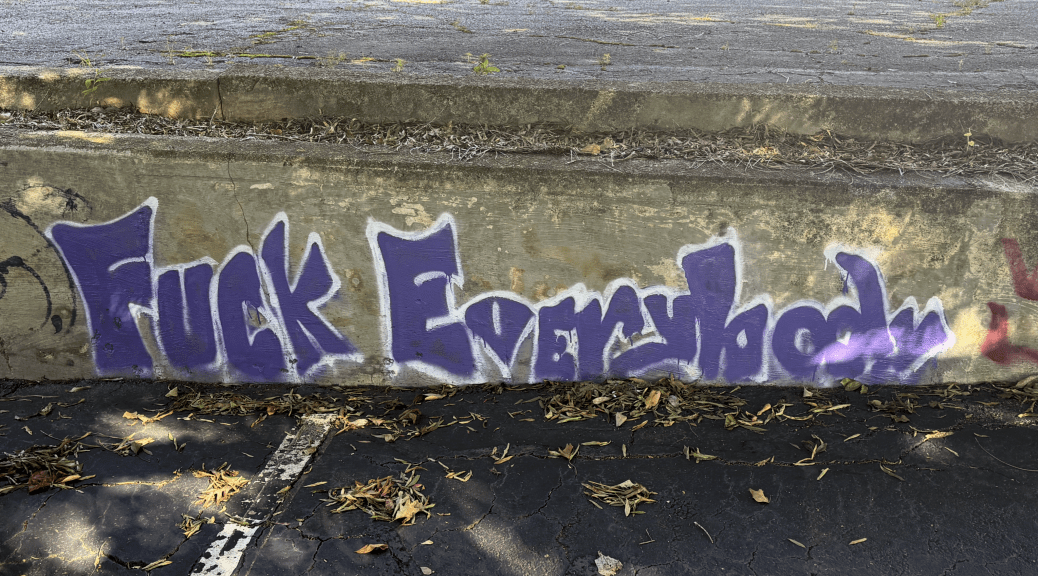
Sayaka Murata’s Vanishing World, or “Fuck Everybody”

I want to defy
The logic of all sex laws

“Sexx Laws,” Beck

I recently cited Bertrand Russell, a philosopher who I read during college. But I also came back to read a biography of Russell in the 1990s during my doctoral program, when I was writing an educational biography for my dissertation.

I was in my mid-30s by then and had left my early 20s search for what I believed mostly behind. As I discovered by becoming a biographer, unmasking any person is quite shocking, and Russell seemed much frailer, less resolute once I saw the whole man.

Russell, you see, had espoused a free love ideology, but putting his beliefs into practice proved much different than advocating for those beliefs.

I think Russell was lurking there in my mind when I saw this graffiti recently:
I snapped a picture with my phone and posted a snarky “Free love or anger?” caption across social media.

Sexual liberation, free love, polyamory, etc., are all fascinating to me because I find these concepts both powerfully compelling and (as witnessed in Russell’s own life) incredibly difficult to realize in lived experiences.

Too often, I think, what should be issues of sexual liberation—more needed by women—is a tactic by men to leverage some space or justification for men’s infidelity; further, these progressive ideas about love and sex tend to hit a wall with men’s inability to be possessive in relationships.

Another interesting example is the creator of DC’s Wonder Woman, William Moulton Marston, who is featured in Jill Lepore’s The Secret History of Wonder Woman.

Marston is often credited with weaving feminist ideals into Wonder Woman, and he also practiced polyamory—living and having children with his wife Elizabeth Holloway Marston and partner Olive Byrne, an arrangement that also included Marjorie Wilkes Huntley from time to time.

Again, the reality behind the ideal revealed that these women made much of Marston’s work possible, and likely did some significant amount of that work.

Who did these progressive ideas about women, sex, and relationships benefit?

Marston reminded me of another foundational author in my life, D.H. Lawrence who expressed and portrayed in his fiction a belief that men needed a woman for his intellectual partner and another for his sexual partner.

These are, of course, just a few examples of how the real world manufactures normal, how individuals navigate that normal or find ways to forge their own normal.

And thus, that blunt graffiti two-words also sit just as I was reading and finishing Sayaka Murata’s Vanishing World.

Sayaka Murata’s Vanishing World: Another Examination of Normal

Like Haruki Murakami, Sayaka Murata is a Japanese writer who draws me in with what reads like literary fiction but is heavily tinged with something like science fiction, or fantasy, or magical realism.

Murata’s works, such as her newest novel Vanishing World, falls into what Margaret Atwood calls speculative fiction. Both Murata and Atwood include elements that are speculative science, but much of these created other worlds seem disturbingly normal, or at least not so much different from the world we live in now.

And similar to her Convenience Store Woman and Earthlings, Vanishing World draws the reader into another engaging and surprising examination of normal.
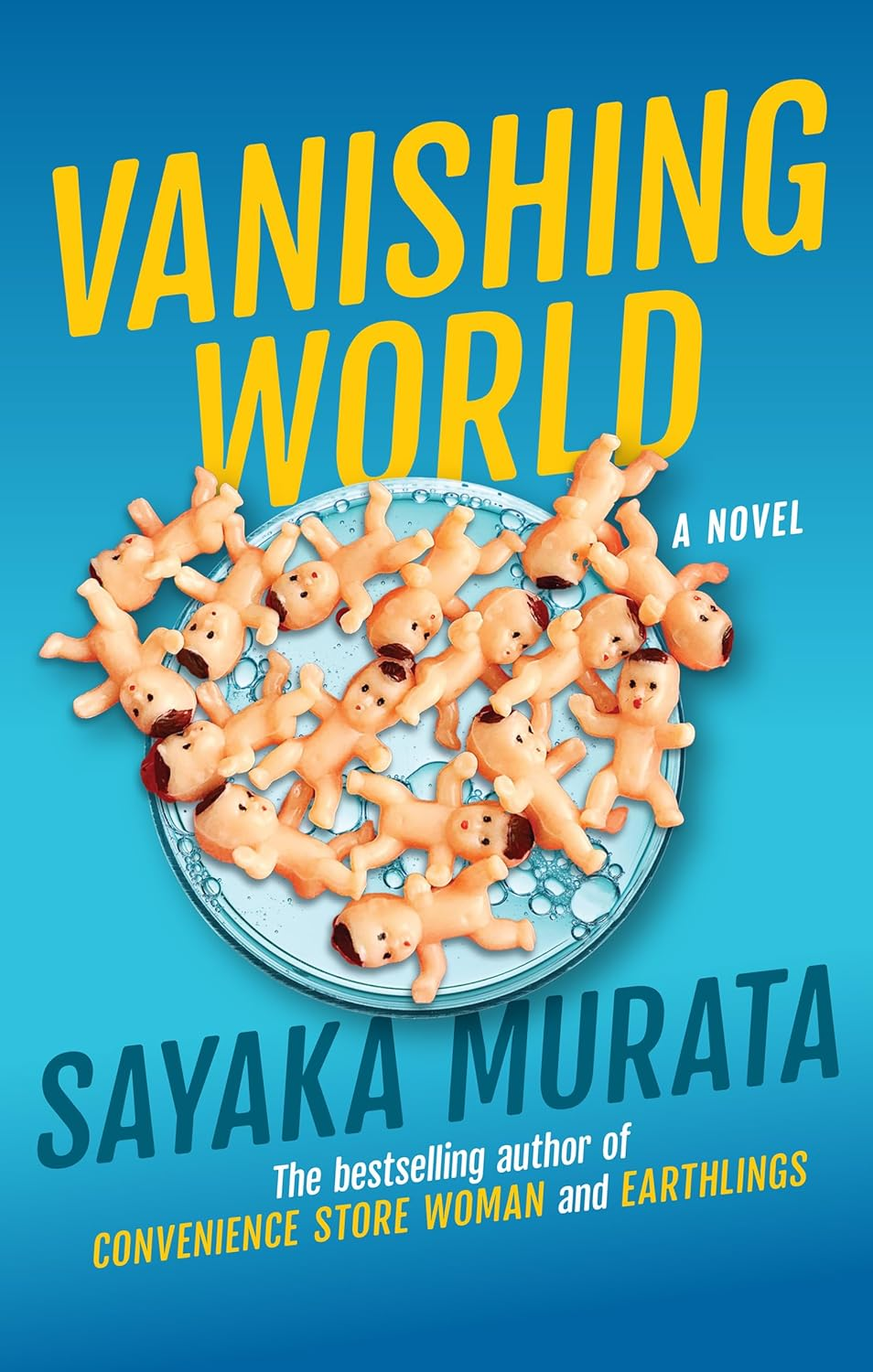
Amane, the main character, lives in the cusp of an old world where procreation is achieved through intercourse (her parents, to Amane’s discomfort, produce Amane through sex), and the brave new world of procreation only through artificial insemination.

In fact, the new normal is that husband and wife are family, and thus, any sexual contact is deemed incest, taboo.

There are some surprises, twists, and disturbing developments, but all in all, Murata forces the reader to think deeply about sex and gender roles, what makes normal “normal.”

The end is disorienting and powerful (similar to Earthlings), bringing the entire work into stark focus.

“Men and women were now all the same,” Amane acknowledges, “all wombs in service of the human race.”

And just pages from the end, Amane argues with her mother: “‘And you aren’t brainwashed, Mom? Is there any such thing as a brain that hasn’t been washed? If anything, it’s easier to go insane in the way best suited for your world?'”

This speculative world of Murata is about humans making normal “fuck nobody,” a sort of extreme puritanical alternate world that renders human nature unnatural—or at least, no longer normal.
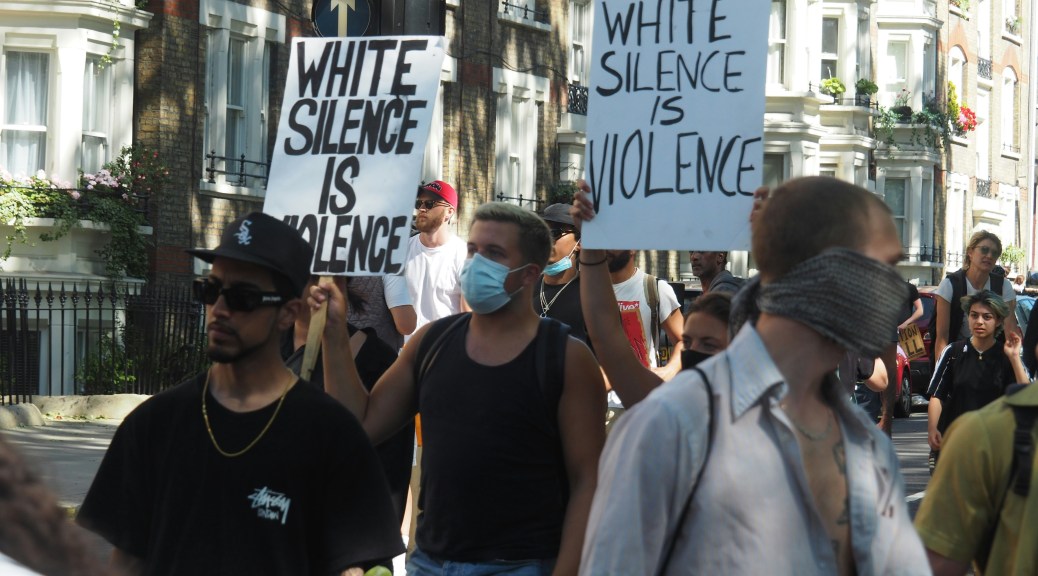
What Every White Person in the US Knows: 2025

[Header Photo by Walid Hamadeh on Unsplash]

Here are two texts that may not immediately appear to be saying something similar about the state of the US in 2025.

Let’s start with On Language, Race and the Black Writer by James Baldwin (Los Angeles Times, 1979):

Every white person in this country—and I do not care what he or she says—knows one thing. They may not know, as they put it, “what I want,” but they know they would not like to be black here. If they know that, then they know everything they need to know, and whatever else they say is a lie.

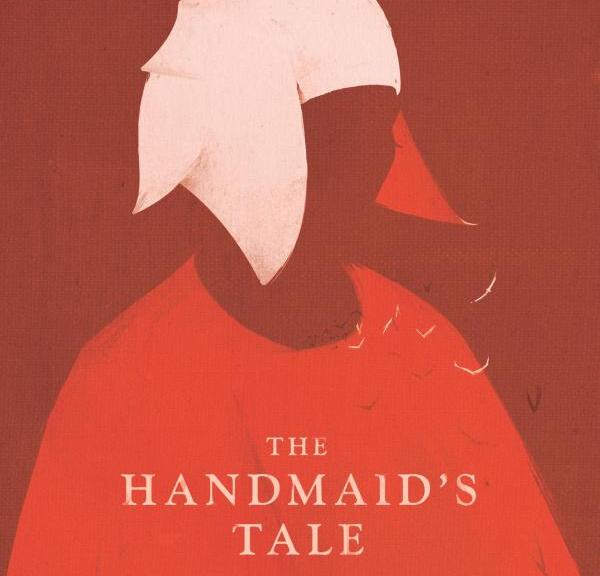
And then, just a few years later, there is Margaret Atwood’s The Handmaid’s Tale, specifically the closing “Historical Notes” where readers learn about the context behind how Gilead comes about.

At a satirical symposium in Gileadean studies dated June 25, 2195, the keynote, Professor James Darcy Pieixoto, explains that context:

Men highly placed in the regime [of Gilead] were thus able to pick and choose among women who had demonstrated their reproductive fitness by having produced one or more healthy children, a desirable characteristic in an age of plummeting Caucasian birthrates, a phenomenon observable not only in Gilead but in most northern Caucasian societies of the time.

The reasons for the decline are not altogether clear to us. Some of the failure to reproduce can undoubtedly be traced to the widespread availability of birth control of various kinds, including abortion, in the immediate pre-Gilead period. Some infertility, then, was willed, which may account for the differing statistics among Caucasians and non-Caucasians.

…But whatever the causes, the effects were noticeable, and the Gilead regime was not the other one to react to them at the time. Rumania, for instance, had anticipated Gilead in the eighties by banning all forms of birth control, imposing compulsory pregnancy tests on the female population, and linking promotion and wage increases to fertility.

What are these texts from over four decades ago telling us about the current political and cultural state of the US during the era of Trump/MAGA?

White Americans, notably the white political and cultural leaders, are openly concerned about the low birthrate among white people. And thus, restricting and banning abortion have swept much of the country after the overturning of Roe v. Wade. [1]

Not that long ago, mainstream thinkers believed Roe v. Wade and abortion rights were safe in the US; people raising concerns were considered alarmists.

Now, as Republicans and conservatives seem to be coming after birth control next, we cannot hesitate as we did before the dismantling of women’s rights came as we should have known it would.

In the passage from the “Historical Notes,” we have a key point about the birthrates of white people falling against the rise of birthrates about other races.

And thus, the connection to Baldwin’s confronting “every white person in this country—and I do not care what he or she says—knows one thing. … [T]hey would not like to be [B]lack here.”

Not to speak for or over Baldwin, but to help us tease out this connection in 2025, white fear in the US is fear not singularly grounded in race but ultimately fueled by the fear of becoming a minority.

We must next consider fully Baldwin’s recognition that for white people, Black people and the consequences of their minority status in the US are a mirror for who white people are—more so than any commentary on Black people themselves.

For all the histrionics denying white privilege, white people know one thing—that white people as the majority, that white people with the balance of power, used that majority status and power to the detriment of any and all minorities.

If and when white people become the minority, they fear that they will then suffer the same consequences of minority status that white people have imposed on other races in the US.

White people cannot fathom a world in which majority and minority statuses do not result in some winning because others are losing.

The Great Whitewashing is upon us—one foreseen by Baldwin and Atwood.

One that is coming to fruition before our eyes.

What every white person knows may destroy everything for everyone.

What each white person does now will tell everyone everything we need to know.


[1] See Things Fall Apart for Women (Again): Leni Zumas’s Red Clocks


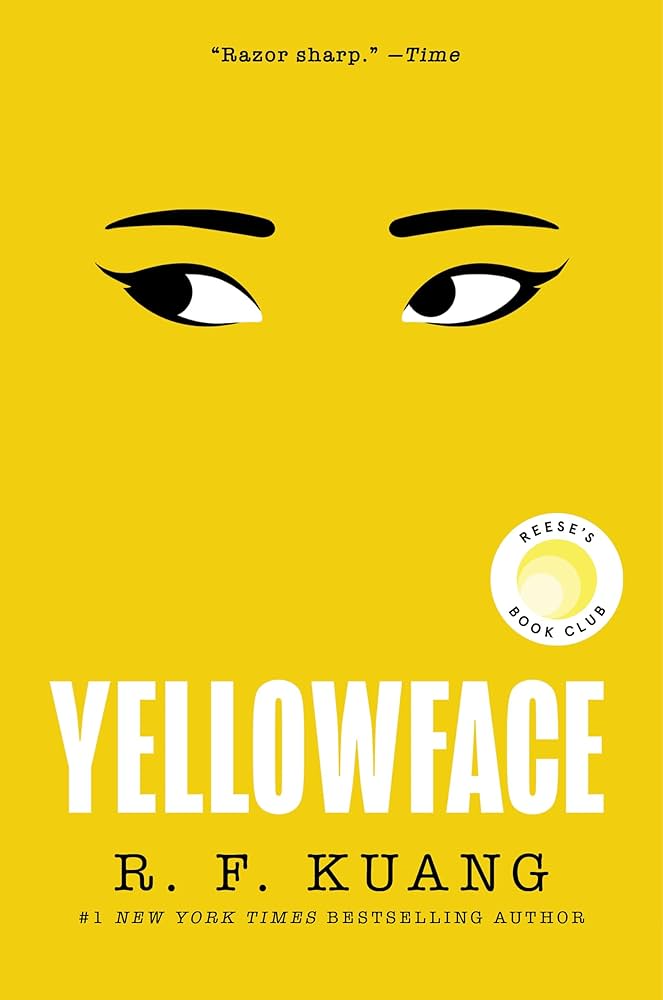
Yellowface: Adventures in Storytelling

It is hard for me to overemphasize the profound impact discovering irreverent humor had on me as a young human in the 1970s.

The list is long—George Carlin, Richard Pryor, The Firesign Theater, National Lampoon, Monty Python, Saturday Night Live, and so many films.

I was 13 when Blazing Saddles (1974) was released, now celebrating its 50th year anniversary. I came to love all of Mel Brooks’s films, but Blazing Saddles found a spot not only in my consciousness but also among my mother’s side of the family.

For many years our gatherings were punctuated with quotes from the movie followed by outbursts of laughter.

But witnessing how people have responded to the film over the years raises an important question: How can anything so misunderstood also be so beloved and enduring?

You see, the anniversary of Blazing Saddles has resurrected an utterly nonsensical response: Blazing Saddles at 50: the button-pushing spoof that could never get made today.

Just as conservatives and anti-woke warriors have misrepresented and dishonored George Carlin, claiming that the film could not be made today because of the woke mob completely misses that Blazing Saddles is a woke film (ironically, suggesting otherwise erases the brilliance of Black contributions to the film by Cleavon Little and Ricard Pryor).

And this leads to another question: When are misrepresentations of racism racism and when are they anti-racism?

We have ample literary evidence of this problem, also recently center stage in the rise of rightwing censorship: Adventures of Huckleberry Finn and To Kill a Mockingbird are excellent examples of representations of racism that offer extremely complicated ways to understand the texts and their appropriateness for exploring racism.

Both novels suffer from centering white characters, and TKAM is likely a poor text for examining racism since it perpetuates the white savior myth.

The reignited but jumbled public debate about Blazing Saddles comes in the wake of my first audiobook experience, Yellowface by R.F. Kuang.

Soon after that listening, I also sat mostly listening to a book club discussion among almost exclusively women.

One of the points brought up, and one of my central reactions, overlaps strongly with the Blazing Saddles/ Huck Finn/ TKAM issues noted above: How does a work become popular while being either misunderstood or not fully understood?

Broadly, I read Yellowface as a scathing satire of the publishing industry (and the insider’s view of MFA and creative writing programs) and a cautionary tale about the corrosive influence of capitalism/The Market on literary quality (sort of the myth that publishing is a meritocracy) as well as DEI commitments among publishers (the novel unmasks DEI as mostly marketing and tokenism).

I mentioned to my partner that I think much of that insider satire has to be lost on many readers in the same way I think Jeffrey Eugenides’s sort of English major perspective is missed by the average reader.

Regardless, Yellowface is incredibly rich and complex in terms of what we are experiencing and how readers might best navigate the storytelling.

First, I think storytelling is central to this work about writers, of course, but Kuang—like Twain and Lee—chooses to center a white character and her white voice (often one we find hard to feel any sympathy for) in order to interrogate storytelling and even story ownership in the context of race and racism.

Here, two important elements come to mind—the use of the unreliable narrator and the overlap between Yellowface and The Handmaid’s Tale by Margaret Atwood.

“Many of Edgar Allan Poe’s works include obsessed narrators who are plagued by their unconscious in order to discover their true selves,” Rachel McCoppin writes. And this description in many ways perfectly describes June Hayward, narrator of Yellowface.

June is relentlessly plagued by her Self to the exclusion of others and ultimately, it seems, to the exclusion of the Self she seems to be seeking.

Here, I must highlight Atwood’s The Handmaid’s Tale since, similar to Yellowface, the novel centers a white woman and her voice while also repeatedly disorienting the reader’s perception of that storytelling.

The narrator in HMT often tells an event and then confesses that version is wrong, only to tell it differently. Then, in the Historical Notes, we discover this story is a transcript recreated by a scholar from audio recordings.

Yellowface also significantly challenges the storytelling while also directly raising questions about who tells the stories as well as who should.

Does the scholar in HMT own the story simply by discovering the tapes? Does June have a right to Athena Liu’s manuscript that is also Liu’s retelling (claiming?) of the stories of Chinese laborers in WWI?

Whether intentional or not, I am also struck not only by the many names by which June Heyward goes (June Hayward, Juniper Song, Junie) but also how that mirrors the imposed name of June on the narrator of HMT:

When I first began “The Handmaid’s Tale” it was called “Offred,” the name of its central character. This name is composed of a man’s first name, “Fred,” and a prefix denoting “belonging to,” so it is like “de” in French or “von” in German, or like the suffix “son” in English last names like Williamson. Within this name is concealed another possibility: “offered,” denoting a religious offering or a victim offered for sacrifice.

Why do we never learn the real name of the central character, I have often been asked. Because, I reply, so many people throughout history have had their names changed, or have simply disappeared from view. Some have deduced that Offred’s real name is June, since, of all the names whispered among the Handmaids in the gymnasium/dormitory, “June” is the only one that never appears again. That was not my original thought but it fits, so readers are welcome to it if they wish.

Margaret Atwood on What ‘The Handmaid’s Tale’ Means in the Age of Trump

Atwood and Kuang invite readers to consider the importances of names, and these works are complex dramatizations of the complexity of not only storytelling but also the storyteller.

I have been a teacher and a literary critic for many decades so after my initial urge to connect Kuang’s novel to Poe’s unreliable narrator (and his foundational role in genre fiction such as horror), I was drawn to the many wonderful referential aspects of Yellowface.

Kuang masterfully blends and fictionalizes high-profile controversies in literature and publishing. [1]

Two are linked to Oprah Winfrey’s book club: A Million Little Pieces and American Dirt.

A Million Little Pieces sparked a public debate about the nature of genre since James Frey was accused of bogus claims in his published memoir (which began as a novel).

I use this debate often with students as a way to interrogate what we mean by genre, by fiction versus nonfiction, and by modes of expression. Among writers, teachers, and literary scholars, these lines are blurred, not distinct. But in the general public, there is little patience for anything other than black and white.

American Dirt, mentioned in the novel, is a recent and key publication that raised the questions many are exploring because of reading Yellowface—who has the right to a story and what constitutes appropriation (Jeanine Cummins’s novel was criticized as “brownface”).

The third reference is one of the most effective turns of Yellowface, when June discloses that Athena had co-opted a sexual assault situation experienced by June. This parallels the short story controversy around “Cat Person.”

While I struggle to feel compassion for June (or frankly any characters in the novel), the storytelling gradually reveals that Athena (and maybe all writers?) traffic in claiming other people’s stories as her own. One later scene involves June talking with Athena’s ex-boyfriend who directly confronts Athena’s willingness to use other people for her literary gain.

As I have continued to think and talk about Yellowface, I am more and more certain about what I don’t know for sure.

The end of the novel includes a revengeful character eventually (maybe?) bringing June’s charade to light, only to parlay that into her own book, Yelllowface.

Kuang has directly noted: “Who has the right to tell a story? It’s the wrong question to ask.”

For me, I am more fascinated by the storytelling than the storyteller. And Yellowface—again, like HMT—forces us through so many twist and turns that we are left unsure what story is true, or even if anything like the truth can exist.


[1] See:

“Freedom From” as Totalitarian Rhetoric

“But in The Handmaid’s Tale, nothing happens that the human race has not already done at some time in the past, or that it is not doing now, perhaps in other countries, or for which it has not yet developed technology,” explains Margaret Atwood in “Writing Utopia,” adding, “We’ve done it, or we’re doing it, or we could start doing it tomorrow.”

Or, we must admit, we are doing it right now.

Atwood’s most well know work is morphing itself into daily headlines, notably featuring a Republican governor from Florida:

As Atwood has warned, “freedom from” is the rhetoric of totalitarianism. In The Handmaid’s Tale, a few women are manipulated to control other women. The handmaid’s are trained by Aunts, who instill the propaganda:

There is more than one kind of freedom, said Aunt Lydia. Freedom to and freedom from. in the days of anarchy, it was freedom to. Now you are being given freedom from. Don’t underrate it….

We were a society dying, said Aunt Lydia, of too much choice. (pp. 24, 25)

The Handmaid’s Tale

Throughout the novel, readers must navigate how Offred (June) weaves the overlap of her own original ideas and vocabulary as that intersects with the propaganda of Gilead:

Will I ever be in a hotel room again? How I wasted them, those rooms, that freedom from being seen.

Rented license. (p. 50)

The Handmaid’s Tale

“Freedom” and “license” are exposed as bound words, the meanings contextual.

As Offred (June) continues to investigate rooms, she discovers a powerful but foreign phrase:

I knelt to examine the floor, and there it was, in tiny writing, quite fresh it seemed, scratched with a pin or maybe just a fingernail, in the corner where the darkest shadow fell: Nolite te bastardes carborundorum.

I didn’t know what it meant, or even what language it was in. I thought it might be Latin, but I didn’t know any Latin. Still it was a message, and it was in writing, forbidden by that very fact, and it hadn’t been discovered. Except by me, for whom it was intended. It was intended for whoever came next. (p. 52)

The Handmaid’s Tale

The power to control language includes defining words, often characterizing them incorrectly in the pursuit of political aims (such as “CRT” and “woke”), but also denying access to language—forbidding reading and writing, literacy, to those in bondage.

And then, Offred (June) explains about her life before Gilead:

We lived, as usual, by ignoring. Ignoring isn’t the same as ignorance, you have to work at it.

Nothing changes instantaneously: in a gradually heating bathtub you’d be boiled to death before you knew it….The newspaper stories were like dreams to us, bad dreams dreamt by others. How awful, we would say, and they were, but they were awful without being believable. They were too melodramatic, they had a dimension that was not the dimension of our lives.

We were the people who were not in the papers. We lived in the blank white spaces at the edges of the print. It gave us more freedom.

We lived in the gaps between the stories. (pp. 56-57)

The Handmaid’s Tale

And from that previous life of “ignoring” the other since it wasn’t about them, Offred (June) finds herself the procreation slave of a Commander, in “reduced circumstances” where she realizes: “There wasn’t a lot of choice but there was some, and this is what I chose” (p. 94).

It takes a special kind of “ignoring” to allow “freedom to” to be erased by the calloused allure of “freedom from” uttered with a smile by a totalitarian.

Better that we listen to a novelist: “We’ve done it, or we’re doing it, or we could start doing it tomorrow.”

Beware lest we all no longer have any of the words needed to be free at all.

My Open Letters: 5 May 2022

Dear 20-Somethings:

First, speaking as a person in his 60s, I am sorry for this country being dismantled in front of you, the country you are entering as the newest wave of adults.

I spent my 20s in the 1980s, the Reagan era, the lingering era of AIDS. That was not the country or world that I wanted. My youth was, in fact, a time that inspired in part Margaret Atwood’s The Handmaid’s Tale and Alan Moore’s V for Vendetta.

My youth, too, was spent with an awareness of the tyranny of the Right, the authoritarian conservative threat that was poised to slip into fascism.

But I also know, adults tend not to listen to the young—children, teens, 20-somethings. Having been a teacher across five decades, I have spent a great deal of my life with young people because I genuinely love young people.

Young people are hope.

Young people represent promises that the rest of us have failed to honor.

Over the last 20 years teaching college, I have watched as young people in their late teens and early 20s have shifted. I am not a “kids today” person; I don’t believe young people are somehow worse now than in some manufactured good old days.

I am routinely stunned at how much smarter young people are now than when I was young.

But I am also aware young people don’t vote; like me, young people are often cynical that the system will work for them.

I have never been a member of a political party.

Republicans are morally bankrupt, and Democrats are spineless. Like W.E.B. Du Bois and George Carlin, I was a non-voter for many years myself.

But the rise of Trump changed that for me. I have conceded that all we have is an imperfect system. The great paradox is that we must use the imperfect system to create a better one.

We—and by “we” I mean not just Americans but humanity—need young people to be the change we failed to be.

My students have often groaned when I turn to literature, but I cannot think of anything better than this to explain the situation before us: “The best lack all conviction, while the worst/ Are full of passionate intensity” (“The Second Coming,” William Butler Yeats).

Can you be the best with passionate intensity in the name of a kinder world, a world where we guarantee freedom and the pursuit of happiness to all, instead of leveraging our power to deny, to demonize, and to hate?


Dear RNC:

You are the party of censorship.

You are the party of hate.

You are, ultimately, the party of lies.

There is no saving that party, but Republicans must not be allowed to spread that hatred in the name of righteousness.

You are spitting in the faces of the idealized Founding Fathers you idolize. You spend your time in office denying freedom to people not like you (white men).

There is no question for you. You are power-hungry authoritarians.

This is who you are.


Dear Anti-Abortion Advocates:

I do not believe that the anti-abortion movement is about pro-life. I do not believe the anti-abortion movement is about babies or children.

I recognize the anti-abortion movement as a forced-birth movement that is anti-women.

But I am willing to be wrong, to admit I am wrong, and to join with those of you who genuinely want to reduce unwanted births, and thus, abortions.

Criminalizing abortion and women does not reduce abortion. Criminalizing abortion and women only increases unsafe abortions and increases violence and death for women.

There are, however, kind and even Christ-like ways to reduce dramatically unwanted pregnancies and abortion:

  • Call for universal healthcare.
  • Call for fully publicly funded contraception.
  • Call for comprehensive sex education.
  • Demand that all the promises of life, liberty, and the pursuit of happiness are extended regardless of gender.

If you choose punishment, you are anti-woman, not anti-abortion.

If you choose punishment, you are abdicating any moral authority you believe you have.

I do not believe that the anti-abortion movement is about pro-life. I do not believe the anti-abortion movement is about babies or children.

So far, you have proven me right. Can you prove me wrong?


Dear White Women:

A majority of white women voted for Trump. Twice.

White women voted for a man on record laughing about sexual assault, a man credibly accused of sexual assault across his entire life, including a former wife.

But even worse than that, by remaining loyal to the Republican Party, white women are complicit in anti-women legislation, and an anti-woman Supreme Court.

Margaret Atwood, a white woman who has been recently criticized for her own faults, held up to the world the horror of women being complicit in the patriarchy.

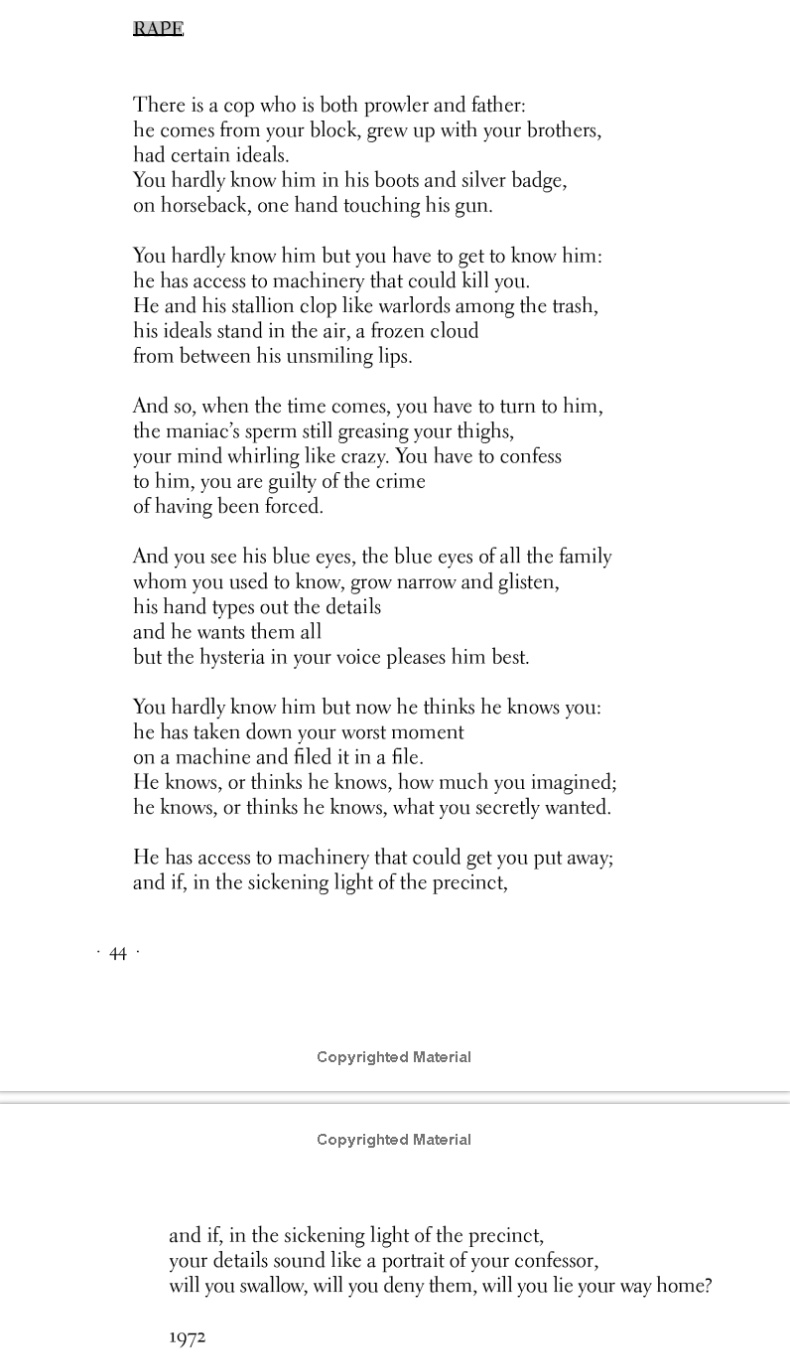
It is a terrible thing to blame a victim, which Atwood dramatizes often in her novel in powerful and disturbing ways. It is a terrible thing to blame a victim, as Adrienne Rich captures in a poem:

And it is a shallow thing to demand that the oppressed rise up to change an oppressive world.

Although men are the problem, white men, white women have entrenched themselves so deeply in the power of white men that being complicit demands that white women join with the rest of us to say “No, this is not the country we want.”

Can you set aside your selfishness, your security, and do the right thing?


Dear DNC:

The world is on fire, and you want my money?

The world is on fire, and you have refused to even drive the firetruck out of the station, much less use the firehose in some sort of effort to end this nightmare.

You see the world being on fire as a political opportunity for you.

How is that different than the RNC setting the world on fire as a political opportunity for them?

I am not a “both sides” thinker. I cannot act as if the DNC and RNC are equally failing our country, failing humanity.

But the DNC is failing everything that matters.

Cancel student loan debt.

Codify Roe v. Wade.

Pass progressive legislation.

Can you act in a way that ends this raging fire, or are you content to simply shout, “The world is burning (so send us your donations)”?

I know that Republicans will aggressively continue being horrible humans, but I do not trust that Democrats are willing to do the right thing because the world being on fire creates political opportunities for both parties.

Just as Republicans are Republicans first, power mongers, Democrats seem trapped in that same conservative mindset.

Can you be Americans first, or better yet, humans first?

National Days of Teaching Truth: May 2022

See a listing of 31 texts for May HERE (add in comments any text you will be teaching and a date; I will add to the sheet)

May 1: “Help me”

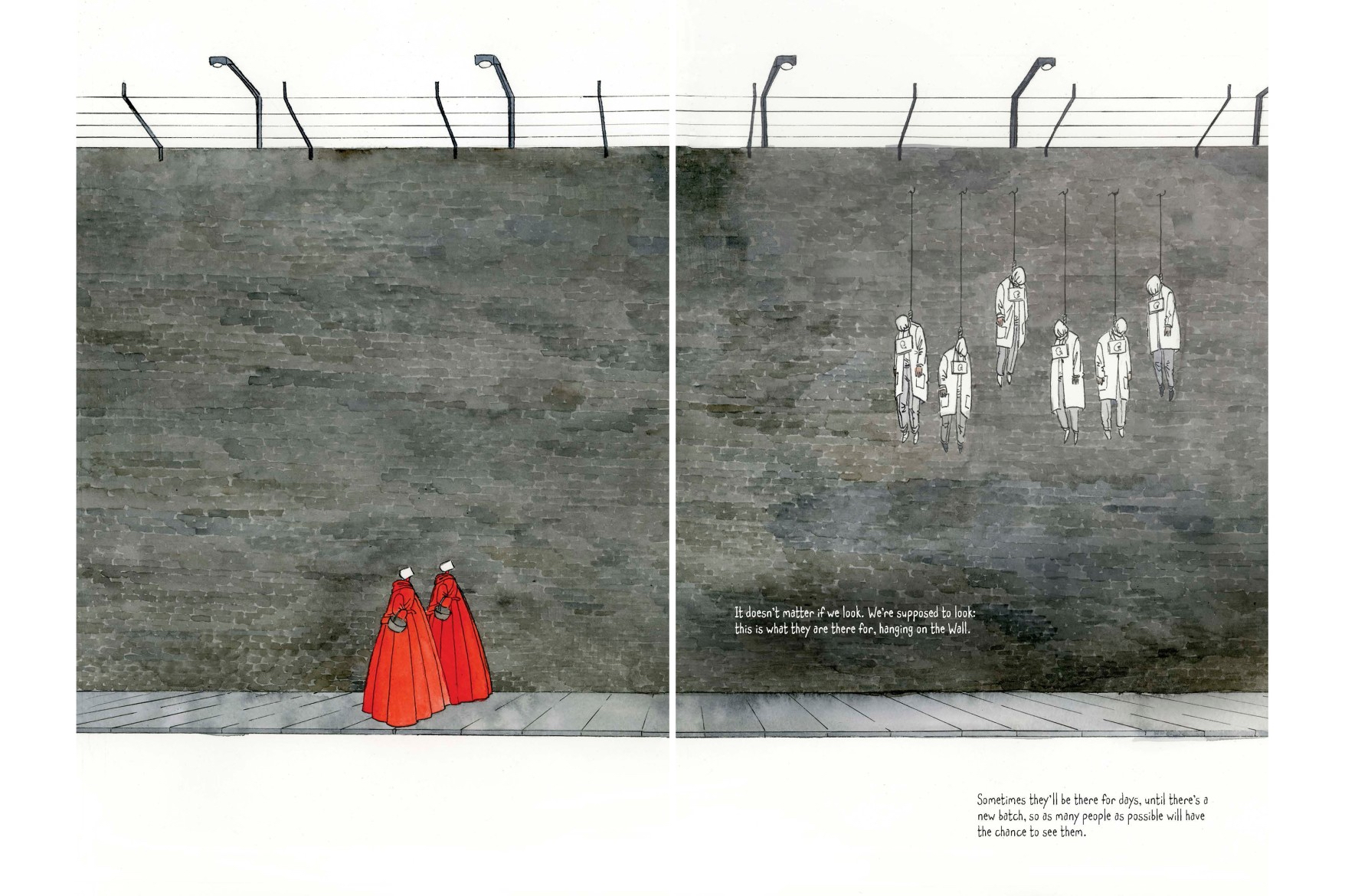
The Handmaid’s Tale (Graphic Novel): A Novel by Margaret Atwood and Renee Nault

The Handmaid’s Graphic Tale

The Handmaid’s Tale, Margaret Atwood

May 2

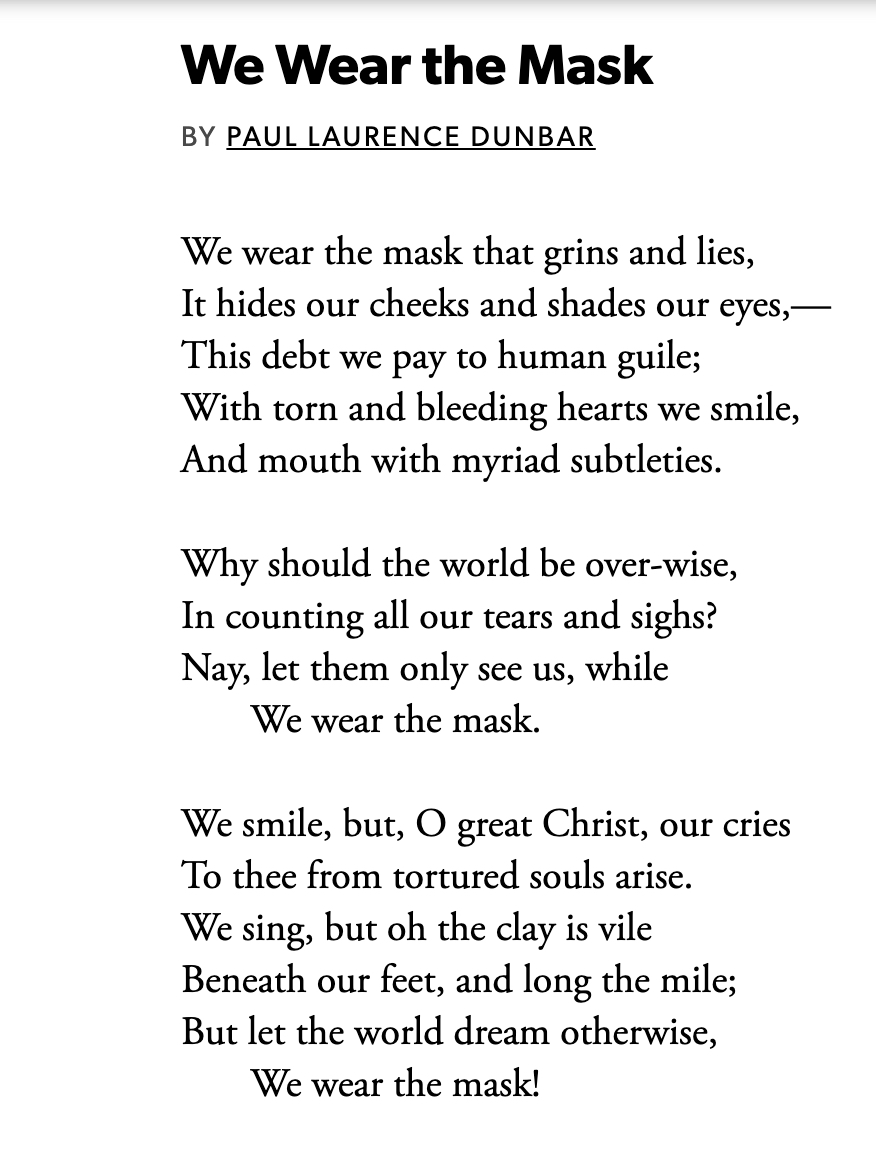
“We Wear the Mask,” Paul Laurence Dunbar

National Days of Teaching Truth to Power

May 3

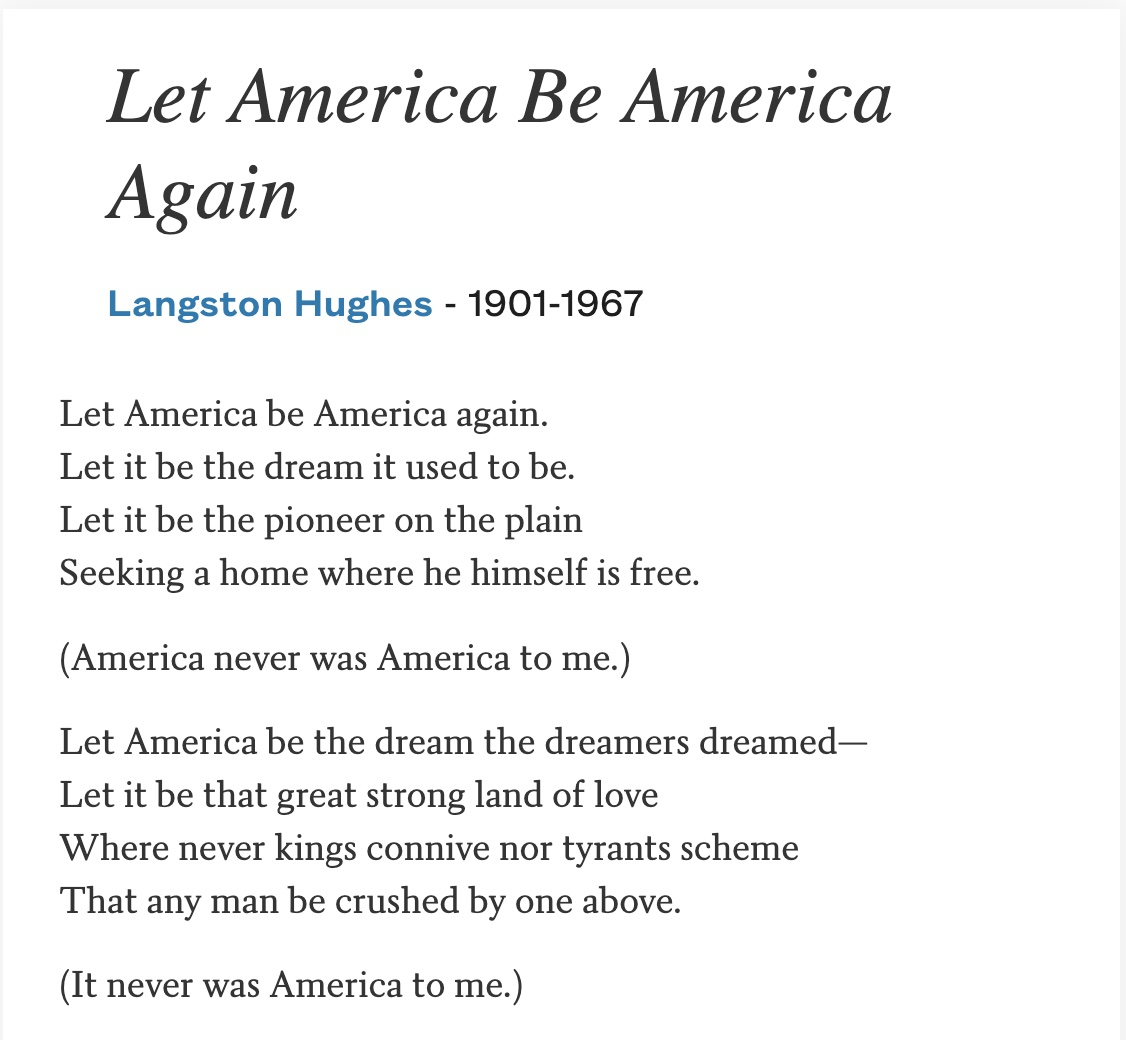
“Let America Be America Again,” Langston Hughes

Listening to Langston Hughes about “Make America Great Again”

May 4

You Can’t Be Neutral on a Moving Train: A Personal History of Our Times, Howard Zinn

Recommended

Red Clocks by Leni Zumas

May 5

Karl Marx: ten things to read if you want to understand him

Karl Marx (b. 5 May 1818)

The Soul of Man under Socialism, Oscar Wilde

May 6

The Transformation of Silence into Language and Action, Audre Lorde

May 7

Gender Queer: A Memoir, Maia Kobabe

What to Do When Your Kid Is Reading a Book That Makes You Uncomfortable

May 8

Letter from a Region in My Mind, James Baldwin

May 9

Mississippi Goddam, Nina Simone

May 10

Why our future depends on libraries, reading and daydreaming, Neil Gaiman

May 11

Vision: The Complete Collection

A Vision of Being Human: “Am I normal?”

May 12

Final Words of Advice/ “Where do we go from here?” 1967), Martin Luther King Jr.

George Carlin (May 12, 1937 – June 22, 2008)

May 13

“Peculiar Benefits,” Roxane Gay

May 14

Maus, Art Spiegelman

May 15

The Mis-Education of the Negro, Carter Godwin Woodson

May 16

“Diving into the Wreck,” Adrienne Rich (b. 16 May 1929)

May 17

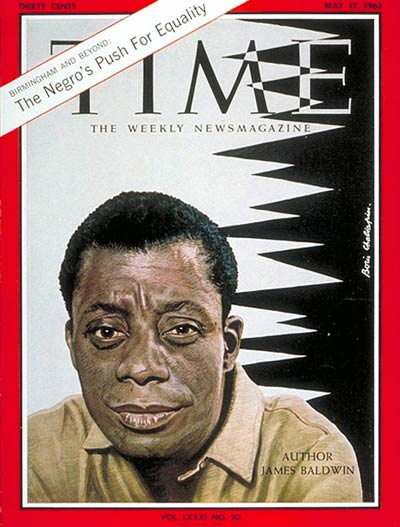
“A Report from Occupied Territory,” James Baldwin

Time Magazine (James Baldwin, 17 May 1963)

May 18

Malcolm X press conference on deadly police raid in Los Angeles (footage excerpt, 1962)

May 19

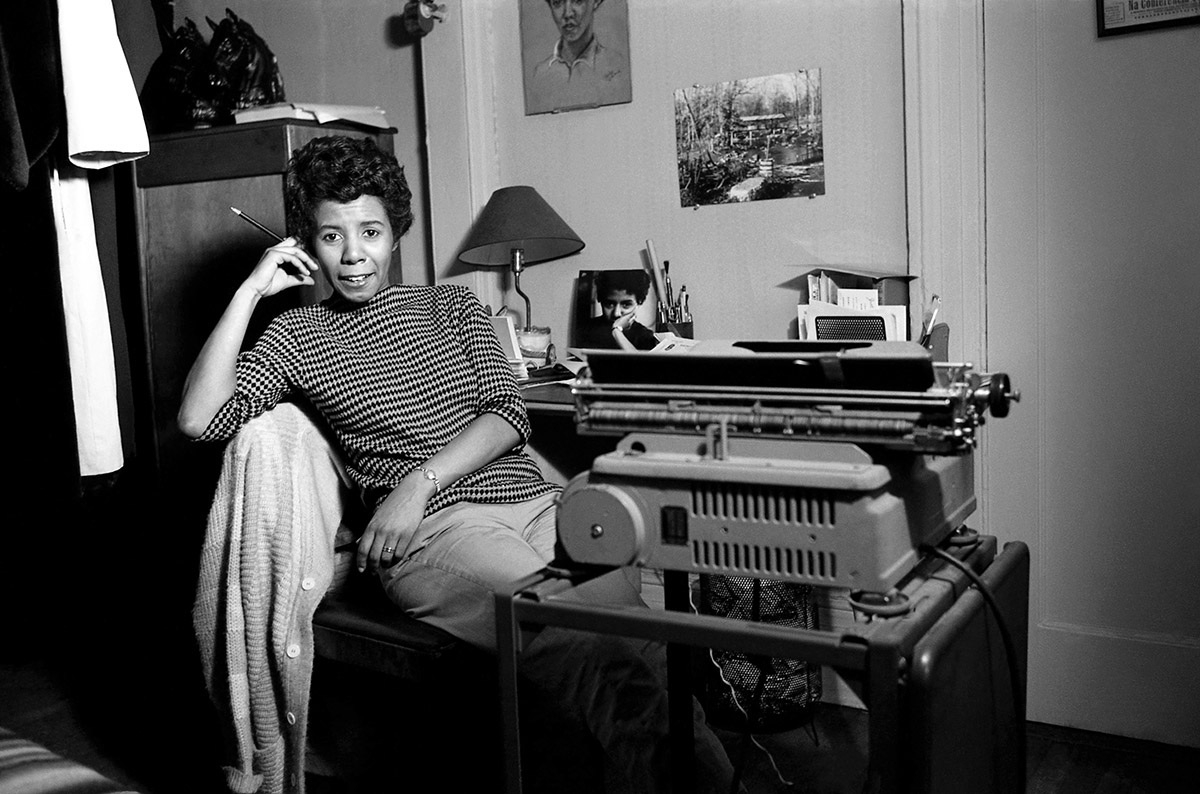
A Raisin in the Sun, Lorraine Hansberry (b. 19 May 1930)

Malcolm X (born Malcolm Little, later Malik el-Shabazz; May 19, 1925 – February 21, 1965)

Caribbean Matters: On Malcolm X’s birthday, remember that his mother’s Caribbean roots shaped him

May 20

“Harlem,” Langston Hughes

May 21

We Real Cool: Black Men and Masculinity, bell hooks

White Lies, Black Incarceration, and the Promise of Reading in Prison

May 22

“We Real Cool,” Gwendolyn Brooks

May 23

Woman in the Nineteenth Century, Margaret Fuller (b. 23 May 1810)

May 24

You Want a Confederate Monument? My Body Is a Confederate Monument, Caroline Randall Williams

May 25

Statement to the Court, Eugene V. Debs

Kurt Vonnegut letter on censorship

May 26

What These Children Are Like, Ralph Ellison

May 27

All Boys Aren’t Blue, George M. Johnson

May 28

The Soul of Man under Socialism, Oscar Wilde

May 29

If Black English Isn’t a Language, Then Tell Me, What Is?, James Baldwin

May 30

“Incident,” Countee Cullen (b. 30 May 1903)

Banning the N-word on campus ain’t the answer — it censors Black professors like me, Vershawn Ashanti Young

May 31

“I Sing the Body Electric,” Walt Whitman (b. 31 May 1819)

Honey Bee: “Honey helps an open wound”

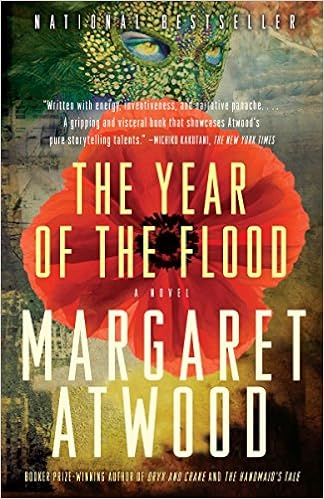
“Gradually, Toby stopped thinking she should leave the Gardeners,” begins Chapter 19 of Margaret Atwood’s book 2 of her Maddaddam Trilogy, The Year of the Flood.

The “flood” is the apocalyptic “Waterless Flood,” predicted by God’s Gardeners, a vegetarian sect, and created by Crake (Oryx and Crake, book 1 of the trilogy).

Oryx and Crake (MaddAddam Trilogy, Book 1) by [Margaret Atwood]

“One day, old walnut-faced Pilar—Eve Six—asked Toby if she wanted to learn about bees,” and Toby does. The scene includes Pilar’s “bee lore”—such as “Honey helps an open wound”—and highlights the fragility of those bees under the weight of human negligence: “It was the pesticides, or the hot weather, or a disease, or maybe all of these—nobody knew exactly.”

Atwood’s trilogy, and this novel specifically, is quite chilling—for me a reread—in the time of Covid-19; our 2020 pandemic at least forces humans to confront our fragility, but it should also provoke some humility for our role in the entire ecosystem, Nature, or as Emily Dickinson envisions, “Landscape.”

What human behavior costs bees also costs humanity—bees as harbingers of our own inflicted doom.

That God’s Gardners are vegetarian, not vegan, is a distinction captured by their devotion and tending to honey bees. For several years now, I have been learning about veganism, and one of the most surprising elements was discovering that for vegans, honey remains a point of debate.

The standard “eat nothing with a face” framing of veganism is a bit fair, and a bit careless. Vegans also shun eggs and milk, produced by creatures with faces, driven by a concern for sentient life that is central to the Gardner’s in Atwood’s novel.

Some of veganism can be grounded in consent—creatures other than humans being given the same grace of consent for their lives and that which they produce—while some is certainly anchored in the sanctity of life, a rejection of reading “dominion” in Genesis as nature and all living creatures subject to the folly of humans.

While bees producing honey seems the same as chickens producing eggs and cows producing milk, the gathering of and using honey continues to be allowed among some vegans and rejected by others.

Once unpacked, in fact, veganism becomes a nearly inextricable ethical spider’s web of contradictions. Fruits and vegetables are not above the workings of nature and living creatures, pollination for example.

How arbitrary is the line between pollination and honey/egg/milk production?

One morning, a little over three years ago, seemingly in a different universe than the world we live in during April of 2020, I was opening a small packet of honey to put in my coffee at Starbucks.

This may have been around the time that I learned some vegans rejected the use of honey (vegans do not, however, shun sugar). So I found myself overwhelmed in that moment with recognizing the arrogance of being human, the work of bees so neatly and cavalierly packaged for human consumption.

For many years, I had avoided processed granular sugar by using honey in my coffee. In recent years, along with the ethical dilemma, I have had to admit that sugar is sugar in the human body so the commitment to honey has always been fairly arbitrary and pointless.

After some health concerns highlighted by blood work last fall, I have renewed my quest to be sugar free, and have even abandoned my dear honey, drinking coffee with creamer only.

That morning at Starbucks began a poem, we rape the bees (because we can), because I stood there thinking about bees as workers, and the stark reality in the U.S. that workers are seen as autonomous beings even as our capitalistic consumer culture compels us to work or find ourselves less than human.

Health care and retirement along with our wages are directly tied to our status as workers. As the Covid-19 crisis is showing us, without the security of health care and wages, we are all dehumanized.

Our Waterless Flood has been a sort of reverse baptism that should wash us clean of the sin of the inhumanities of capitalism. This pandemic may as well call us to reconsider not only our basic humanity but our oversized role in all of nature.

For us in the South, we fear the invisible threat of Covid-19 as pollen covers over everything during an April that has brought us temperatures in the 80s, a swarm of tornadoes, and a frost and freeze warning.

Is making honey and serving the queen simply the beeness of being a bee, an existential fact like Sisyphus and his rock? Is working in the service of the U.S. economy simply the basic humanity of being human as well, a fate shared with the bees?

I included lyrics from “Bloodbuzz Ohio” (The National)—“I was carried to Ohio in a swarm of bees”—in my poem, and am often drawn to lyrics and poetry about bees.

So as I approach the end of book 2 of Atwood’s trilogy while I also live a new life guided more than normal by simply surviving our Waterless Flood, I venture outside everyday for some relief, some peace—everything yellow-dusted in pollen—and eventually I cough and sneeze, tempered then by the new paranoia we all feel from the basic human reactions that may signal the Waterless Flood is right there before us.

One of my favorite spots to sit outside my apartment, a converted cotton mill in the quickly gentrifying South, is among an assortment of bees and wasps in the rafters of the deck overhang. So far, we share the space in harmony, although I have to calm my own knee-jerk fears.

Now, I am tempered by Atwood’s speculative novels that seem all too real, but also Matthew Olzmann’s “Letter to Someone Living Fifty Years from Now,” published the same year I wrote my bee poem, ending: “And then all the bees were dead.”


Recommended

Honeybee: Poems & Short Prose, Naomi Shihab Nye

[The murmuring of bees has ceased], Emily Dickinson

The Unforgettable Yoko Ogawa

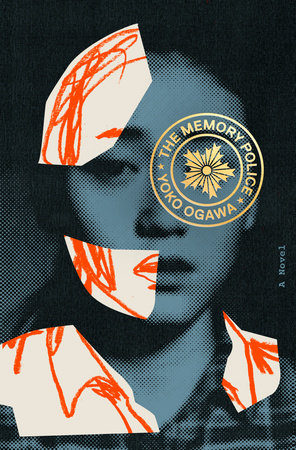
My experience with Yoko Ogawa’s The Memory Police was filled with moments of disorientation that matched at a much smaller level the events of the novel, set on an unnamed island where the inhabitants suffer through a series of disappearances under the surveillance of the Memory Police.

First, I was drawn to the stunning cover and a description promising a stark work of science fiction.

Since I received a hardback copy and the inside flap claims the novel is a “stunning new work,” I began reading the work as exactly that—a newly published novel by a young writer.

Yet, as I read, the genre wasn’t so neatly clearcut, and I soon learned the novel is from 1994, the English translation being new, but Ogawa, now in her late 50s, has a celebrated career in Japan.

“I sometimes wonder,” the narrator begins, “what was disappeared first—among all the things that have vanished from the island” (p. 3). And from there, the novel proceeds ominously but softly, or subtly, in a voice and a story that do prove to be stark but defy a simple label of science fiction; at turns it reads as fantasy, and then as fable or allegory.

For a book centered on the provocative act of disappearing, I was drawn as well to how much is not there to begin with. Character names and place names are missing or sparse. But I also felt off balance, disoriented, by the mismatch between the patient and soft narration against the foreboding doom of the disappearances, some of which seem minor although the loss and the ever-present threat of the Memory Police render all of the disappearances life-altering.

Reading Ogawa for the first time reminded me of Haruki Murakami, Albert Camus’s The Stranger, and Philip K. Dick—although I quickly warmed to seeing the novel as purely a work by Ogawa. In some ways there is a sense of detachment and very slow development I find often Murakami, and may be shared qualities of Japanese narrative.

Broadly, Ogawa’s fable is a powerful reflection of Camus’s existential message from The Stranger: “after a while you could get used to anything” (p. 77). However, in Ogawa’s allegorical nightmare, that concept is both proven and stretched almost beyond comprehension by the end of the novel.

It is the similarity with Philip K. Dick that sits strongest with me, though. Like Dick, Ogawa creates a pervasive sense of foreboding and fatalism in the lives of the characters. The totalitarian reality of The Memory Police is similar to many of Dick’s works as well as Margaret Atwood’s The Handmaid’s Tale and The Testaments, but Ogawa keeps the reader detached from and uninformed about the facts of that oppressive society.

Also similar to Dick, Ogawa investigates human nature, including what makes anyone human—or in this case, what can a human lose and still remain human (similar to a motif in Kazuo Ishiguro’s Never Let Me Go).

Another sparse aspect of the novel is plot, but as a reader, I was fully engaged with the characters; Ogawa’s careful and delicate portrayal of friendship and intimacy suggests that at least one key component of being fully human is our community with others.

The Memory Police begins calmly and persistently, but it never really reaches a boil or fever pitch, ultimately fading to the end more so than disappearing suddenly as is the case within the narrative. The novel, in fact. ends with the word “disappear,” and I was left filled and emptied simultaneously.

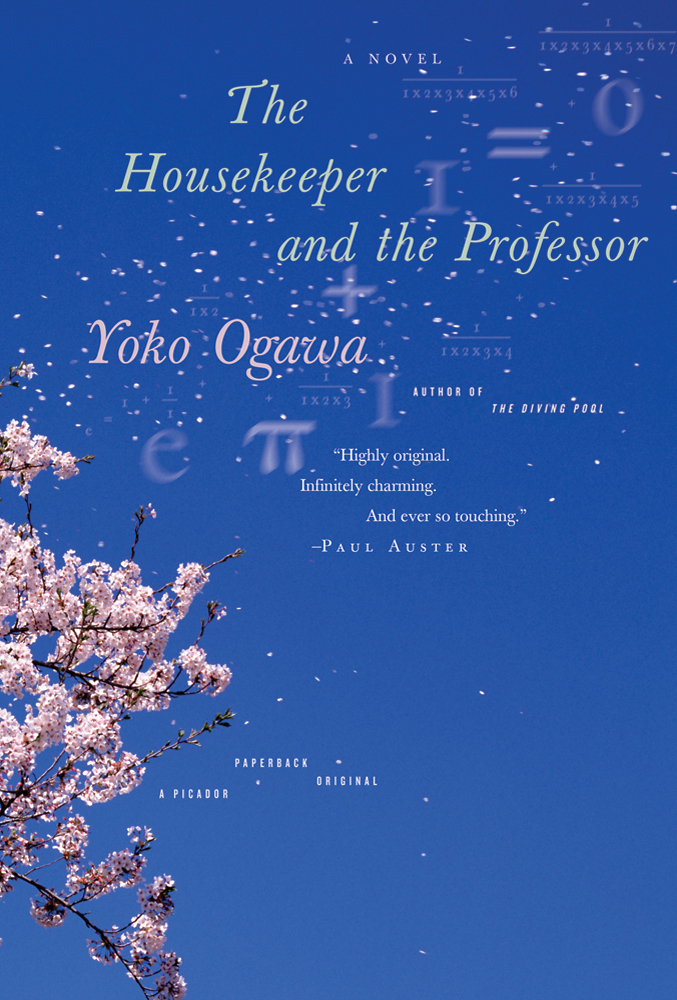
While reading this novel, I ordered four more of Ogawa’s works, and immediately began The Housekeeper and the Professor, where I found a rhythm that feels distinctly Ogawa’s.

Image result for the housekeeper and the professor"

While this slim novel reads as literacy fiction with a touch of allegory, absent many of the conventions of genre fiction, Ogawa once again deals with memory. In The Memory Police, characters not only have material disappearances, but over time, most of the characters no longer remember what has been lost—except for the rare few who become targets of the Memory Police.

Recall becomes dangerous, and suggests those with their memories intact have power that the omnipresent Memory Police are charged with erasing.

The premise of The Housekeeper and the Professor is not fantastical, but it is exceptional; the Professor of the title is an aging mathematical genius who, after an accident, has only 80 minutes at a time of memory along with his memory of his life prior to 1975.

Since his short-term memory constantly resets, his sister-in-law, alone as his caretaker, is challenged to keep a housekeeper employed to manage his life.

Ogawa builds on this unusual circumstance a really sweet and beautiful narrative about the housekeeper, her young son (dubbed Root by the Professor), and the Professor. The characters are often gentle and kind souls, often delicate, in spite of the odd nature of the Professor’s life and their tenuous relationships.

The story is often quirky, and Ogawa manages several moments of real tension on much smaller levels than in The Memory Police, but palpable tension none the less.

Although not essential knowledge for the reader, this novel’s use of mathematical principles is the motif that holds the story together, more weighty than the low profile of the plot and the slow development of the themes and characterizations. For the Professor and eventually the housekeeper and her son, math is beautiful and fascinating.

In Ogawa’s work, memory as that blends with all human relationships seems to be an essential element of being fully human, but in The Housekeeper and the Professor, readers also witness something about our basic humanity, for example in how the Professor interacts with and teaches Root:

Among the many things that made the Professor an excellent teachers was the fact that he wasn’t afraid to say “we don’t know.” For the Professor, there was no shame in admitting you didn’t have the answer, it was a necessary step toward the truth. It was as important to teach us about the unknown or the unknowable as it was to teach us what had already been safely proven. (p. 63)

That last sentence, I think, is a wonderful description of my experience reading Ogawa, which now continues with her collected three novellas, The Diving Pool.

Recommended Works in English Translation

Haruki Murakami

After the Winter, Guadalupe Nettel

The Plotters, Un-su Kim

The Transmigration of Bodies, Yuri Herrera

Signs Preceding the End of the World, Yuri Herrera

Kingdom Cons, Yuri Herrera

The Vegetarian, Han Kang

The White Book, Han Kang

The Polyglot Lovers, Lina Wolff

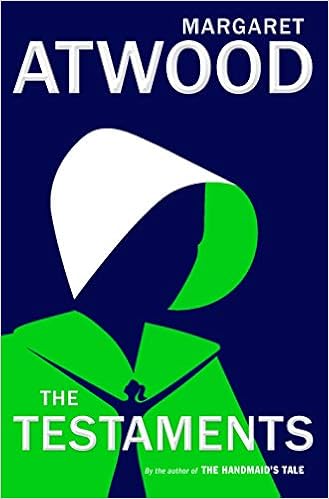
Margaret Atwood’s The Testaments: Reading and Writing Beyond Gilead

Becka said that spelling was not reading: reading, she said, was when you could hear the words as if they were a song. (p. 297)

The Testaments, Margaret Atwood

“How did Gilead fall?” Margaret Atwood asks in the Acknowledgements, noting that The Testaments, set 15 years after the main action of The Handmaid’s Tale but drafted 30-plus years after that novel, “was written in response to this question” (p. 417).

Even a writer of Atwood’s talent and success probably could never have imagined that Handmaid has become the cultural and political touchstone that has occurred with the rise of Trump and the popular Hulu series.

Those who found Handmaid in the late 1980s to be powerful then and an extremely compelling work of fiction may be skeptical about Atwood’s very late return to this now modern classic. For both the newly converted and the long-time fans of Atwood, I want to assure you all that this much delayed sequel pays off quite wonderfully.

I came to Atwood as a teacher—specifically high school Advanced Placement Literature and Composition—and then as a scholar. I have also grounded a tremendous amount of my academic and public work in Atwood’s fiction and non-fiction.

With efforts here, then, to avoid as much as possible spoilers, I want to highlight a few of the ways in which Atwood maintains elements from Handmaid while also extending her writer’s urge to connect literacy with empowerment and attaining ones full humanity.

The Testaments offers the narratives of three women—notably including Aunt Lydia from Handmaid. In both novels, as is common with Atwood’s fiction, the narrations are both lending a voice to those often unheard or silenced and working as meta-narrations about the nature of truth when stories are told, retold, and examined (both novels end with Gilead being  the focus of academic scholarship).

Much of Atwood’s fiction is an exploration of what it means to tell and retell stories.

Names and renaming are also prominent in the sequel, dramatizing the power of names and (re)naming as those processes disproportionately impact women in the service of men and patriarchy.

Handmaid details the end of the U.S. and how Gilead comes into being, although much of that is limited to what Offred could have known as a handmaid. Then, many of the finer details are revealed in the Historical Notes, a scholarly examination of Gilead well after its fall.

Testaments broadens the perspectives by including one voice from an inner woman of power, a woman mostly trapped in the upper levels of the Gilead machine, and another view from outside (Canada) that is both somewhat naive and deeply cynical.

These testaments piece together a well established Gilead for the reader and also document the theocracy’s final days. Some of the most compelling elements here are the full development of Aunt Lydia and the careful examination of two characters being groomed to be Aunts (after narrowly avoiding being wed to Commanders).

Part XVII: Reading Room serves as an excellent example of where Atwood excels in combining many of the thematic and narratives elements of her dystopian speculative novel. Aunts are women designed within Gilead to control other women; Aunts are embodiments of a sort of paradoxical authority, including their legal access to reading and writing.

In their journey to becoming Aunts, Agnes and Becka—who have bonded over their fears of being married to a Commander—take on a mentee (Agnes)/mentor (Becka) relationship since Becka has learned to read and write well ahead of Agnes. The motif of reading and writing is emphasized near the end of the novel, and Gilead, I think, to highlight the power of language.

Agnes struggles:

My reading abilities progressed slowly and with many stumbles. Becka helped a lot. We used Bible verses to practise, from the approved selection that was available to Supplicants.. With my very own eyes I was able to read portions of Scripture that I had until then only heard. (p. 297)

These scenes reminded me of Atwood’s deft use in the original novel of Commanders reading scripture to the Wives and Handmaids, with the reader alerted to what Becka soon reveals to Agnes:

The day came when the locked wooden Bible box reserved for me would be brought out to the Reading Room and I would finally open this most forbidden of books. I was very excited about it, but that morning Becka said, “I need to warn you.”

“Warn me?” I said. “But it’s holy.”

“It doesn’t say what they say it says.” (p. 302)

This echoes in Handmaid when the Commander reads the Bible before the Ceremony with Offred:

The Commander pauses, looking down, scanning the page….We lean toward him a little, iron fillings to the magnet. He has something we don’t have, he has the word. How we squandered it once….

For lunch it was the Beatitudes….They played it from a tape….The voice was a man’s….I knew they made that up, I knew it was wrong, and they left things out, too, but there was no way of checking. (pp. 88-89)

In both novels, Atwood reveals that whoever controls the word maintains power. These novels should remind readers that throughout history, learning to read has been carefully controlled—who is allowed, who is not, and who remains so burdened with living that to read seems a luxury.

And so Agnes gains a sort of consciousness along with gaining literacy: “Being able to read and write did not provide the answers to all questions. It led to other questions, and then to others” (p. 299).

As Becka cautioned, Agnes confronts that “[t]he truth was not noble, it was horrible”:

This is what the Aunts meant, then, when they said women’s minds were too weak for reading. We would crumble, we would fall apart under the contradictions, we would not be able to hold firm.

Up until that time I had not seriously doubted the rightness and especially the truthfulness of Gilead’s theology. If I’d failed at perfection, I’d concluded that the fault was mine. But as I discovered what had been changed by Gilead, what had been added, and what had been omitted, I feared I might lose my faith. (p. 303)

This awakening in Agnes born of her learning to read and write leads to a larger theme for Atwood: “Once a story you’ve regarded as true has turned false, you begin suspecting all stories” (p. 307).

And in Testaments, “Beneath its outer show of virtue and purity, Gilead was rotting” (p. 308).

As compelling as Atwood’s motifs are in their deconstructing of history and the present, The Testaments if no mere “protest novel,” which James Baldwin rejected, explaining:

It must be remembered that the oppressed and the oppressor are bound together within the same society; they accept the same criteria, they share the same beliefs, they both alike depend on the same reality….

The failure of the protest novel lies in its rejection of life, the human being, the denial of his beauty, dread, power, in the insistence that it is his categorization alone which is real and which cannot be transcended. (pp. 17-18)

Atwood doesn’t stoop to simple Continue reading Margaret Atwood’s The Testaments: Reading and Writing Beyond Gilead