Abstract: The current reading crisis, the “science of reading” (SoR) movement, is a subset of the perpetual education crisis begun under Ronald Reagan with A Nation at Risk. Ultimately, “crisis” education reform is a sort of industry that works as a distraction and erasure. Consequently, marginalized and minoritized students, often significant populations within Urban education, are never directly served in education reform grounded in accountability instead of equity. The SoR movement, through legislation and policy, is working indirectly to drive book censorship, book bans, and the whitewashing of texts in classrooms and libraries.
I am teaching for the second time a new course in my department, an introduction to educational philosophy.
At about midterm, we have covered the primary educational philosophies to prepare them for a major project over the second half of the course. When we covered Essentialism, I noted that this philosophy drives reading and education reform in several English-speaking countries, notably in the “Science of Reading” (SOR) and “Science of Learning” (SOL) movements.
Essentialism is summarized in this online, open-access text on educational philosophies (see 3.2):
Essentialism adheres to a belief that a core set of essential skills must be taught to all students. Essentialists tend to privilege traditional academic disciplines that will develop prescribed skills and objectives in different content areas as well as develop a common culture. Typically, Essentialism argues for a back-to-basics approach on teaching intellectual and moral standards. Schools should prepare all students to be productive members of society. The Essentialist curriculum focuses on reading, writing, computing clearly and logically about objective facts concerning the real world. Schools should be sites of rigor where students learn to work hard and respect authority. Because of this stance, Essentialism tends to subscribe to tenets of Realism. Essentialist classrooms tend to be teacher-centered in instructional delivery with an emphasis on lecture and teacher demonstrations.
Key beliefs of Essentialism advocate for basic skills instruction in core courses (notably reading and math), teacher-centered direct instruction, and conservative cultural norms.
Often Essentialist movements are popularly labeled “back-to-basics” movements, raising some problems for these arguments since calls for back-to-basics have existed in cycles reaching well back into the early decades of the twentieth century in the US. [1]
A cautionary tale about returning to Essentialism to form reading policy exists in the UK where phonics-centered reading reform has been implemented since 2006. [2]
Research has revealed that reform in the UK, in fact, has been implemented (including annual phonics assessments for all early literacy students), but that those reforms have not achieved the essential goal of improving student reading comprehension; and thus, researchers called for a more balanced approach to reading instruction.
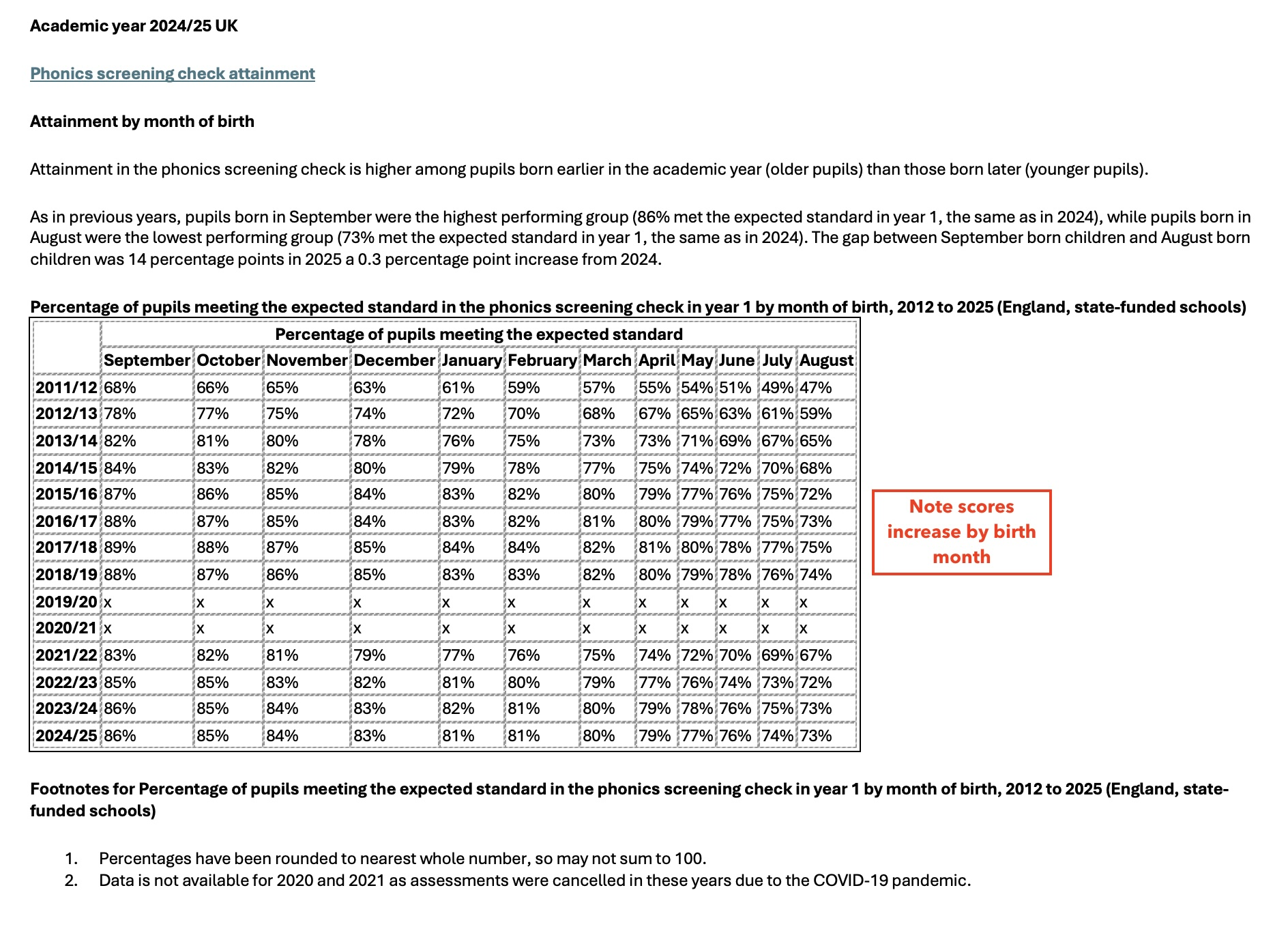
A key lesson from the UK is that skills-based assessments (phonics checks) produce student achievement strongly correlated with birth month, suggesting that child development may be a significant factor in this data (see HERE for all the data from the 2024 UK phonics check):
Another cautionary tale exists right here in the US, notably in the misunderstood and misrepresented National Reading Panel (NRP) report and the subsequent reading reform that occurred after No Child Left Behind (NCLB) mandates in 2001. Two lessons must be emphasized:
First, the NRP report found that systematic phonics instruction for the early grades tended to increase student acquisition of phonics but did not increase comprehension. Further, when compared to students who received more holistic reading instruction, students receiving systematic phonics early were not significantly ahead of those students in later grades in terms of comprehension achievement.
And the disturbing irony about the newest phonics gambit is that claims of a reading crisis directly caused by balanced literacy, popular reading programs, and a lack of phonics instruction are not grounded in evidence.
Now moving to the reading instruction, there’s a narrative that has been sold to the American public and policymakers. There’s a literacy crisis because teachers do not teach the science of reading because they were not taught the science of reading in colleges of education. I have tried to identify the evidence that was used to construct this claim, and I actually have not found this evidence yet.
A perceived crisis demands attention and creates an impetus for urgently needed solutions. The Course takes that tack, arguing that there is a national crisis in reading and then promoting phonics as the cause (there is not enough of it) and the solution (more of it is needed). As we argue here, there is no indisputable evidence of a national crisis in reading, and even if there were a crisis, there is no evidence that the amount of phonics in classrooms is necessarily the cause or the solution.
None the less, copy-cat SOR reading legislation has continued to gain momentum across the US, and some states such as Florida and Mississippi have produced over a decade of data on these reforms.
Further, just as the phonics gambit claims of a reading crisis are not supported by scientific research, the outcomes of SOR reform have not produced as promised (similar to the UK).
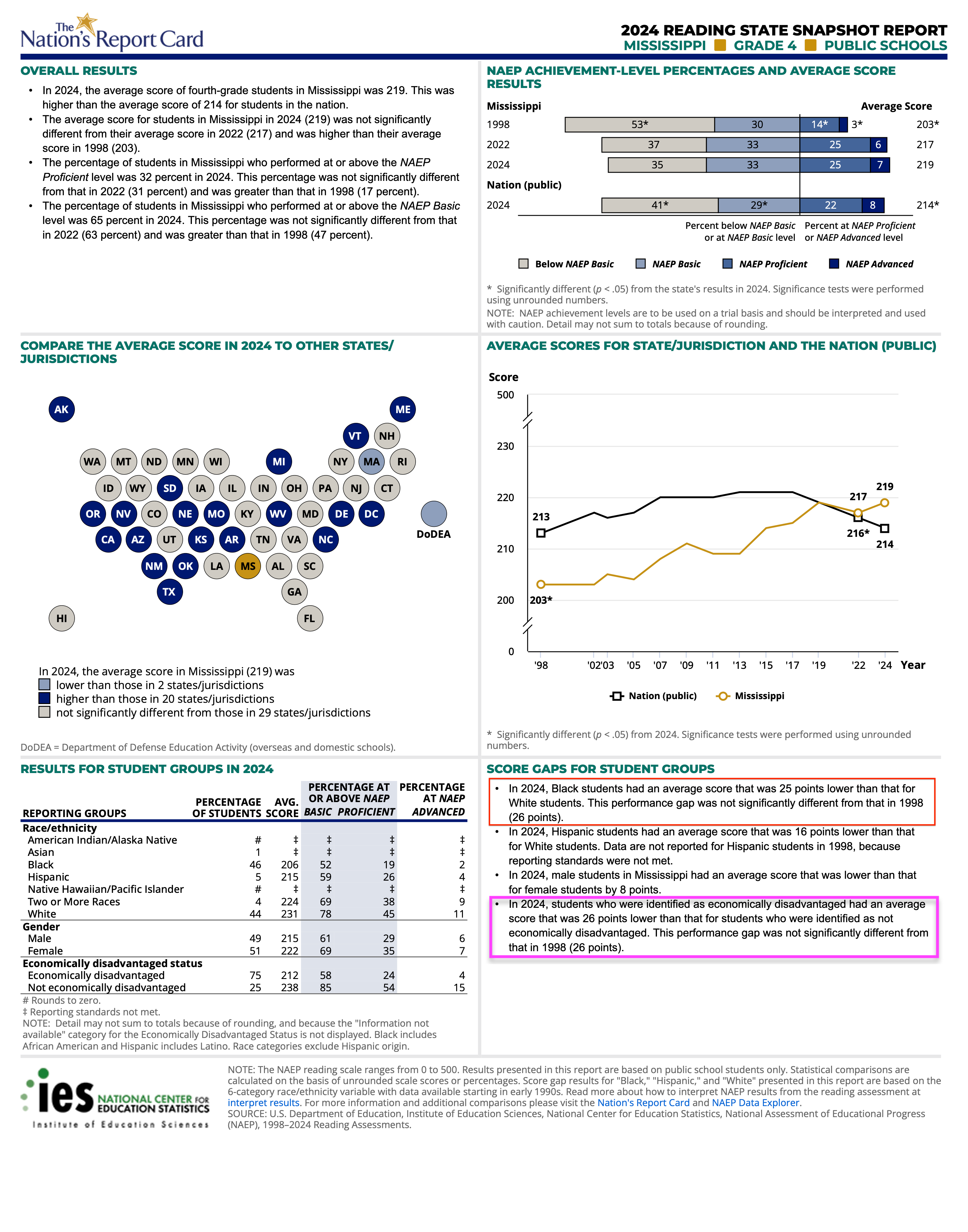
Notably, despite MS being touted as the gold-standard of reading reform, no research exists showing why MS continues to retain about 9000 K-3 students each years, why MS grade 8 reading scores drop back into the bottom 25% of states, and why the race/class achievement gap remains the same in MS as 1998.
Yet, driven by Essentialist beliefs about reading and teaching, reformers have continued to double down on the MS model.
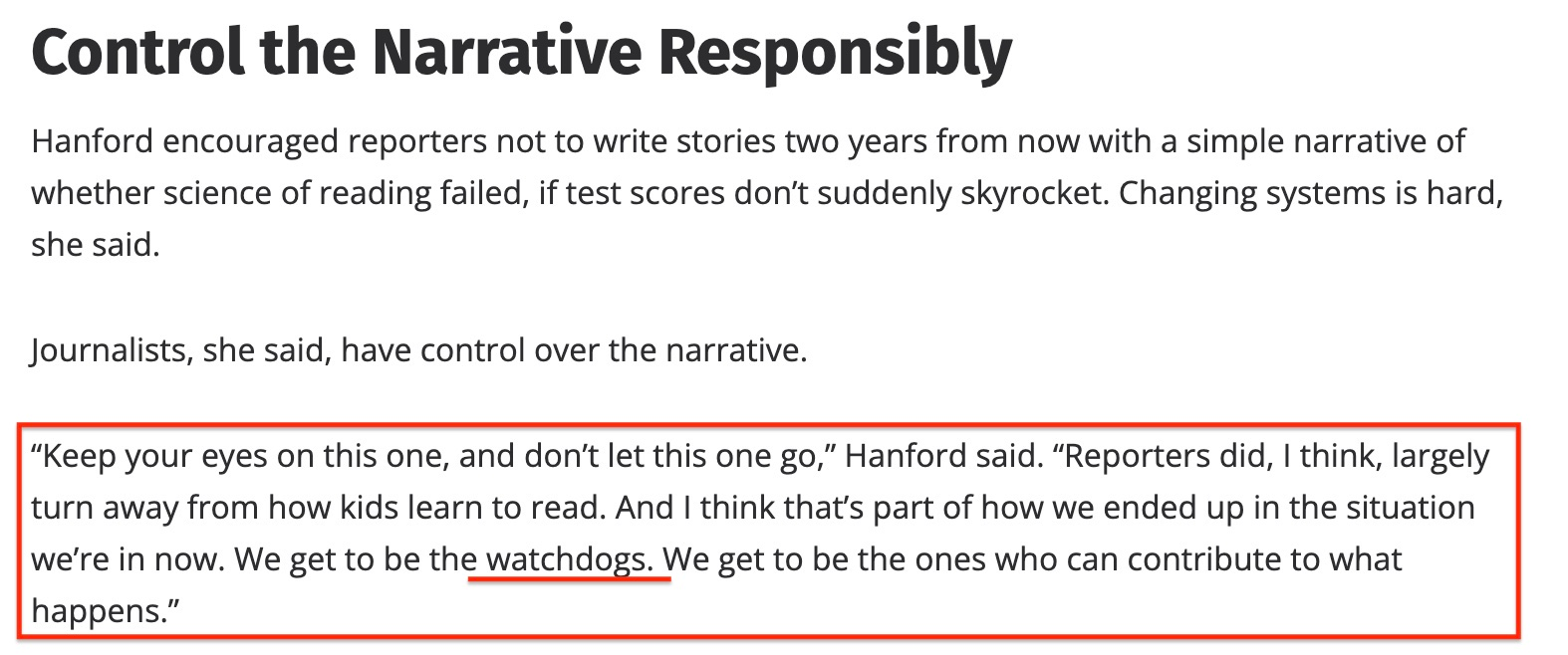
The mainstream media has played a significant role in this phonics gambit, even anticipating in 2023 both the lack of success from SOR reform and calling for advocates of SOR not to waver in the context of that evidence of failure:
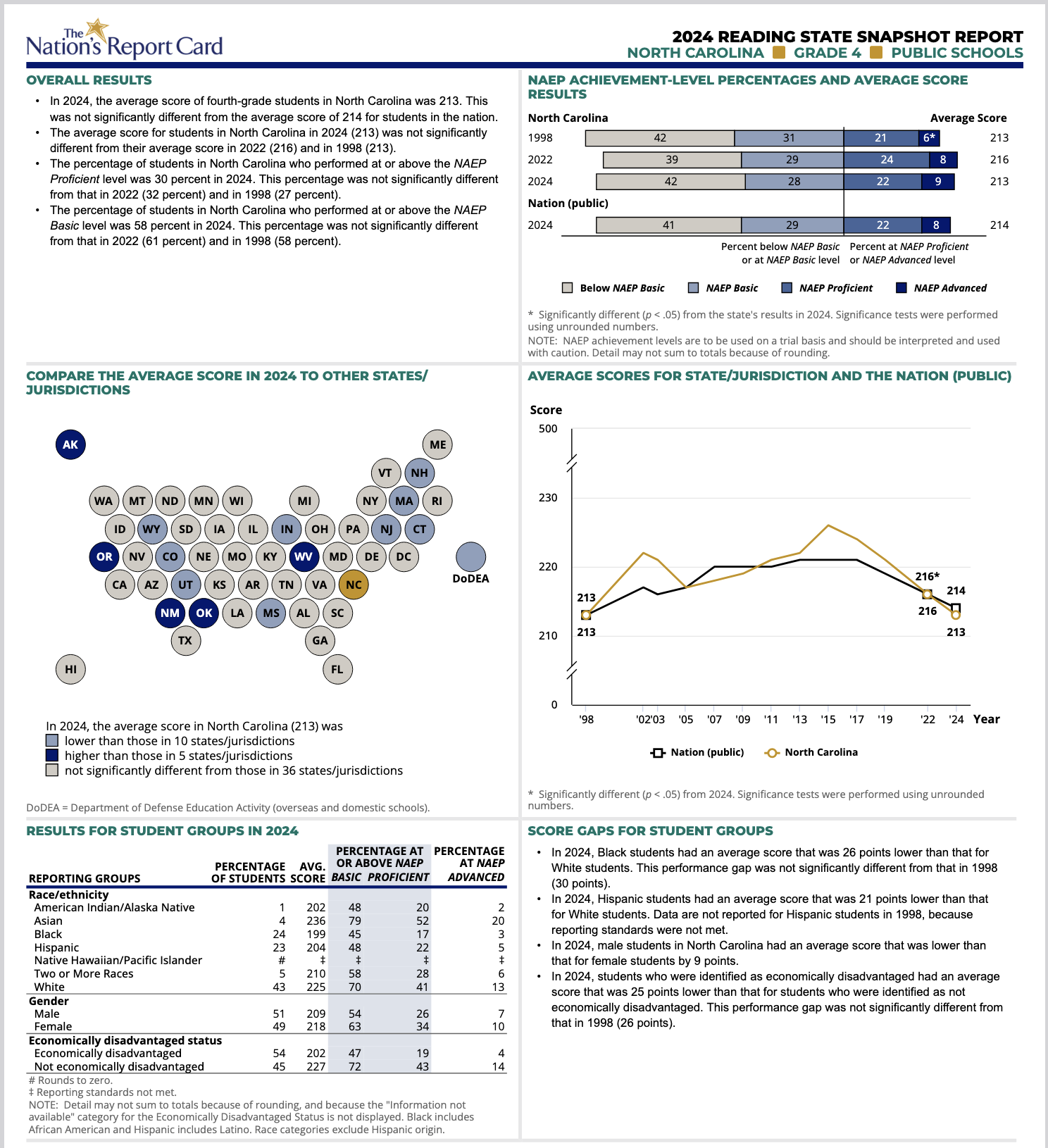
And right on cue, two years after Hanford’s plea, we have this from North Carolina [3]:
Third graders experienced a two-point drop in reading proficiency — decreasing from 49% to 47% — though third graders who achieved an alternative pathway saw a two-point increase (from 31% to 33%).
First- and second-graders’ scores are based on their performance on the DIBELS 8 assessment. Third graders can pass the beginning-of-grade test, end-of-grade test, or the retest for proficiency. However, these students can also achieve proficiency through an “alternative pathway,” which include DIBELS 8, STAR Reading — the state-approved alternative assessment — or the Read to Achieve test, according to Dan Tetreault, DPI’s assistant director of Early Learning.
“We really need to freeze something around comprehension in grade three, and spend a lot of time in that area with our students so that we begin to see growth — some change in their achievement. And I think it’s buried somewhere in comprehension,” said Board member Dr. Olivia Holmes Oxendine….
The results reflect the first drop in reading proficiency results for third-graders since science of reading implementation officially began during the 2022-23 school year. Reading proficiency among third graders at the end of that school year was 47%, rose to 49% by 2023-2024, and has now dropped back to 2020-2021 levels.
During the back-to-basics movements under the Reagan administration (which gave us the flawed A Nation at Risk report spawning endless education reform), Lou LaBrant wrote her memoir, completed in 1987 as she approached 100. LaBrant taught from 1906 to 1971, and in her memoir, she lamented having taught through and rejected multiple back-to-basics movements throughout her career and life.
And here we are again, facing another phonics gambit that isn’t working, that will never work because we always start with the wrong problems and cannot resist reform typically given the veneer of “science” while being mostly driven by ideology and beliefs about teaching and learning.
Like the Queen’s gambit in chess, the phonics gambit is old, misleading, and only works on those who don’t really understand the context of the game being played.
The major difference, of course, is that the losers in this gambit, again, are our students, especially the most vulnerable students who deserve something other than a game and a mostly petty contest of “my beliefs can beat up your beliefs.”
The proportion of disadvantaged pupils meeting the government’s “expected standard” in their year 1 phonics screening test has fallen this year, as overall progress since the pandemic has plateaued.
Government data published today shows 67 per cent of disadvantaged pupils taking the test for the first time met the standard this year, compared with 68 per cent last year.
Overall, 80 per cent of pupils passed the test in year 1, the same figure reported last year.
Summer-born pupils remain less likely to meet the government’s benchmark. Seventy-three per cent of pupils born in August met the standard this year, compared to 86 per cent of those born in September.
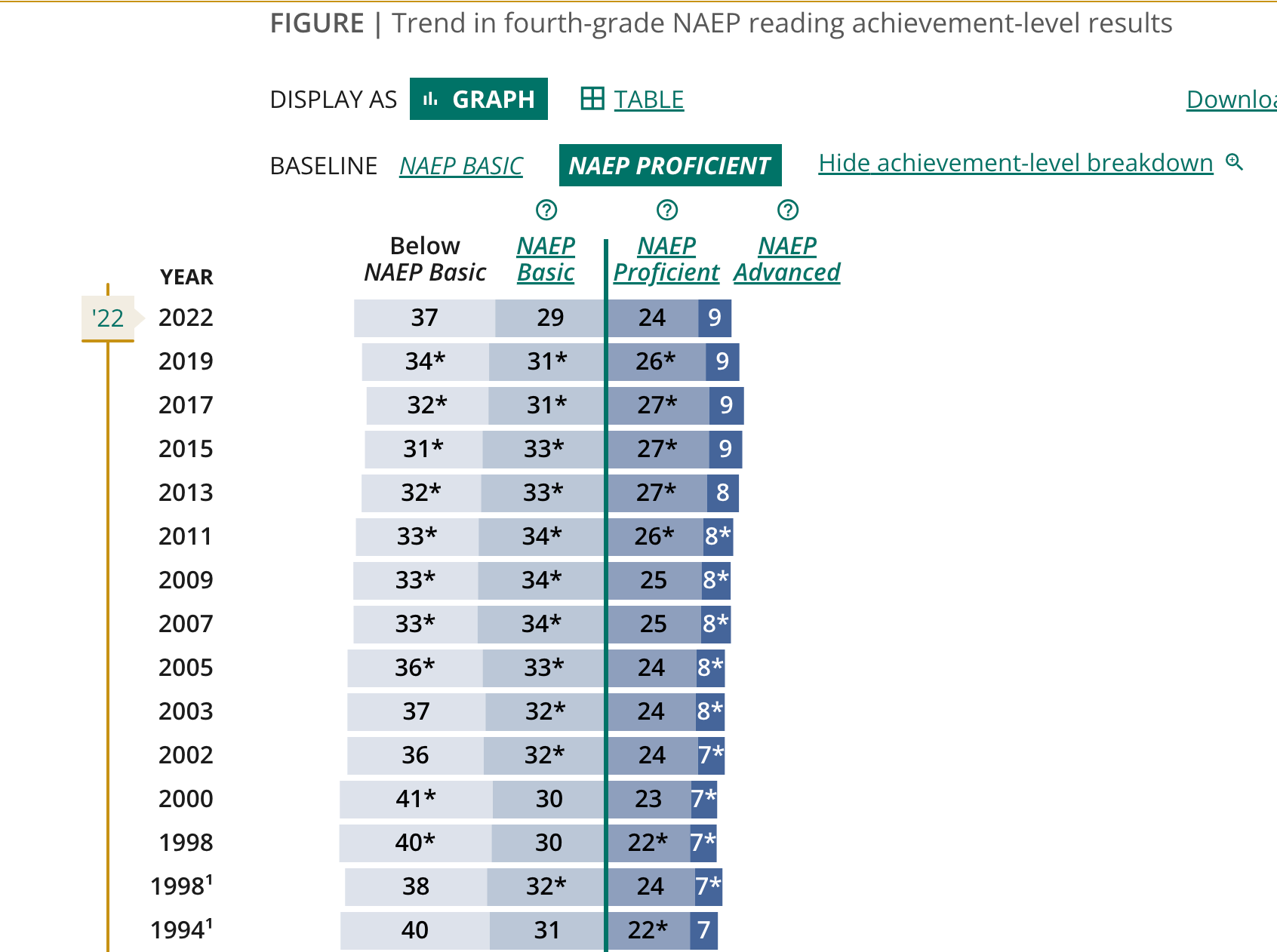
The bait in this misinformation is almost always misrepresenting NAEP scores. Again, the confusion and misinformation is grounded in NAEP’s achievement levels that use “proficient” as an aspirational goal for students that is well above grade-level reading as measured on state assessments of reading, as I recently explained:
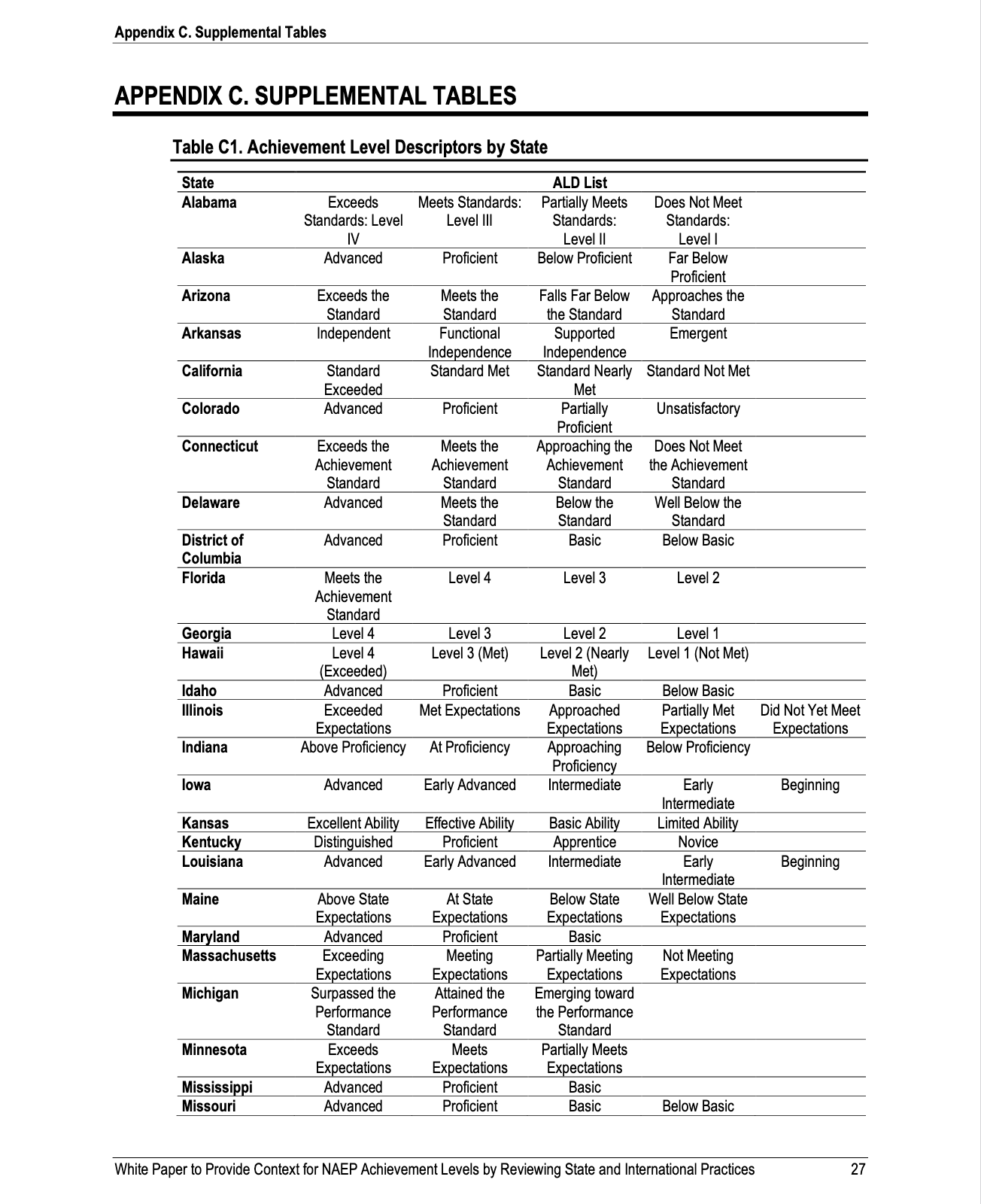
The disconnect lies with the second benchmark, “proficient.” According to the NAEP, students performing “at or above the NAEP Proficient level … demonstrate solid academic performance and competency over challenging subject matter.” But this statement includes a significant clarification: “The NAEP Proficient achievement level does not represent grade level proficiency as determined by other assessment standards (e.g., state or district assessments).”
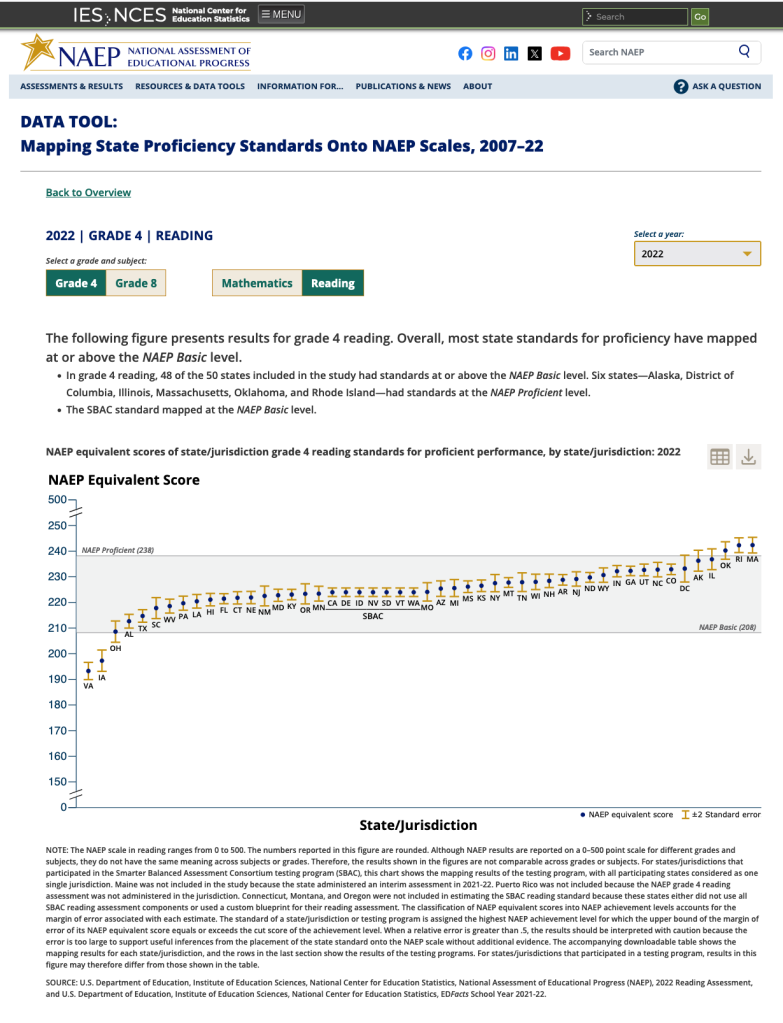
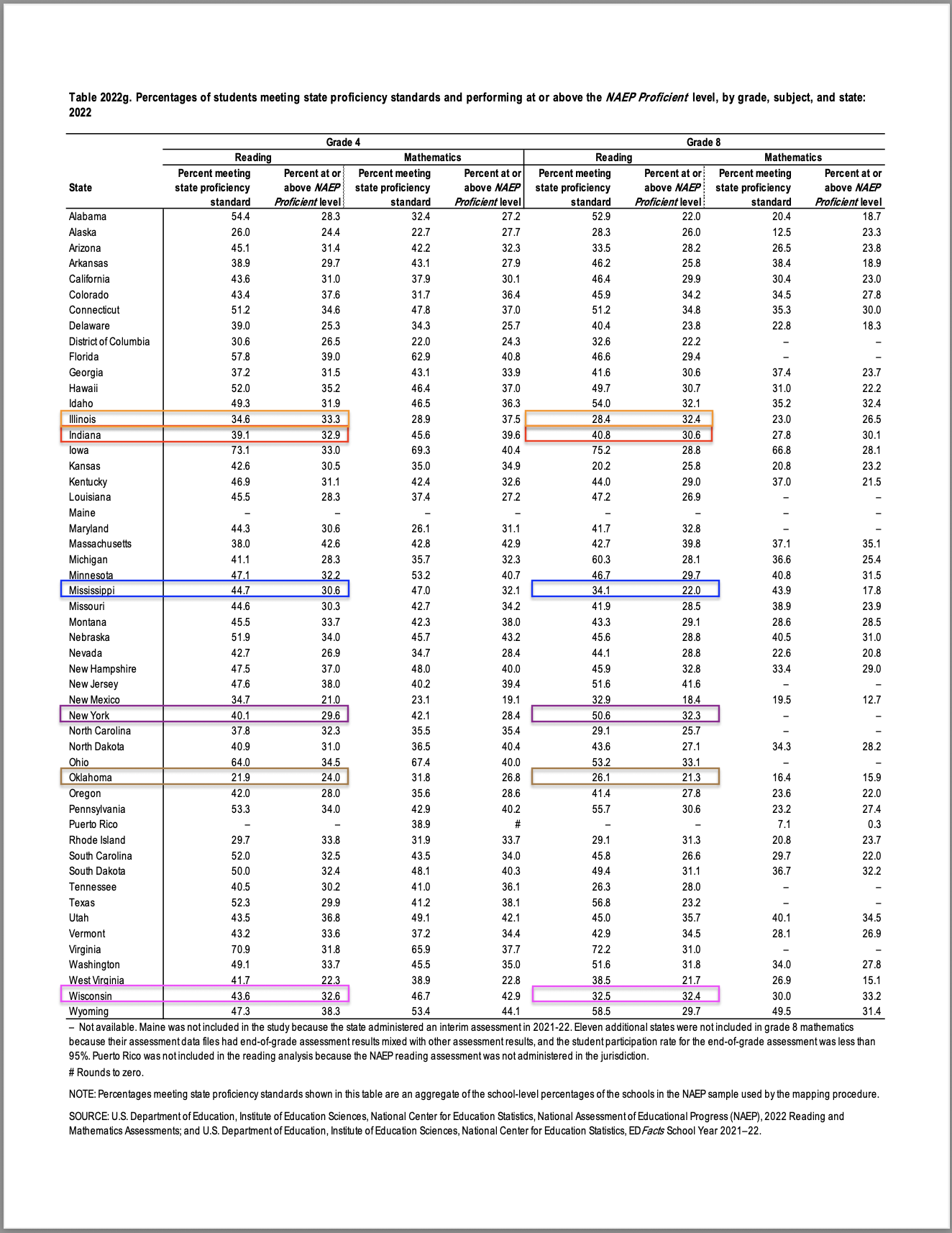
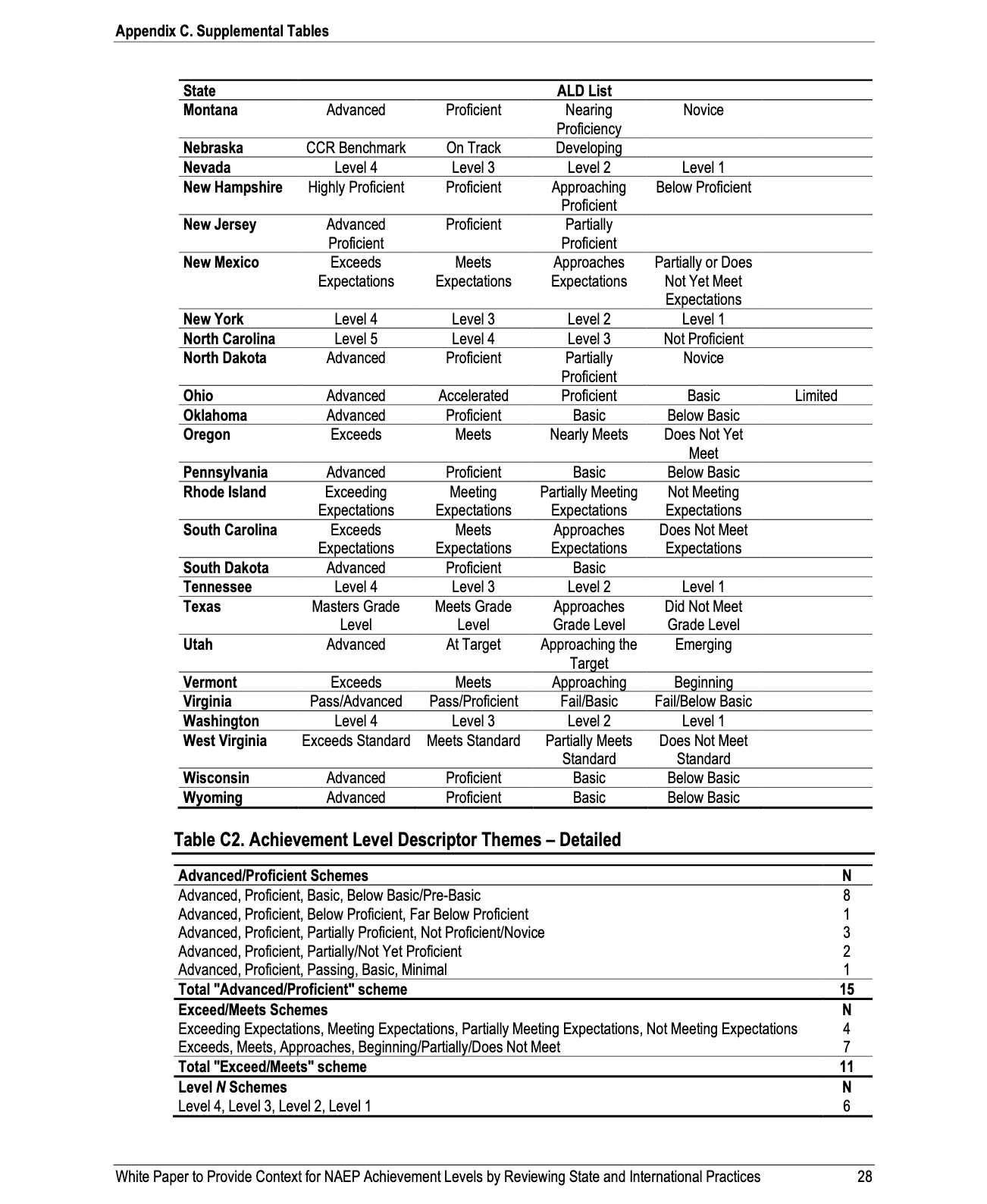
NAEP provides a correlation that shows almost all states set “proficient” at the NAEP basic level:
The bait, however, manufactures the perception of a crisis by making claims about NAEP proficient—2/3 of students are not proficient—that at least exaggerates the state of reading achievement among students:
Next, the switch.
Since about 2012, most states have revised or introduced new reading legislation grounded in the “science of reading” (SOR); in other words, states have made significant political and financial investments in both that there is a reading crisis and that the reforms will improve student reading achievement.
Mississippi, for example, has been christened a “miracle” and many states are rushing to copy their reforms despite a lack of research or evidence about the impressive grade 4 reading scores (which disappear by grade 8). [See three questions that need to be answered about MS.]
Many states are also beginning to adjust their proficiency cut scores [1], complicating any claims of reform being effective versus a misleading change in how students are labeled:
Wisconsin isn’t the only state that recently instituted changes that effectively boost proficiency rates. Oklahoma and Alaska recently made similar adjustments. New York lowered passing or “cut” scores in reading and math last year, while Illinois and Colorado are considering such revisions.
Now, here is the switch.
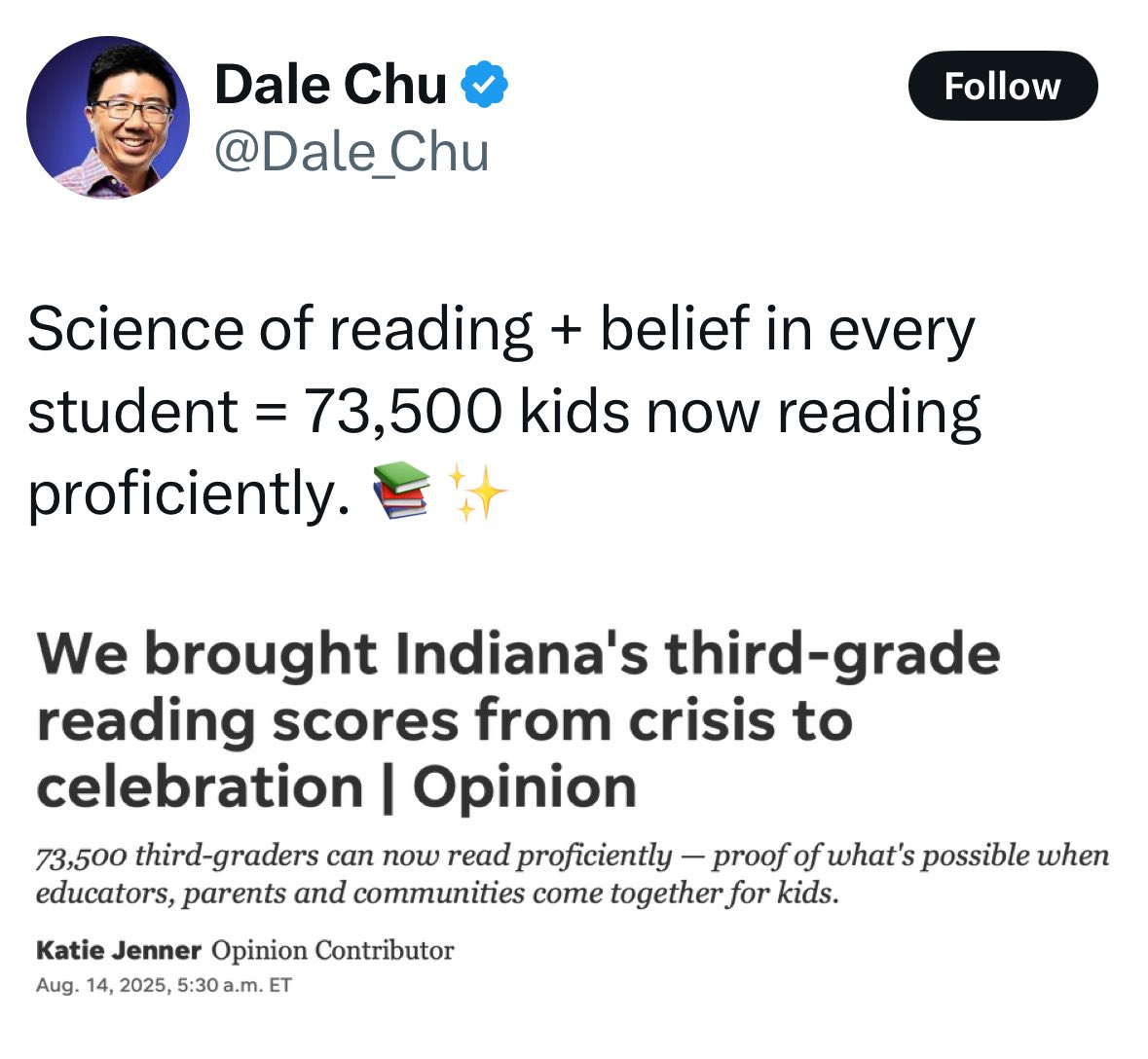
SOR advocates use the proficient level of NAEP to manufacture a crisis, but then celebrate state-level proficiency (that correlates with NAEP basic) to make claims that the SOR reforms are working:
Here are some fun facts, however, about Indiana and other states: These state proficiency gains are equal to NAEP basic, which, again, SOR advocates refuse to acknowledge when discussing the state of reading the US today; note the correlations below of states with NAEP proficient (appears to be nothing to celebrate, right, if we accept the original bait that NAEP proficient is the correct standard?):
While I do maintain that crisis rhetoric isn’t an effective approach to education reform—especially when that crisis is built on misinformation and misunderstanding test data—I will concede there is a reading reform crisis driven by market, political, and ideological agendas among the adults who seem more interested in scoring gotcha points and profiting off reform than improving student reading.
First, the most current evidence available suggests that reading reform that appears to raise test scores in the short term only is primarily driven by grade retention, not changing reading programs, teacher training, or instruction.
Next, recent research again reveals “63% of the variance in test performance was explained by social capital family income variables that influence the development of background knowledge,” leading the researchers to argue:
The influence of family social capital variables manifests itself in standardized test results. Policy makers and education leaders should rethink the current reliance on standardized test results as the deciding factor to make decisions about student achievement, teacher quality, school effectiveness, and school leader quality. In effect, policies that use standardized test results to evaluate, reward, and sanction students and school personnel are doing nothing more than rewarding schools that serve advantaged students and punishing schools that serve disadvantaged students.
One of the political purposes of NAEP is to hold states accountable for state assessments. If you look carefully at the correlation above, students moving from one state to another would result in that student being labeled differently in terms of reading achievement [2].
Despite the negative responses to my argument, I maintain that the US needs a common standard for age-level reading that includes clear achievement levels that can support valid reading reform and develop a data base that better reflects if reform produces higher student achievement.
We cannot and should not be shouting “crisis” because we do not have the data to draw any valid conclusions about the overall state of reading in the US.
What we do have is permanent reform for the market and political benefit of those perpetuating crisis rhetoric and selling solutions.
The current state of NAEP and state testing allows rampant market and political manipulation of claims about reading and reading reform.
To maintain permanent crisis and reform, many are willing to sacrifice students, teachers, and public schools.
I am not.
[1] For some background on changes to how tests measure student achievement, I recommend exploring the controversial and often misunderstood re-centering of the SAT.
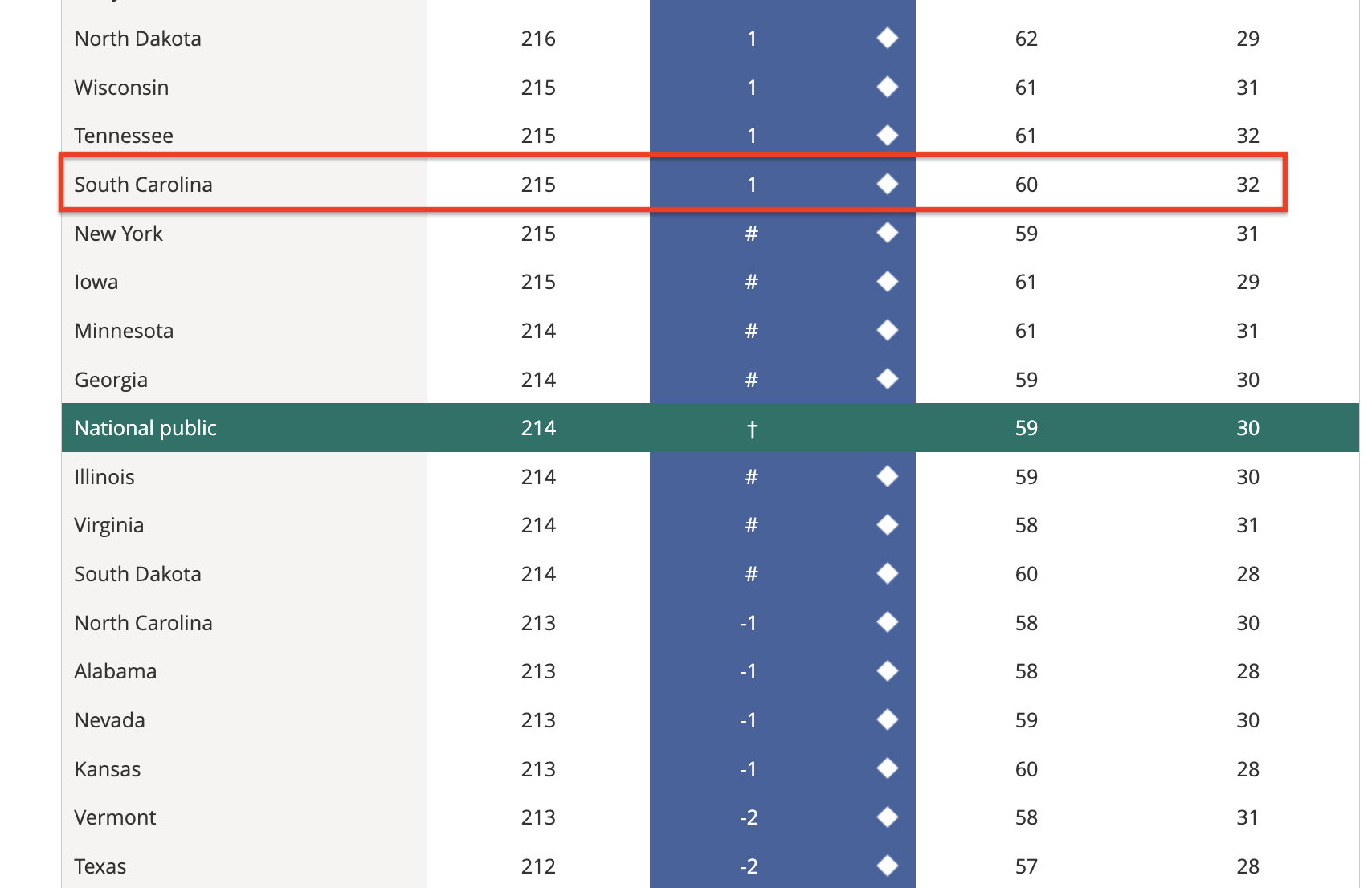
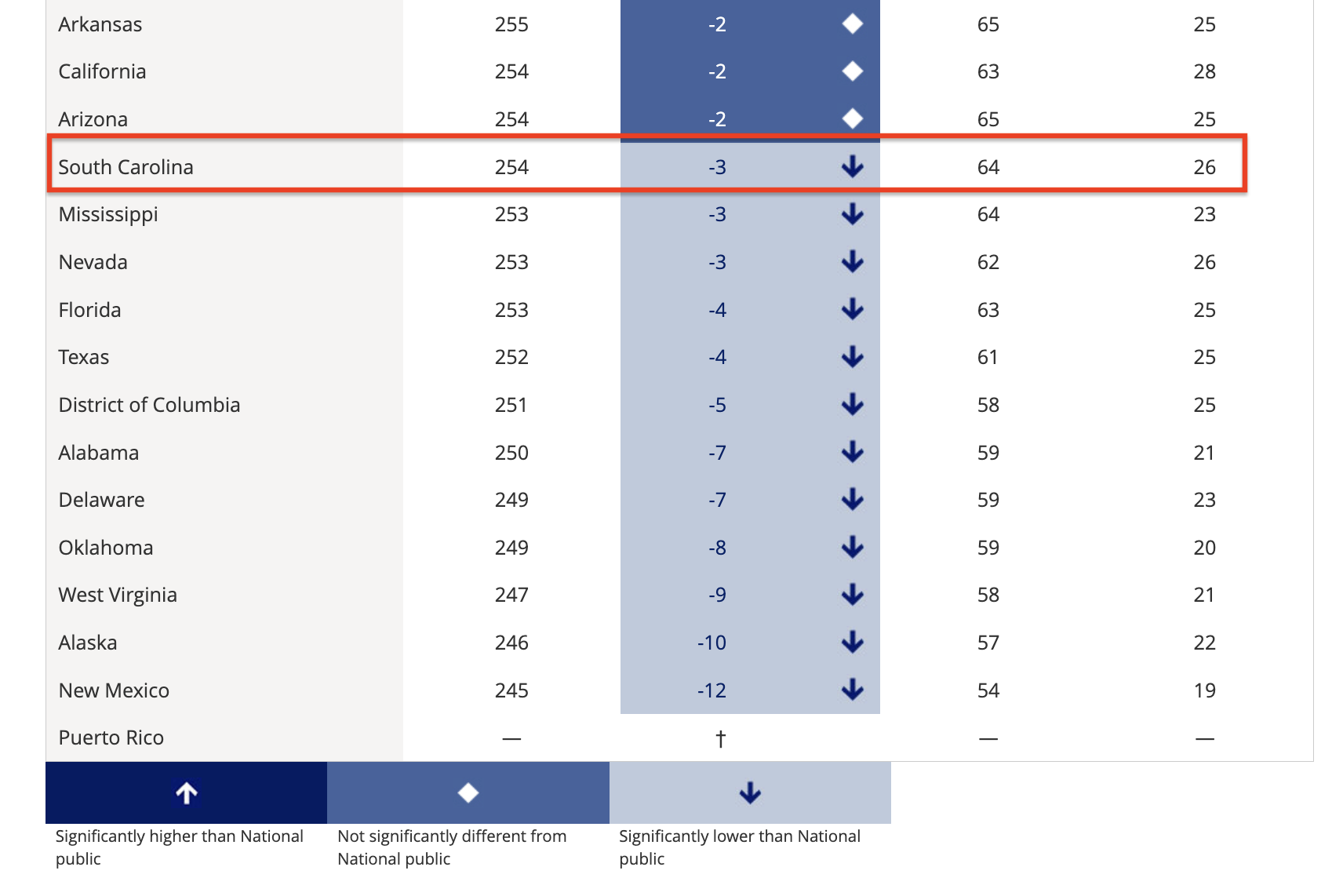
The reading proficiency bait-and-switch has come to South Carolina (another grade retention state that has much lower grade 8 reading scores than grade 4; see below):
This is more partisan political grandstanding, but the grandstanding in on incredibly thin ice.
SC, like IN above, sets state reading proficiency in the NAEP basic range; however, note that SC is toward the lower end of basic (see the correlations above).
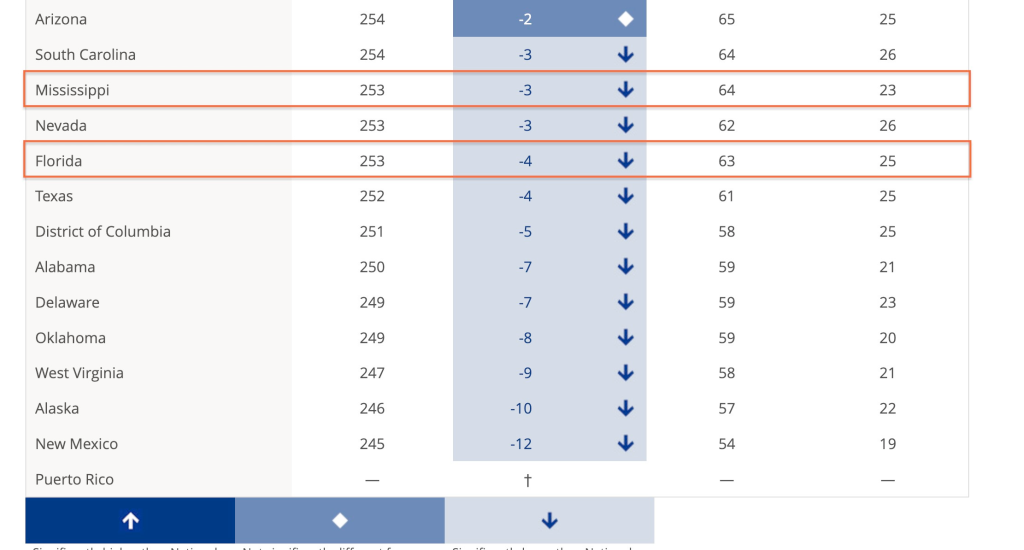
SC sits just above the national average in grade 4 reading (2024), but like MS and FL, the impact of grade retention seems to be in play because by grade 8, SC falls down toward the bottom, again similar to MS and FL:
When I had my OpEd on the manufactured reading crisis and NAEP misinformation published in The Washington Post, I anticipated that SOR advocates would continue their misinformation campaign, including targeted attacks on me that repeat false claims and innuendoes (“hidden agenda”).
I do find it a bit odd that my OpEd claims have ruffled so many feathers because, to be blunt, the OpEd is pretty moderate and factual. For those not interested in reading the piece, here is the TL;DR:
Many SOR advocates and education reformers misrepresent or misunderstand NAEP data and achievement levels, reading “proficiency” and “grade level,” reading programs, and reading theories. I call for accurate and honest discourse and claims.
The wide range of achievement levels between NAEP and state accountability testing should be standardized, and in my informed opinion, that should be a shift to a standard for age-level reading proficiency.
Many states have chosen as reading policy to implement third-grade mandatory retention based on state testing, and current research shows that SOR-based reform is only raising test scores in the short term when states have retention. Grade retention disproportionately impacts Black and brown students, poor students, multilingual learners, and students with special needs; as well, retention is punitive with many negative consequences. I caution states against choosing grade retention since it likely distorts test data and does not contribute to authentic achievement gains.
However, most of the negative responses to this commentary that I have seen focuses on one element—my rejecting crisis rhetoric about reading.
Since I began teaching in 1984, I have worked as an educator entirely in the post-A Nation at Risk era of high-stakes accountability education reform.
I reject crisis rhetoric about reading and education for the following reasons:
The test-score gap by race and socioeconomic status is not unique to reading; all standardized testing exposes that gap regardless of content area. There is no unique gap in reading.
Reading and education crisis have been declared every moment over the past 100 years (at least), and thus, I maintain that the current status of education in the US is the norm that our society has chosen to accept. That norm, by the way, is something I have worked diligently to change for over 40 years as an educator and scholar.
“Crisis” in reading and education is manufactured to feed the reform industry, and not to improve teaching or learning. Two things can be true at once: Education reformers manufacture hyperbolic stories about education and reading crisis to maintain a culture of perpetual reform (for market and political/ideological reasons), and the US public education and social safety net are historically and currently grossly negligent about the serving individual needs of all students (notably those vulnerable populations most negatively impacted by test-based gaps).
“Crisis” reform in the US has created a culture of blame for students, teachers, and public education that distracts from the evidence on the primary sources for low test scores and test-based gaps. Over 60% of those test scores and thus that gap is causally driven by out-of-school factors. Current research suggests that test-based evaluations of schools and students have failed and must be replaced for most effective reform.
There simply is no settled evidence that the US has a “crisis” in reading or that any specific reading program or reading theory has contributed significantly to low student reading proficiency. As well, there simply is no monolithic settled body of science or research on how to teach reading that supports a one-size-fits-all reading program or theory (such as structured literacy); there is a century of robust and complex research on teaching reading that can and should be better implemented in day-to-day classroom instruction; however, the greater causes for ineffective instruction and inadequate student achievement are, again, out-of-school factors and a failure to provide students and teachers the learning/teaching conditions necessary for better outcomes.
Again, to be clear, the US does not currently have the data to make any sort of valid claim about reading proficiency in the US. The only verifiable claim we can or should make is that there is clearly an opportunity gap grounded in race and socioeconomic status as well as ample evidence that multilingual learners and students with special needs are far too often neglected in our schools.
As I argue in the commentary, we need better data, and we need a more honest and nuanced public discourse about reading and education that is not corrupted by market and political/ideological agendas.
Further, journalists, politicians, and even parents should not be controlling the discourse or the reform in reading and education.
Yes, they are and should be stakeholders with a voice in a democracy, but ultimately, education is a profession that has never had autonomy—and I suspect that is because more that 7 out of 10 educators are women (notably even higher in the early grades when students are first taught to read).
I do not—like many in the SOR and education reform movements—have a “hidden agenda.”
I have never and would never sell a reading or education program. I have never and would never endorse any program or theory or ideology. I provide the vast majority of my work for free, open-access publications and my blog.
Over 40+ years, I have presented many dozens of times with well over 90% of that for free or at my own expense.
I am a critical educator and scholar, and I have never been paid to make any claims or to endorse any organization. My published and spoken work is mine and mine only.
I am fortunate to be a university-based scholar, and thus, I have academic freedom and am beholden to no one except me.
My agenda?
I work to support the professional autonomy of teachers so that the individual needs of students can be fully served in our public education system.
And thus, my agenda includes calling out misinformation, identifying the market and political/ideological agendas driving permanent education reform, and providing for all stakeholders counter-evidence to the crisis story being sold.
Since I am an older white man with university tenure in the US, I am not much impacted by the persistent lies and distortions about me and my “hidden agenda”; however, those lies and distortions are in the service of other people maintaining the education reform gravy train that feeds their bank accounts and political/ideological agendas.
Here is another TL;DR version of my WaPo commentary: If you have to misinform or lie to make your argument, you likely do not have a valid argument.
SOR advocates and education reformers are mostly misinforming and outright fanning the flames of crisis to promote their own agendas.
Suggesting I have a “hidden agenda” is a whole lot of projection.
We can and should do better in our rhetoric and our claims.
We can and should create better systems of assessment and thus better data.
We can and should reform reading and education in ways that address the lives of our students as well as the learning and teaching conditions of our schools.
Punishing thousands of Black, brown, and poor students with grade retention because we are addicted to permanent education reform is inexcusable; test-based grade retention is not reading reform.
The accountability era of education reform begun in the early 1980s has never worked, except to perpetuate constant cycles of crisis/reform.
There is no reading or education crisis.
There is a culture of political negligence in the US that has existed for many decades—that culture is grounded in rugged individualism and bootstrapping myths of the US that are contradicted by (ironically) scientific evidence and research.
Students and teachers (mostly women) are not broken beings that need to be fixed.
Students and teachers reflect the negative systemic forces that somehow we as a society refuse to acknowledge or reform.
I should not be surprised that in the Trump/MAGA era there are many people offended by a call for honest and accurate rhetoric about reading, education, students, teachers, and schools.
I think those people being offended says more about them than me.
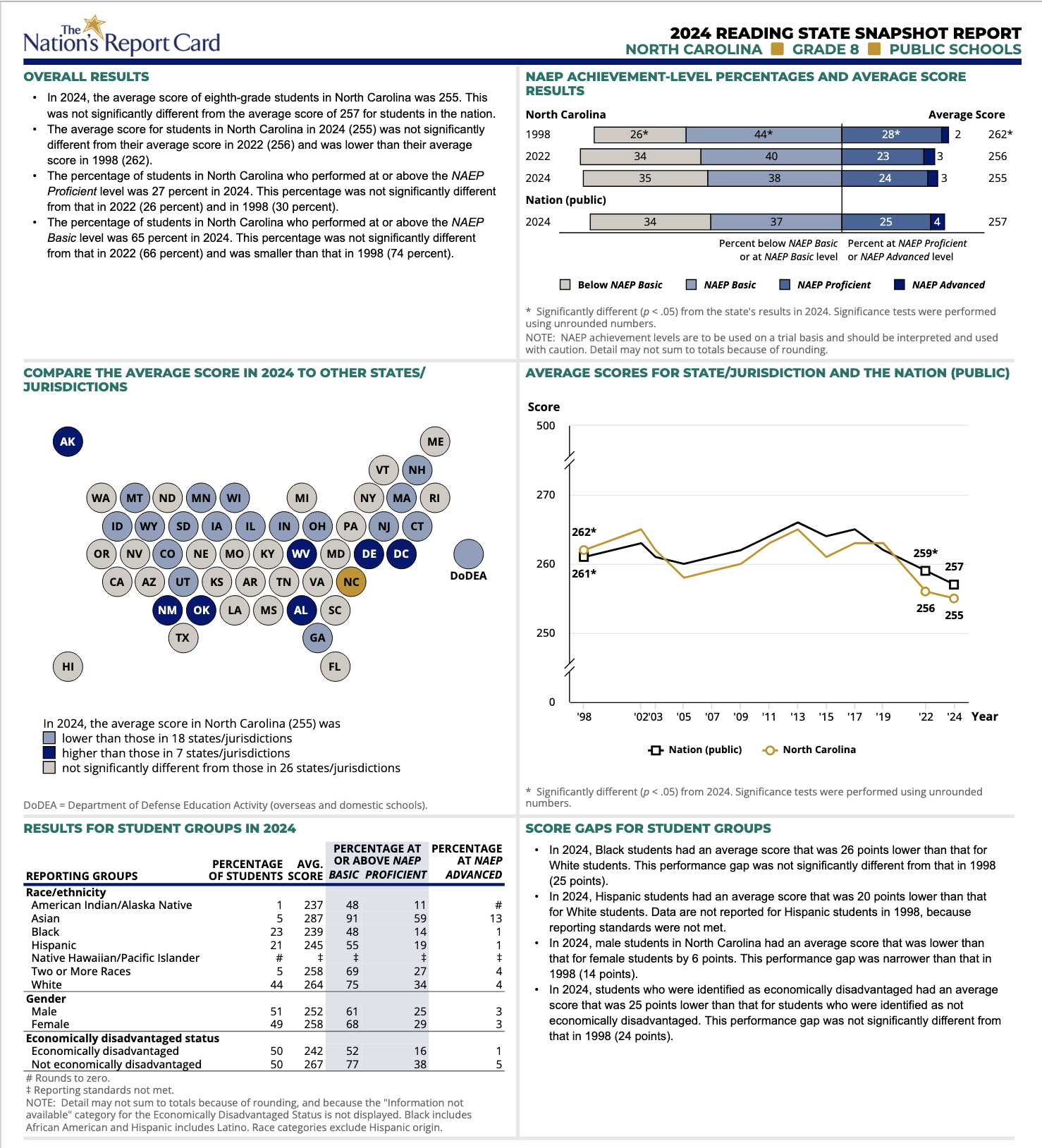
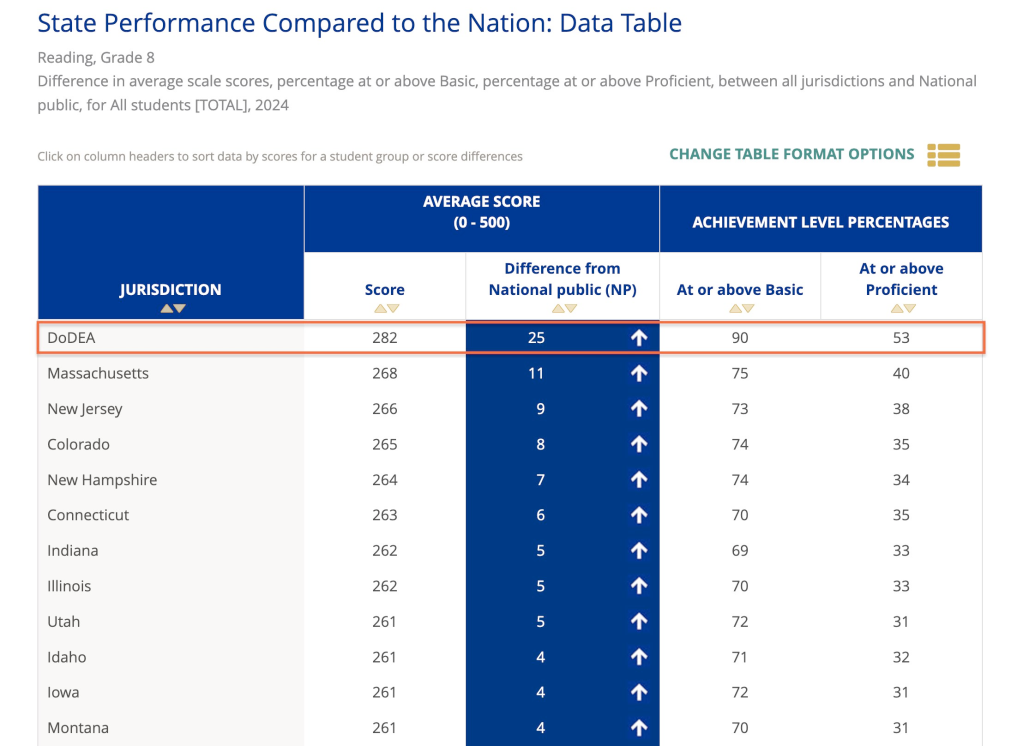
For example, third-grade retention states such as Mississippi and Florida had exceptional NAEP reading scores among fourth-graders but scores fell back into the bottom 25 percent of all states among eighth-graders
Here are the highlights, although I recommend reading the entire piece:
In 1748, famed Scot David Hume defined nature. He elaborated such a law as “a regularity of past experience projected by the mind to future cases”. He argued that the evidence for a miracle is rarely sufficient to suspend rational belief because a closer look has always revealed that what was reported as a miracle was more likely false, resulting from misperception, mistransmission, or deception….
A careful examination confirms that enthusiasm to emulate Mississippi should be tempered with scepticism….
This provides a boost of about $111.63 of extra funding annually for each pupil. Comparing this amount to what are annual contemporary per pupil expenditures nationally, we have to agree that if such small expenditures can make a visible difference in student performance it truly is a miracle – a Mississippi version of St. John’s loaves and fishes.
But it was the second component of the Mississippi Miracle, a new retention policy, perhaps inspired by New Orleans’ Katrina disaster a decade earlier, that is likely to be the key to their success….
Prior to 2013, a higher percentage of third-graders moved on to the fourth grade and took the NAEP fourth-grade reading test. After 2013, only those students who did well enough in reading moved on to the fourth grade and took the test.
It is a fact of arithmetic that the mean score of any data set always increases if you delete some of the lowest scores (what is technically called “left truncation of the score distribution”)….
Strangely though, for the eighth-grade literacy test, the state’s rank dropped to a tie for 42nd place!…
(Note that this works especially well for student height, for after retaining the shortest third-graders for an extra year they will likely be taller when they are measured again a year later. It would be nice if the same were true for students struggling in academic subjects.)…
Were we to do this we would find that most of Mississippi’s gains are due to the retention rate.
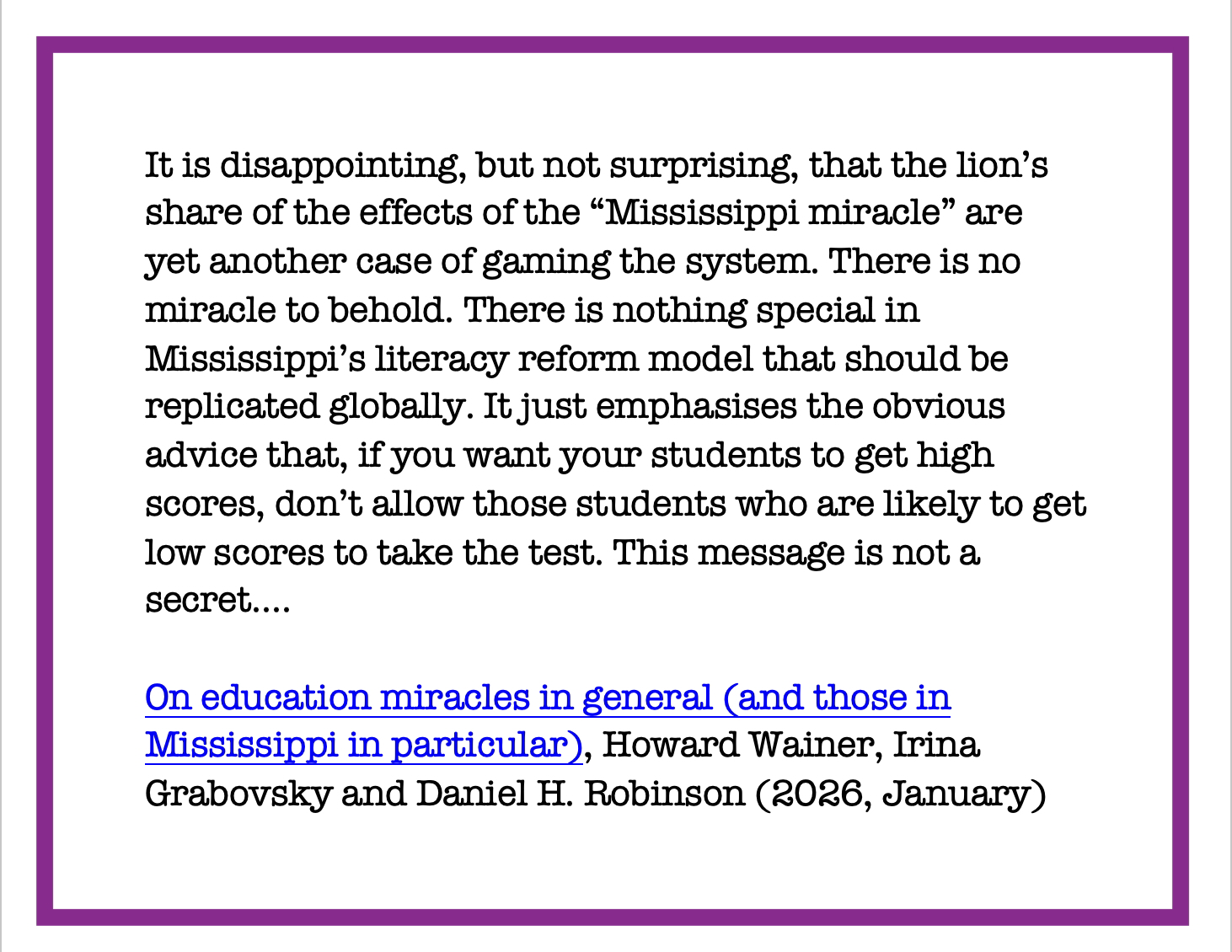
It is disappointing, but not surprising, that the lion’s share of the effects of the “Mississippi miracle” are yet another case of gaming the system. There is no miracle to behold. There is nothing special in Mississippi’s literacy reform model that should be replicated globally. It just emphasises the obvious advice that, if you want your students to get high scores, don’t allow those students who are likely to get low scores to take the test. This message is not a secret….
Find a way to prevent the lowest test scorers from taking the exam and the average score will increase….
Second, besides weak empirical data, educational reformers like Patrinos should have given greater weight to the extant literature on the Mississippi Miracle. The miracle had already been convincingly debunked.10 Fourth-grade gains had vanished by the time the students reached eighth grade.
Question 1: Why is Mississippi retaining about 9000-12,000 K-3 students annually since 2014?
One of the key assertions of the “science of reading” (SOR) movement is that students across the US are mostly not proficient readers because teachers rely on balanced literacy to teach reading.
Certainly, a decade is enough time to reach the 95% rate of proficiency, and thus, retention numbers should have dropped dramatically or be near 0.
Question 2: How is Mississippi a “miracle” if the achievement gap for race and socioeconomic status is the same as 1998?
As shown in MS’s 2024 NAEP reading scores for grade 4:
Question 3: Why has Mississippi’s grade 8 NAEP scores remained in the bottom 25% of states despite the grade 4 NAEP scores jumping into the top 25%?
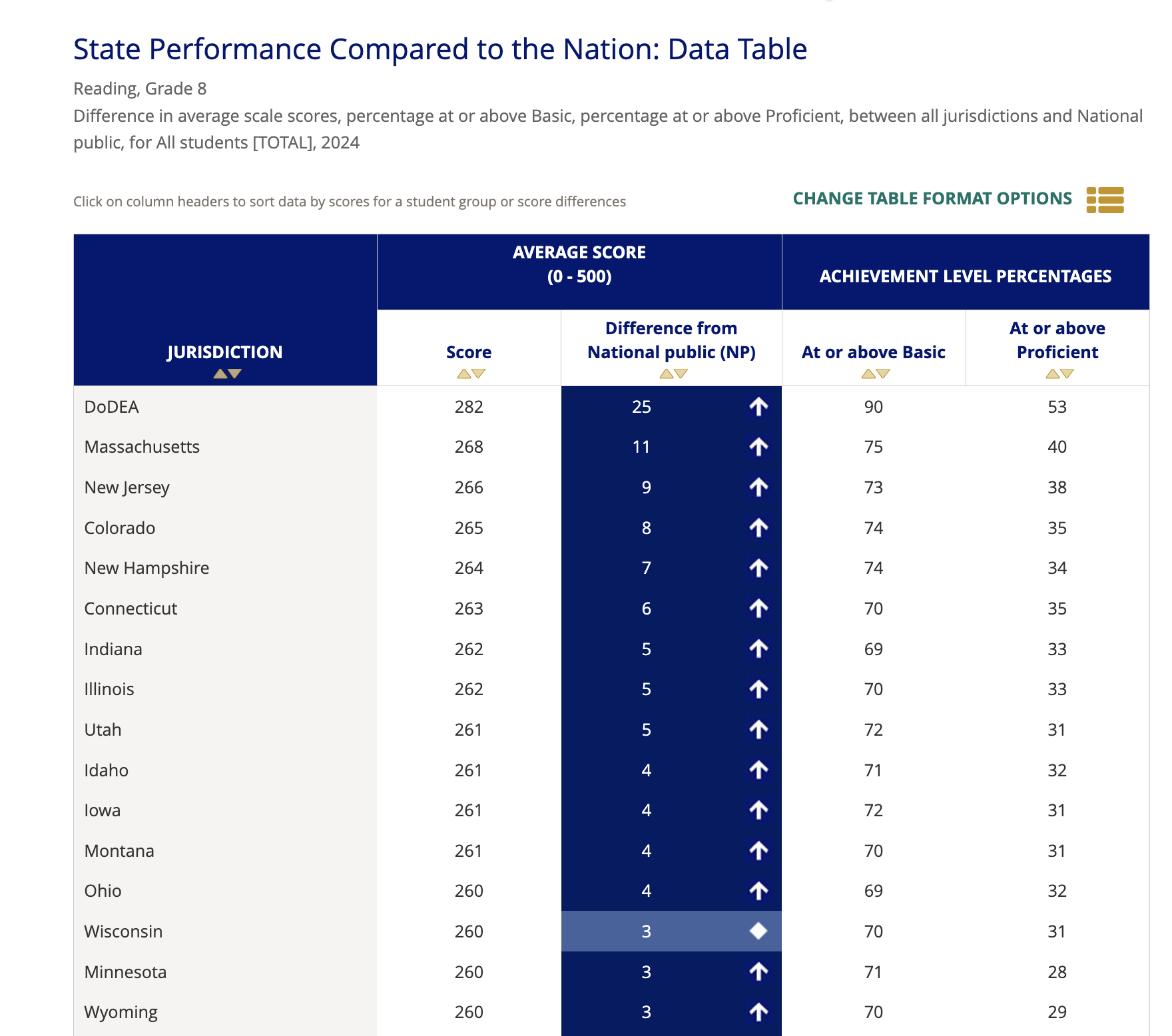
For 2024, MS NAEP grade 8 reading scores drop to eleventh from the bottom of state scores:
An analysis of reading reform found that states with comprehensive reform that includes grade retention have experienced short-term increases in test scores.
However, the analysis does not identify why these comprehensive reforms (including grade retention) are correlated with those short-term scores increases.
Research on education “miracles” have found that virtually none exist, and even when a school or program appears to be “high flying” there is little evidence those can be scaled up meaningfully.
Mississippi’s grade 4 NAEP scores in reading, then, raise questions that must be answered; instead, it is now politically cool to adopt copy-cat legislation from the state without proper evidence that there is valid success or a solid understanding of what is happening and why.
Responding to the symposium question “What Shall We Do about Reading Today?” Emmett A. Betts, professor of Education at Pennsylvania State College, opened the first article in a professional journal for elementary education with a broad claim:
In a democracy, the people get the kind of schools they want. One of the many functions of an educator is to point the way to ever better schools. If the people want many public and private institutions for the preparation of teachers regardless of the quality of the work or the teacher supply and demand, the people get them. If the people want better schools plants and instruction, they make their will known at the polls and they get what they want. In a democracy, the quantity and quality of educational opportunity is the product of what people want, and what they want is to no small degree conditioned by the educational leadership they have elected to follow. (p. 226)
This may read a bit idealistic or naive, but Betts, I think, offers an accurate characterization of the very complex public education system in the US—a system bound necessarily to the political system itself.
Betts then warns:
Very soon strong pressure will be felt by elementary school teachers to intensify instruction in certain areas, such as reading. This pressure will be brought to bear by non-educators who have found a deficiency but who may may offer no other solution than a “stronger prescription.” Years of fruitful research on learning many be cast aside in order to “do something about reading instruction….” To prevent this wastage, educators must be prepared to bring to bear a considerable accumulation of information that permits an adequate resolving of this problem. (p. 226)
Later in that issue, William S. Gray, University of Chicago, expands on Betts’s warning:
[R]ecent editorials…maintain that current deficiencies in reading are the product of “pseudo-scientific bungling and the innovation of so-called progressive methods of teaching. The solution advocated by one editor was the elimination of “impractical non-essentials,” which were not defined, and of “undisciplined dabbling with practical essentials. The implication of these vague criticisms is that recent innovations in teaching reading have been adopted without due consideration of essentials and of methods of achieving desired ends. Such assumptions are as unsound and merit no more consideration than a purely defensive attitude. (p. 235)
In forty-plus pages, eleven literacy scholars confront the same problems with a reading crisis that may sound familiar to people in 2025.
However, this is from 1942
And in a mere two decades, guess what the state of reading the US entailed?
“After half a century of [progressive reform and expanding public education],” wrote Jacques Barzun in Tomorrow’s Illiterates: The State of Reading Instruction Today (1961), “we who run businesses, carry on professions, work for the government, or engage in teaching itself are forced to admit that illiteracy is still with us” (xii-xiii).
Barzun adds, “the citizen who is interested (and who has managed to learn to read) [may have their] hair [stand] on end at hearing what folly has been condoned as educational theory during the past thirty years” (p. xiv).
Editor of this volume and author of chapters 1 and 7, Charles Child Walcutt argues: “One way to describe the reading problem is to say that it is a teacher problem and—even more—that it is a problem of the teaching of teachers” (p. 18).
And of course: “The assertion that the reading experts do not understand the theory of their system can be demonstrated if we point out the false assumptions, the faulty extrapolations from scientific research, and the absolute contradictions that appear in its central propositions and procedures” (pp. 19-20).
Over sixty years ago, a reading crisis was declared (twenty years after on just before it), teachers were blamed, and reading experts were accused of not understanding the science behind their own field.
Déjà vu all over again.
There is a recurring story—one that is profitable and easy to sell—that education in the US is a failure, notably reading and math education.
The problem with this story is that it has existed since the mid-1800s in some fashion; but as I share above, an intense era of education (reading and math) crisis is at least 80 years and running.
And then, the last 40 years has been characterized by perpetual education reform, several cycles of new standards, new tests, and constant high-stakes accountability.
At no point in the US has the public, the media, or political leaders declared education (reading or math) effective.
But since the 1980s, after the hyper-crisis panic of A Nation at Risk, the US has doubled and tripled down on in-school only reform—”pressure will be brought to bear by non-educators,” as Betts noted in 1942.
The story that isn’t compelling and is hard to sell is this: The history of education crisis and reform has been grounded in misdiagnosing educational problems, casting misguided blame, and mandating solutions that are destined to fail—and even cause harm.
However, here is a story told in research that the US will not accept:
Almost 63% of the variance in test performance was explained by social capital family income variables that influence the development of background knowledge. Background knowledge is a known predictor of standardized test results. Family income variables are immutable by schools. Only public policies, outside the control of school personnel, can influence family income….
Policy makers and education leaders should rethink the current reliance on standardized test results as the deciding factor to make decisions about student achievement, teacher quality, school effectiveness, and school leader quality. In effect, policies that use standardized test results to evaluate, reward, and sanction students and school personnel are doing nothing more than rewarding schools that serve advantaged students and punishing schools that serve disadvantaged students. (Maroun and Tienken, 2024)
In other words, the ways we measure school and teacher effectiveness as well as student achievement are in fact mostly measuring out-of-school factors.
So, what is really wrong with education?
Ideology/politics and market forces.
The disconnect between public, political, and media beliefs about education and decades of research reinforced by Maroun and Tienken is entirely ideological/political.
Many people in the US are bound to rugged individualism and the meritocracy myth, both of which feed into another belief that education transforms society.
So we are now at the story the US hates, refuses to acknowledges, and thus, does not sell: Schools reflect our society, but do not (cannot) transform it (reread the opening quote from Betts above).
There is a core libertarian belief in the US rejecting the dominance of systemic forces that drives crisis rhetoric about education as well as the politics and policy mandating how we implement our schools.
US public education has never been a singular process. There has never been one program or learning/teaching theory driving schools.
However, the ideological attacks on schools, teachers, and students have always reduced claims of crisis to simplistic problems and blame (reading the entire journal issue from 1942 or the book from 1961 is eerie and frustrating).
But possibly as powerful and problematic as ideology/politics is the impact of market forces on educational practices.
To be blunt, the education market benefits from perpetual education crisis, not from successful education reform. (See also: The healthcare market benefits from perpetual illness, not curing diseases and healthy people.)
Education crisis and reform, then, have been almost entirely ideological/political and market driven.
Ironically, perpetual crisis/reform benefits both ideology/politics and the market.
Regretfully, perpetual crisis/reform does not benefit schools, teachers, or students.
This also is a story that doesn’t sell: The current “science of” movement (science of reading, science of math, science of learning) is nothing new; in fact, this is simply the science of ideology (again).
Because of the outsized impact of ideology/politics and the market on how we talk about, judge, and implement schooling in the US, we do not have a crisis, but an entrench set of failures we lack the political will to address: perpetual opportunity and achievement gaps between affluent, white students and minoritized/marginalized students (Black and brown students, impoverished students, multilingual learners, and special needs students).
Yet those gaps have been about the same for many decades and across all areas of learning (there is no gap in reading, for example) that isn’t also in math or science, or even civics).
But as Maroun and Tienken show, those measured gaps are more about social inequity than education—even though those measures also show in-school inequity as well that magnifies systemic inequities.
The ideology/politics driving how we view and implement our schools is corrupted by a fatalism about needed social reform.
It isn’t that we cannot build a better society; it isn’t that we cannot build better schools.
It is that we simply have chosen that neither matters more than our sacred—and misguided—beliefs and market.
The overwhelming majority of American students are reaching “baseline proficiency,” in math, reading and science, according to PISA. That’s almost certainly because of our public school systems, where about 87 percent of students in grades K-12 get their education. U.S. politicians for a while were pushing the aspirational idea that most students should score proficient or above on the NAEP tests. That is a very high and probably unrealistic standard. Most of America’s students are reaching the NAEP “basic” level, mirroring the PISA results.
Dr. Elena Aydarova – “Science of Reading” and the Educational Reform Movement: Actors, Networks, and Agendas
Dr. Paul Thomas – “Science of” Movements as Trojan Horse Education Reforms
Shawna Coppola – Literacy for All: A Framework for Anti-Oppressive Teaching Presented
Dr. Catherine Compton-Lilly – Centering Readers Means Centering Equity
Dr. Barbara Flores, Dr. Edgar Lampkin, Dr. Jill Kerper Mora, and Dr. Esteban Díaz – Pushing Back Against Science of Reading Mandates: The California Story
Dr. Rachael Gabriel – The Science-Policy Gap: Impacts and Possibilities of Speculative Policy-Making
Dr. Peter Johnston and Kathy Champeau – Just & Equitable Literacy Learning: Developing Children’s Social, Emotional, & Intellectual Lives
Dr. Alan Flurky, Dr. Peter Duckett, and Dr. Maria Perpetua Liwanag – Reading as a Meaning Making Process: Insights from Miscue Analysis
Dr. Andy Johnson – Context Matters: LETRS, SoR Research Standards, and Baloney
Dr. Steven Strauss, Dr. Jill Kerper Mora, Dr. Barbara FRlores, and Dr. Edgar Lampkin — Debunking Science of Reading Neuroscience Claims
educator, public scholar, poet&writer – academic freedom isn't free









 dr. p.l. (paul) thomas