This “Southern surge” narrative tends to center Mississippi but also includes Florida, Alabama, and Louisiana (the most recent “miracle” state based on an incomplete or misleading use of NAEP scores).
Like many media manufactured narratives, the “Southern surge” in reading falls apart when the data are carefully examined.
While I give the Chalkbeat article some credit for admitting that the so-called “surge” is not fully understood, Barnum—as Hanford did when christening Mississippi a “miracle” in 2019 (“What’s up in Mississippi? There’s no way to know for sure what causes increases in test scores”)—gives the “surge” narrative nearly complete credibility even with the headline hedge and a couple points made then glossed over (“Eighth grade results have been less impressive for these Southern exemplars, though”).
Here are the (likely fatal) flaws in the “surge” narrative:
Although Barnum cites an important and comprehensive analysis of reading reform, he fails to acknowledge its most important findings: States adopting reading reform (often popularly associated with Mississippi’s model even when states explicitly do not mimic those reform policies, such as California) has seen short-term test score gains in reading (note that score gains are not necessarily higher reading proficiency); however, while Barnum lists several reading policy components (“third grade retention, phonics-based curriculum, and statewide teacher training”), this study directly states that only retention is associated with higher scores (with the researchers noting their study did not identify why).
Barnum notes the drop by Southern states’ grade 8 reading scores, but fails to acknowledge that this data point may suggest that retention is inflating scores, not increasing reading proficiency. Notably states such as Florida and Mississippi have had these reform for over one to two decades without the “surge” appearing in grade 8 data.
The retention component also is troubling since these states continue to retain students as high rates. If the other policies were working, we should expect retention numbers to decrease significantly, but they have not.
Possibly the most damning ignored data from NAEP, however: Across all states, but including the so-called “surge” states, the race and poverty gaps remain persistent, typically the same as in 1998.
There are statistical realities also being ignored in the “surge” narrative.
Test scores for the lowest performing students are easier to improve that top-scoring students, for example.
But likely more significant is that early literacy test scores are strongly correlated with student biological age (England has almost twenty years of data on phonics checks that show this); therefore, when grade retention removes the lowest scoring students from the testing population (grade 3 retention laws impact grade 4 NAEP testing) and reintroduces them when they are biologically older, the possibility is that scores are being artificially inflated.
Reading “crisis/miracle” narratives and the phonics gambit should be dead horses; these unfounded claims have existed in the US well back into the 1940s, recurring decade after decade.
At best, “we don’t fully understand it yet,” and at worst, too many people profit off this zombie narrative, and children, teachers, and schools will continue to be sacrificed instead of putting these stories in the ground where they belong.
The “reading wars” that raged in American schools for decades finally seem to be ending. The victor is clear: Phonics is the best way to teach kids how to read.
California is the latest state to re-embrace the tried-and-true teaching method, in which kids learn the sounds that each letter makes and then use them as building blocks for words and sentences. Gov. Gavin Newsom (D) on Thursday signed reforms into law that will encourage schools to turn away from other unsupported teaching methods, despite resistance from teacher unions….
Momentum for re-embracing phonics started in Mississippi, which long had a reputation for sitting at the bottom of national education rankings. In 2013, state officials decided to enforce adoption of the old-school instruction method that is often referred to as the “science of reading.” The state explicitly discouraged methods such as cueing and started aggressively holding back third-graders who didn’t meet reading standards, angering many parents.
There are a few problems, however.
First, and most damning, California did not just pass Science of Reading legislation modeled on Mississippi, as detailed by Martha Hernandez:
The bill has been described in the media as California’s new “science of reading” bill, but this shorthand fails to accurately reflect the legislation’s comprehensive scope and intention.
Let’s be clear, AB 1454 is not about narrowing literacy instruction to one approach. Rather, it’s about realizing California’s long-standing, comprehensive vision for literacy that meets the needs of all students — including our state’s 1.1 million English learners.
Phonics and foundational skills are essential for teaching students to read, and they always have been. But effective literacy instruction is not just about sounding out words. Children also need strong oral language, vocabulary, background knowledge, writing and comprehension skills to thrive as readers.
AB 1454 accounts for this reality. At its core, it aligns with California’s English Language Arts/English Language Development (ELA/ELD) Framework, adopted in 2014. This framework is nationally recognized for weaving together multiple strands of research — including phonics and decoding — alongside research on how children learn a second language, how their home language knowledge supports English learning, and how their cultures and life experiences shape how they use and understand language.
For a comprehensive overview of how California’s new reading legislation does not conform to the Mississippi model, please see this excellent overview by Jill Kerper Mora, Edgar Lampkin, Barbara Flores, and Anita Flemington: Pushing back against Science of Reading mandates: The California story.
Next, the Editorial Board perpetuates the whole language Urban Legend about failure in California, a state that saw literacy test scores drop after a decrease in funding and an influx of multilingual learners in the late 1980s into the 1990s (in fact, Linda Darling Hammond found a positive correlation between whole language and higher NAEP scores in the 1990s).
And finally, but not surprisingly, the Editorial Board falls for the Mississippi “miracle” narrative.
There currently is no research showing SOR instruction has succeeded in MS; in fact, research shows only grade retention is associated with some short-term test score increases. MS grade 8 scores remain in the bottom 25% of score in the US, the state continues to retain about 9000 K-3 students each year, and the race/poverty gap is the same as 1998.
I entered the classroom as a high school English teacher somewhat ominously in 1984, an academic year when Orwell’s classic was increasingly assigned but also when in South Carolina, where I taught, the high-stakes accountability era began with a vengeance.
From 1995 until 1998, I completed an EdD in Curriculum and Instruction while teaching full-time and even taking on some adjunct work at local colleges. Unlike most of those in my EdD cohort, I have no plans to leave K-12 teaching once I graduated from the program.
However in 2002, my former high school English teacher, Lynn Harrill (whose position I had taken where I was teaching English), left his position at Furman University, which was within driving distance for me. In a flurry of a few weeks, I was offered the job, and frankly, I had almost no idea what committing to teacher education would entail.
To be blunt, teacher education was incredibly frustrating and disappointing because much of my work was bureaucracy—nearly endless cycles of new standards and documenting that we were addressing those standards. Accreditation and certification rendered the quality of teaching pre-service teacher to teach a mere ghost of what we wanted to do, what we were capable of doing.
I have written before about how and why teacher education struggles both to foster new teachers and to challenge misleading and inaccurate (mostly by politicians, media, and pundits) attacks about the failures of teacher education, teachers, students, and public schools (see more HERE).
The piece below represents my uncomfortable position in teacher education because I believe in teacher education as a field and degree but am at least skeptical if not cynical about accreditation/certification.
It seems my time in teacher education has come to a close (my department is transitioning away from teacher certification toward education studies), and since the piece below failed to find a journal home, I am offering it here (and I also prefer open-access).
This is a complicated topic, but I hope this does a fair job because I do love teachers of all kinds and find the “bad teacher” myth one of the most misguided narratives in the US.
Teacher Education in (Another) Era of the “Bad Teacher” Myth
P.L. Thomas, Furman University
In 2018, a simplistic but compelling story was established: Teachers do not know how to teach children to read because teacher educators have failed to teach the “science of reading” (SOR) in teacher preparation programs (Aukerman, 2022a, 2022b, 2022c). These misleading narratives about teacher education, National Assessment of Educational Progress (NAEP) data, and reading have gained momentum and now drive reading policy and legislation in practically every state in the US (Aydarova, 2023, 2024; Reinking, Hruby, & Risko, 2023).
There is an ironic truism—“a lie can travel halfway around the world while the truth is still putting on its shoes”—most often incorrectly attributed to Mark Twain that describes the misguided SOR movement’s central claims wrapped in the initial mantra that SOR is both simple and settled. Here, though, are two more nuanced and evidenced-based counter-points to the SOR story being sold (Thomas, 2024b, 2024c, 2024d):
Reading instruction can and should be significantly reformed (in the context of addressing wider systemic inequities), but the SOR version of causes and solutions are false.
Teacher education can and should be significantly reformed, but the SOR version of causes and solutions are false.
I have been a strong advocate for education reform, beginning when I entered the field in 1984, and subsequently a strong advocate for teacher education reform, starting with entering higher education and teacher education in 2002. Writing about Maxine Greene over a decade ago, I noted about teacher education: “As teacher educators, we are trapped between the expectations of a traditional and mechanistic field and the contrasting expectations of best practice guided by critical pedagogy” (Thomas, 2010).
Further, critical pedagogy acknowledges that all teaching and learning are political acts (Kincheloe, 2005), which require teachers and teacher educator to reject the norms of teaching being apolitical. The current SOR movement and concurrent re-emergence of the “bad teacher” myth have created a hostile environment for teachers at all levels, and thus, the time is now for re-imagining being teacher educators as well as K-12 teachers who advocate for teacher professionalism and the individual needs of all students.
The Anti-Teacher (and Sexist) Roots of Rejecting Teacher Autonomy
Over the past few years, both traditional and social media have uncritically reanimated the “bad teacher” myth (Bessie, 2010; Thomas, 2023b) with the following stories:
Elementary teachers are failing to teach reading effectively to US students.
That failure is “because many deans and faculty in colleges of education either don’t know the science or dismiss it,” according to Hanford (2018).
Elementary, literature/ELA teachers, and history teachers are brainwashing students with CRT (Pollock & Rogers, 2022).
Elementary and literature/ELA teachers are grooming children to be gay or transgender by forcing them to read diverse books and stories.
Except for teachers themselves and some education scholars, these new “bad teacher” myths are both extremely compelling and almost entirely false. Writing more than a decade ago during a peak “bad teacher” movement in the US, Adam Bessie (2010) explains about the bad teacher stories represented then by Michelle Rhee and perpetuated by the Obama administration and Bill Gates:
The myth is now the truth.
The Bad Teacher myth, [Bill] Ayers admits, is appealing, which is why it’s spread so far and become so commonly accepted. Who can, after all, disagree that we “need to get the lazy, incompetent teachers out of the classroom?” Even Ayers agrees that he, like all of us, “nods stupidly” along with this notion. As a professor at a community college and former high school teacher, I nod stupidly as well: I don’t want my students held back, alienated, or abused by these Bad Teachers.
This myth is also seductive in its simplicity. It’s much easier to have a concrete villain to blame for problems school systems face. The fix seems easy, as well: all we need to do is fire the Bad Teachers, as controversial Washington, DC, school chancellor superstar Michelle Rhee has, and hire good ones, and students will learn. In this light, Gates’ effort to “fix” the bug-riddled public school operating system by focusing on teacher development makes perfect sense. The logic feels hard to argue with: who would argue against making teachers better? And if, as a teacher, you do dare to, you must be “anti-student,” a Bad Teacher who is resistant to “reforms,” who is resistant to improvements and, thus, must be out for himself, rather than the students.
Bessie (2010) concludes, “The only problem with the Bad Teacher myth, as anyone involved with education is intimately aware of, is that problems in education are anything but simple,” and ultimately, these myths are not supported by the evidence.
One challenge of doing public work and advocacy addressing education, education reform, and teachers/teaching is framing clear and accessible messages that avoid being simplistic and misleading. Since I have spent years of challenging the overly simplistic and misleading SOR movement (Thomas, 2022), I have attempted to carefully craft some direct and brief messages, including “not simple, not settled,” “teach readers, not reading” (Afflerbach, 2022), and my core commitments to teacher autonomy and the individual needs of all students.
One would think that these core commitments attract support even among those who disagree on other aspects of teaching and education policy. Yet, I face a persistent resistance to supporting teacher autonomy, grounded in a fundamental distrust of all teachers. Teacher autonomy is essential for teaching to be a profession (Kraft & Lyon, 2024), but autonomy is also essential because education is a high-accountability field. One of the historical and current mechanisms to reduce or eliminate teacher autonomy is the norm of teaching as apolitical, discouraging teachers at all levels from advocating for themselves or their students.
The problematic tension in education is that teachers are routinely held accountable for mandates (not their professional decisions and practices) and how well they comply with the mandates, repeated currently in the SOR movement. Since many education mandates are flawed (such as current SOR reading legislation) and for decades have failed, teachers are then blamed for that failure even though they didn’t impose the mandates and were simply the mechanisms for required practices.
Most education crisis rhetoric and education reform have been grounded for decades in anti-teacher sentiments. Currently, the reading crisis movement blames reading teachers for being ill-equipped to teach reading (failing children) and teacher educators for not preparing those teachers, for example (Aukerman, 2022a). One of the strongest elements of rejecting teacher autonomy, in fact, is among SOR advocates who promote structured literacy, often scripted curriculum (Compton-Lily, et al., 2020) that reduces teachers to technicians and perpetuates holding teachers accountable for fidelity to programs instead of supporting teacher expertise to address individual student needs.
Let me be clear that all professions with practitioner autonomy have a range of quality in that profession (yes, there are some weak and flawed teachers just as there are weak and flawed medical doctors). To reject teacher autonomy because a few teachers may not deserve it is a standard not applied in other fields. But the heightened resistance to teacher autonomy is likely grounded in gender bias.
K-12 teaching (especially elementary teaching) is disproportionately a woman’s career since about 8 in 10 public school teachers are women. And while teacher pay is low compared to other professions, the pay inequity is more pronounced in areas where the proportion of women is even higher at the elementary level (Will, 2022). As a frame of reference, a more respected and better rewarded teaching profession is in higher education where professor have professional autonomy, except the gender imbalance exposes a similar sexist pattern. While the gender balance is better in higher education than K-12, the pay and security of being a professor increases where men are a higher proportion of the field (Quinn, 2023).
Autonomy, pay, and respect track positively for men and negatively for women in teaching, and the resistance to autonomy for K-12 teachers strongly correlates with the field being primarily women. A key but ignored element of education reform must include better pay for all K-12 teachers and supporting teacher autonomy so that individual student needs can be met. The historical and current resistance to teacher autonomy exposes the lingering sexism in how we view, treat, and reward educators.
Therefore, at its core, the “bad teacher” myth and requiring teachers to remain apolitical, objective, or neutral serve indirectly to further de-professionalize teachers at both the K-12 level and in teacher education. This leads to the role of science in de-professionalizing teachers when examined as part of the SOR movement.
“Science of Reading” Playing Numbers Games Not Supported by Science
One of the most effective elements of the SOR movement that helps reinforce the “bad teacher” myth is the rhetorical power of “science” in the claims. It appears that the use of “science” has reinvigorated the push to impose scripted curriculum on schools, a central effort of George W. Bush while governor of Texas. While that wave of scripted curriculum failed, in the 2020s, many advocates and legislators have completely caved on teacher autonomy as state after state is mandating scripted reading programs based on stories in the media that misrepresent teacher expertise about reading, teacher educators, and a reading crisis.
At the core of the SOR movement, then, is the pernicious use of numbers games within the rhetoric of “science.” A foundational example is the misrepresentation of NAEP reading scores to declare that 60% or 2/3 of students are not proficient readers and/or not reading at grade level (Hanford, 2018; Kristof, 2023). This numbers shell game is based in the misleading use of “proficient” by NAEP as well as the combination of ignorance about those achievement levels and willful ignorance about those achievement levels (Loveless, 2016, 2023; Thomas, 2025). The NAEP numbers game is frustrating because the claim shuffles “not proficient” and “not on grade level” while literally inverting the valid claim based on NAEP. In fact, for 30 years, NAEP grade 4 reading data show that about 60%+ of students are reading at grade level and above since NAEP “basic” (not “proficient”) is equivalent to grade level reading (See NAEP National Achievement-Level Results, n.d.).
Further, and even more frustrating, is that this numbers game distracts us from the real issues: (1) The US has no standard for “grade level” reading, (2) we have never fully interrogated the need for a standard “age level” instead of “grade level” metric, and most importantly, (3) the real challenge (even failure) is the disproportionate number of marginalized and minoritized students in the below grade level data pool.
Along with the misleading NAEP story, as well, is a numbers game that hasn’t been fully unpacked—the claim that 90-95% students can be proficient if we simply implement SOR. As a side note, those SOR advocates making this shifting claim (sometimes it is 90%, sometimes it is 95% or 96%) have not, along with most of mainstream media, clarified how this claim is based in scientific research while also avoiding a compelling example of the possibility that the 90-95% proficiency is achievable: Department of Defense (DoDEA) schools have close to that rate of achievement (see below).
Now as the SOR movement has grown over the past 6 years, the 90-95% claim has been repeated more and more although that numbers game still has less traction than the 2/3 not proficient claim. However, when I began my review of a recent National Council on Teacher Quality (NCTQ) report (Thomas, 2023a), I took the time to interrogate the 90% claim by the anti-teacher education think tank: “With effective reading instruction, we could take that [student reading proficiency] to more than 90%” (Teacher Prep Review, 2023, p. 4)
That claim by NCTQ has a footnote to a few studies, but the most interesting evidence is the final citation to a blog post by Nathaniel Hansford (2023) who admits at the beginning, “it has always stuck out to me as a strange figure” because:
First, most academic research does not typically use percentages in this sort of manner. Second, I often see this figure unaccompanied by a citation. And third, it seems low; I find it hard to believe that 5% of students just cannot learn how to read.
When Hansford (2023) asked for scientific evidence for the claim, this is what he discovered:
Some of the citations I was sent were policy papers, by authors and institutions that used this claim. However, these papers were not experimental and usually cited popular Science of Reading books, not experimental research. There was also, interestingly, one research paper sent to me from the 1980s, that made the claim, but did not cite any evidence to support it. So it appears that this claim has been in circulation for a long time. The most common source listed for this claim seemed to be Louisa Moats, who has written about this rule on numerous occasions. However, she does not claim that 95% of students can reach grade level, based on just core instruction, but rather in totality. Louisa Moats cites 4 sources in support for this rule. In Kilpatrick’s book Essentials of Assessing, Preventing, and Overcoming Reading Difficulties; a 2009 paper by Lim, et al. on students with Down Syndrome; a 2005 paper by Mathes, et al, examining the rate of risk reduction for struggling reading, with intensive intervention instruction, and a literature review of risk reduction, by Joseph Torgersen. In my opinion, the last two citations provide some experimental evidence to support this claim.
I have found no better conclusion about the 90-95% claim than the one offered by Hansford (2023); there is scarce and dated scientific evidence to support, at best, that the 90-95% claim is a valid aspirational goal of reading proficiency: “This all said, it does seem there is some level of support for 96% being a benchmark goal [emphasis added], for reading proficiency rates.”
Key here is that like the NAEP misrepresentation, the 90-95% claim is in no way a scientific claim being used by a movement that has used “scientific” as a rhetorical lever to promote their ideological (not scientific) agenda targeting K-12 teachers and teacher educators. The SOR numbers games are essentially distractions. Regretfully, we certainly need to address reading proficiency in students, especially for marginalized and minoritized students.
But the real problems and achievable solutions are likely not to make the education marketers money but will require a different way to view education, one that acknowledges the key number that education reformers and SOR advocates ignore. That number is 60+%.
A recent study confirms a statistic that has been repeated by scientific research for decades—about 60+% of measurable student achievement is causally linked to out-of-school (OOS) factors (not reading programs, not instructional practices, not teacher quality, not teacher education): “Almost 63% of the variance in test performance was explained by social capital family income variables that influence the development of background knowledge” (Maroun & Tienken, 2024).
That fact of measurable student achievement discredits claims that reading proficiency, for example, is mostly a problem of reading programs and reading instructional practices. Reading reform for decades has simply shuffled programs and reading theory, which amounts to rearranging chairs on the deck of the Titanic. Yet as I noted above, there is credible evidence that something approaching 90% reading proficiency is achievable; this evidence does not rely on the “bad teacher” myth but does require addressing those OOS factors. Notable, yet mostly ignored, the reading achievement of DoDEA students on NAEP in 2022 are impressive—79% at or above grade level in grade 4 and 91% at or above grade level in grade 8 (See State achievement-level results, n.d.).
The DoDEA story isn’t one of reading programs, reading theory, or teacher/teacher educator bashing; in fact, there is a compelling story here that demonstrates the importance of addressing living as well as teacher and learning conditions so that students and teachers can be successful:
How does the military do it? In large part by operating a school system that is insulated from many of the problems plaguing American education.
Defense Department schools are well-funded, socioeconomically and racially integrated, and have a centralized structure that is not subject to the whims of school boards or mayors….
But there are key differences.
For starters, families have access to housing and health care through the military, and at least one parent has a job.
“Having as many of those basic needs met does help set the scene for learning to occur ,” said Jessica Thorne, the principal at E.A. White Elementary, a school of about 350 students.
Her teachers are also well paid, supported by a Pentagon budget that allocates $3 billion to its schools each year, far more than comparably sized school districts. While much of the money goes toward the complicated logistics of operating schools internationally, the Defense Department estimates that it spends about $25,000 per student, on par with the highest-spending states like New York, and far more than states like Arizona, where spending per student is about $10,000 a year .
“I doubled my income,” said Heather Ryan, a White Elementary teacher . Starting her career in Florida, she said she made $31,900; after transferring to the military, she earned $65,000. With more years of experience, she now pulls in $88,000.
Competitive salaries — scaled to education and experience levels — help retain teachers at a time when many are leaving the profession. At White Elementary, teachers typically have 10 to 15 years of experience, Ms. Thorne said. (Mervosh, 2023)
The SOR movement is playing a harmful and duplicitous numbers game that fits into decades of ineffective and harmful education reform. But the SOR movement is also following the corrosive playbook of using “science” as a rhetorical veneer for ideological agendas. Like scientific racism, the SOR movement is disturbingly absent science for many of their foundational claims, and the collateral damage is not just students but teaching as a profession.
Numbers games have consequences, and ironically, the research emerging from SOR policies is beginning to show that SOR legislation is whitewashing the curriculum (Rigell, et al., 2022) and de-professionalizing teachers (Blaushild, 2023). While there are several shifting numbers in the SOR movement, no science supports the foundational claims. And the numbers that are being ignored are the huge taxpayers’ costs for shuffling reading programs to line the pockets of many of the people promoting those numbers games. Unless teacher educators and K-12 teachers use their political voices to reject and resist the false stories and numbers games, the teaching profession will continue to be eroded.
If Teacher Education Is Failing Reading, Where Is the Blame?
The current SOR climate surrounding public education in the U.S. has its roots, ironically, in misreading (or at least reading uncritically) A Nation at Risk, a report during the Ronald Reagan administration that was widely reported by mainstream media. The politically driven and deeply flawed report also prompted the accountability movement in the U.S.—state standards and high-stakes testing—that eventually enveloped the entire country by the 1990s.
The report established a false but compelling cultural truism that is too rarely interrogated: Public schools in the U.S. are failing. Since the early 1980s, political leadership has decided that the failure is due to a lack of accountability, but accountability of whom or what has shifted over the past 40 years.
The first blame narrative focused on students and schools, ushering in high-stakes testing at 3rd grade, 8th grade, and high school (exit exams) as well as school and district report cards. Eventually high-stakes accountability of students and schools seemed not to change the measurable outcomes that advocates had promised; there were also unintended consequences such as exit exams increasing the number of students not completing high school.
Gradually after No Child Left Behind (NCLB), the blame narrative moved to teachers, in part driven by George W. Bush’s popularizing the slogan “soft bigotry of low expectations,” the rise of charter schools embracing “no excuses,” and the same messages and buy-in for Bush era education policy by Barack Obama’s administration and Department of Education. For about a decade the blame narrative focused on teachers, and political leaders rushed to intensify teacher evaluation, notably the use of value-added methods (VAM). Once again, the outcomes promised by advocates did not come to fruition. Eventually, in fact, the tide turned against the use of VAM and other types of punitive teacher evaluations (ASA, 2014).
The vacuum left in the blame narrative did not remain long. Concurrent with the SOR movement that claims public school teachers are not teaching reading guided by the SOR is the next round of blame—teacher education. The blame narrative makes for strange bedfellows. While mainstream media have begun to blame teacher education consistently, a leading literacy professional organization, the International Literacy Association (ILA), reinforced the story as well. Education Week has led this charge; for example, Madeline Will (2020):
Decades of research have shown that teaching explicit, systematic phonics is the most reliable way to make sure that young students learn how to read words. Yet an Education Week analysis of nationally representative survey results found that professors who teach early-reading courses are introducing the work of researchers and authors whose findings and theories often conflict with one another, including some that may not be aligned with the greater body of scientific research.
EdWeek‘s survey data were confirmed, it seemed, by ILA’s survey data: 60% of respondents claim their teacher education programs did not prepare them well to teach reading (Top takes, 2020).
First, we should pause at media and professional organizations citing survey data while also embracing a very rigid and narrow demand for SOR. Survey data have many problems, and in this case, we may want to know if disgruntled teachers (and disgruntled for many valid reasons unrelated to teacher preparation or literacy) were disproportionately motivated to reply. None the less, it is quite a different thing to say “60% of respondents claimed X” than “60% of teachers claimed X.” Are these survey data representative of all teachers of reading?
Let’s assume this is true, that more than half of teachers charged with reading instruction believe they are not properly prepared to teach reading. But let’s also unpack how that came to be, and ultimately answer in a fair way, where the blame rests.
For the past 30-40 years, teachers and teacher educators have had less and less professional autonomy; or stated a different way, the professional autonomy of teachers and teacher educators has been reduced to how well they can address mandated standards and produce measurable outcomes that prove those standards were addressed and effective. In the high-stakes accountability era, then, if we are going to accept that 60% of teachers were not well prepared in their teacher education programs, we must be willing to acknowledge that those programs were governed most often by the accreditation process. Organizations such as NCATE and CAEP have been holding teacher education accountable along with the coordination of professional organizations (often generating tensions between accountability and teacher autonomy).
How teacher education approached literacy broadly and reading specifically was grounded in standards designed by ILA (elementary) and the National Council of Teachers of English (NCTE) (secondary), and those programs were periodically monitored by ILA and NCTE for if or how well the programs met those standards. If we currently believe that the teaching of reading in our public schools is failing our students, we must also acknowledge that teachers are implementing state standards of reading and preparing students for state tests of reading; those teachers were also taught how to teach in teacher education programs implementing national standards determined by ILA and NCTE under duress to produce measurable student outcomes linked to state-mandated standards and high-stakes testing.
Accepting the survey data as valid, then, the blame for these failures rests at least in part in the accountability and accreditation process, of which teachers and teacher educators are mere agents. After being a classroom teacher of ELA for 18 years and then a teacher educator for the last 24 years, I believe I have a strong and well-informed view of what is happening. This is a better explanation, but not a simple one that the media would prefer or a politically expedient one that politicians would prefer.
Education has never been the type of failure proclaimed by A Nation at Risk, and a lack of accountability was never the cause of what the true failures in education were then and are today. Formal education reflects and a perpetuates inequity in the U.S. Public schools are not game changers. Therefore, it is true that far too many students are not being taught to read well enough, and that on balance, public education is failing far too many students.
Counter to the story being sold, however, those failures are about inequity—inequity of opportunities both outside and inside schools that disproportionately impacts poor students, Black and brown students, multi-lingual learners, and special needs students (populations the SOR movement has correctly identified as being under-served). And as jumbled as the journey has been, the logic experiment I offer above reaches a credible conclusion: the accountability era has failed and once again disproportionately impacting vulnerable populations of students.
But accreditation has failed just as much. Accountability grounded in standards and high-stakes assessment is not conducive to teaching, learning, or scholarship. As a former K-12 classroom teacher, I can attest to that fact; as a teacher educator, I can confirm that the bureaucracy surrounding compliance with accreditation and certification mandates often dilute my courses and overburden my professional work to the exclusion of scholarship and research as well as teaching. Accountability structures are disproportionately bureaucracy within a political system, and thus can be a distraction from effective teaching, learning, or professional behavior.
While I am frustrated with mainstream media misrepresenting reading and reading instruction, I am concerned with the necessity for professional organizations such as ILA and NCTE to work within and through the political bureaucracy of accountability, accreditation, and certification because of the necessary tensions related to accountability and teacher autonomy. Those professional organizations are put into no-win situations similar to the experiences of K-12 teachers and teacher educators. The result is well intentioned and hard-working professionals often work against our bests interests.
Here, then, is a larger lesson of this entire four-decades mess: Let’s stop looking for people to scapegoat in the blame narrative, and recognize instead that systems are failing us, especially when we are complying to them. Professional autonomy for K-12 teachers and teacher educators is a process we have not tried, but one far more likely to give our schools and our students a better chance if we also acknowledge that social and educational equity need the same financial and administrative focus we have given accountability since the early 1980s.
Teacher Educators and the Politics of Resisting Systemic Failure
Media and political stories have for decades perpetuated a story of student, teacher, and school failure. The current SOR movement has expanded the false story of the “bad teacher” by blaming “bad” teacher educators for producing reading teachers ill equipped to serve the most vulnerable students in our schools. The effectiveness of these myths depends on maintaining the blame gaze on individuals to mask systemic failures and the politics of calling for no politics.
What often appears to be student or teacher failure, however, is the negative consequences of failed systems. Both the larger inequity of society and schooling combined with the inherently flawed accountability paradigm constitutes the cause agents for the outcomes (almost always high-stakes testing data) used to determine student achievement. If we want something to change, then, teacher educators must assume a political stance against systemic failures, and part of that stance must include preparing future (and current) teachers also to assume a political stance.
At mid-twentieth century, Lou LaBrant (1952), who would soon after serve as president of NCTE, wrote on English Journal: “When I finished college my teachers thought I was ‘prepared to teach English’” (p. 345). Yet, what she recognized, and advocated for in this article, was a need for change: “It is time to examine the patched and worn bottles into which we have put this magnificent, live wine of language” (p. 347). I suspect, if LaBrant were still with us today, she would make the same call for how we prepare our teachers in the 2020s, acknowledging that to have different outcomes, we need to change the systems that overwhelmingly cause those outcomes.
Teacher educators, to be change agents, must embrace a new politics of resisting systemic failures, which have been unfairly portrayed as “bad teachers.” We are in the same place of crisis and reform after forty years of accountability linked to standards and testing, all of which has driven repeated cycles of new standards for certification and accreditation. Those systems have not only failed but have distracted from the sort of systemic reform needed to address the inequity of living and schooling that guarantees failure. For all teachers, our only option is a new politics of teacher education and teaching.
References
Afflerbach, P. (2022). Teaching readers (not reading): Moving beyond skills and strategies to reader-focused instruction. Guilford Press.
Aydarova, E. (2024). What you see is not what you get: Science of reading reforms as a guise for standardization, centralization, and privatization. American Journal of Education. https://www.journals.uchicago.edu/doi/10.1086/730991
Aydarova, E. (2023). ‘Whatever you want to call it”: Science of reading mythologies in the education reform movement. Harvard Educational Review, 93(4), 556–581, https://doi.org10.17763/1943-5045-93.4.556
Blaushild, N.L. (2023). “It’s just something that you have to do as a teacher”: Investigating the intersection of educational infrastructure redesign, teacher discretion, and educational equity in the elementary ELA classroom. The Elementary School Journal, 124(2), 219-244.
Compton-Lilly, C.F., Mitra, A., Guay, M., & Spence, L.K. (2020). A confluence of complexity: Intersections among reading theory, neuroscience, and observations of young readers. Reading Research Quarterly, 55(S1), S185-S195. https://doi.org/10.1002/rrq.348
Ellis, V., Gatti, L., & Mansell, W. (2024). The new political economy of teacher education: The enterprise narrative and the shadow state. Policy Press.
Hoffman, J.V., Hikida, M., & Sailors, M. (2020). Contesting science that silences: Amplifying equity, agency, and design research in literacy teacher preparation. Reading Research Quarterly, 55(S1), S255–S266. https://doi.org/10.1002/rrq.353
Kincheloe, J.L. (2005). Critical pedagogy primer. 2nd ed. Peter Lang USA.
Kraft, M.A., & Lyon, M.A. (2024). The rise and fall of the teaching profession: Prestige, interest, preparation, and satisfaction over the last half century. EdWorkingPaper 22-679. https://doi.org/10.26300/7b1a-vk92
Maroun, J., & Tienken, C.H. (2024). The pernicious predictability of state-mandated tests of academic achievement in the United States. Education Sciences, 14(2), 129-142. https://doi.org/10.3390/educsci14020129
Pollock, M., & Rogers, J. (2022, January). The conflict campaign: Exploring local experiences of the campaign to ban ‘critical race theory’ in public k–12 education in the u.s., 2020–2021. IDEA. https://idea.gseis.ucla.edu/publications/the-conflict-campaign/
Reinking, D., Hruby, G.G., & Risko, V.J. (2023). Legislating phonics: Settle science of political polemic? Teachers College Record. https://doi.org/10.1177/01614681231155688
Rigell, A., Banack, A., Maples, A., Laughter, J., Broemmel, A., Vines, N., & Jordan, J. (2022, November). Overwhelming whiteness: A critical analysis of race in a scripted reading curriculum. Journal of Curriculum Studies, 54(6), 852–870, https://doi.org10.1080/00220272.2022.2030803
Thomas, P. L. (2010) “Of rocks and hard places—The challenge of Maxine Greene’s mystification in teacher education.” Journal of Educational Controversy 5(1). https://cedar.wwu.edu/jec/vol5/iss1/10
Thomas, P.L. (2022). The Science of Reading movement: The never-ending debate and the need for a different approach to reading instruction. Boulder, CO: National Education Policy Center. http://nepc.colorado.edu/publication/science-of-reading
Tierney, R.J., & Pearson, P.D. (2024). Fact-checking the Science of Reading: Opening up the conversation. Literacy Research Commons. https://literacyresearchcommons.org
I am teaching for the second time a new course in my department, an introduction to educational philosophy.
At about midterm, we have covered the primary educational philosophies to prepare them for a major project over the second half of the course. When we covered Essentialism, I noted that this philosophy drives reading and education reform in several English-speaking countries, notably in the “Science of Reading” (SOR) and “Science of Learning” (SOL) movements.
Essentialism is summarized in this online, open-access text on educational philosophies (see 3.2):
Essentialism adheres to a belief that a core set of essential skills must be taught to all students. Essentialists tend to privilege traditional academic disciplines that will develop prescribed skills and objectives in different content areas as well as develop a common culture. Typically, Essentialism argues for a back-to-basics approach on teaching intellectual and moral standards. Schools should prepare all students to be productive members of society. The Essentialist curriculum focuses on reading, writing, computing clearly and logically about objective facts concerning the real world. Schools should be sites of rigor where students learn to work hard and respect authority. Because of this stance, Essentialism tends to subscribe to tenets of Realism. Essentialist classrooms tend to be teacher-centered in instructional delivery with an emphasis on lecture and teacher demonstrations.
Key beliefs of Essentialism advocate for basic skills instruction in core courses (notably reading and math), teacher-centered direct instruction, and conservative cultural norms.
Often Essentialist movements are popularly labeled “back-to-basics” movements, raising some problems for these arguments since calls for back-to-basics have existed in cycles reaching well back into the early decades of the twentieth century in the US. [1]
A cautionary tale about returning to Essentialism to form reading policy exists in the UK where phonics-centered reading reform has been implemented since 2006. [2]
Research has revealed that reform in the UK, in fact, has been implemented (including annual phonics assessments for all early literacy students), but that those reforms have not achieved the essential goal of improving student reading comprehension; and thus, researchers called for a more balanced approach to reading instruction.
A key lesson from the UK is that skills-based assessments (phonics checks) produce student achievement strongly correlated with birth month, suggesting that child development may be a significant factor in this data (see HERE for all the data from the 2024 UK phonics check):
Another cautionary tale exists right here in the US, notably in the misunderstood and misrepresented National Reading Panel (NRP) report and the subsequent reading reform that occurred after No Child Left Behind (NCLB) mandates in 2001. Two lessons must be emphasized:
First, the NRP report found that systematic phonics instruction for the early grades tended to increase student acquisition of phonics but did not increase comprehension. Further, when compared to students who received more holistic reading instruction, students receiving systematic phonics early were not significantly ahead of those students in later grades in terms of comprehension achievement.
And the disturbing irony about the newest phonics gambit is that claims of a reading crisis directly caused by balanced literacy, popular reading programs, and a lack of phonics instruction are not grounded in evidence.
Now moving to the reading instruction, there’s a narrative that has been sold to the American public and policymakers. There’s a literacy crisis because teachers do not teach the science of reading because they were not taught the science of reading in colleges of education. I have tried to identify the evidence that was used to construct this claim, and I actually have not found this evidence yet.
A perceived crisis demands attention and creates an impetus for urgently needed solutions. The Course takes that tack, arguing that there is a national crisis in reading and then promoting phonics as the cause (there is not enough of it) and the solution (more of it is needed). As we argue here, there is no indisputable evidence of a national crisis in reading, and even if there were a crisis, there is no evidence that the amount of phonics in classrooms is necessarily the cause or the solution.
None the less, copy-cat SOR reading legislation has continued to gain momentum across the US, and some states such as Florida and Mississippi have produced over a decade of data on these reforms.
Further, just as the phonics gambit claims of a reading crisis are not supported by scientific research, the outcomes of SOR reform have not produced as promised (similar to the UK).
Notably, despite MS being touted as the gold-standard of reading reform, no research exists showing why MS continues to retain about 9000 K-3 students each years, why MS grade 8 reading scores drop back into the bottom 25% of states, and why the race/class achievement gap remains the same in MS as 1998.
Yet, driven by Essentialist beliefs about reading and teaching, reformers have continued to double down on the MS model.
The mainstream media has played a significant role in this phonics gambit, even anticipating in 2023 both the lack of success from SOR reform and calling for advocates of SOR not to waver in the context of that evidence of failure:
And right on cue, two years after Hanford’s plea, we have this from North Carolina [3]:
Third graders experienced a two-point drop in reading proficiency — decreasing from 49% to 47% — though third graders who achieved an alternative pathway saw a two-point increase (from 31% to 33%).
First- and second-graders’ scores are based on their performance on the DIBELS 8 assessment. Third graders can pass the beginning-of-grade test, end-of-grade test, or the retest for proficiency. However, these students can also achieve proficiency through an “alternative pathway,” which include DIBELS 8, STAR Reading — the state-approved alternative assessment — or the Read to Achieve test, according to Dan Tetreault, DPI’s assistant director of Early Learning.
“We really need to freeze something around comprehension in grade three, and spend a lot of time in that area with our students so that we begin to see growth — some change in their achievement. And I think it’s buried somewhere in comprehension,” said Board member Dr. Olivia Holmes Oxendine….
The results reflect the first drop in reading proficiency results for third-graders since science of reading implementation officially began during the 2022-23 school year. Reading proficiency among third graders at the end of that school year was 47%, rose to 49% by 2023-2024, and has now dropped back to 2020-2021 levels.
During the back-to-basics movements under the Reagan administration (which gave us the flawed A Nation at Risk report spawning endless education reform), Lou LaBrant wrote her memoir, completed in 1987 as she approached 100. LaBrant taught from 1906 to 1971, and in her memoir, she lamented having taught through and rejected multiple back-to-basics movements throughout her career and life.
And here we are again, facing another phonics gambit that isn’t working, that will never work because we always start with the wrong problems and cannot resist reform typically given the veneer of “science” while being mostly driven by ideology and beliefs about teaching and learning.
Like the Queen’s gambit in chess, the phonics gambit is old, misleading, and only works on those who don’t really understand the context of the game being played.
The major difference, of course, is that the losers in this gambit, again, are our students, especially the most vulnerable students who deserve something other than a game and a mostly petty contest of “my beliefs can beat up your beliefs.”
The proportion of disadvantaged pupils meeting the government’s “expected standard” in their year 1 phonics screening test has fallen this year, as overall progress since the pandemic has plateaued.
Government data published today shows 67 per cent of disadvantaged pupils taking the test for the first time met the standard this year, compared with 68 per cent last year.
Overall, 80 per cent of pupils passed the test in year 1, the same figure reported last year.
Summer-born pupils remain less likely to meet the government’s benchmark. Seventy-three per cent of pupils born in August met the standard this year, compared to 86 per cent of those born in September.
Another flurry of over-the-top commentary has resurfaced on social media concerning reading reform in Mississippi; for example:
The fact that Mississippi cast aside decades of Department of Education recommendations and immediately saw its test scores skyrocket is all the proof you need that the Department of Education shouldn't exist.
Since 2019, the discourse around reading reform in MS has been consistently hyperbolic and misleading because, frankly, there is little solid evidence supporting the rush to copy the state’s reform.
Even a historically top-scoring state, Massachusetts, is poised to join the “science of reading” reform fad.
The relentless cycles of ever-new education reform since the 1980s and the fatal mistake of copycat reform movements are being replicated by the rush to “be like Mississippi.”
The belief that MS has performed a miracle in reading instruction and achievement is likely at least misleading if not a mirage (increased test scores due to manipulating the population of students being tested but not due to greater reading proficiency). Regardless, states must resist copycat education reform.
Questions Remain Unanswered about Popular Reading Reform: The Mississippi Model
Because of the state’s exceptional National Assessment of Educational Progress (NAEP) grade 4 reading scores in 2019, Mississippi was anointed as an education “miracle” in The New York Times.
However, one admission in that NYT’s christening has yet to be fully addressed: “What’s up in Mississippi? There’s no way to know for sure what causes increases in test scores, but Mississippi has been doing something notable: making sure all of its teachers understand the science of reading.”
At best, Mississippi’s grade 4 reading scores challenge the overwhelming evidence that standardized test scores mostly correlate with race and social class. However, in 2019, the outlier NAEP scores were merely correlated with Mississippi’s comprehensive reading reform that has now been implemented for well over a decade.
Much of that reform, unfortunately, has been the result of media, politicians, and reformers failing to understand test data—such as misunderstanding and misrepresenting NAEP achievement levels—and thus passing reform that fails to match the needs of students, teachers, and schools.
Despite the lack of robust research on why Mississippi has achieved and maintained outlier scores in grade 4 reading, many states have rushed to implement the Mississippi model of reading reform, often identified as the “science of reading.”
That reform has some common features: mandates about what reading programs meet the standard of “scientific,” teacher retraining in the “science of reading,” bans on some reading instructional practices, and third-grade retention based on state assessments of reading.
Research by Westall and Cummings offers insight into the current state of reading reform, acknowledging that those reforms have resulted in some short-term test score gains similar to Mississippi’s.
However, that study has an important caveat: Only states implementing third-grade retention are seeing those score increases. The researchers note that this study does not conclude why retention correlates with short-term score gains, however.
While Reading Wars are often contentious and driven by hyperbole and confrontational rhetoric, most people would agree that the US can and should do a better job of teaching children to read, and our most vulnerable populations of students are those being carelessly left behind despite a permanent state of education reform in the US for over five decades.
Before we commit to more reform, there are at least three questions needing to be answered about the Mississippi model for reading.
The first question may be the most important: What is the role of grade retention in reading reform?
Research on grade retention continues to raise red flags about the practice, often resulting in negative consequences for students and disproportionately impacting minoritized and impoverished students.
Mississippi has been retaining about 9,000+ K-3 students since 2014, and those retention numbers seem to be relatively consistent. If the reading reform is working, MS should have seen a significant drop in students being retained.
It seems possible that grade retention impacts the population of students being tested, and thus, distorts the test data. In short, grade retention may be raising test scores without improving student reading proficiency.
A second question must seek why Mississippi’s exceptional grade 4 scores do not erase the race or poverty gaps. As NAEP reports in 2024: “In 2024, Black students had an average score that was 25 points lower than that for White students. This performance gap was not significantly different from that in 1998 (26 points). … [And] students who were identified as economically disadvantaged had an average score that was 26 points lower than that for students who were identified as not economically disadvantaged. This performance gap was not significantly different from that in 1998 (26 points).”
The opportunity and achievement gaps in education in the US are by far the most pressing needs in our schools, and yet, these reforms seem to be inadequate for closing them.
The influence of family social capital variables manifests itself in standardized test results. Policy makers and education leaders should rethink the current reliance on standardized test results as the deciding factor to make decisions about student achievement, teacher quality, school effectiveness, and school leader quality. In effect, policies that use standardized test results to evaluate, reward, and sanction students and school personnel are doing nothing more than rewarding schools that serve advantaged students and punishing schools that serve disadvantaged students.
A final question concerns the evidence about short-term score increases among states implementing reading reform. Similar to another high-retention state, Florida, Mississippi has remained in the bottom 25% of states in grade 8 reading NAEP scores.
This data evidence also suggests that retention may be distorting test scores and not supporting robust or valid reading achievement by students.
Regretfully, the “science of” era of education reform is repeating a problem found in reform cycles since the Reagan era: Focusing on trends and failing to do the hard work of identifying what our problems are and then seeking reform to improve teaching and learning for all students.
The crisis/reform approach has not worked and likely is not working now.
However, the truth is that we simply do not know what is needed or what works because we are not committed to doing the complicated work needed and we remain too often trapped in market forces as well as political and ideological agendas that fail to serve the needs of the children who need reading the most.
Since the “science of reading” (SOR) has now expanded into a “science of learning” (SOL) movement, the same problems among SOR advocates have appeared among SOL advocates—misinformation and misunderstanding about teaching and learning combined with a bait-and-switch approach that offers anecdotes as if they prove the so-called “science,” for example:
There is so much wrong with this that it is mind boggling, but let’s focus on, first, this is merely an anecdote, which proves nothing except that it happened.
Second, that direct instruction can be effective for students demonstrating simple recall is not very shocking; in fact, many would recognize that direct instruction/recall is asking far too little of students, especially in literacy instruction.
At one point in my education, I could name all the presidents in order as well as all the state capitals. It would have been better if I had developed a more sophisticated understanding of the presidency and the political realities of the US.
Through direct instruction over a brief amount of time, I can say one word, “inside,” and my poodle will happily trot into our apartment. I didn’t let her discover that; direct instruction produced pretty reliable recall in that sweet dog.
But she isn’t smarter; she is well trained.
Here, then, I am going to expand some on a third point: Furey clearly does not understand the issue he seems to be attacking, grammar instruction (with the implied agents being woke progressives who worship at the alter of discovery learning).
Intensive Phonics. This position claims that we learn to read by first learning the rules of phonics, and that we read by sounding out what is on the page, either out-loud or to ourselves (decoding to sound). It also asserts that all rules of phonics must be deliberately taught and consciously learned.
Basic Phonics. According to Basic Phonics, we learn to read by actually reading, by understanding what is on the page. Most of our knowledge of phonics is subconsciously acquired from reading (Smith, 2004: 152)….
Zero Phonics. This view claims that direct teaching is not necessary or even helpful. I am unaware of any professional who holds this position.
Furey seems to be posting a Gotcha! aimed at what he believes is a Zero Grammar view so let me follow Krashen’s lead and clarify: “I am unaware of any professional who holds this position.”
The Big Irony of a “science of” advocate attacking a straw man position on grammar is that there is pretty solid body of research/science on grammar instruction (note that many people use “grammar” to encompass grammar, mechanics, and usage).
To understand the research on direct (and isolated) grammar instruction, we first must clarify our instructional goal. If a course is a grammar course, and the goal is for student to acquire grammar knowledge, then some or even a significant amount of direct instruction can be justified and effective.
Even in the context of teaching students to acquire distinct grammar knowledge, however, many would caution against viewing grammar as “rules” and instead would encourage seeing grammar as a set of contextualized conventions that also carry some degree of power coding.
For example, subject/verb usages are a feature of so-called standard English, and some dialects can be identified by varying from those standards. It is important to acknowledge that one is not “right” or “better” linguistically, although the so-called standard forms tend to carry some cultural or social capital. And there may be cultural/social negative consequences for using dialects considered not standard.
As an analogy, direct (isolated) grammar instruction can be effective for teaching students grammar knowledge just as having students diagram sentences can be effective for teaching students how to diagram sentences.
The problem is when we make our instructional goal teaching students to write with purpose and with awareness of language conventions (grammar, mechanics, usage).
There is a long and deep research base reaching back into the early 1900s showing that direct (isolated) grammar instruction fails to transfer into student writing and can even have negative outcomes for the quality and amount of student writing.
For example, LaBrant (1946) noted: “We have some hundreds of studies now which demonstrate that there is little correlation (whatever that may cover) between exercises in punctuation and sentence structure and the tendency to use the principles illustrated in independent writing” (p. 127).
This does not mean “do not teach grammar,” but does mean that direct grammar instruction needs to in the context of student writing.
Students who are writing by choice and with purpose are much more likely to engage with and understand (and thus apply) language conventions (grammar, mechanics, usage) than when we directly teach those in isolation.
So let me be clear: Teaching students to write without direct instruction would be inexcusable, but teaching grammar through direct and isolated instruction is malpractice when our goal is teaching writing.
Here, then, are some ways to insure direct grammar instruction in the context of student writing is effective:
Establish direct instruction of grammar in context based on student writing and demonstration of need. This can be effective for both individual student writing conferences and whole-class instruction (if most student demonstrate the same needs).
Recognize that some language conventions are abstractions that may be difficult to grasp for students at early stages of brain development; holding students accountable for usage should be tempered by their development (see Weaver below).
Avoid the “error hunt” (see Weaver below) and do not frame language conventions as “right/wrong” or revising and editing as “correcting.” The goal is language convention awareness and purposeful writing by students.
Avoid traditional grammar textbook and exercises. Prefer instead research-based direct instruction that transfers to writing such as sentence combining and lessons on the history of the English language (see Style below).
Adopt either a workshop approach to writing or integrate workshop elements (choice, time, and feedback) into the course.
Forefront and help students understand that revising writing is their primary responsibility as writers in order to communicate as well as possible; however, editing (addressing language conventions) is a part of that process, although it may be delayed until a piece is worthy of editing and before publishing or submitting. As LaBrant (1946) cautioned: “I am not willing to teach the polishing and adornment of irresponsible, unimportant writing” (p. 123).
The surface features of student writing need not be perfect when writing is part of a course. Seeking perfect surface features can and often is a goal for published writing.
As this discussion shows, another failure of the “science of” movement is the urge to attack caricatures and to oversimplify.
Teaching grammar is not a simple thing to address, and, again, I will note using Krashen, there simply is no credible professional saying teachers should not teach grammar. In fact, no credible educator would reject direct instruction of grammar as long as that instruction is in the context of student writing.
LaBrant (1947) made an assertion about teaching almost 80 years ago that may sound familiar: “A brief consideration will indicate reasons for the considerable gap between the research currently available and the utilization of that research in school programs and methods” (p. 87).
I have always regarded this as accurate, and have repeated the claim myself for decades.
Straw man fallacies, caricature, and anecdotes, I fear, are not the path to making this less true.
The “science of” movement is failing here, and the consequences are to the detriment of students and teachers who deserve better.
The bait in this misinformation is almost always misrepresenting NAEP scores. Again, the confusion and misinformation is grounded in NAEP’s achievement levels that use “proficient” as an aspirational goal for students that is well above grade-level reading as measured on state assessments of reading, as I recently explained:
The disconnect lies with the second benchmark, “proficient.” According to the NAEP, students performing “at or above the NAEP Proficient level … demonstrate solid academic performance and competency over challenging subject matter.” But this statement includes a significant clarification: “The NAEP Proficient achievement level does not represent grade level proficiency as determined by other assessment standards (e.g., state or district assessments).”
NAEP provides a correlation that shows almost all states set “proficient” at the NAEP basic level:
The bait, however, manufactures the perception of a crisis by making claims about NAEP proficient—2/3 of students are not proficient—that at least exaggerates the state of reading achievement among students:
Next, the switch.
Since about 2012, most states have revised or introduced new reading legislation grounded in the “science of reading” (SOR); in other words, states have made significant political and financial investments in both that there is a reading crisis and that the reforms will improve student reading achievement.
Mississippi, for example, has been christened a “miracle” and many states are rushing to copy their reforms despite a lack of research or evidence about the impressive grade 4 reading scores (which disappear by grade 8). [See three questions that need to be answered about MS.]
Many states are also beginning to adjust their proficiency cut scores [1], complicating any claims of reform being effective versus a misleading change in how students are labeled:
Wisconsin isn’t the only state that recently instituted changes that effectively boost proficiency rates. Oklahoma and Alaska recently made similar adjustments. New York lowered passing or “cut” scores in reading and math last year, while Illinois and Colorado are considering such revisions.
Now, here is the switch.
SOR advocates use the proficient level of NAEP to manufacture a crisis, but then celebrate state-level proficiency (that correlates with NAEP basic) to make claims that the SOR reforms are working:
Here are some fun facts, however, about Indiana and other states: These state proficiency gains are equal to NAEP basic, which, again, SOR advocates refuse to acknowledge when discussing the state of reading the US today; note the correlations below of states with NAEP proficient (appears to be nothing to celebrate, right, if we accept the original bait that NAEP proficient is the correct standard?):
While I do maintain that crisis rhetoric isn’t an effective approach to education reform—especially when that crisis is built on misinformation and misunderstanding test data—I will concede there is a reading reform crisis driven by market, political, and ideological agendas among the adults who seem more interested in scoring gotcha points and profiting off reform than improving student reading.
First, the most current evidence available suggests that reading reform that appears to raise test scores in the short term only is primarily driven by grade retention, not changing reading programs, teacher training, or instruction.
Next, recent research again reveals “63% of the variance in test performance was explained by social capital family income variables that influence the development of background knowledge,” leading the researchers to argue:
The influence of family social capital variables manifests itself in standardized test results. Policy makers and education leaders should rethink the current reliance on standardized test results as the deciding factor to make decisions about student achievement, teacher quality, school effectiveness, and school leader quality. In effect, policies that use standardized test results to evaluate, reward, and sanction students and school personnel are doing nothing more than rewarding schools that serve advantaged students and punishing schools that serve disadvantaged students.
One of the political purposes of NAEP is to hold states accountable for state assessments. If you look carefully at the correlation above, students moving from one state to another would result in that student being labeled differently in terms of reading achievement [2].
Despite the negative responses to my argument, I maintain that the US needs a common standard for age-level reading that includes clear achievement levels that can support valid reading reform and develop a data base that better reflects if reform produces higher student achievement.
We cannot and should not be shouting “crisis” because we do not have the data to draw any valid conclusions about the overall state of reading in the US.
What we do have is permanent reform for the market and political benefit of those perpetuating crisis rhetoric and selling solutions.
The current state of NAEP and state testing allows rampant market and political manipulation of claims about reading and reading reform.
To maintain permanent crisis and reform, many are willing to sacrifice students, teachers, and public schools.
I am not.
[1] For some background on changes to how tests measure student achievement, I recommend exploring the controversial and often misunderstood re-centering of the SAT.
The reading proficiency bait-and-switch has come to South Carolina (another grade retention state that has much lower grade 8 reading scores than grade 4; see below):
This is more partisan political grandstanding, but the grandstanding in on incredibly thin ice.
SC, like IN above, sets state reading proficiency in the NAEP basic range; however, note that SC is toward the lower end of basic (see the correlations above).
SC sits just above the national average in grade 4 reading (2024), but like MS and FL, the impact of grade retention seems to be in play because by grade 8, SC falls down toward the bottom, again similar to MS and FL:
When I had my OpEd on the manufactured reading crisis and NAEP misinformation published in The Washington Post, I anticipated that SOR advocates would continue their misinformation campaign, including targeted attacks on me that repeat false claims and innuendoes (“hidden agenda”).
I do find it a bit odd that my OpEd claims have ruffled so many feathers because, to be blunt, the OpEd is pretty moderate and factual. For those not interested in reading the piece, here is the TL;DR:
Many SOR advocates and education reformers misrepresent or misunderstand NAEP data and achievement levels, reading “proficiency” and “grade level,” reading programs, and reading theories. I call for accurate and honest discourse and claims.
The wide range of achievement levels between NAEP and state accountability testing should be standardized, and in my informed opinion, that should be a shift to a standard for age-level reading proficiency.
Many states have chosen as reading policy to implement third-grade mandatory retention based on state testing, and current research shows that SOR-based reform is only raising test scores in the short term when states have retention. Grade retention disproportionately impacts Black and brown students, poor students, multilingual learners, and students with special needs; as well, retention is punitive with many negative consequences. I caution states against choosing grade retention since it likely distorts test data and does not contribute to authentic achievement gains.
However, most of the negative responses to this commentary that I have seen focuses on one element—my rejecting crisis rhetoric about reading.
Since I began teaching in 1984, I have worked as an educator entirely in the post-A Nation at Risk era of high-stakes accountability education reform.
I reject crisis rhetoric about reading and education for the following reasons:
The test-score gap by race and socioeconomic status is not unique to reading; all standardized testing exposes that gap regardless of content area. There is no unique gap in reading.
Reading and education crisis have been declared every moment over the past 100 years (at least), and thus, I maintain that the current status of education in the US is the norm that our society has chosen to accept. That norm, by the way, is something I have worked diligently to change for over 40 years as an educator and scholar.
“Crisis” in reading and education is manufactured to feed the reform industry, and not to improve teaching or learning. Two things can be true at once: Education reformers manufacture hyperbolic stories about education and reading crisis to maintain a culture of perpetual reform (for market and political/ideological reasons), and the US public education and social safety net are historically and currently grossly negligent about the serving individual needs of all students (notably those vulnerable populations most negatively impacted by test-based gaps).
“Crisis” reform in the US has created a culture of blame for students, teachers, and public education that distracts from the evidence on the primary sources for low test scores and test-based gaps. Over 60% of those test scores and thus that gap is causally driven by out-of-school factors. Current research suggests that test-based evaluations of schools and students have failed and must be replaced for most effective reform.
There simply is no settled evidence that the US has a “crisis” in reading or that any specific reading program or reading theory has contributed significantly to low student reading proficiency. As well, there simply is no monolithic settled body of science or research on how to teach reading that supports a one-size-fits-all reading program or theory (such as structured literacy); there is a century of robust and complex research on teaching reading that can and should be better implemented in day-to-day classroom instruction; however, the greater causes for ineffective instruction and inadequate student achievement are, again, out-of-school factors and a failure to provide students and teachers the learning/teaching conditions necessary for better outcomes.
Again, to be clear, the US does not currently have the data to make any sort of valid claim about reading proficiency in the US. The only verifiable claim we can or should make is that there is clearly an opportunity gap grounded in race and socioeconomic status as well as ample evidence that multilingual learners and students with special needs are far too often neglected in our schools.
As I argue in the commentary, we need better data, and we need a more honest and nuanced public discourse about reading and education that is not corrupted by market and political/ideological agendas.
Further, journalists, politicians, and even parents should not be controlling the discourse or the reform in reading and education.
Yes, they are and should be stakeholders with a voice in a democracy, but ultimately, education is a profession that has never had autonomy—and I suspect that is because more that 7 out of 10 educators are women (notably even higher in the early grades when students are first taught to read).
I do not—like many in the SOR and education reform movements—have a “hidden agenda.”
I have never and would never sell a reading or education program. I have never and would never endorse any program or theory or ideology. I provide the vast majority of my work for free, open-access publications and my blog.
Over 40+ years, I have presented many dozens of times with well over 90% of that for free or at my own expense.
I am a critical educator and scholar, and I have never been paid to make any claims or to endorse any organization. My published and spoken work is mine and mine only.
I am fortunate to be a university-based scholar, and thus, I have academic freedom and am beholden to no one except me.
My agenda?
I work to support the professional autonomy of teachers so that the individual needs of students can be fully served in our public education system.
And thus, my agenda includes calling out misinformation, identifying the market and political/ideological agendas driving permanent education reform, and providing for all stakeholders counter-evidence to the crisis story being sold.
Since I am an older white man with university tenure in the US, I am not much impacted by the persistent lies and distortions about me and my “hidden agenda”; however, those lies and distortions are in the service of other people maintaining the education reform gravy train that feeds their bank accounts and political/ideological agendas.
Here is another TL;DR version of my WaPo commentary: If you have to misinform or lie to make your argument, you likely do not have a valid argument.
SOR advocates and education reformers are mostly misinforming and outright fanning the flames of crisis to promote their own agendas.
Suggesting I have a “hidden agenda” is a whole lot of projection.
We can and should do better in our rhetoric and our claims.
We can and should create better systems of assessment and thus better data.
We can and should reform reading and education in ways that address the lives of our students as well as the learning and teaching conditions of our schools.
Punishing thousands of Black, brown, and poor students with grade retention because we are addicted to permanent education reform is inexcusable; test-based grade retention is not reading reform.
The accountability era of education reform begun in the early 1980s has never worked, except to perpetuate constant cycles of crisis/reform.
There is no reading or education crisis.
There is a culture of political negligence in the US that has existed for many decades—that culture is grounded in rugged individualism and bootstrapping myths of the US that are contradicted by (ironically) scientific evidence and research.
Students and teachers (mostly women) are not broken beings that need to be fixed.
Students and teachers reflect the negative systemic forces that somehow we as a society refuse to acknowledge or reform.
I should not be surprised that in the Trump/MAGA era there are many people offended by a call for honest and accurate rhetoric about reading, education, students, teachers, and schools.
I think those people being offended says more about them than me.
Here are the highlights, although I recommend reading the entire piece:
In 1748, famed Scot David Hume defined nature. He elaborated such a law as “a regularity of past experience projected by the mind to future cases”. He argued that the evidence for a miracle is rarely sufficient to suspend rational belief because a closer look has always revealed that what was reported as a miracle was more likely false, resulting from misperception, mistransmission, or deception….
A careful examination confirms that enthusiasm to emulate Mississippi should be tempered with scepticism….
This provides a boost of about $111.63 of extra funding annually for each pupil. Comparing this amount to what are annual contemporary per pupil expenditures nationally, we have to agree that if such small expenditures can make a visible difference in student performance it truly is a miracle – a Mississippi version of St. John’s loaves and fishes.
But it was the second component of the Mississippi Miracle, a new retention policy, perhaps inspired by New Orleans’ Katrina disaster a decade earlier, that is likely to be the key to their success….
Prior to 2013, a higher percentage of third-graders moved on to the fourth grade and took the NAEP fourth-grade reading test. After 2013, only those students who did well enough in reading moved on to the fourth grade and took the test.
It is a fact of arithmetic that the mean score of any data set always increases if you delete some of the lowest scores (what is technically called “left truncation of the score distribution”)….
Strangely though, for the eighth-grade literacy test, the state’s rank dropped to a tie for 42nd place!…
(Note that this works especially well for student height, for after retaining the shortest third-graders for an extra year they will likely be taller when they are measured again a year later. It would be nice if the same were true for students struggling in academic subjects.)…
Were we to do this we would find that most of Mississippi’s gains are due to the retention rate.
It is disappointing, but not surprising, that the lion’s share of the effects of the “Mississippi miracle” are yet another case of gaming the system. There is no miracle to behold. There is nothing special in Mississippi’s literacy reform model that should be replicated globally. It just emphasises the obvious advice that, if you want your students to get high scores, don’t allow those students who are likely to get low scores to take the test. This message is not a secret….
Find a way to prevent the lowest test scorers from taking the exam and the average score will increase….
Second, besides weak empirical data, educational reformers like Patrinos should have given greater weight to the extant literature on the Mississippi Miracle. The miracle had already been convincingly debunked.10 Fourth-grade gains had vanished by the time the students reached eighth grade.
Question 1: Why is Mississippi retaining about 9000-12,000 K-3 students annually since 2014?
One of the key assertions of the “science of reading” (SOR) movement is that students across the US are mostly not proficient readers because teachers rely on balanced literacy to teach reading.
Certainly, a decade is enough time to reach the 95% rate of proficiency, and thus, retention numbers should have dropped dramatically or be near 0.
Question 2: How is Mississippi a “miracle” if the achievement gap for race and socioeconomic status is the same as 1998?
As shown in MS’s 2024 NAEP reading scores for grade 4:
Question 3: Why has Mississippi’s grade 8 NAEP scores remained in the bottom 25% of states despite the grade 4 NAEP scores jumping into the top 25%?
For 2024, MS NAEP grade 8 reading scores drop to eleventh from the bottom of state scores:
An analysis of reading reform found that states with comprehensive reform that includes grade retention have experienced short-term increases in test scores.
However, the analysis does not identify why these comprehensive reforms (including grade retention) are correlated with those short-term scores increases.
Research on education “miracles” have found that virtually none exist, and even when a school or program appears to be “high flying” there is little evidence those can be scaled up meaningfully.
Mississippi’s grade 4 NAEP scores in reading, then, raise questions that must be answered; instead, it is now politically cool to adopt copy-cat legislation from the state without proper evidence that there is valid success or a solid understanding of what is happening and why.
If more parents who were themselves the recipients of a decent education could be made aware of the asinine statements about the teaching of the English language which are being spewed forth by today’s educational theorists, there would be an armed uprising among the Parent-Teacher Associations all over the United States.
Yes, 1959.
And where does the blame lie?
That inheritance is being endangered by various forces operant in our society: by the hucksters of Madison Avenue, by the tiresome circumlocutions of the bureaucrats; by the tortured locutions of the sociologists, psychologists and symbol-haunted critics. However erosive these may be, the root responsibility for the decline in standards of English rests, I think, with the teachers of English in our primary and secondary schools, and even more so, with the teachers of education who produced them. These are the people whom you can chiefly thank for the fact that so many college entrants cannot spell, punctuate, or put together a coherent sentence in their own tongue, let alone any other….
[And] THERE is an organization called the National Council of Teachers of English, whose attitudes and activities constitute one of the chief threats to the cultivation of good English in our schools.
65 years ago, it seems, schools were focusing, alas, on the wrong things:
Today, the emphasis is placed, with unutterable stupidity, upon teaching the things that cannot be taught, the things that have to be learned, by trial and error, by oneself, such as social adjustment. High schools undertake to teach safe driving: you can teach someone to drive, but you cannot teach him to drive safely; the temperamental and emotional factors involved are beyond the reach of the instructor. But reading, spelling, punctuation, grammar and arithmetic can be taught: yet students enter college badly lacking in these fundamental skills, and with the most fragmentary notions of geography and history.



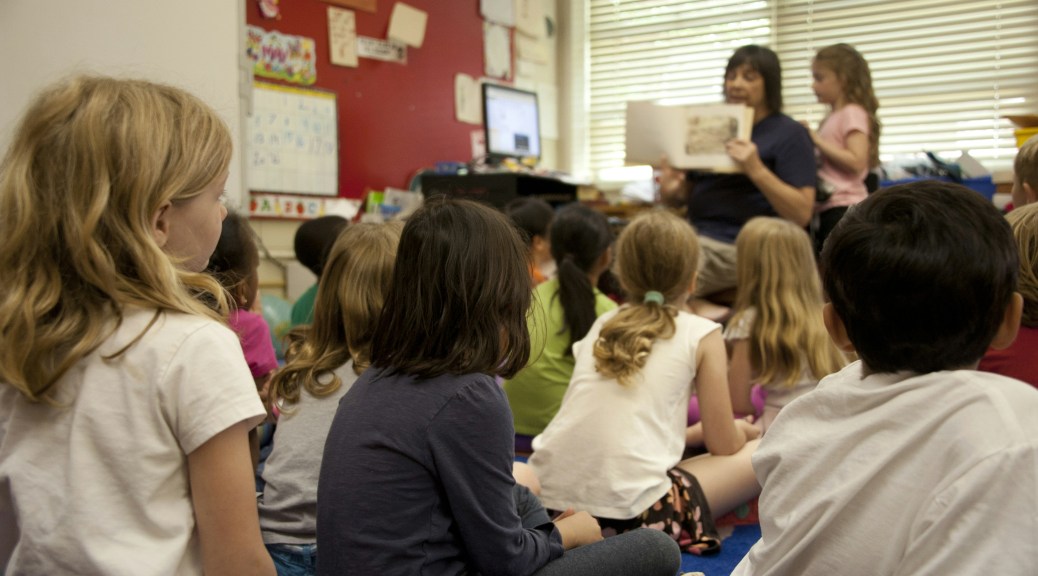

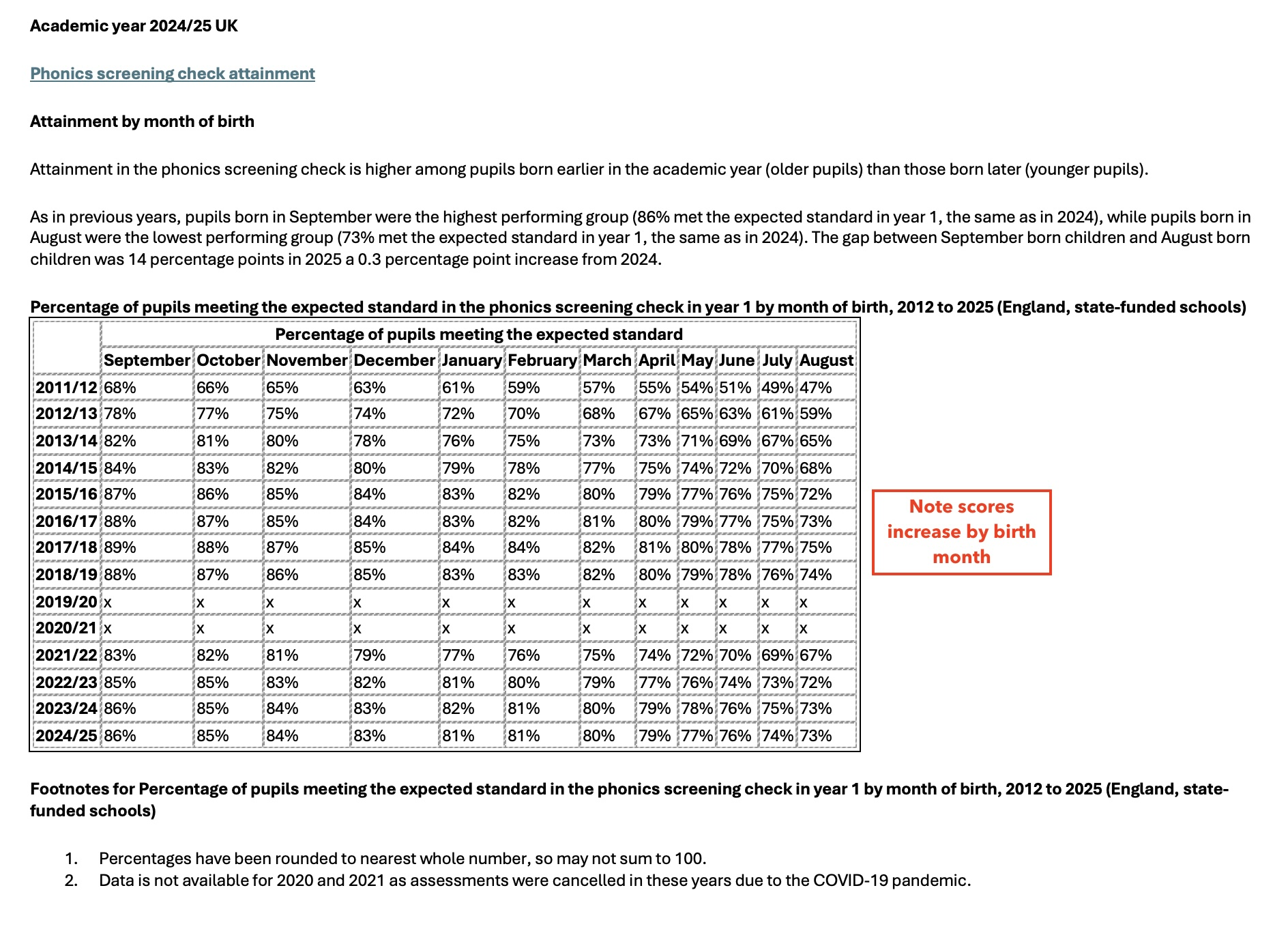
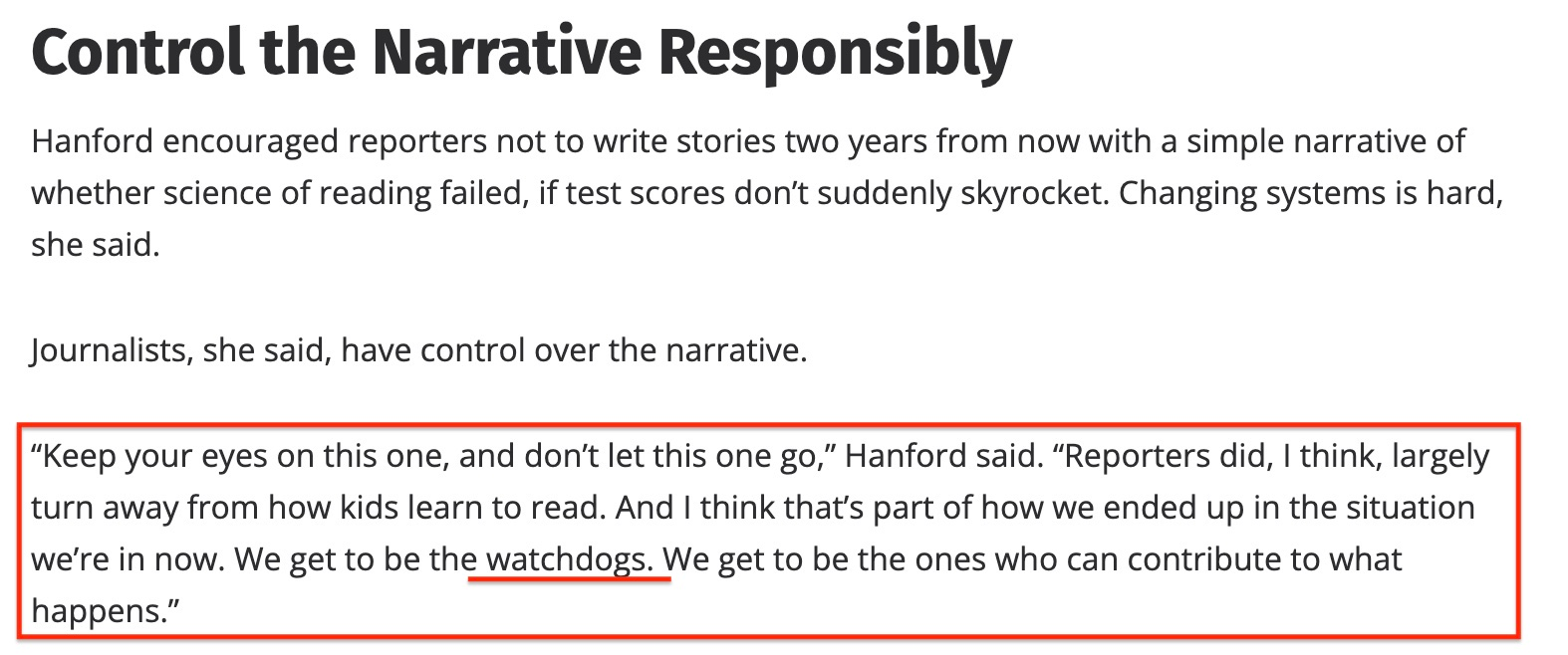
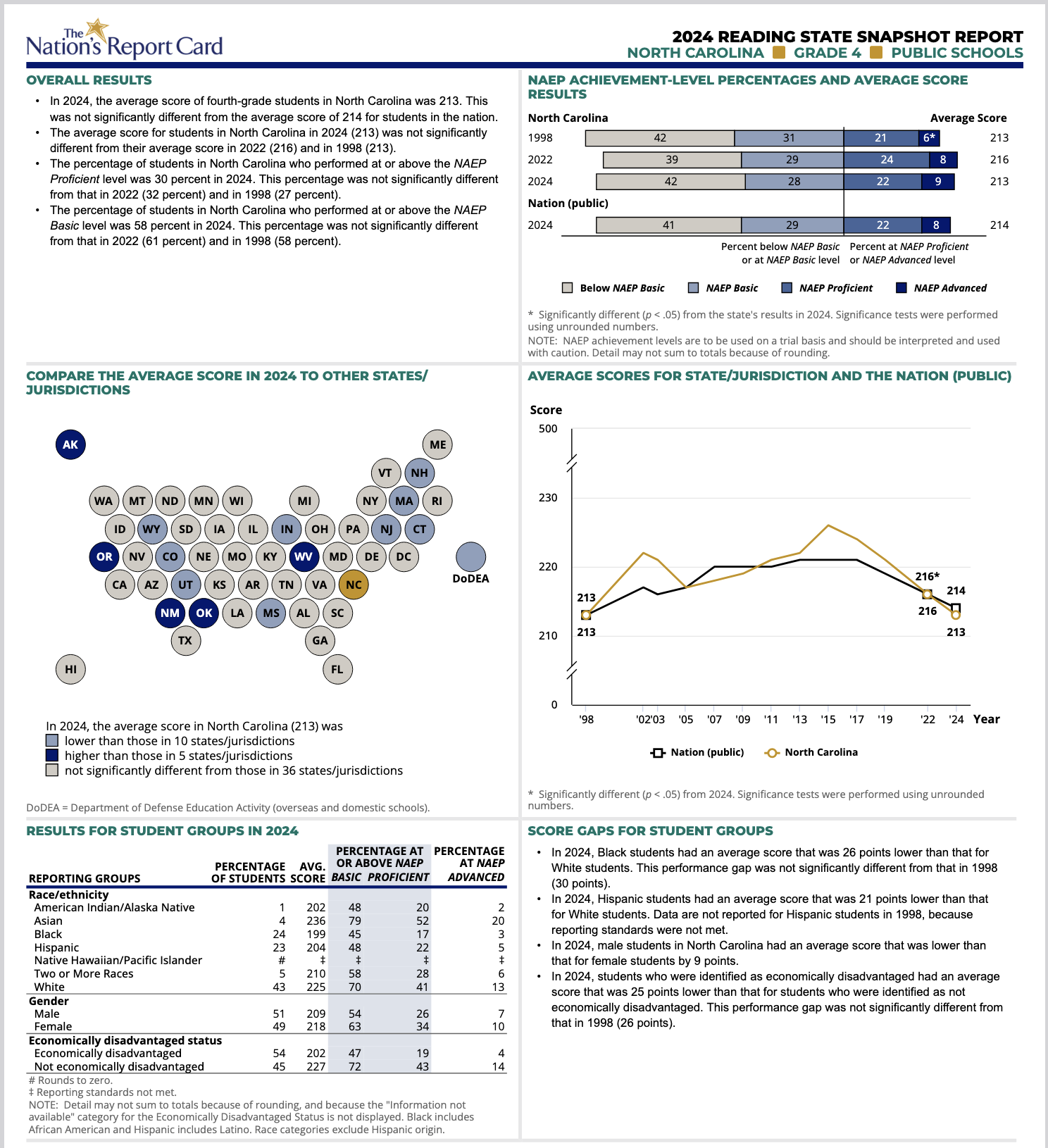
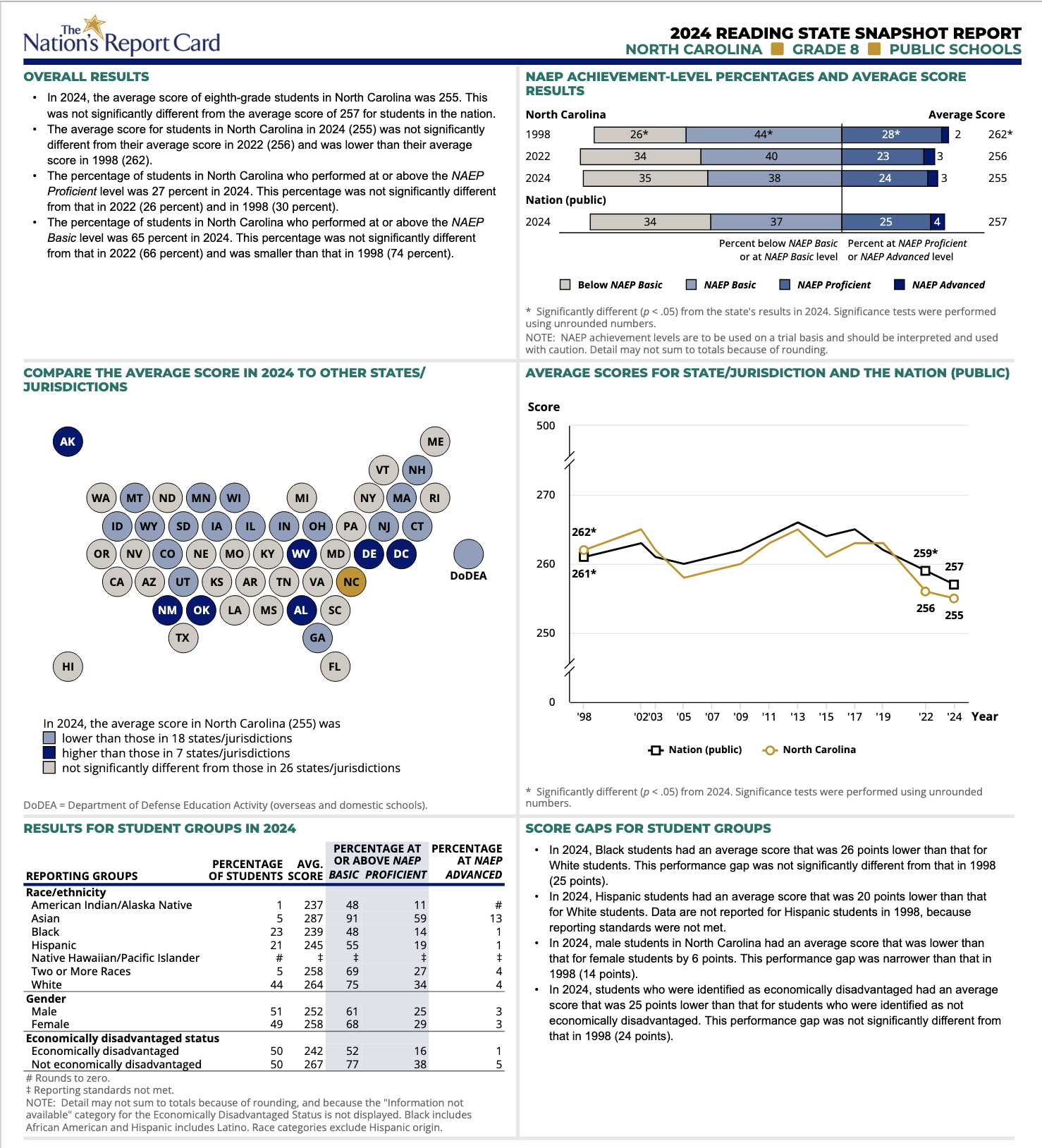


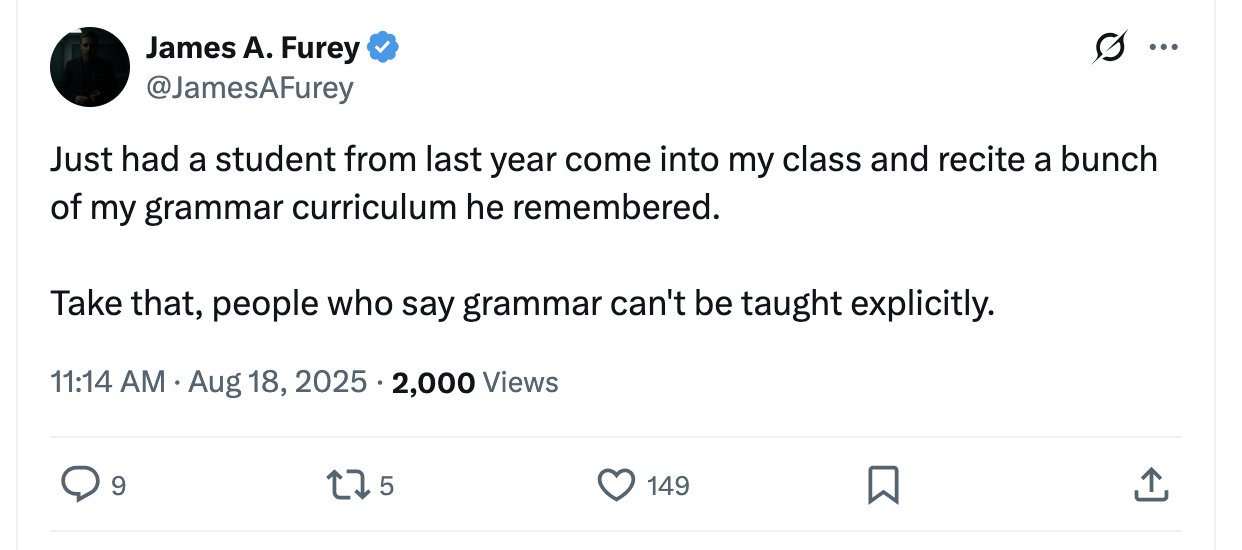

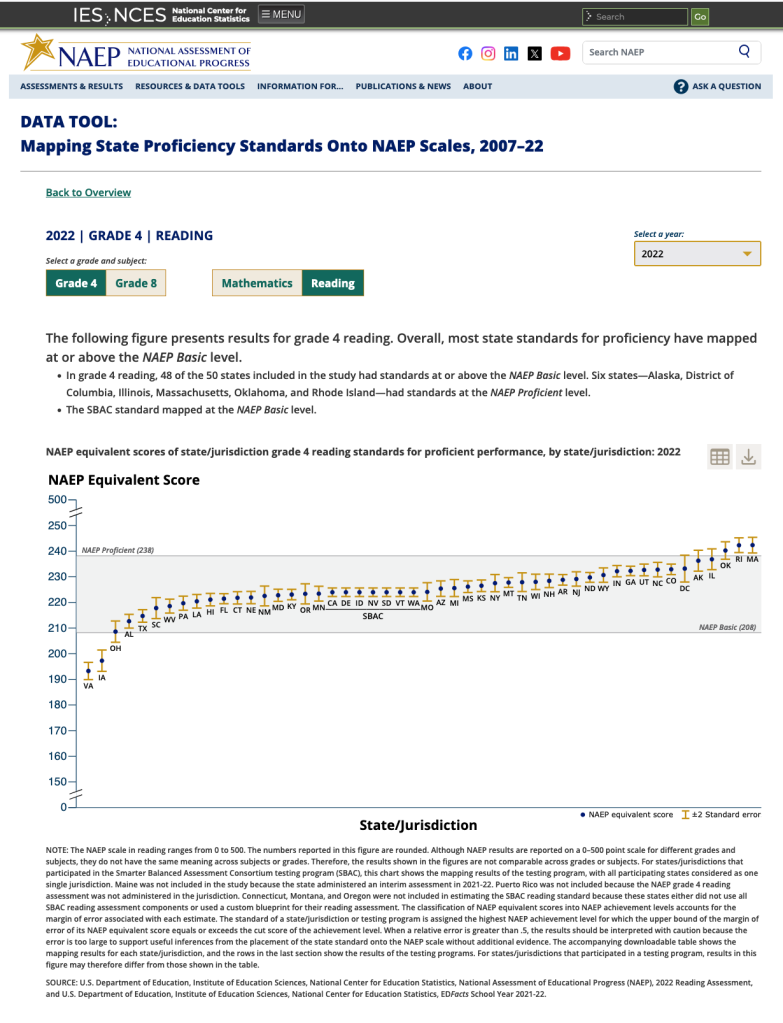
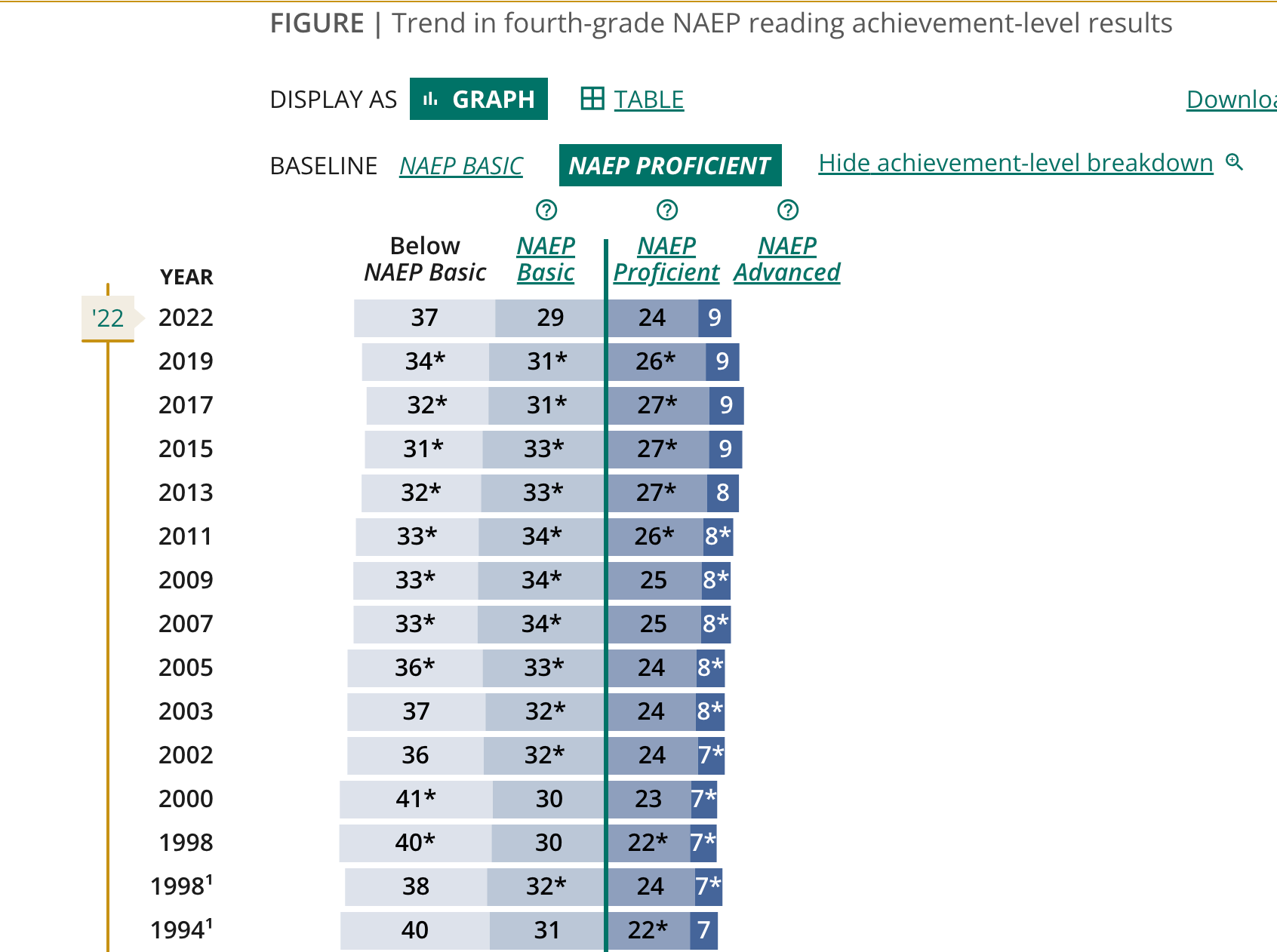
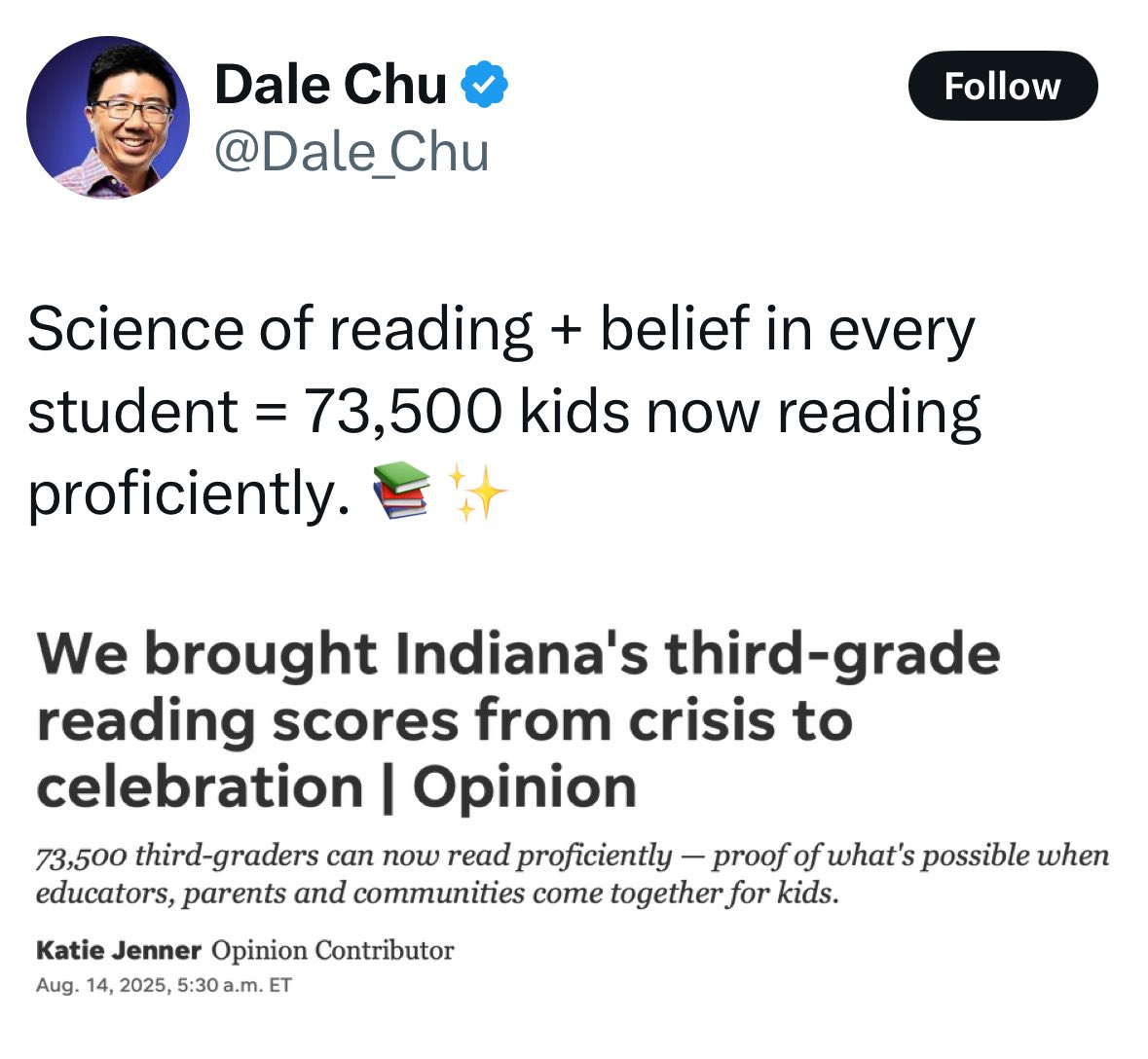
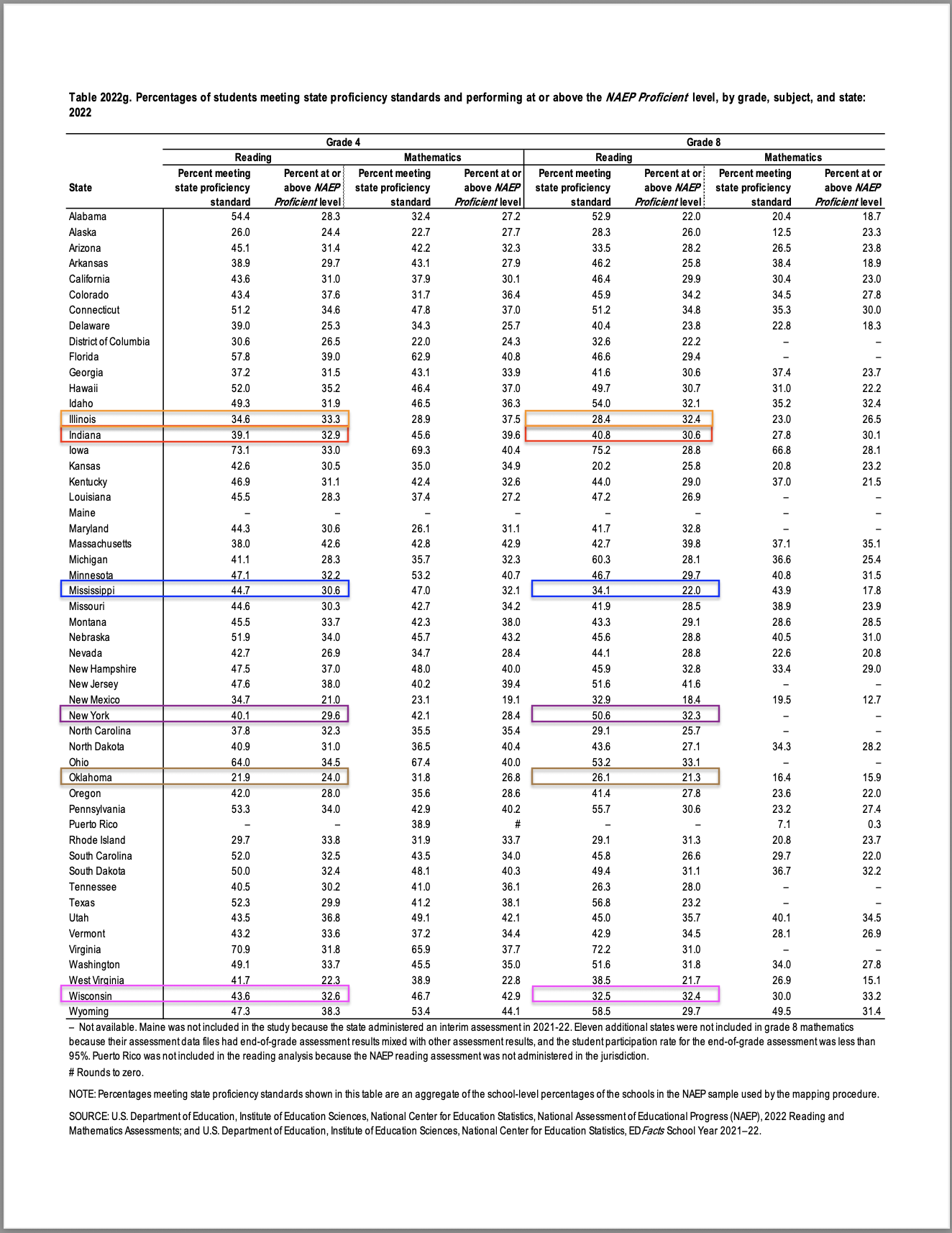
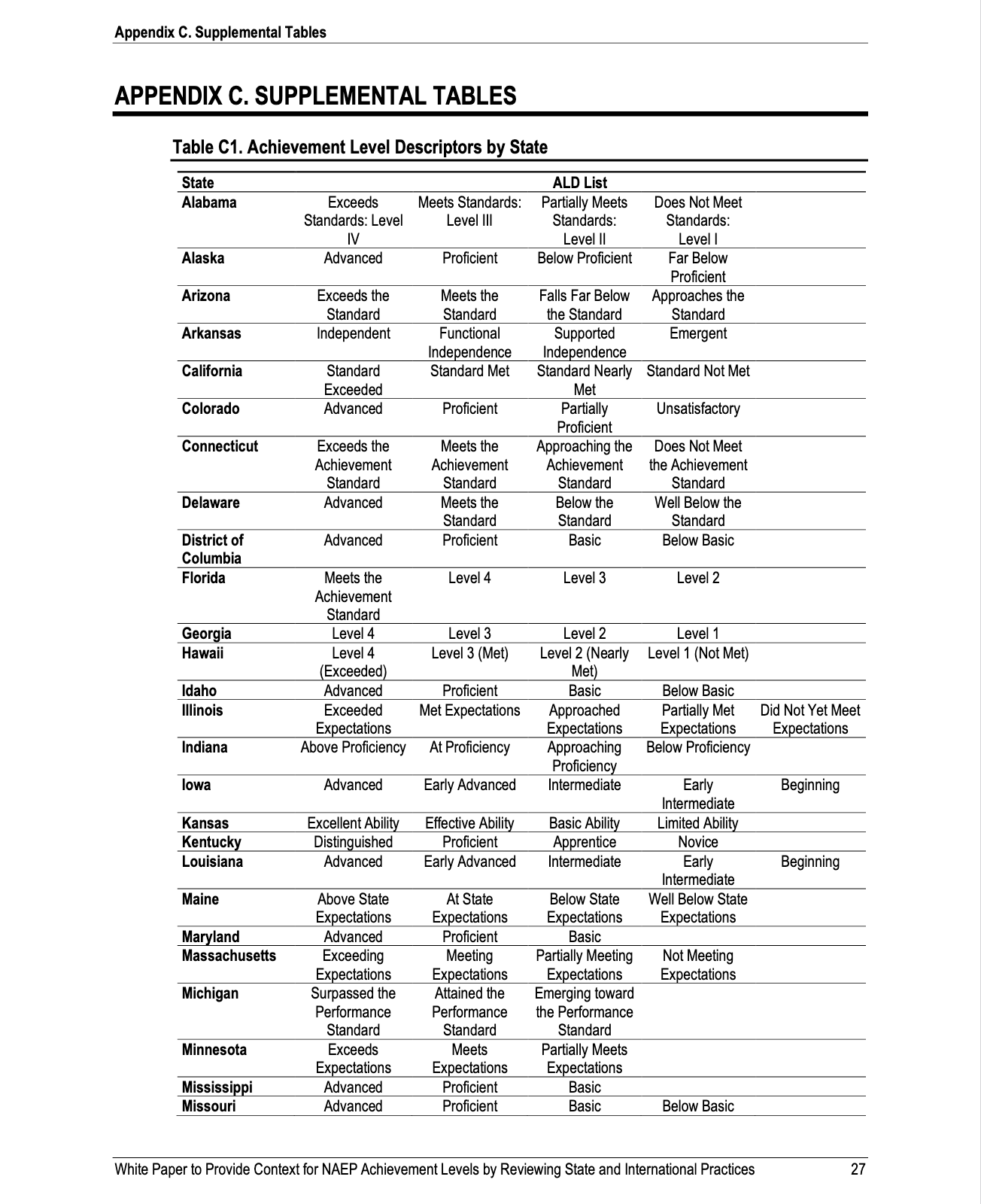
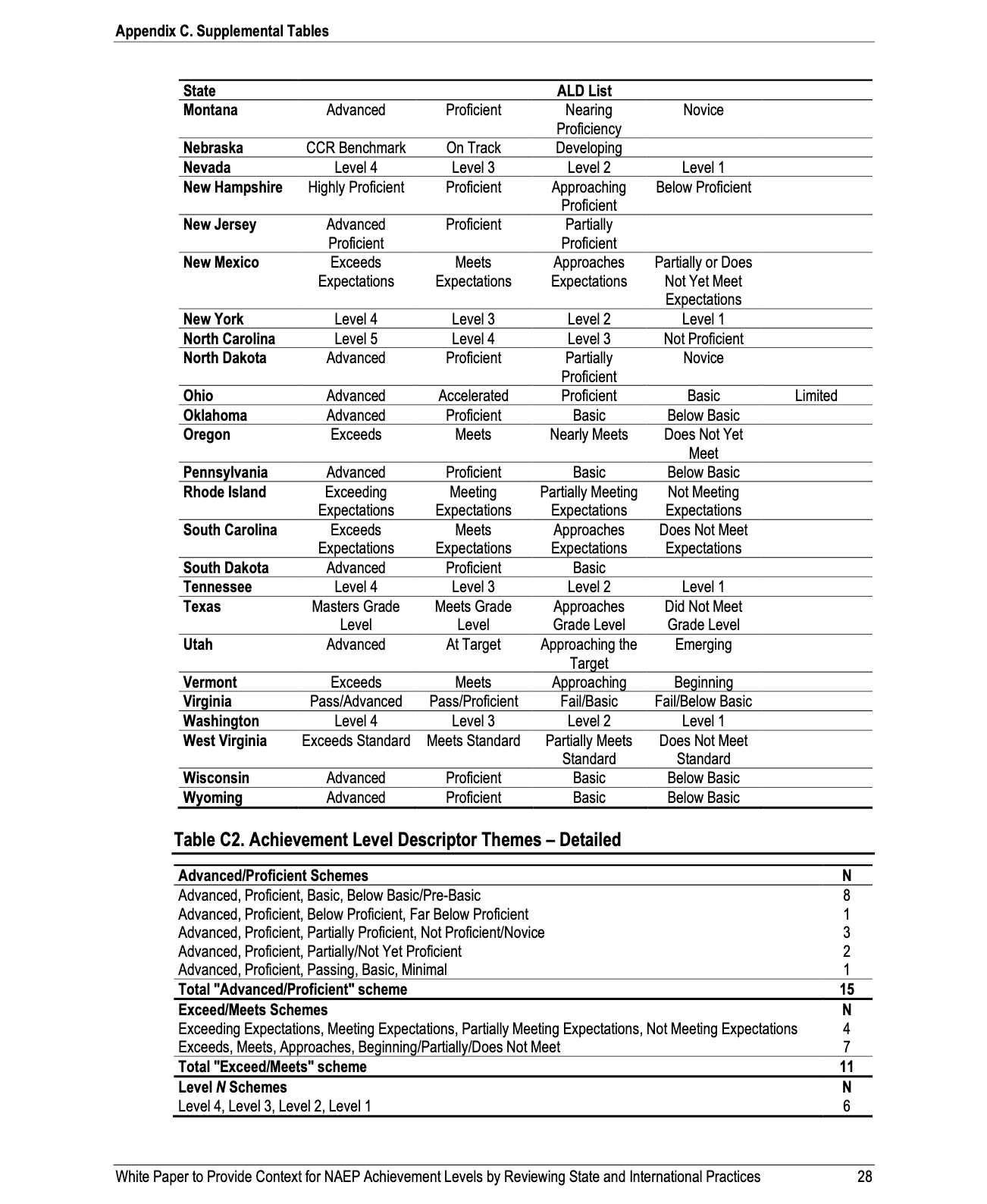
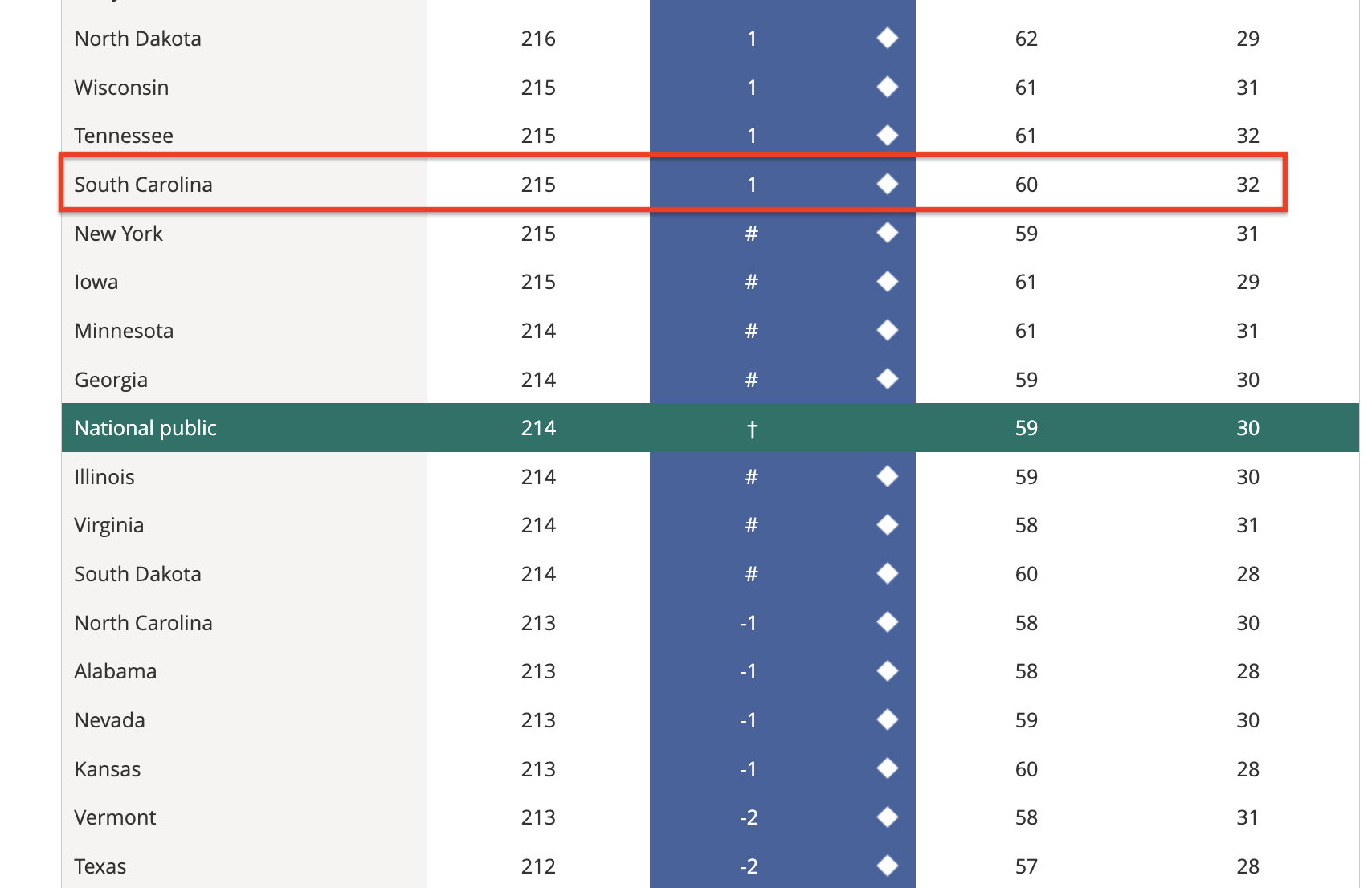
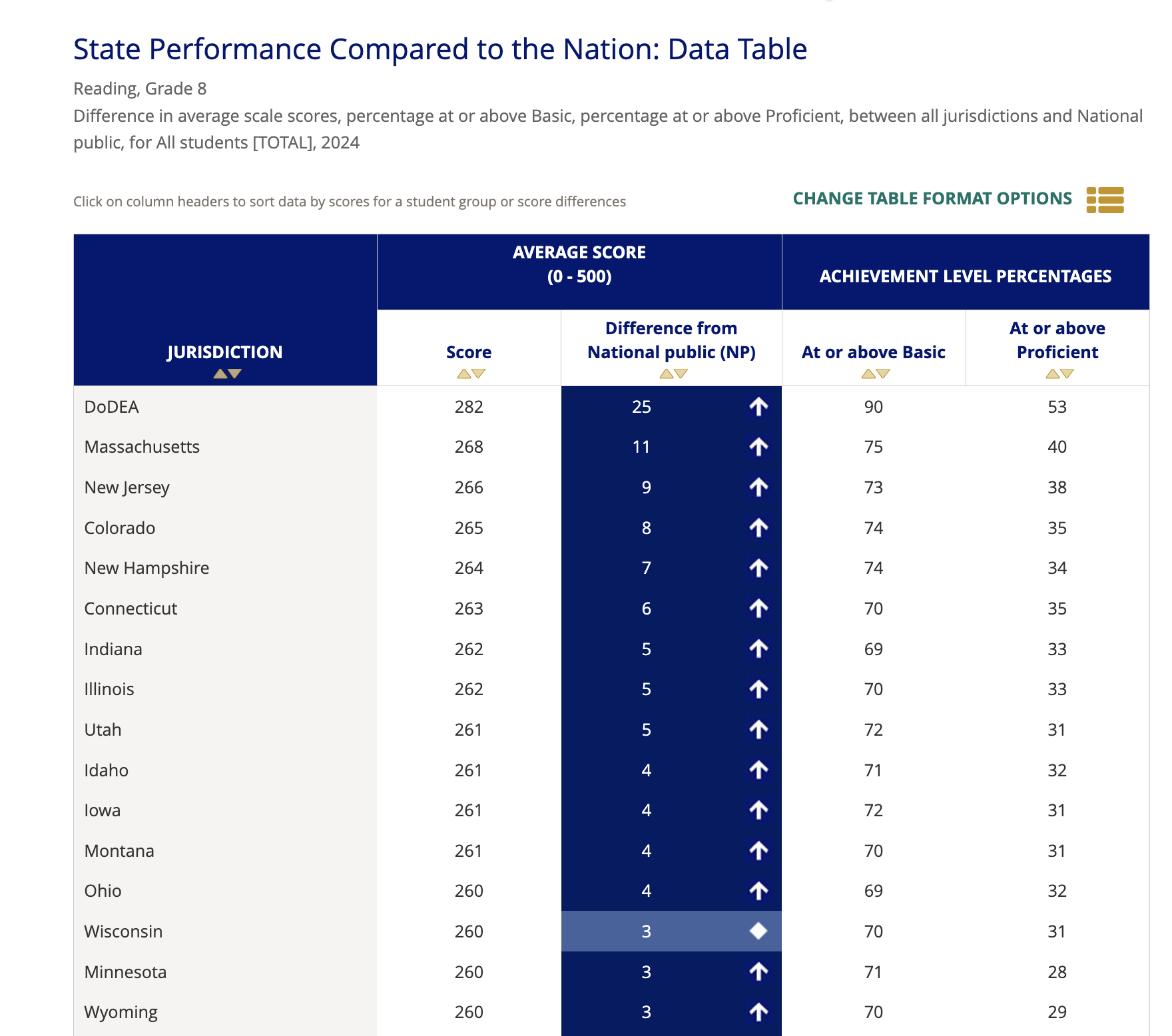
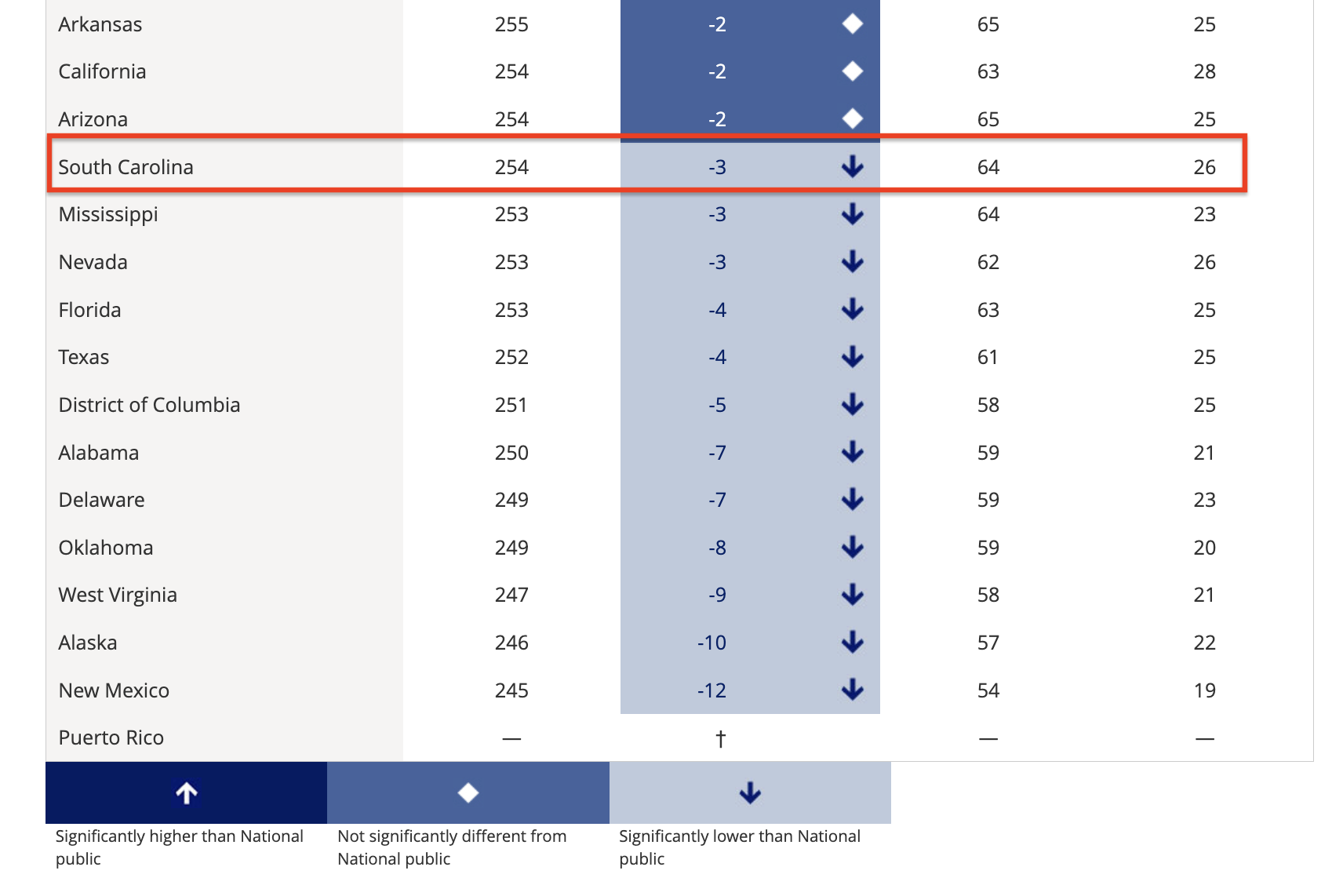


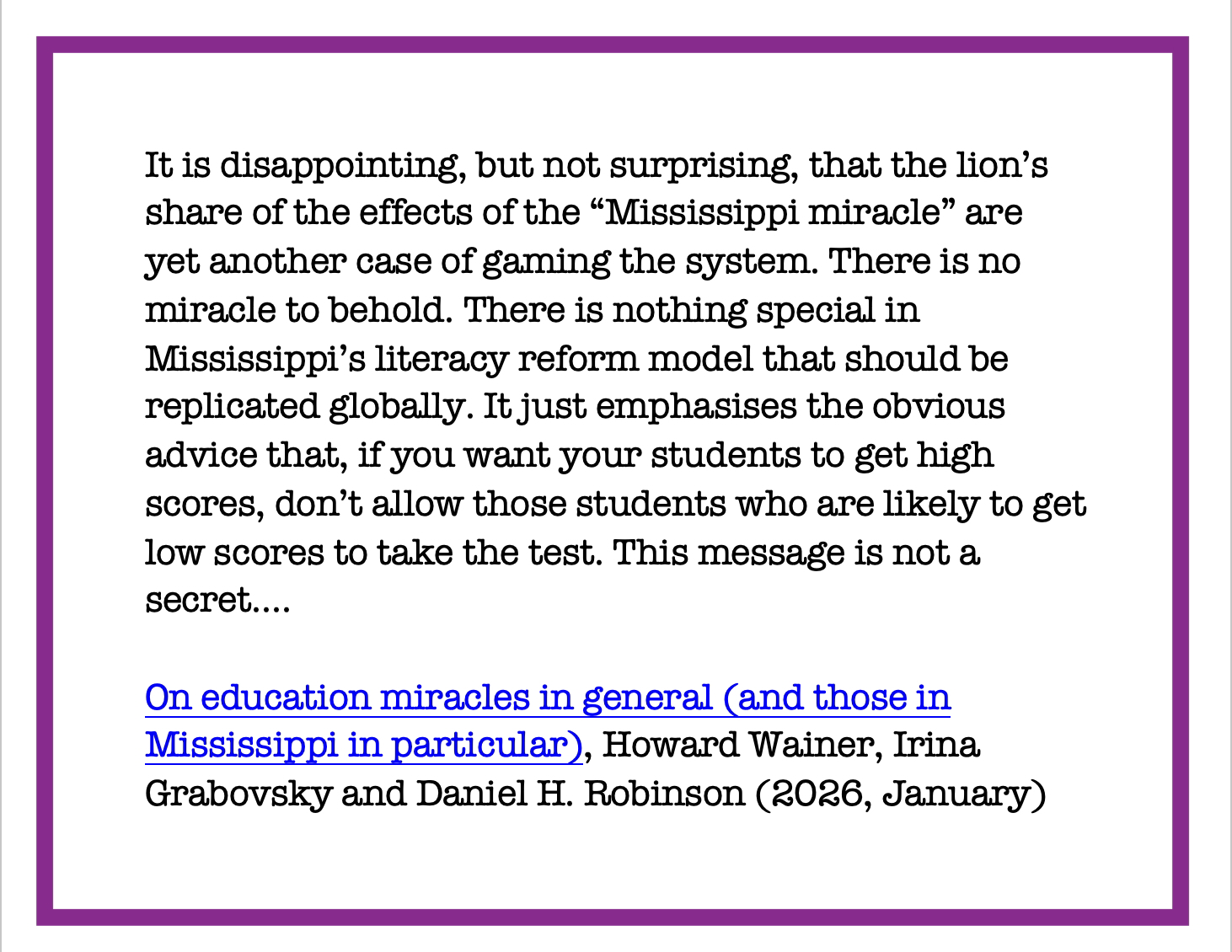
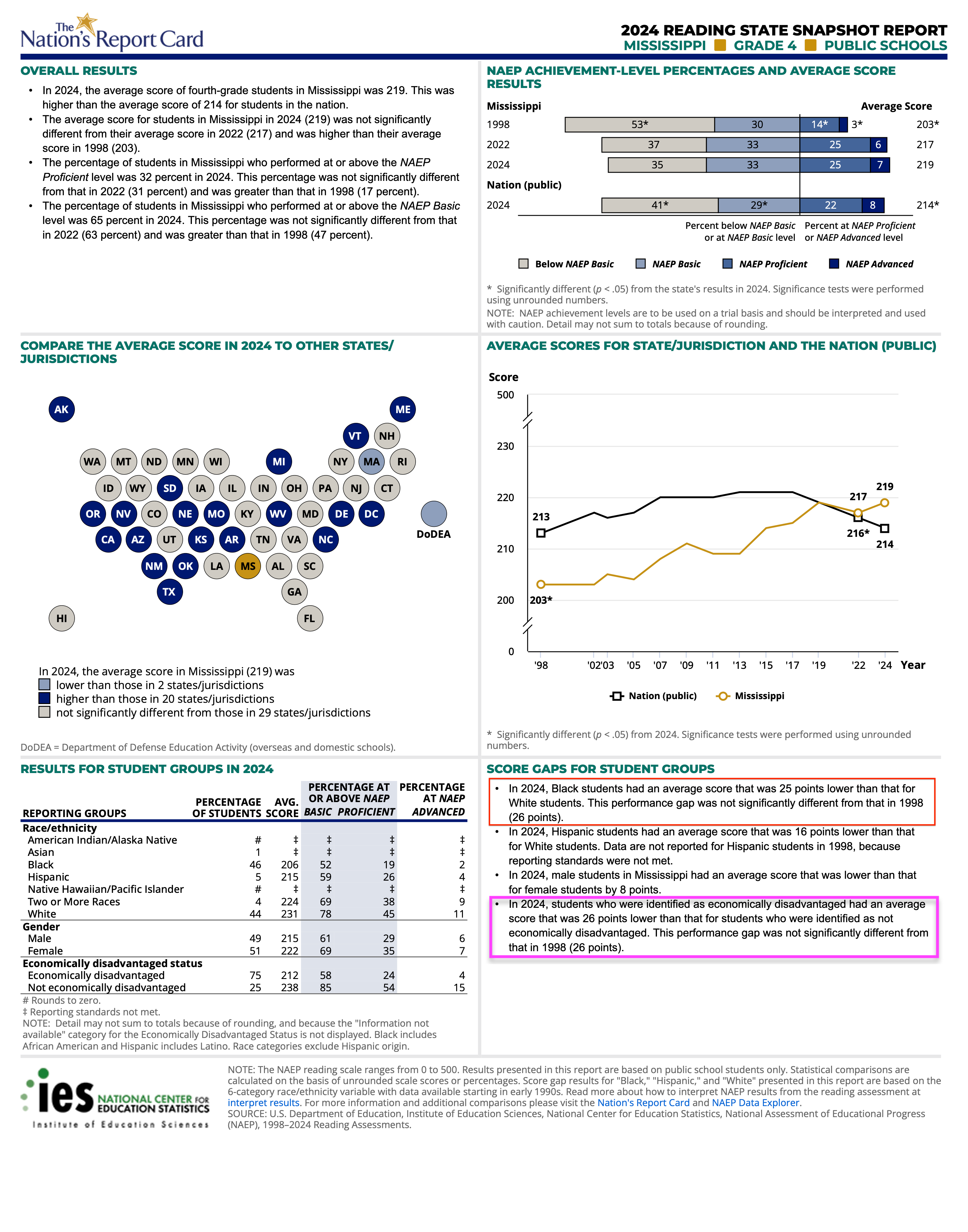
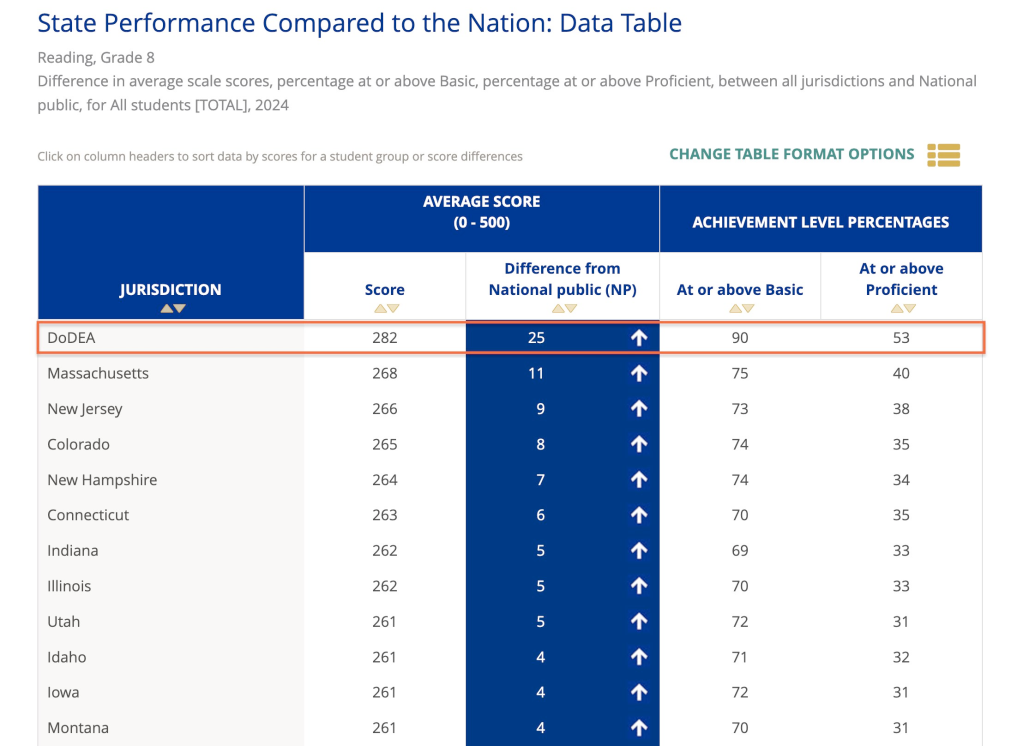
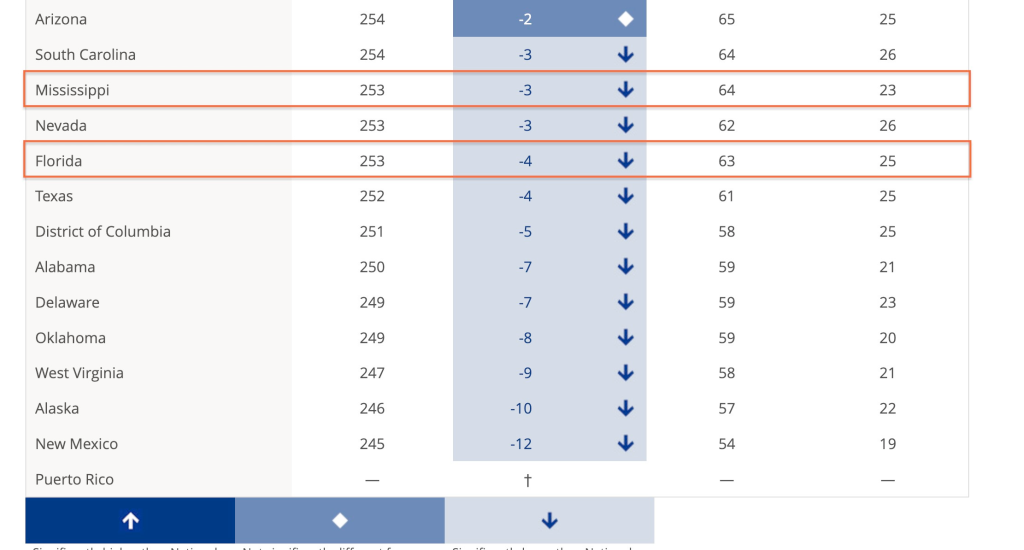

 dr. p.l. (paul) thomas