I recently cited Bertrand Russell, a philosopher who I read during college. But I also came back to read a biography of Russell in the 1990s during my doctoral program, when I was writing an educational biography for my dissertation.
I was in my mid-30s by then and had left my early 20s search for what I believed mostly behind. As I discovered by becoming a biographer, unmasking any person is quite shocking, and Russell seemed much frailer, less resolute once I saw the whole man.
Russell, you see, had espoused a free love ideology, but putting his beliefs into practice proved much different than advocating for those beliefs.
I think Russell was lurking there in my mind when I saw this graffiti recently:
I snapped a picture with my phone and posted a snarky “Free love or anger?” caption across social media.
Sexual liberation, free love, polyamory, etc., are all fascinating to me because I find these concepts both powerfully compelling and (as witnessed in Russell’s own life) incredibly difficult to realize in lived experiences.
Too often, I think, what should be issues of sexual liberation—more needed by women—is a tactic by men to leverage some space or justification for men’s infidelity; further, these progressive ideas about love and sex tend to hit a wall with men’s inability to be possessive in relationships.
Another interesting example is the creator of DC’s Wonder Woman, William Moulton Marston, who is featured in Jill Lepore’s The Secret History of Wonder Woman.
Marston is often credited with weaving feminist ideals into Wonder Woman, and he also practiced polyamory—living and having children with his wife Elizabeth Holloway Marston and partner Olive Byrne, an arrangement that also included Marjorie Wilkes Huntley from time to time.
Again, the reality behind the ideal revealed that these women made much of Marston’s work possible, and likely did some significant amount of that work.
Who did these progressive ideas about women, sex, and relationships benefit?
Marston reminded me of another foundational author in my life, D.H. Lawrence who expressed and portrayed in his fiction a belief that men needed a woman for his intellectual partner and another for his sexual partner.
These are, of course, just a few examples of how the real world manufactures normal, how individuals navigate that normal or find ways to forge their own normal.
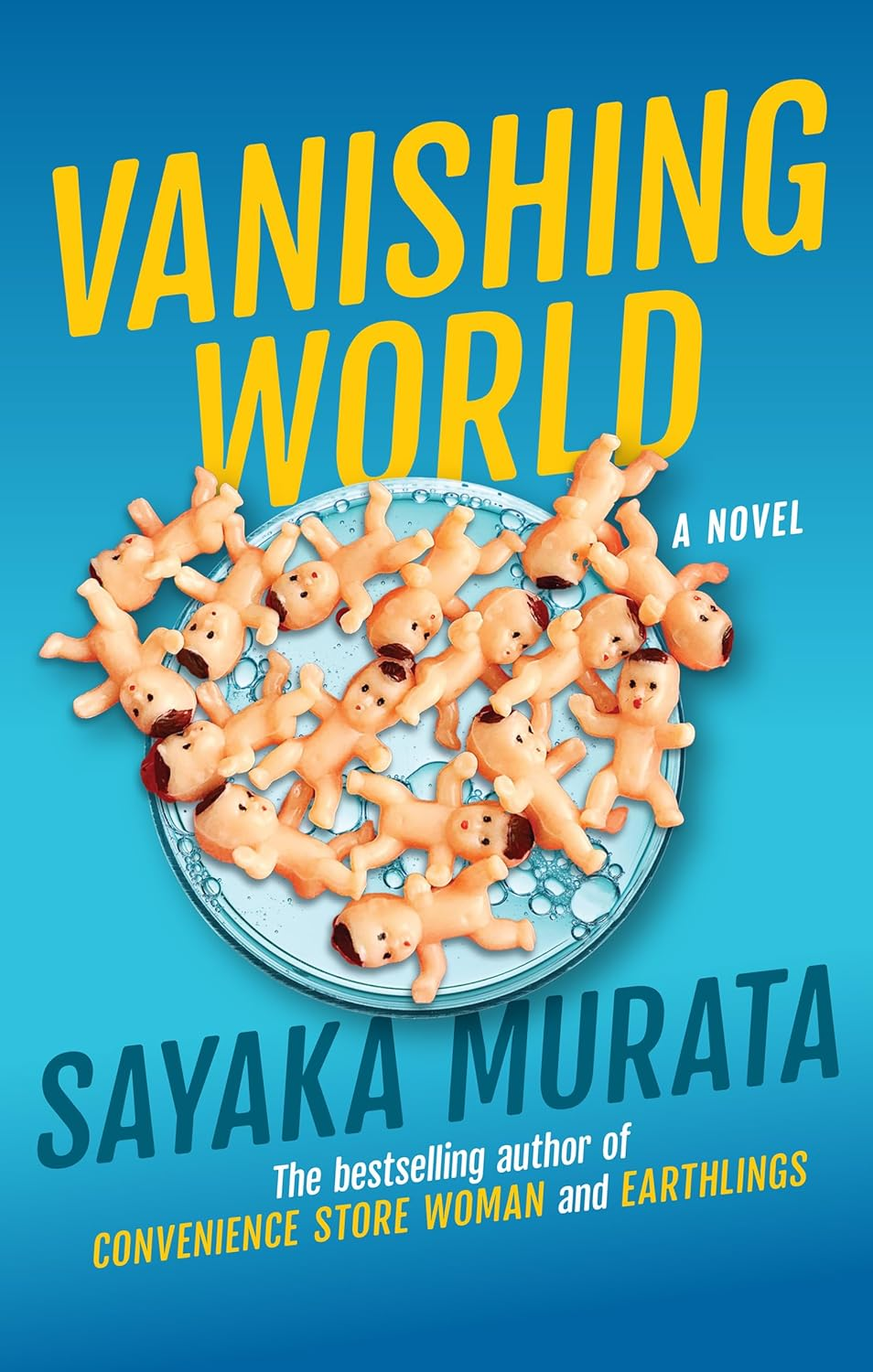
And thus, that blunt graffiti two-words also sit just as I was reading and finishing Sayaka Murata’s Vanishing World.
Sayaka Murata’s Vanishing World: Another Examination of Normal
Like Haruki Murakami, Sayaka Murata is a Japanese writer who draws me in with what reads like literary fiction but is heavily tinged with something like science fiction, or fantasy, or magical realism.
Murata’s works, such as her newest novel Vanishing World, falls into what Margaret Atwood calls speculative fiction. Both Murata and Atwood include elements that are speculative science, but much of these created other worlds seem disturbingly normal, or at least not so much different from the world we live in now.
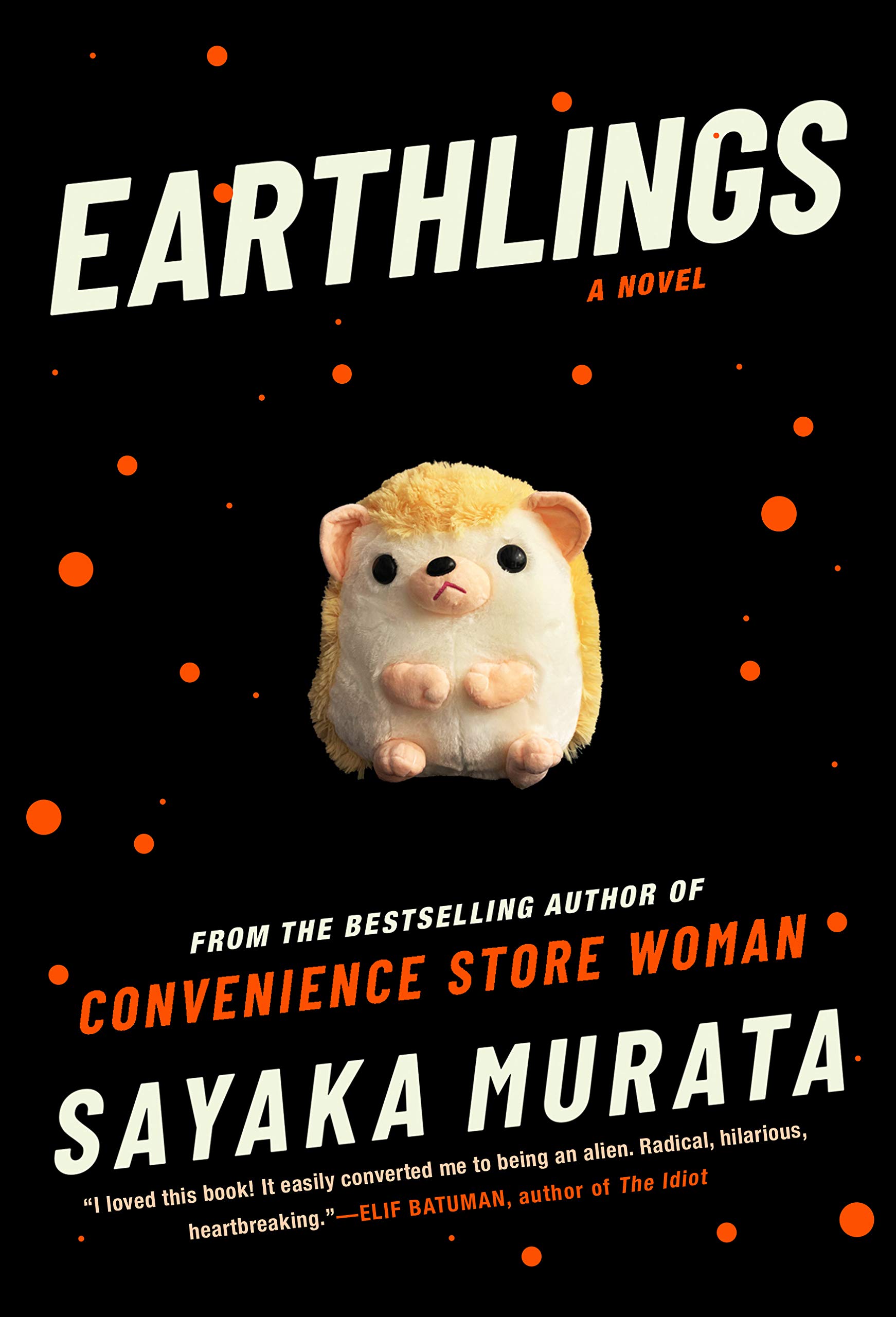
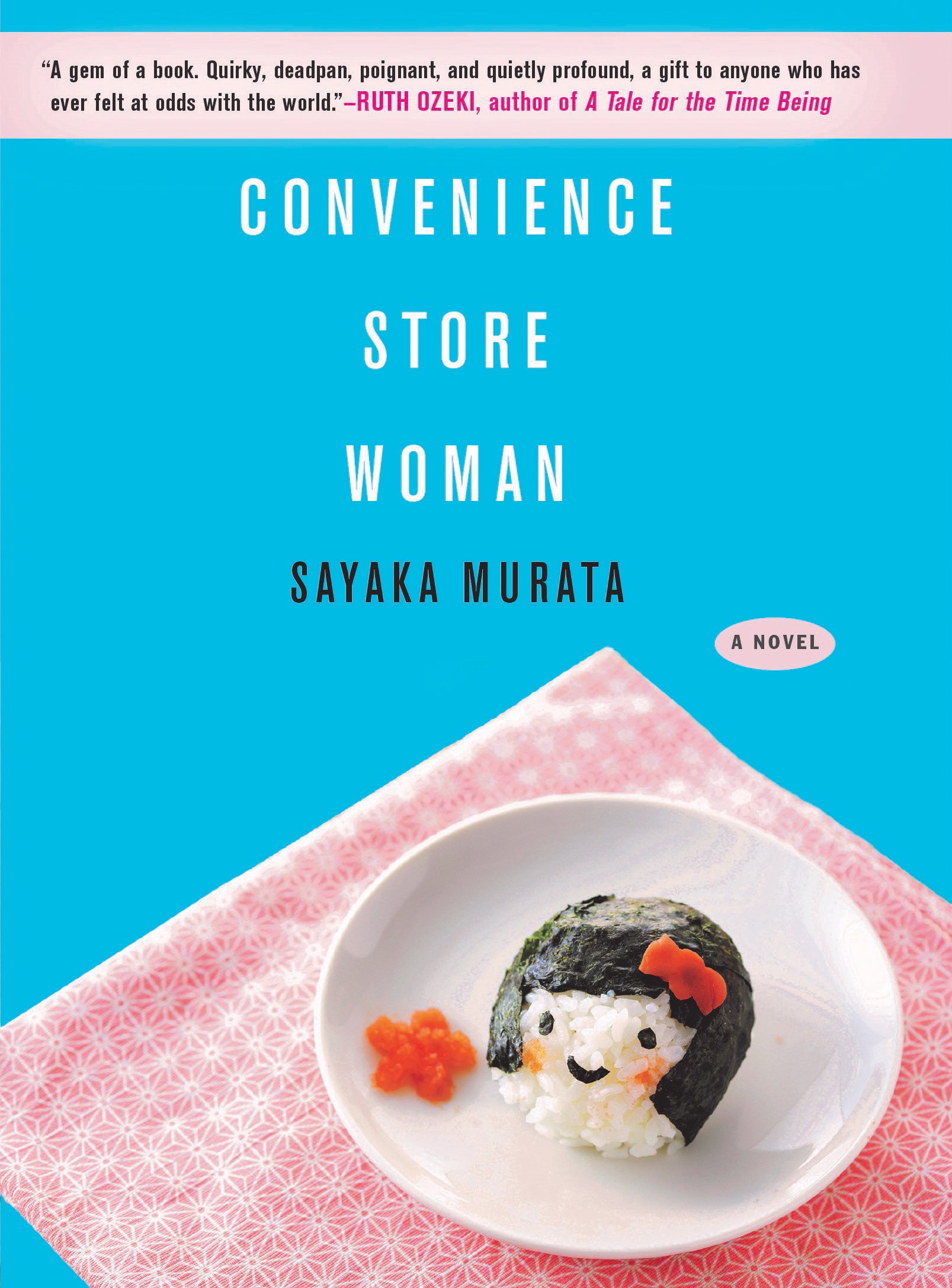
And similar to her Convenience Store Woman and Earthlings, Vanishing World draws the reader into another engaging and surprising examination of normal.
Amane, the main character, lives in the cusp of an old world where procreation is achieved through intercourse (her parents, to Amane’s discomfort, produce Amane through sex), and the brave new world of procreation only through artificial insemination.
In fact, the new normal is that husband and wife are family, and thus, any sexual contact is deemed incest, taboo.
There are some surprises, twists, and disturbing developments, but all in all, Murata forces the reader to think deeply about sex and gender roles, what makes normal “normal.”
The end is disorienting and powerful (similar to Earthlings), bringing the entire work into stark focus.
“Men and women were now all the same,” Amane acknowledges, “all wombs in service of the human race.”
And just pages from the end, Amane argues with her mother: “‘And you aren’t brainwashed, Mom? Is there any such thing as a brain that hasn’t been washed? If anything, it’s easier to go insane in the way best suited for your world?'”
This speculative world of Murata is about humans making normal “fuck nobody,” a sort of extreme puritanical alternate world that renders human nature unnatural—or at least, no longer normal.
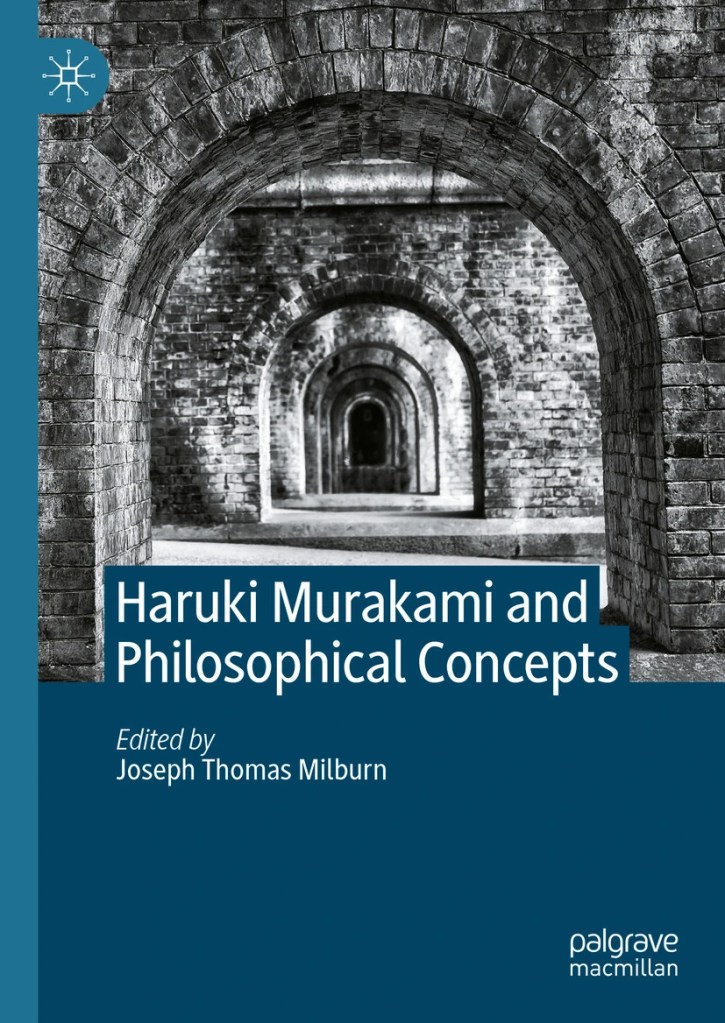
Thomas, P.L. (2025). Haruki Murakami’s 7 stories: “It’s quite easy to become Men Without Women.” In J. Milburn (ed.), Haruki Murakami and philosophical concepts (pp. 65-72). Palgrave.
I was born in Woodruff, South Carolina, and spent some of my childhood in nearby Enoree. Both were very small (Enoree was essentially a cross roads, not far from even smaller Cross Anchor); both were mill towns that had not quite begun to crumble in the 1960s and 1970s.
Woodruff seems like parody now, an ugly parody since the town had literal racial divisions with the Black neighborhood, Pine Ridge, on the other side of the railroad tracks dividing the town.
Racism and a bitter fundamentalism were the norm among white people, although most of these cancers remained unspoken and carefully navigated.
What I heard and witnessed in white-only spaces, including my home, contrasted disturbingly with what I heard and witnessed in mixed-race spaces—notably the vibrant high school sports arenas that much of my hometown worshipped. Yes, my hometown was a high school Friday night football sort of world that, again, almost seems like parody now.
Tradition and authority governed schooling and parenting. Conservative ideology was so pervasive there was little to no evidence any other way of thinking was possible.
There was a bitterness and fatalism among white people, among my family members, that I am deeply aware of now. I see it in the far-right Trump movement, reminding me of my parents railing against Muhammad Ali and blaming Dan Rather for the fall of Richard Nixon.
A darkness of empty minds. Irrational and certain.
By some inexplicable twist of fate, the paradox, I found myself in a series of events that allowed me to rise above that emptiness, allowed me the freedom of the human mind that quite literally saved my life.
I wasn’t quite bookish as a child, but I grew up surrounded by books and reading; my mother was a very bright woman with sparse formal education, a natural teacher with a tendency toward nurturing and mothering (she spent a good bit of her life running an in-home daycare and raised my sister’s three sons).
The secular miracle of my life was that for some odd reason my parents never censored my world, especially my intellectual life. By the time I was a teenager, I had graduated from relentlessly watching science fiction B-movies with my mother to reading covertly hundreds of comic books and novels by Arthur C. Clarke, Larry Niven and Jerry Purnell, and other science fiction not assigned in school (and there were several assigned novels in school I simply did not read, like Charles Dickens, even though I fell in love with Thomas Wolfe’s You Can’t Go Home Again, which I read in a literal fever while home sick).
In tenth grade, the miracle of miracles, I entered Lynn Harrill’s English class. Lynn was a fairly new teacher, a kind and passionate educator who eventually became a mentor and the primary impetus for my life as a teacher, scholar, and writer.
Lynn was perceptive, and bold. I spent many days hanging out in Lynn’s room when I wasn’t in class (a kindness I learned and mimicked when I became a teacher, the first years in the exact room where Lynn taught me).
His perception was recognizing my proclivities and how traditional schooling wasn’t serving me fully. His boldness was whispering to me one day when I was taking up his valuable time that I should read D.H. Lawrence (he added that since he knew my parents the recommendation would be fine but Lawrence was a controversial writer).
Lynn was right about the recommendation and my parents.
By high school, in fact, my mother patiently wrote checks each month for my subscription to a few comic books and Playboy, delivered to my home as if this sort of thing was completely normal in 1970s SC.
Of course, as a teen, Playboy and Lawrence spoke to my sexual curiosity of adolescence, but that was a very small fraction of my intellectual life that they both spurred. I recall to this day several interviews I read in Playboy by thoughtful people dramatically unlike the adults of my hometown.
Lawrence became my first literary crush (Clark as well as Niven and Purnell was my first nerd-reading crush). Over the next few years, I read everything by Lawrence. In college as I drifted toward education and English, I gathered as much literary analysis of Lawrence as I could.
Hovering beneath all this, of course, was my comic book collecting. For almost 50 years, I have been a collector of some kind. When I discover a writer, I plow through all their work, proudly buying and displaying all their books.
From that first affair with Lawrence to the more recent obsessions with Haruki Murakami, there have been too many love affairs with authors’ works to list them all—Kurt Vonnegut, Milan Kundera, Margaret Atwood, James Baldwin, and on and on.
And as I noted many times, one of the pivotal moments of my life was finding a used copy of the non-economic writing of Karl Marx, including the foundational pieces that turned me on to being an educator.
Yes, Karl Marx inspired me to a life of service and a commitment as a teacher to foster in students a vibrant mind of possibilities and ideas—and a robust, unyielding repulsion for indoctrination, and even authority.
Many years later, I discovered Paulo Freire and bell hooks. Freire gave me an important framing—the choice of being authoritative (earning the respect of students and readers because I demonstrate authority over content) instead of authoritarian (demanding compliance because of my status).
It is 2022 and I am terrified.
That terror isn’t grounded in the never-ending threat of Covid (although that is certainly terrifying), but in the spreading threat from Republicans determined to censor and control curriculum and what books anyone has access too.
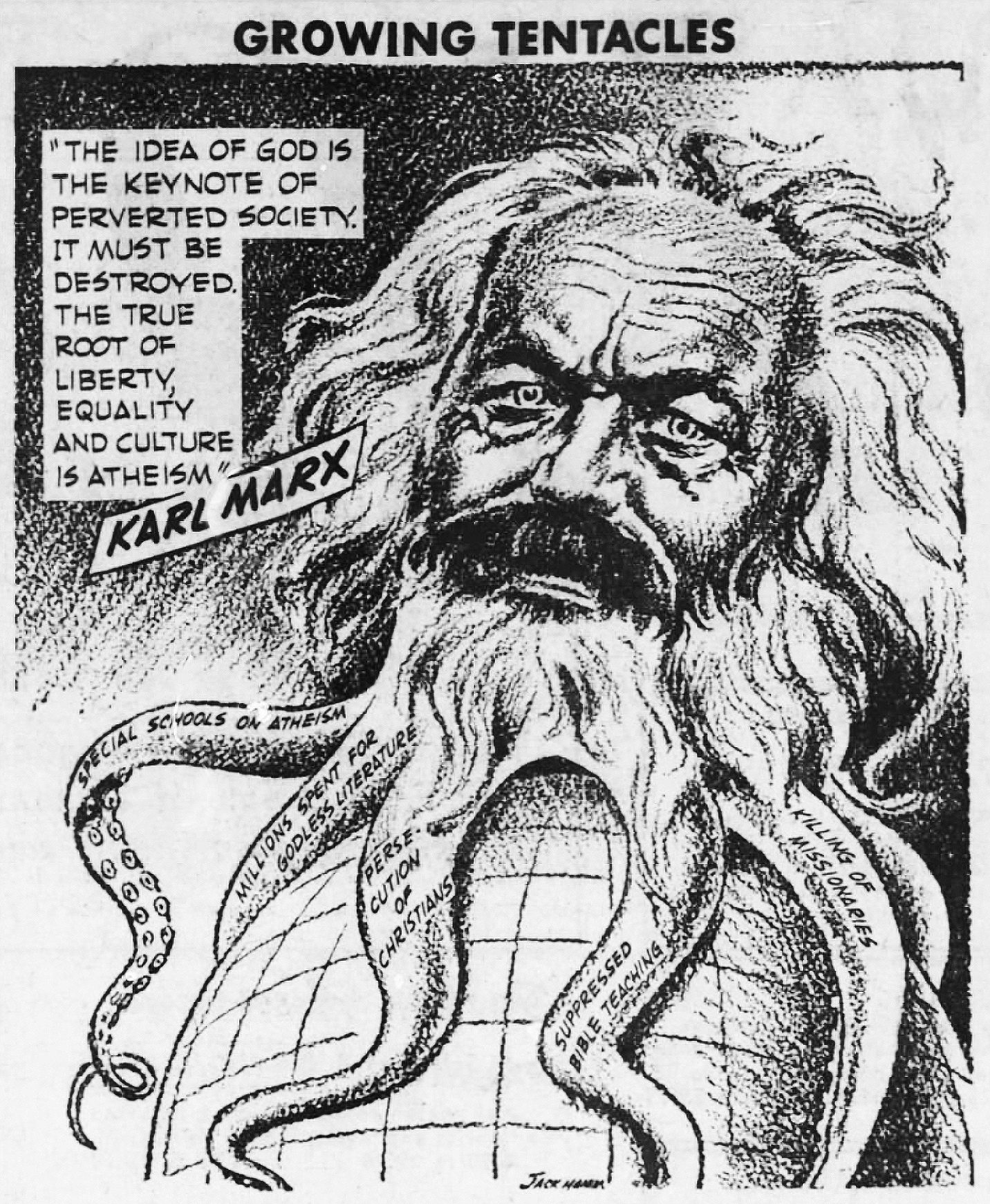
Notice the second tentacle from the left: “Millions spent for Godless literature.”
I was born about 6 months before this editorial cartoon, and today read the following from Judd Legum:
In Indiana, State Senator Scott Baldwin (R) has introduced sweeping legislation that Baldwin says is designed to ban Critical Race Theory (CRT) and related concepts in K-12 education. During a committee hearing on the bill earlier this month, Baldwin told a high school English teacher that he should be “impartial” when discussing Nazism. It is a case study about how the frantic efforts to ban CRT can quickly lead to absurd outcomes.
Republicans all across the U.S. are introducing and passing legislation censoring curriculum (targeting anti-racism content) and banning books from classrooms, school libraries, and public libraries (focusing on LGBTQ+ authors and works); some school board members have even called for book burnings.
My home state of SC is following the lead of other Republican-led states (notably Texas) by proposing guidelines that allow anyone to censor books for others.
It is incredibly important to emphasize that Republicans are actively removing books from school and public libraries—using government to decide what books and ideas people have access to.
These actions are tyranny. The antithesis of being free people.
There is no individual freedom without intellectual freedom.
No one should be held hostage to a life of an empty mind. Everyone deserves the accidental great fortune of my youth, including the kindness and boldness of my teacher, Lynn Harrill.
But none of this should be done in whispers, or with fear.
Republicans are calling for the eternal darkness of the empty mind, and we must resist because censorship erodes both American freedom and human dignity.
Also in 1961, Lou LaBrant recognized the failure of education as conformity:
Throughout our country today we have great pressure to improve our schools. By far too much of that pressure tends toward a uniformity, a conformity, a lock-step which precludes the very excellence we claim to desire….Only a teacher who thinks about his work can think in class; only a thinking teacher can stimulate as they should be stimulated the minds with which he works. Freedom of any sort is a precious thing; but freedom to be our best, in the sense of our highest, is not only our right but our moral responsibility. “They”—the public, the administrators, the critics—have no right to take freedom from us, the teachers; but freedom is not something one wins and then possesses; freedom is something we rewin every day, as much a quality of ourselves as it is a concession from others. Speaking and writing and exploring the books of the world are prime fields for freedom. (pp. 390-391)
“Normality was contagious, and exposure to the infection was necessary to keep up with it,” explains Natsuki in Sayaka Murata’s Earthlings.
If we accept that “normal” describes what is typical, and thus, what we may expect in any circumstance, then the novels of Murata are themselves not normal.
Having focused for the last couple of years on fiction in translation (see links below)—prompted in part by my scholarly and personal interest in Haruki Murakami—I think part of the appeal of fiction from other cultures, crafter originally in languages other than my native English, is that the works confront and challenge my perceptions of normal, even though my critical ideology always calls on me to question, to step back, and to reconsider the assumptions of being human.
However, Murata’s work has shaken me to the core, although in a different way than my recent journey through three novels by Ryu Murakami (below); both authors leave me confused about my responses to their graphic violence and matter-of-fact explorations of the decidedly taboo (child sexual assault, incest, and cannibalism, for example, in Murata).
But while Ryu Murakami crafts tension around both horrific violence by serial murderers and the ever-present threat of violence (readers can likely never again ignore the possibility of severed feet), Murata’s tensions are existential, and while far more dramatic than day-to-day human anxiety, any reader who lives with the existential dread of simply being alive must interrogate their empathy for Keiko (Convenience Store Woman) and Natsuki.
I read Earthlings first, mesmerized by the first third of the novel focusing on Natsuki at 11 years old and in the early stages of puberty. However, this opening is no coming-of-age narrative seeking to reach some sort of universal appeal.
Yes, some of the first two chapters is somewhat quirky explorations of what almost everyone understands about being an adolescent—especially Natsuki’s feeling alienated from her family, particularly her antagonistic mother—but Natsuki being the victim of sexual assault (far too common for young women throughout the world) turns even more disturbing because her confession of the abuse is callously dismissed by her mother and ultimately because Natsuki at 11 enacts a surrealistic revenge that leaves the reader, again, conflicted.
The rest of the novel is Natsuki as an adult, in her 30s, and here we see many of the same powerful motifs found in Convenience Store Woman, where Keiko is also a woman in her 30s.
Murata offers readers characters explicitly aware that they are not normal, but who are along a spectrum of navigating their world-views against either the urge to become normal or finding a way to exist in the so-called normal world as an alien (with sufficient ambiguity about whether that is literal, delusional, or metaphorical).
From casual interest in incest and gleeful cannibalism to choosing a single life as a career part-time convenience store worker, the plot elements of Murata’s novels shatter expectations about tone as well as anyone’s confidence in their own sense of normality.
It isn’t enough to say that Murata seems to show that there really is no such thing as “normal”—except for the power of normalization to seem real.
Murata pushes even further, toward the implication of normal as entirely arbitrary; “normal,” if we dare to be critical, becomes most harmful in human experiences when it becomes “right.”
Normal people marry and have children. Normal people seek out careers and center the focus of their lives on those careers.
And since these are the right things to do, this is how anyone can be fully human.
The harm, of course, is that those who choose not to marry, have children, and center their lives on their careers are choosing the wrong path—and are in effect not fully human.
This brings me to the ultimate overwhelming weight of Murata’s novels—the burden of normal on children and women as well as the role of normal in the sexual and physical violence pervading the lives of children and women.
Yes, there are cartoonishly surreal moments in Murata that prod a smile, but everything in her worlds is tinted by the inevitability of the disease of normality and the futility of a single human’s desire simply to be herself, her true and full self.
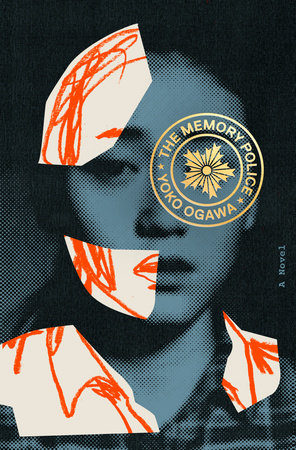
My experience with Yoko Ogawa’s The Memory Police was filled with moments of disorientation that matched at a much smaller level the events of the novel, set on an unnamed island where the inhabitants suffer through a series of disappearances under the surveillance of the Memory Police.
First, I was drawn to the stunning cover and a description promising a stark work of science fiction.
Since I received a hardback copy and the inside flap claims the novel is a “stunning new work,” I began reading the work as exactly that—a newly published novel by a young writer.
Yet, as I read, the genre wasn’t so neatly clearcut, and I soon learned the novel is from 1994, the English translation being new, but Ogawa, now in her late 50s, has a celebrated career in Japan.
“I sometimes wonder,” the narrator begins, “what was disappeared first—among all the things that have vanished from the island” (p. 3). And from there, the novel proceeds ominously but softly, or subtly, in a voice and a story that do prove to be stark but defy a simple label of science fiction; at turns it reads as fantasy, and then as fable or allegory.
For a book centered on the provocative act of disappearing, I was drawn as well to how much is not there to begin with. Character names and place names are missing or sparse. But I also felt off balance, disoriented, by the mismatch between the patient and soft narration against the foreboding doom of the disappearances, some of which seem minor although the loss and the ever-present threat of the Memory Police render all of the disappearances life-altering.
Reading Ogawa for the first time reminded me of Haruki Murakami, Albert Camus’s The Stranger, and Philip K. Dick—although I quickly warmed to seeing the novel as purely a work by Ogawa. In some ways there is a sense of detachment and very slow development I find often Murakami, and may be shared qualities of Japanese narrative.
Broadly, Ogawa’s fable is a powerful reflection of Camus’s existential message from The Stranger: “after a while you could get used to anything” (p. 77). However, in Ogawa’s allegorical nightmare, that concept is both proven and stretched almost beyond comprehension by the end of the novel.
It is the similarity with Philip K. Dick that sits strongest with me, though. Like Dick, Ogawa creates a pervasive sense of foreboding and fatalism in the lives of the characters. The totalitarian reality of The Memory Police is similar to many of Dick’s works as well as Margaret Atwood’s The Handmaid’s Tale and The Testaments, but Ogawa keeps the reader detached from and uninformed about the facts of that oppressive society.
Also similar to Dick, Ogawa investigates human nature, including what makes anyone human—or in this case, what can a human lose and still remain human (similar to a motif in Kazuo Ishiguro’s Never Let Me Go).
Another sparse aspect of the novel is plot, but as a reader, I was fully engaged with the characters; Ogawa’s careful and delicate portrayal of friendship and intimacy suggests that at least one key component of being fully human is our community with others.
The Memory Police begins calmly and persistently, but it never really reaches a boil or fever pitch, ultimately fading to the end more so than disappearing suddenly as is the case within the narrative. The novel, in fact. ends with the word “disappear,” and I was left filled and emptied simultaneously.
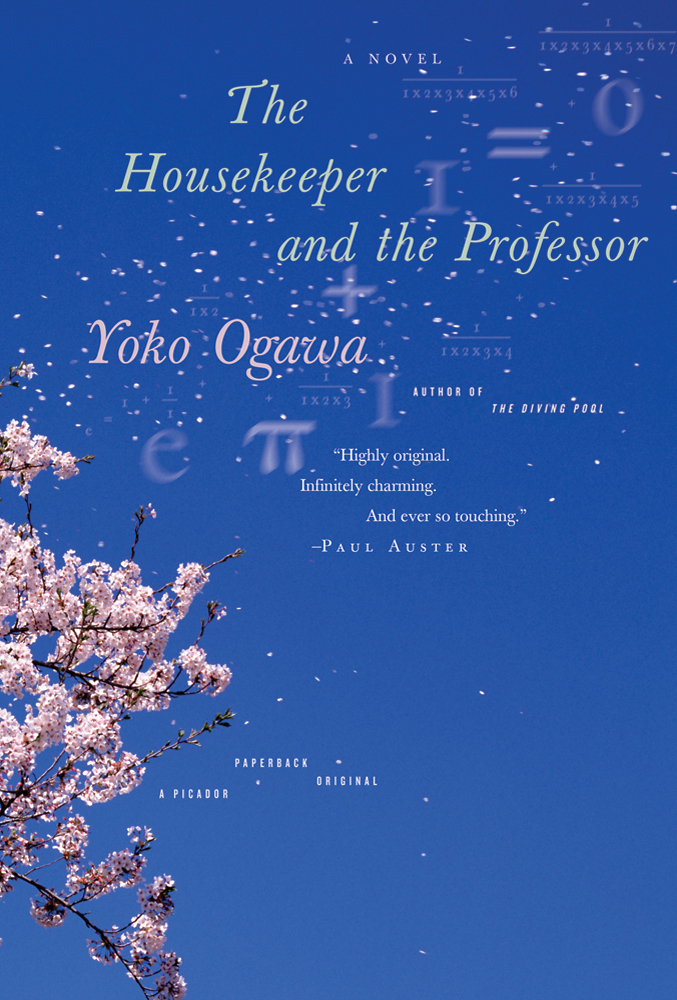
While reading this novel, I ordered four more of Ogawa’s works, and immediately began The Housekeeper and the Professor, where I found a rhythm that feels distinctly Ogawa’s.
While this slim novel reads as literacy fiction with a touch of allegory, absent many of the conventions of genre fiction, Ogawa once again deals with memory. In The Memory Police, characters not only have material disappearances, but over time, most of the characters no longer remember what has been lost—except for the rare few who become targets of the Memory Police.
Recall becomes dangerous, and suggests those with their memories intact have power that the omnipresent Memory Police are charged with erasing.
The premise of The Housekeeper and the Professor is not fantastical, but it is exceptional; the Professor of the title is an aging mathematical genius who, after an accident, has only 80 minutes at a time of memory along with his memory of his life prior to 1975.
Since his short-term memory constantly resets, his sister-in-law, alone as his caretaker, is challenged to keep a housekeeper employed to manage his life.
Ogawa builds on this unusual circumstance a really sweet and beautiful narrative about the housekeeper, her young son (dubbed Root by the Professor), and the Professor. The characters are often gentle and kind souls, often delicate, in spite of the odd nature of the Professor’s life and their tenuous relationships.
The story is often quirky, and Ogawa manages several moments of real tension on much smaller levels than in The Memory Police, but palpable tension none the less.
Although not essential knowledge for the reader, this novel’s use of mathematical principles is the motif that holds the story together, more weighty than the low profile of the plot and the slow development of the themes and characterizations. For the Professor and eventually the housekeeper and her son, math is beautiful and fascinating.
In Ogawa’s work, memory as that blends with all human relationships seems to be an essential element of being fully human, but in The Housekeeper and the Professor, readers also witness something about our basic humanity, for example in how the Professor interacts with and teaches Root:
Among the many things that made the Professor an excellent teachers was the fact that he wasn’t afraid to say “we don’t know.” For the Professor, there was no shame in admitting you didn’t have the answer, it was a necessary step toward the truth. It was as important to teach us about the unknown or the unknowable as it was to teach us what had already been safely proven. (p. 63)
That last sentence, I think, is a wonderful description of my experience reading Ogawa, which now continues with her collected three novellas, The Diving Pool.
(A.02) Teaching Beyond Fear: Inquiry Around Gun Violence in the English Language Classroom
Date: Thursday, November 21, 2019
Time: 9:30 a.m. – 10:45 a.m.
Location: Ballroom II
Beginning with a keynote from YA author Tom Leveen, this roundtable utilizes experiences and expertise from English educators, young adult literature authors, classroom teachers, and mental health professionals in order to consider how secondary English Language Arts can address school gun violence. More specifically, presenters will discuss using young adult literature and writing strategies to guide students as they explore difficult issues, such as violence in schools.
Roundtable Leader: Paul Thomas: History of Violence: Guns, U.S. Education, and American Exceptionalism
In pursuit of helping all children to become readers, this session by the Elementary Steering Committee will address the misleading narratives that assert that all children acquire reading in the same way, featuring several reading scholars who will discuss the multiple ways the “Science of Reading” is misread and misleading.
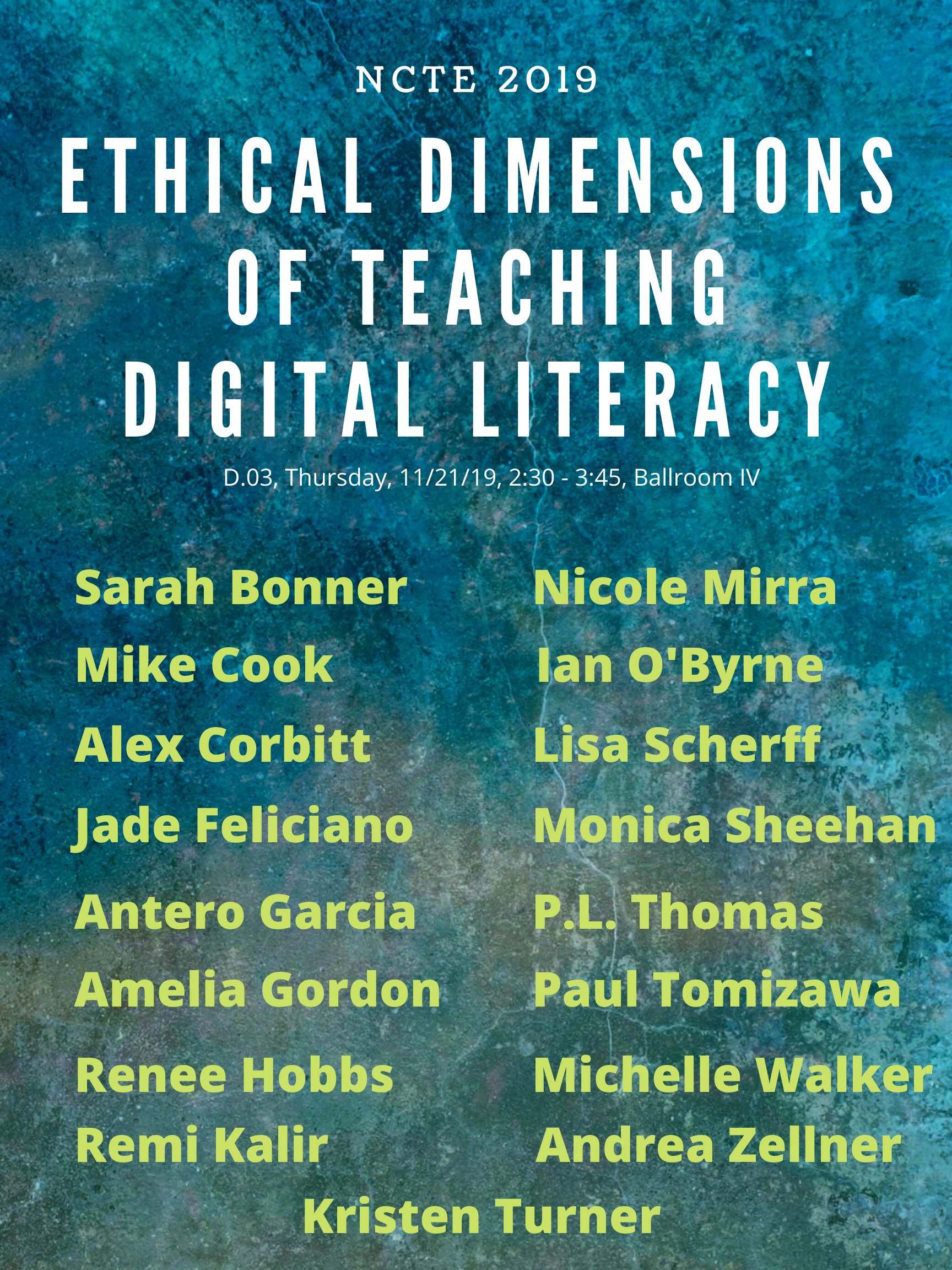
(D.03) Ethical Dimensions of Teaching Digital Literacy
Date: Thursday, November 21, 2019
Time: 2:30 p.m. – 3:45 p.m.
Location: Ballroom IV
How do we teach students to be responsible, ethical citizens in a digital world? From reading and writing online to social interactions, teachers have responsibilities in teaching the ethical dimensions of digital literacy. This session will provide practical applications across grade levels.
Roundtable Leader: Paul Thomas: The Ethical Dilemma of Satire in an Era of Fake News and the Brave New World of Social
At NCTE 2018, Chimamanda Ngozi Adichie confessed that she still reads “dead white men” even as she advocated for expanding the canon. In other words, expanding the canon does not mean erasing authors, but rather incorporating new perspectives, asking new questions, sharing new ideas. This roundtable session explores what it means to expand the canon by making contemporary connections. Participants will select among 13 tables, each offering units grounded in canonical text(s) and exploring critical and contemporary ways to investigate those texts. After brief opening comments, participants will have the opportunity to circulate among 3 of the 13 roundtables.
Roundtable Leader: Paul Thomas: Haruki Murakami and The Great Gatsby
(F.02) Critical Media Literacy in English Education
Date: Friday, November 22, 2019
Time: 11:00 a.m. – 12:15 p.m.
Location: Ballroom IV
The roundtable session on critical media literacy in English education focuses on the ways in which English educators advocate with others for critical media literacy. Linking to the conference theme, several roundtable presenters inquire into our conception and practices of critical media literacies, including the ways of consuming, producing and distributing critical media literacies in an age of post-truth politics.
Opening Comments: Paul Thomas: What Is Teaching English?
Date: Friday, November 22, 2019
Time: 12:30 p.m. – 1:45 p.m.
Location: Ballroom IV
The L. Ramon Veal Research Seminar is an ELATE-sponsored session that supports graduate students and teacher researchers engaged in educational research through directed discussion with senior scholars in ELA teacher education.
Respondent: Paul Thomas
(H.01) The Intersection of Literacy, Sport, Culture, and Society
Date: Friday, November 22, 2019
Time: 2:00 p.m. – 3:15 p.m.
Location: Ballroom II
This roundtable session invites attendees to explore contemporary literacies and diverse teaching practices by using sports content and an examination of sports culture to create learning environments that empower students to think critically about issues impacting the world around them.
Roundtable Leader: Paul Thomas: Race, Athleticism, and Intelligence in Media Narratives of Athletes
Teaching necessitates attending to the learning and growth of other people, but how, as teachers, can we nurture our own creative and intellectual development? In this interactive session, attendees will dialogue with educators who, through bogging, podcasting, and tweeting, are using social media to foster their public selves.
Co-presenter: Sean Connors Co-presenter: Paul Thomas Co-presenter: John Warner
As a lifelong white Southern male, I found the characterization of that man—what many would call a Georgia cracker—to be unsettling. He is arrogant, self-assured, and able, as he declares, to wrangle his way out of any trouble.
What is off, I think, is that in real life this type of poor Southern white man is an odd but distinct combination of embarrassed arrogance. They are stubbornly self-assured—and completely un-self-aware. But they are also painfully laconic, and if you look carefully, they often become flushed, the blood rising in their necks and faces as they swell with both anger and embarrassment.
In the audio of the wiretap that leads to this KKK member being interrogated, there are hints that Mindhunter is softening the characterizations (that dialogue, and the verb usage, is far too formal) so the scene that bothers me seems to be a reasonable cinematic decision—although it fits into a current narrative about white men now who seem to be afraid of losing status that they never deserved in the first place.
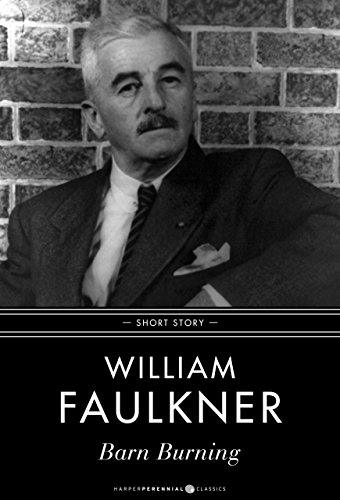
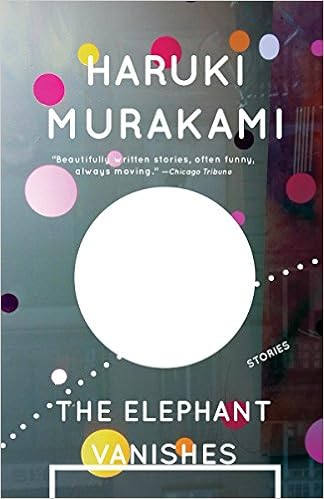
After seeing the film, I decided to re-read both Faulkner’s and Murakami’s stories.
My experiences with Faulkner began flatly in high school, “The Bear,” and then more seriously in a Southern literature course where I found myself deeply embarrassed and suddenly aware of how much I did not know as a junior English education major. Immediately after I graduated college at the end of the first semester of my fifth year, I set out to read everything by Faulkner as I spent several month substitute teaching and doing a long-term sub—all while applying for what I hoped would be my first teaching job that coming fall.
Faulkner then provided for me, still deeply uncritical, an influential combination of modernism filtered through a deeply familiar Southern voice; there was much there that was technically and verbally dazzling (or so it seemed to me as a twenty-something want-to-be writer and teacher).
In 2019 Trumplandia, however, as I rapidly approach 60, I found a much different Faulkner in my re-reading of “Barn Burning”—one now informed by, for example, James Baldwin’s confrontation of Faulkner and the uncomfortable reality that even my well-educated friends now lament that times are really hard for white men in this #MeToo era.
If you are not from the South and you want to understand my opening concerns about the absence of the embarrassed arrogance in the KKK member being interrogated, or if you can’t quite grasp yet who Trump voters are, I suggest you wade into Faulkner’s “Barn Burning” to witness Abner Snopes. A few pages in, readers have the central character of Snopes detailed:
There was something about his wolf-like independence and even courage when the advantage was at least neutral which impressed strangers, as if they got from his latent ravening ferocity not so much a sense of dependability as a feeling that his ferocious conviction in the rightness of his own actions would be of advantage to all whose interest lay with his.
And later in the story, once the family has been once again relocated because of the father’s serial criminality, Abner Snopes chastises is young son Sarty (the eyes of the story) for nearly betraying his father in court:
“You’re getting to be a man. You got to learn. You got to learn to stick to your own blood or you ain’t going to have any blood to stick to you. Do you think either of them, any man there this morning, would? Don’t you know all they wanted was a chance to get at me because they knew I had them beat?”
You will witness Snopes go before the Justice of the Peace twice, quite guilty both time and quite determined that he should not be punished because his actions, to him, are entirely justified—both the burning of a barn and tracking horse manure across the rug when he arrives at Major de Spain’s farm. Snopes is all rugged individual (“wolf-like independence”) and white nationalism/tribalism (“‘your own blood'”) bundled into Southern embarrassed arrogance.
Few things anger many poor white males in the South more than questioning or challenging their honor code, a code wrapped in white nationalism; Snopes rations out his justice and expects everyone else to step aside, recognize its authority.
Re-reading the story also revealed to me how Faulkner incorporates a distinct element of materialism to the theme of individual versus communal justice. Snopes destroys the property of those wealthier than him to assert his dominance in the same way Snopes uses racial slurs about and at black characters in the story.
Snopes is just as domineering with his family, the women and children subject to his verbal and physical wrath, his expected but unpredictable lashing out. Snopes desperately clings to the mythical fiefdom he has manufactured thoughtlessly in his mind.
Faulkner’s story ends with the boy’s sense of “‘truth, justice'” finally coming to a deadly climax with his father’s barn burning, but even as the boy feels compelled to betray his father, his blood, Sarty cannot rise above the engrained but distorted myth of his father:
Father. My father, he thought. “He was brave!” he cried suddenly, aloud but not loud, no more than a whisper: “He was! He was in the war! He was in Colonel Sartoris’ cav’ry!” not knowing that his father had gone to that war a private in the fine old European sense, wearing no uniform, admitting authority of and giving fidelity to no man or army or flag, going to war as Malbrouck himself did: for booty—it meant nothing and less than nothing to him if it were enemy booty or his own.
As Faulkner is apt to do often, the story reveals itself as one of the self-defeating South, where pride in tradition fails any reasonable effort to ground that pride in an ethical unpacking of the past.
Today the laconic embarrassed arrogance has shifted to rants on social media defending the Confederate Flag and arguing that the South fought the Civil War for state’s rights or wildly claiming many blacks fought in Confederate uniforms in that sacred war.
Especially in 2019, both Murakami’s story and the film adaptation help put Faulkner’s story and today’s angry white men in a sharp relief.
Murakami tends to traffic in disassociated men, what can be misinterpreted as sympathetic narratives about the male condition. His “Barn Burning” is steeped in the naive narrator (the film directly mentions The Great Gatsby, but those familiar with Murakami’s work can feel a sort of Nick narrator in this story, fascinated with the mysterious and wealthy boyfriend who appears with the younger woman at the center of the story).
Barn burning is the surprising confession by that mysterious new boyfriend, who decides to confide in the narrator and give the story both an air of mystery and a much more ambiguous (although still detached) moral center than Faulkner’s stark display of Southern honor:
“I’m not judging anything. They’re waiting to be burned. I’m simply obliging. You get it? I’m just taking on what’s there. Just like the rain….Well, all right, does this make me immoral? In my own way, I’d like to believe I’ve got my own morals. And that’s an extremely important force in human existence. A person can’t exist without morals.”
This self-identified barn burner, then, is a more expressive Abner Snopes, and Murakami’s version is far more ambiguous about the barn burnings and how the reader is supposed to judge, or not, the three main characters—the married narrator, the twenty-year-old woman involved with both men (and who falls asleep easily), and the new boyfriend who flatly states he burns barns.
Another twist added by Murakami is when the narrator confronts the barn burner about not being able to find the most recently burned barn: “‘All I can say is, you must have missed it. Does happen you know. Things so close up, they don’t even register.'”
A brief exchange but, I think, a valuable commentary on anyone’s lack of self-awareness—the inability see the things so close up but that still drive who we are, what we do, and how we navigate the world as if our morals are the right ones.
Murakami leaves the reader with more unanswered, however, capturing some of the indirect and ambiguous also lingering at the end of Faulkner’s story.
[Spoiler alert for the film Burning.]
And this brings me to the film adaptation that moves beyond Faulkner’s modernist and Murakami’s post-modernist tendencies.
In the film, the barn burning mystery (transposed to burning greenhouses) becomes a frame for the new boyfriend being a serial murderer and the central character being pushed himself into asserting violently his own moral code.
The movie adaptation steers the viewer into a psychological mystery. As we watch along with the central character, Lee Jong-su, a disturbing picture develop. Ben declares to his new girlfriend, after Shin Hae-mi has disappeared, that burning greenhouses is merely a metaphor (that the viewers and Jong-su recognize as a metaphor for his being a serial murderer of young women).
To work through Faulkner to Murakami to Burning is more than a journey through literary/film theory and genre/medium. This an exercise is coming to recognize the very real and violent consequences of the anger that rises in men of a certain type (maybe, as the film suggests, all men) who cling to their individualistic moral codes to the exclusion of everyone else.
These are not just the men of a short story or movie; these are the agents of mass shootings and the daily terrors of domestic violence and sexual aggression and assault.
As a white man from the South, I struggle with the sharp awareness that the tension in Sarty between some larger communal ethics and the myth of this father remains a reality for young men in 2019. I also fear that the new narrative that the world is becoming too hard for men is very fertile ground for the sort of unbridled arrogance and violence that pervades the U.S.
Faulkner’s story ends in allusion. The barn burning blazes behind Sarty, who understands what the gun fire he hears confirms. Yet, he walks away, and “[h]e did not look back.”
If Faulkner is being hopeful here, I cannot muster that same optimism today.
Several years ago I was initiated into the craft beer world—having been a serious drinker of beer since high school but being a somewhat resolute low-brow consumer in many ways eschewing the snobbery I witnessed among wine connoisseurs.
Along with my cycling friends Rob and Brian, I made a couple trips to Colorado for bicycling and beer; while on those trips, I was gradually indoctrinated into a more refined understanding of craft beer, mostly guided by Brian.
Today, I frequent local and regional breweries almost exclusively for my beer drinking—along with my one remain low-brow habit of grande Dos Equis ambers a couple times a week at Mexican restaurants.
I remain far too naturally unsophisticated to ever grasp wine nuances, although I have friends who can easily convince me to enjoy wine with them, but my beer palate is moderately well educated, and I do enjoy a wide range of craft beers that I am certain baffles the mostly Bud Light crowd of my hometown and state.
Having come to beer snobbery late in life, I find the distinctions about “good” or “bad” beer quite similar to the genre wars that I have been living since I was a teen since my introduction to so-called literary fiction was significantly primed by my initial love for science fiction (mere “genre” fiction) and comic books (not any sort of literature at all!).
In Literary fiction or genre? When Megan Abbott and Naomi Novik are writing, who cares, Michale Robbins opens by confronting: “If there’s a distinction between ‘genre fiction’ and ‘literary fiction,’ it’s certainly not that the former isn’t literary and the latter isn’t generic. It’s mostly that the generic conventions of the latter are those that critics and professors are trained to value most.”
A former student, who was a top-notch English major and now teaches English, recently finished reading Donna Tartt’s The Goldfinch and drew the same conclusion—if we remain in a formalist paradigm of what counts as “literary,” then Tartt’s novel may well be pronounced so much popular fiddle.
Yet, as my former student noted, the novel could just as easily be praised if we change our metrics, set aside our snobbery.
Much of the discussion among educators focuses on how using these texts can be enhanced by injecting marginalized perspectives. This is the “disrupt” part of Disrupt Texts. Rather than taking a single perspective as representative for all, the discussion challenges the notion of a single, fixed history. This is the root of critical thinking and a pre-requisite to lasting learning.
Education isn’t merely transmitting information; students must be taught to make meaning for themselves.
Warner’s last point can be extended, I think, to giving students not the right or only lens for evaluating texts (using the often unnamed New Criticism approach to dissecting text often written with New Criticism’s emphasis on craft and meaning in mind) but many and varied opportunities to examine texts in order to draw their own ways to navigate texts (a variety of lens, some more formal such as feminist or Marxist) and their own guidelines for what makes texts compelling, satisfying, and even “good.”
My former student and I continued to discuss her experience with The Goldfinch, the challenges, I noted, of making a really long novel satisfying. Tartt’s work, she said, was enjoyable to read, but she felt it failed in some important ways—ways I categorize as achieving or not that “satisfying.”
This discussion prompted me to think about Haruki Murakami’s 1Q84, a very long and complex work.
When I first read 1Q84, I was initially drawn to the rotating main characters, but when a third focal character is introduced, I began to feel uncomfortable, a sense that the novels’ cohesion was being compromised.
Also I was uneasy with Murakami’s novel being labeled “science fiction”; I could not see anything about the work as I read it that would make me classify it as that genre (maybe something like fantasy or magical realism?).
I find all of Murakami compelling so I read quite eagerly even as I was uncomfortable with the possibility that the long work would not remain cohesive (I am sure my English training in New Criticism and literary snobbery were in play here as well). However, the work came together, fell into place—although how that happens is at least fantastical (one would argue a convention of genre not literary fiction).
All of this is to say that as an experienced and autonomous reader I have developed capacities for interrogating texts, mostly to determine if I enjoyed the work and the writer.
Some of my formal background as a student and English education major/English teacher actually inhibits my joy as a reader—a reality all too common for students.
The genre wars, then, often create barriers to reading and reading for pleasure.
In Moore’s “Poetry,” her second stanza evokes “high-sounding interpretation,” “unintelligible,” and “we/ do not admire what/ we cannot understand.”
Writers, like Moore and others, it seems, do themselves play into the genre wars and all that snobbery, especially about what constitutes the “good” writers as distinct from the hacks. But in the end, writers are mostly about having readers, readers eager to read, readers satisfied by a compelling and cohesive text—wishing for a next story, or book, or essay, or poem.
I cannot shake from my own mind as a reader the importance of texts being satisfying, cohesive. But I also think about my joy as a reader.
Two of the most wonderful texts I have ever read are Roxane Gay’s “There is No ‘E’ in Zombi Which Means There Can Be No You Or We” and Carmen Maria Machado’s “The Husband Stitch”—beautiful, compelling works of fiction that depend heavily on so-called genre conventions but rise well above the bar of satisfying (even if we cannot resist the allure of evaluation, whether they are “literature”).
As a reader I am seeking writing that demonstrates purpose, a fidelity, I think, to the sort of writing the writer intends, the sort of text I am choosing to read.
Everything else is just fiddle, like calling Miller High Life “The Champagne of Beers.”
educator, public scholar, poet&writer – academic freedom isn't free








 dr. p.l. (paul) thomas