Category Archives: literacy

Schedule: Fall 2024 – Winter/Spring 2025

ILEC

Tuesday, September 3rd, 2024

7:00 PM, EST, 6:00 PM CST.   

Dr. Paul Thomas

“Science of” Movements as Trojan Horse Education Reform [access PP HERE]


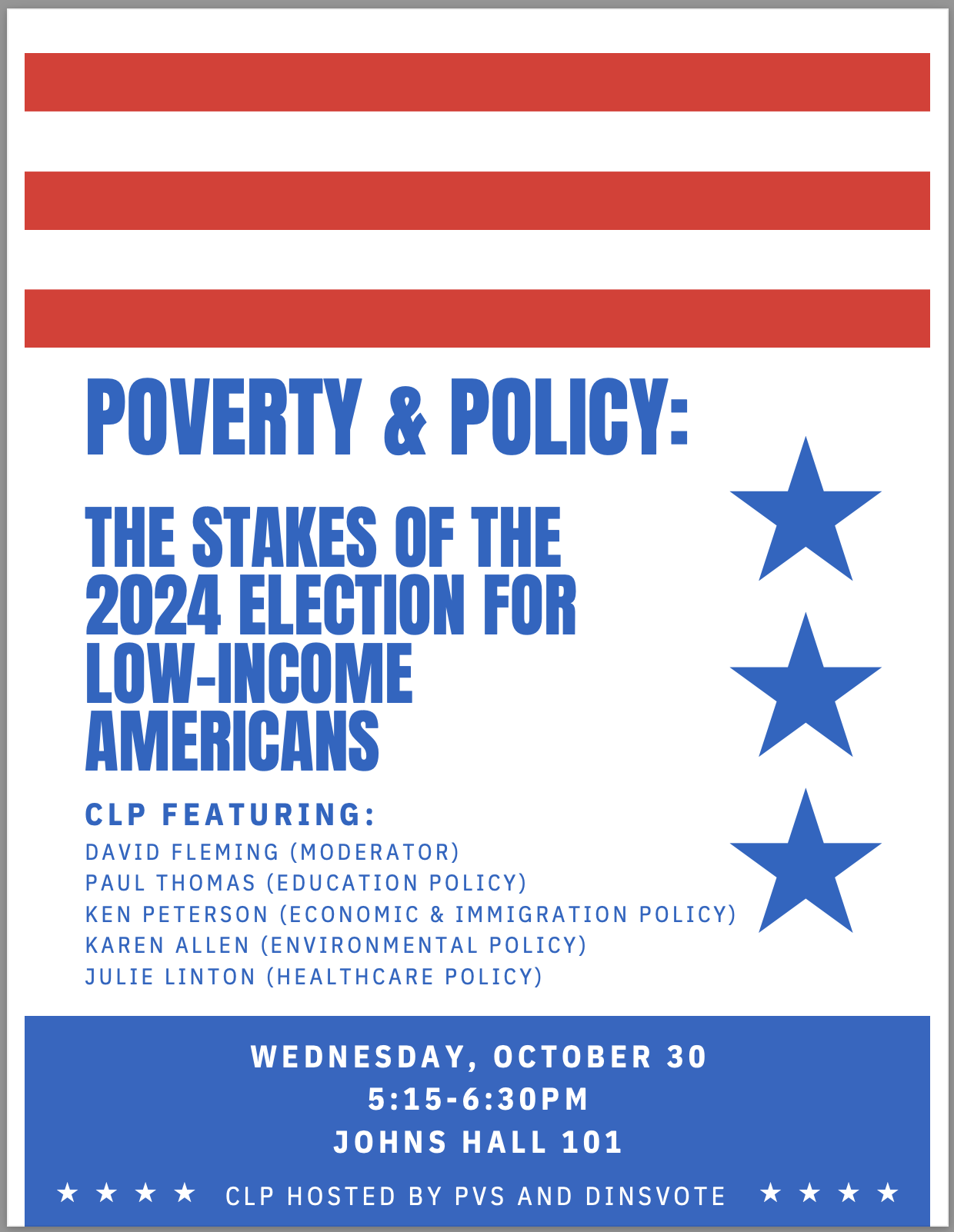
Poverty & Policy: The Stakes of the 2024 Election for Low-Income Americans

  • Wednesday, October 30
  • 5:15-6:30pm
  • Johns Hall 101

The CLP will feature the following Furman experts: 

David Fleming, Professor of Political Science and International Affairs at Furman University (moderator)
Paul Thomas, Professor of Education at Furman University (education policy)
Ken Peterson, Professor of Economics at Furman University (economic and immigration policy)
Karen Allen, Professor of Sustainability and Anthropology (environmental policy)
Julie Linton, MD, FAAP, Professor of Pediatrics, Prisma Health Children’s Hospital Upstate, USC School of Medicine Greenville, Professor in Furman’s Community Engaged Medicine (healthcare policy)

What Really Matters: I Am Thinking about People Tonight [click title for text of talk]

Slideshow [click for PP slideshow]


2024 NCTE Annual Convention

November 21–24

Boston, Massachusetts

11/21/2024

11:30 AM – 12:45 PM EST

Groundwork: Heart, Hope, and Humanity in Rural Education

Room 258 A


11/22/2024

12:30 PM – 1:45 PM EST

Resisting Scripted Curriculum as Erasure: Holding Onto the Heart, Hope, and Humanity of Reading

Room 210 B

Rountables Listing [click for PP]

Roundtable:

Paul Thomas

“Orange: Teaching Reading not Simply Black-and-White” [click HERE for PDF]


11/23/2024

2:45 PM – 4:00 PM EST

Standing for—Indeed, Fighting for—Teacher Professionalism and the Right to Teach Responsively

Room 205 A

Roundtables Listing [click for PP]

Opening Talk:

Paul Thomas

Attacks on Balanced Literacy Are Attacks on Teacher Professionalism [click title to access PP]

The “science of reading” movement has promoted a misleading story about reading through the media—reading proficiency is in crisis because teachers do not know how to teach reading and were not properly prepared by teacher education. This opening talk with argue that attacks on BL are grounded in efforts to deprofessionalize teachers.

Roundtable:

Paul Thomas

Reclaiming BL’s Commitment to Serving Individual Student Needs and Teacher Autonomy [click title to access PP]

Thomas will examine an authentic definition of BL as a reading philosophy that centers serving the individual needs of all students. He will examine also the caricatures of guessing and three cueing (MSV), providing attendees scholarly evidence for accurate characterizations of BL as well as deeper understanding of reading proficiency.


 Literacy in the Disciplines 6-12

Webinar

December 10, 2024 – 6-7 pm

We Teach English in Times of Perpetual Crisis: Selling a Story of Reading (and Literacy)

English-speaking countries around the world are once again fighting another Reading War. In the US, the movement is called the “science of reading” (SOR) and the result has been intense media scrutiny of reading programs, teachers, and teacher education as well as highly prescriptive state-level legislation and mandates. Those of us who do not teach beginning readers are not exempt from the negative consequences of another Reading War. This webinar will briefly introduce the history of Reading Wars and identify the key elements of the SOR movement and why the public stories and legislation are poised to erase teacher autonomy and serving the individual needs of students.

Access PP HERE

We Teach English in Times of Perpetual Crisis: Selling a Story of Reading (and Literacy) [Webinar Companion Post]

Recommended Reading

English Journal Series: We Teach English in Times of Perpetual Crisis


CCIRA 2025

Thursday, February 6, 2025

Session One — 10:15-11:45 a.m.

“Science of” Movements as Trojan Horse Education Reform [Access PP PDF Here]

In June 2024, the newly formed Evidence Advocacy Center announced plans to “[transform] the [teaching] profession into an evidence-based system.” However, the EAC admitted “educators will relinquish certain freedoms.” This session will examine the “science of” movements as a subset of a 40-year cycle of accountability-based education reform (Trojan Horse Education Reform) that de-professionalizes teachers and fails to serve the needs of students or public education.

Session Two — 2:00 – 3:30 p.m.

Big Lies of Education: “Science of” Era Edition [Access PP PDF Here]

Education practices and policy are often directly and indirectly driven by the stories told in the media, among the public, and by political leaders. This session will explore the Big Lies in the compelling but misleading narratives, including A Nation at Risk/education “crisis,” reading proficiency/NAEP, National Reading Panel, poverty as an excuse, and international test rankings and economic competitiveness.

Thomas, P.L. (2022). How to end the Reading War and serve the literacy needs of all students: A primer for parents, policy makers, and people who care (2nd Ed.). Charlotte, NC: Information Age Publishing.


PSLA 2025 Annual Conference

“Ignite the Literacy Light & Lead”

February 20-22, 2025

Hilton Beachfront Resort & Spa
Hilton Head Island, South Carolina

Panel Presentation: “Remaining Responsive to Learners in Challenging Times”

Saturday, February 22nd from 8:00-9:00 am

Palmetto Room


Furman University CLP

“Banned Together” Screening

Thursday February 27, 2025

6:30pm in Burgiss Theater

Panel:

Jennifer Wiggin, producer

Josh Malkin, SC ACLU

Paul Thomas, Furman University


SC for Ed Webinar: Understanding NAEP during Another Reading Crisis

Understanding NAEP during Another Reading Crisis

Click HERE for PDF of PowerPoint

March 20, 6:30 pm


A4PEP

The Manufactured Crisis: Exposing the False Narrative of Public Education’s “Failure”

Date & Time

Apr 16, 2025 08:30 PM EST

Description

Join us for a timely and vital conversation on April 16 at 6:30 p.m. ET with Dr. P.L. Thomas, Professor of Education at Furman University. For decades, media and policymakers have pushed a narrative that America’s public schools are “failing.” But who benefits from this story, and who is harmed by it? Dr. Thomas will expose how the education reform industry has fueled a false crisis, undermining trust in public schools while advancing corporate-driven reforms. Drawing on his experience as a teacher, scholar, and national award-winning writer, Dr. Thomas will offer critical insights into how we can challenge disinformation and reclaim a narrative rooted in equity, democracy, and community empowerment.

REGISTER HERE

6:30 pm, April 16

[Click HERE for presentation]

Ignoring Evidence in the “Science of” Era: Fidelity and Deficit Ideology Edition

[Header Photo by Isabela Kronemberger on Unsplash]

As a writer and a teacher of writing, I am well aware of the need to avoid cliches, but cliches often do, in fact, capture well something that is worth considering.

In this education reform “science of” era, reading reformers are suffering the negative consequences of missing the forest by hyper-focusing on a few trees.

The ugliest of ironies is that reading reform driven by the “science of reading” (SOR) story fails the evidence test, notably that SOR legislation is not based on science. A growing body of research has been detailing how SOR legislation and mandates are misguided and even harmful.

The cautionary tales being ignored [1] are also expanding, and possibly the most powerful evidence that the SOR movement is misguided is in the UK, where a similar reading reform movement was implemented in 2006.

Not surprising, but phonics-intensive reading reform in the UK has not achieved what was promised—and media as well as political leaders are still shouting “reading crisis.” [2]

At the core of education reform broadly and reading reform narrowly are several fatal flaws that mainstream reformers refuse to avoid: (1) manufactured crises, (2) one-size-fits-all solutions, and (3) policies and mandates that are hostile to teacher autonomy and individual student needs.

Digging deeper into the monolithic reading reform cycles over the past 40 years (and reaching back into 80 years of reading crisis rhetoric and fruitless reading wars), some of the most ignored evidence in reading crisis rhetoric and reading reform/policy concerns the failure to address how demanding teacher fidelity to policy and programs reinforces deficit ideology about language and marginalized students.

As I have noted, I was confronted with evidence about Units of Study (UoS) that has never been the focus of the outsized and misguided attacks on that program and Lucy Calkins. Teachers at a conference just weeks before the Covid shutdown explained to me that their problem with UoS was not the program itself but the excessive policing and accountability by administrators that teachers implement the program with fidelity.

Two problems exist with implementing programs with fidelity. First, that shifts the locus of authority away from the teacher and to the program itself. And thus, second, that shift institutionalizes a deficit ideology about language and students since programs tend to impose standardized versions of literacy as well as evaluate students in terms of how they fail to demonstrate standard literacy.

Fidelity to programs creates obstacles for honoring fidelity to student needs.

Few people challenge how efforts to standardized language is a way to standardize humans (and children). Formal schooling’s approach to language is almost exclusively standardizing—systematic phonics, Standard English grammar, and false concepts such as the “word gap” (see Recommended articles below).

What we in the US should not be ignoring is evidence from the UK of how policy manifests itself in the real-world classroom.

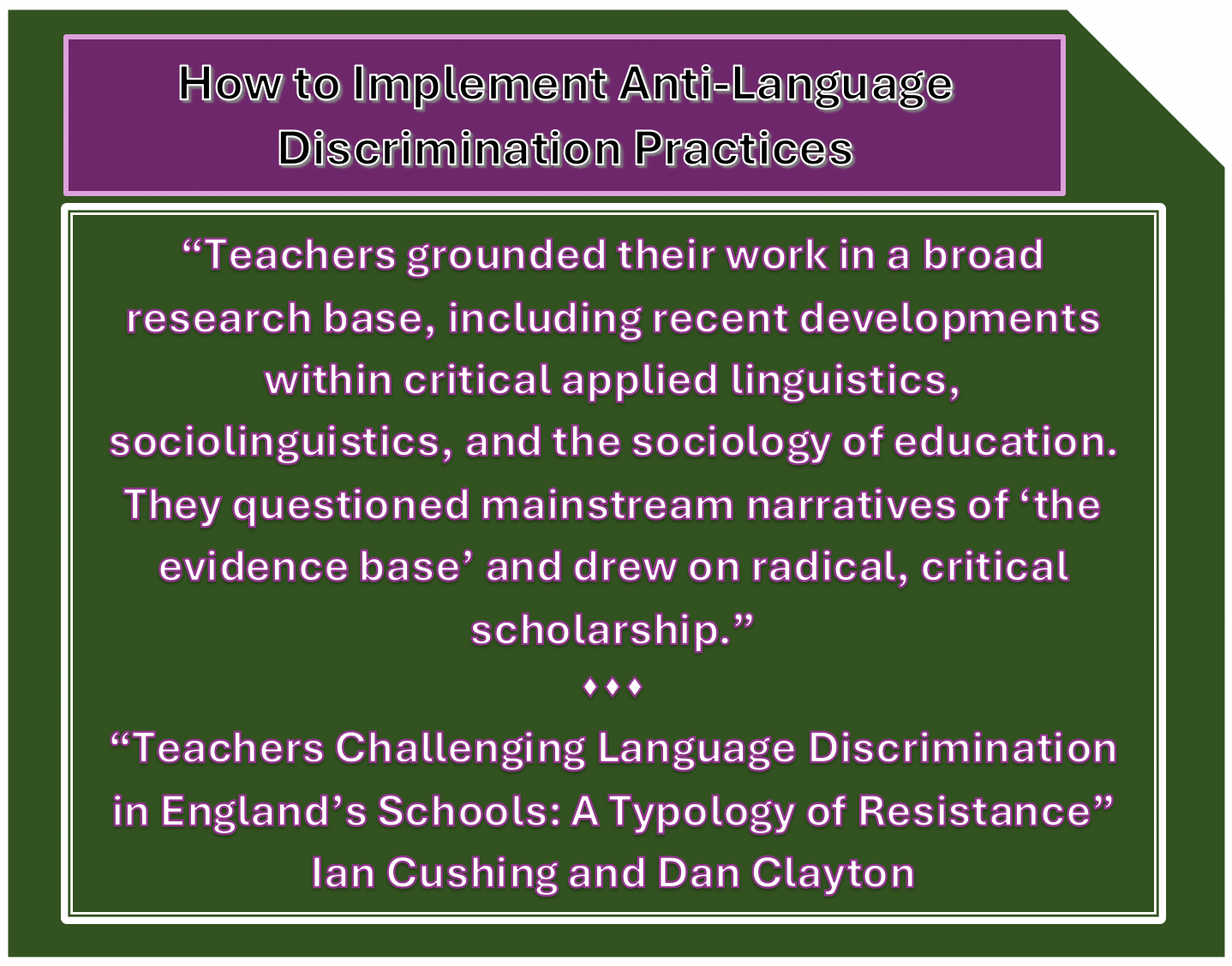
One example is a new article: Teachers Challenging Language Discrimination in England’s Schools: A Typology of Resistance by Ian Cushing and Dan Clayton.

Cushing and Clayton offer excellent data based on evidence drawn from the Critical Language Awareness group (CLAW). Here are some of the highlights of that evidence:

  • “[T]eachers work in contexts where they undoubtedly negotiate a dense array of top-down policy initiatives which may well not align with their language ideological beliefs.” Key here is that policy imposes beliefs about language, thus, there is no such thing as objective or apolitical policy.
  • And thus: “We understand language discrimination not simply as about individual attitudes which manifest in individual, malicious acts of prejudice, but as a structural phenomenon underpinned by language ideologies which stratify, rank, and hierarchically organise language varieties and the communities associated with them (Lippi-Green, 2012). Schools are particularly key sites of language ideological production and the co-construction of racial, class, and linguistic stratification.”
  • Language/reading policy legislates national ideology grounded in deficit ideology:

Attempting to justify these structural deficits, the state produced a stigmatising narrative of strivers and scroungers which framed working-class and racialised minorities as responsible for their own hardships, and thus responsible for their own welfare by modifying their individual behaviours, including language (Tyler, 2018).

Austerity, public cuts, and the 2011 nationwide uprisings that followed created an ideological space in which educational reform was deemed by the state to be urgent and necessary, and where the most marginalised members of society could begin to experience upward social mobility and educational success simply by changing their language (see Nijjar, 2018).

  • The dynamic in place in the UK is being replicated in the US:

These mechanisms include new national curricula, high-stakes standardised grammar tests for primary school students, high-stakes GCSE assessments for secondary school students, revised professional standards for teachers, and Ofsted, the schools inspectorate. These policy mechanisms place teachers into positions where they are encouraged (and rewarded) to perceive marginalised students’ language as deficient, to engage in hostile language policing, and to reproduce ideologies of linguistic correctness which bolster language discrimination. At the same time, post-2010 curriculum changes stripped away units and assessments concerned with spoken language study, leaving little room for teachers to engage in critical debates about language variation, attitudes, and ideologies. These changes coordinated with a resurgence of deficit discourses in policy, such as those clustered around the so-called word gap and an increased focus on technical grammar and vocabulary—at the expense of critical and social aspects of language.

  • Language/reading policy tends to erase how language ideologies are “intricately connected to race, class, and privilege.” In short, “language ideologies were a proxy for other forms of stigma,” and that stigma impacts both students and teachers, especially those from marginalized backgrounds and identities.
  • Reading policy ignores and even resists critical approaches to language that “challenge language discrimination.” Yet, Cushing and Clayton document “how students had ‘loved looking at how and why their language got policed’ and how the unit allowed students to see that ‘attitudes about their language were really just about their social class.'”
  • Literacy instruction not grounded in deficit ideology faces multiple obstacles, then: “internal obstacles (in the form of management) and external obstacles (in the form of Ofsted, national curricula, assessments, and examination boards).”
  • “What is important to stress here is that schools are under increasing pressure to demonstrate ideological fidelity to externally produced, state-produced education policy, themselves which are underpinned by academic scholarship subscribing to normative ideologies about language and discourses of deficit (Cushing, 2023c).”
  • Cushing and Clayton build to a typology for anti-language discrimination. Here, I want to emphasize a key component about what counts as evidence: “Teachers grounded their work in a broad research base, including recent developments within critical applied linguistics, sociolinguistics, and the sociology of education. They questioned mainstream narratives of ‘the evidence base’ and drew on radical, critical scholarship.”

The article ends by noting that teachers alone cannot change this pattern, and I want to stress that is especially true in the US where teachers are often powerless and have been publicly discredited as not knowing how to teach reading.

However, the evidence is clear that “[l]anguage discrimination is a structural phenomenon” and that reading policy and reading programs are key elements in that structure.

Mandating fidelity to deficit beliefs about language and students is at the core of the SOR movement. Once again, we are missing the evidence by focusing on a few trees and ignoring the forest.


[1] Another Cautionary Tale of Education Reform: “Improving teaching quality to compensate for socio-economic disadvantages: A study of research dissemination across secondary schools in England”; Cautionary Tales of State Reading Legislation: UK; Cautionary Tales of State Reading Legislation: Tennessee; UK PISA 2022 Results Offer Cautionary Tale for US Reading Reform; Research, the Media, and the Market: A Cautionary Tale

[2] Recommended: The Balancing Act by Dominic Wyse and Charlotte Hacking

Recommended

Tiered vocabulary and raciolinguistic discourses of deficit: from academic scholarship to education policy, Ian Cushing

Social in/justice and the deficit foundations of oracy, Ian Cushing

Teachers Challenging Language Discrimination in England’s Schools: A Typology of Resistance, Ian Cushing and Dan Clayton

Pathologizing the Language and Culture of Poor Children, Curt Dudley-Marling and Krista Lucas


Recommended: The Balancing Act by Dominic Wyse and Charlotte Hacking

The Balancing Act: An Evidence-Based Approach to Teaching Phonics, Reading and Writing, Dominic Wyse and Charlotte Hacking

Publisher’s Description

Dominic Wyse and Charlotte Hacking present a ground-breaking account of teaching phonics, reading, and writing. Created from a landmark study, new research, new theory, and cutting-edge teacher professional development, this balanced approach to teaching seeks to improve all children’s learning, and therefore life chances.

The book dismantles polarised debates about the teaching of phonics and analyses the latest scientific evidence of what really works. It shows, in vivid detail, how phonics, reading, and writing should be taught through the creativity of some of the best authors of books for children. By describing lessons inspired by ‘real books’, it showcases why the new approach is more effective than narrow phonics approaches.

The authors call for a paradigm shift in literacy education. The chapters show how and why education policies should be improved on the basis of unique analyses of research evidence from experimental trials and the new theory and model the Double Helix of Reading and Writing. It is a book of hope for the future in the context of powerful elites influencing narrow curricula, narrow pedagogy, and high stakes assessments.

The Balancing Act will be of interest to anyone who is invested in young children’s development. It is essential reading for teachers, trainee teachers, lecturers, researchers, and policy makers world-wide who want to improve the teaching of reading and writing in the English language.

Press Release


Recommended

May the Force Be With You: Reading for Pleasure Instead of Reading as Task

[Header Photo by Brian McGowan on Unsplash]

May 4 has become a special day in pop culture, especially for fans and nerds who love Star Wars. May 4, 2024, proved to be a doubly special day since it fell on Free Comic Book Day.

That morning, I had two of my grandchildren—my granddaughter, 9, and my grandson, 7. With some trepidation that they would be far less excited than I was, I offered to take them to Free Comic Book Day at my local comic book shop, The Tangled Web.

The store was filled with adult faces I knew from visiting the shop at least weekly, but I was pleased to see many children there also as we weaved through the pay line to reach the back room tables stacked with free comic books.

The sign read “Three Books Only,” and the store owner greeted us, adding that the comics for children were on the first table.

My grandson said he saw the book he wanted, Pokemon, as we shuffled forward in line.

When we reached the end, where the owner was sitting, my granddaughter was holding three books when she saw one at the end she wanted so we told her she could swap out one she was holding.

The owner heard us and told her to keep all four.

We looked around a bit—my grandson wanted to see the high-priced Pokemon cards behind the case—and then as we walked to the car, my granddaughter took my hand and said the owner was nice for letting her have an extra book.

Immediately in the car, my grandson began flipping through his Pokemon book, saying some times he just likes to look at the pictures. I told him that over my comic book life sine the 1970s, I almost always do a first “read” of the books just looking at the artwork.

Back at the apartment, my granddaughter took one book in to read, a teaser copy of Monster High (IDW). My partner was setting up for her and the children to play Smash Bros. on the TV while my granddaughter consumed her new comic book.

Soon, she moved over to the couch, sitting down heavily and sighing. The story ended in a cliff hanger, and she was sad there wasn’t more.

My granddaughter was hooked. The magic of free comic book day.

No tests. No assignments. No chastising children not to look at pictures while making meaning.

Just a few encouraging adults, access to books, and the freedom to read for pleasure.

We had to drop the children off with their father just after midday to head to my partner’s book club. I tend to be a passive observer, although I did read their first book.

The book club consists of mostly friends in a gamer group, and the anchor for the monthly gathering is a series of wines for tasting.

The discussions are relatively haphazard, often wandering off into very interesting tangents punctuated with attending to children and dogs or grabbing snacks provided by everyone.

This Saturday the food was supposed to be Star Wars themed because of May 4.

As time passed and some needed to leave, the group chose the next book—this month had been nonfiction and the next category is works in translation (something I was particularly excited about)—by sharing blurbs about several suggested books (including three from my partner).

As they worked through the summaries, I ordered the first two options—Frankenstein in Baghdad: A Novel and Kim Jiyoung, Born 1982: A Novel. But the group chose the novel most enthusiatiscally recommended by my partner, Kafka on the Shore by Haruki Murakami.

My partner taught that novel for several years, and I have a co-edited volume on Murakami, just submitted an invited chapter on Murakami’s Men Without Women based on this blog post, and am currently re-reading 1Q84.

To say the least, my partner and I are as excited as my grandchildren were in the wake of Free Comic Book Day.

The next day, however, I read Dan Kois writing about the “Decline by 9”:

[A] child’s attitude towards reading enjoyment and importance is a predictor of reading frequency, which is why it also is striking to note the drop between ages eight and nine in the percentage of kids who think reading books for fun is extremely or very important (from 65% to 57%). Similarly, the number of kids who say they love reading drops significantly from 40% among eight-year-olds to 28% among nine-year-olds.

Kois acknowledges some of the standard reasons cited for children not reading—often over many decades blaming technology such as smartphones today—but then makes this point:

But others also pointed to the way reading is being taught to young children in an educational environment that gets more and more test-focused all the time. “I do not blame teachers for this,” said O’Sullivan, but the transformation of the reading curriculum means “there’s not a lot of time for discovery and enjoyment in reading.” She noted a change I, too, had noticed: Reading in the classroom has moved away from encouraging students to dive into a whole book and moved toward students reading excerpts and responding to them. “Even in elementary school, you read, you take a quiz, you get the points. You do a reading log, and you have to read so many minutes a day. It’s really taking a lot of the joy out of reading.”

The specific reference is to the “science of reading” (SOR) movement that has targeted reading programs by banning some and mandating those that are often scripted curriculum and phonics-heavy.

As Kois’s article acknowledges, the SOR movement is sacrificing important aspects of reading, including pleasure, rich texts, and diversity [1].

Yes, possibly even more intensely than at any point over the past 40 years of high-stakes accountability in education, the SOR movement has sacrificed reading for pleasure to reading as task.

But this is a matter of intensity because formal schooling has always been one of the places where pleasure reading goes to die.

I taught high school English for 18 years throughout the 1980s and 1990s, witnessing first-hand that most of my very bright students had become non-readers even though you could visit any K-1 classroom and see a room full of children eager to read.

My high school students all had one thing in common—formal schooling.

This May the Fourth was a truly wonderful day for reading that I was gifted to witness. On a Saturday and nowhere near a school.

I watched children and adults choose to be readers, eager and excited.

And again, no tests. No assignments. No chastising anyone about how to make meaning or what mattered about what they were reading.

This May the Fourth was about The Force, not some Jedi skill set, but reading for pleasure and not reading as a task.


Note

[1] Does the “Science of Reading” Fulfill Social Justice, Equity Goals in Education? (pt. 1)

America Dishonors MLK By Refusing to Act on Call for Direct Action (pt. 2)

Scripted Curriculum Fails Diversity, Students, and Teachers: SOR Corrupts Social Justice Goals (pt. 3)

Recommended

The power of touch is vital for both reading and writing, Naomi S. Baron (The Conversation)

The Guardian view on English lessons: make classrooms more creative again

Not Lost in a Book, Dan Kois

Republish: Schools are using research to try to improve children’s learning – but it’s not working (The Conversation)

[Note: Follow links to research cited and note the recommended links after the republished article.]


Sally Riordan, UCL

Senior Research Fellow in the Centre for Teachers and Teaching Research, UCL

2 April 2024


Evidence is obviously a good thing. We take it for granted that evidence from research can help solve the post-lockdown crises in education – from how to keep teachers in the profession to how to improve behaviour in schools, get children back into school and protect the mental health of a generation.

But my research and that of others shows that incorporating strategies that have evidence backing them into teaching doesn’t always yield the results we want.

The Department for Education encourages school leadership teams to cite evidence from research studies when deciding how to spend school funding. Teachers are more frequently required to conduct their own research as part of their professional training than they were a decade ago. Independent consultancies have sprung up to support schools to bring evidence-based methods into their teaching.

This push for evidence to back up teaching methods has become particularly strong in the past ten years. The movement has been driven by the Education Endowment Foundation (EEF), a charity set up in 2011 with funding from the Conservative-Liberal Democrat coalition government to provide schools with information about which teaching methods and other approaches to education actually work.

The EEF funds randomised controlled trials – large-scale studies in which students are randomly assigned to an educational initiative or not and then comparisons are then made to see which students perform better. For instance, several of these studies have been carried out in which some children received one-on-one reading sessions with a trained classroom assistant, and their reading progress was compared to children who had not. The cost of one of these trials was around £500,000 over the course of a year.

Trials such as this in education were lobbied for by Ben Goldacre, a doctor and data scientist who wrote a report in 2013 on behalf of the Department for Education. Goldacre suggested that education should follow the lead of medicine in the use of evidence.

Using evidence

In 2023, however, researchers at the University of Warwick pointed out something that should have been obvious for some time but has been very much overlooked – that following the evidence is not resulting in the progress we might expect.

Reading is the most heavily supported area of the EEF’s research, accounting for more than 40% of projects. Most schools have implemented reading programmes with significant amounts of evidence behind them. But, despite this, reading abilities have not changed much in the UK for decades.

This flatlining of test scores is a global phenomenon. If reading programmes worked as the evidence says they do, reading abilities should be better.

And the evidence is coming back with unexpected results. A series of randomised controlled trials, including one looking at how to improve literacy through evidence, have suggested that schools that use methods based on research are not performing better than schools that do not.

In fact, research by a team at Sheffield Hallam University have demonstrated that on average, these kinds of education initiatives have very little to no impact.

My work has shown that when the findings of different research studies are brought together and synthesised, teachers may end up implementing these findings in contradictory ways. Research messages are frequently too vague to be effective because the skills and expertise of teaching are difficult to transfer.

It is also becoming apparent that the gains in education are usually very small, perhaps because learning is the sum total of trillions of interactions. It is possible that the research trials we really need in education would be so vast that they are currently too impractical to do.

It seems that evidence is much harder to tame and to apply sensibly in education than elsewhere. In my view, it was inevitable and necessary that educators had to follow medicine in our search for answers. But we now need to think harder about the peculiarities of how evidence works in education.

Right now, we don’t have enough evidence to be confident that evidence should always be our first port of call.

Sally Riordan, Senior Research Fellow in the Centre for Teachers and Teaching Research, UCL

This article is republished from The Conversation under a Creative Commons license. Read the original article.


Recommended

Close Reading: Evidence, schmevidence: the abuse of the word “evidence” in policy discourse about education, Gary Thomas

Recommended: Fact-checking the Science of Reading, Rob Tierney and P David Pearson

Responses Needed to Senator Cassidy’s Report on Literacy

U.S. Senator Bill Cassidy, M.D. (R-LA) has released a report on literacy that opens with yet another example of misrepresenting NAEP reading scores to manufacture a reading crisis for political gain: “Two-thirds of America’s fourth and eighth graders are not proficient in reading.”

The report is an embarrassing recycling of the media misinformation campaign about reading in the US.

In fact, most of the footnotes cite news articles (including the Washington Times, a conservative outlet that lacks credibility) and conservative think tanks (ExcelinEd, Fordham). [1]

Notably missing are citations to scientific research on reading or credible analyses of NAEP data.

Responses are needed and can be sent to Literacy@help.senate.gov by April 5, 2024.

Here is my response:

I am very disappointed in this report, notably since it starts with misinformation about NAEP: https://www.help.senate.gov/imo/media/doc/literacy_report.pdf

The report is deeply flawed and relies on misleading and false journalism (footnotes) to support misleading and inaccurate claims:

How Media Misinformation Became “Holy Text”: The Anatomy of the SOR Movement

ILEC Response: Mainstream media coverage of reading proficiency, teachers of reading, NAEP scores, and teacher preparation

Good intentions are not enough and government policy on education has done more harm than good since A Nation at Risk. We can do better, and we should. But we must start with accurate claims and credible solutions.

Big Lies of Education: Reading Proficiency and NAEP

Big Lies of Education: A Nation at Risk and Education “Crisis” 

Stop using misinformation and crisis rhetoric for political gain [2] and genuinely address what students and teachers need to be successful.


US Senate Committee on Health, Education, Labor, and Pensions


[1] Analysis of 33 footnotes for the report:

Preventing a Lost Generation: Facing a Critical Moment for Students’ Literacy

Senator Bill Cassady, MD, Ranking Member

US Senate Committee on Health, Education, Labor, and Pensions

NAEP/PISA Data/ Government Reports

National Achievement-Level Results, National Assessment of Educational Progress (Oct. 24, 2022), https://www.nationsreportcard.gov/reading/nation/achievement/.

National Achievement-Level Results, The National Assessment of Educational Progress (Oct. 24, 2022), https://www.nationsreportcard.gov/reading/nation/achievement/.

Trends in High School Dropout and Completion Rates in the United States, National Center for Education Statistics (Jan. 2020), https://nces.ed.gov/programs/dropout/index.asp.

Thomas G. Sticht, Vice President, Basic Skills in Defense, Human Resources Research Organization (June 1982), https://files.eric.ed.gov/fulltext/ED237776.pdf.

Scores Decline in NAEP Reading at Grades 4 and 8 Compared to 2019, National Assessment of Educational Progress (Oct. 24, 2022), https://www.nationsreportcard.gov/highlights/reading/2022/

NAEP Report Card: 2019 NAEP Reading Assessment, National Assessment of Educational Progress (2019), https://www.nationsreportcard.gov/highlights/reading/2019/g12/.

NAEP Long-Term Trend Assessment Results: Reading and Mathematics, National Assessment of Educational Progress (Sept. 1, 2022), https://www.nationsreportcard.gov/highlights/ltt/2022/.

Program for International Student Assessment 2022 Results, Organization for Economic Cooperation and Development (Dec. 5, 2023), https://www.oecd.org/publication/pisa-2022-results/.

AEP Report Card: Reading State Achievement-Level Results, National Assessment of Educational Progress (Oct. 24, 2022), https://www.nationsreportcard.gov/reading/states/achievement/.

Teaching Children to Read: An Evidence-Based Assessment of the Scientific Research Literature on Reading and Its Implications for Reading Instruction, National Reading Panel (Apr. 2000), https://www.nichd.nih.gov/sites/default/files/publications/pubs/nrp/Documents/report.pdf.

National Achievement-Level Results, National Assessment of Educational Progress (Oct. 24, 2022), https://www.nationsreportcard.gov/reading/nation/achievement/.

NAEP Long-Term Trend Assessment Results: Reading and Mathematics, National Assessment of Educational Progress (Sept. 1, 2022), https://www.nationsreportcard.gov/highlights/ltt/2022/.

Joint Dear Colleague Letter, U.S. Department of Education Office for Civil Rights (Jan. 8, 2014), [LINK OMITTED, apparent error]

Resource on Confronting Racial Discrimination in Student Discipline, U.S. Department of Education Office for Civil Rights (May 2023), https://www.justice.gov/opa/press-release/file/1585291/dl?inline.

Think Tank/Advocacy Reports

Donald J. Hernandez, Professor, Double Jeopardy: How Third-Grade Reading Skills and Poverty Influence High School Graduation, The Annie E. Casey Foundation (2012), https://assets.aecf.org/m/resourcedoc/AECF-DoubleJeopardy-2012-Full.pdf.

Anthony P. Carnevale et al., Director and Research Professor, Recovery: Job Growth and Education Requirements Through 2020, Georgetown Public Policy Institute – Center on Education and the Workforce (June 2013), https://cewgeorgetown.wpenginepowered.com/wp-content/uploads/2014/11/Recovery2020.FR_.Web_.pdf

Economic Impacts of Dropouts. National Dropout Prevention Center (n.d.), https://dropoutprevention.org/resources/statistics/quick-facts/economic-impacts-of-dropouts/.

Erin Fahle et. al, Research Scientist, The First Year of Pandemic Recovery: A District-Level Analysis, The Harvard University Center for Education Policy and Research & The Educational Opportunity Project at Stanford University (Jan. 2024), https://educationrecoveryscorecard.org/wp-content/uploads/2024/01/ERS-Report-Final-1.31.pdf.

Why The Three-Cueing Systems Model Doesn’t Teach Children to Read, Excel in Ed (2022), https://excelined.org/wp-content/uploads/2022/12/ExcelinEd_FactSheet_ThreeCueingDoesNotTeachChildrenToRead.pdf.

2023 Voice of the Superintendent Survey Executive Brief, EAB (Feb. 16, 2023), https://pages.eab.com/2023SuperintendentSurveyExecutiveBrief.html.

Daniel Buck, Soft-on-Consequences Discipline Is Terrible For Teachers, Thomas B. Fordham Institute (Feb. 9, 2023), https://fordhaminstitute.org/national/commentary/soft-consequences-discipline-terrible-teachers.

Max Eden, The Trouble with Social Emotional Learning, House Committee on Appropriations – Labor, Health and Human Services, Education, and Related Agencies (Apr. 6, 2022) AEI, https://www.aei.org/research-products/testimony/the-trouble-with-social-emotional-learning/.

Chronic Absenteeism: 2017-2023, Return2Learn Tracker (Oct. 23, 2023), https://www.returntolearntracker.net/.

Media

Micaela Burrow, Army Qualification Test Scores Plummeted Further In 2022, Daily Caller. (Sept. 16, 2022). https://dailycaller.com/2022/09/16/army-qualification-scores-plummeted-2022/.

April Rubin, ACT Test Scores Fall to Lowest Levels in 32 Years, Axios (Oct. 11, 2023), https://www.axios.com/2023/10/11/act-test-scores-lowest-2023.

Matt Barnum & Kalyn Belsha, Blizzard of State Test Scores Shows Some Progress in Math, Divergence in Reading, Chalkbeat (Oct. 2, 2023), https://www.chalkbeat.org/2023/10/2/23896045/state-test-scores-data-math-reading-pandemic-era-learning-loss.

Linda Jacobson, Science of Reading Push Helped Some States Exceed Pre-Pandemic Performance, The 74 Million (Oct. 17, 2023), https://www.the74million.org/article/science-of-reading-push-helped-some-states-exceed-pre-pandemic-performance/.

Liana Loewus, Data: How Reading Is Really Being Taught, Education Week (Dec. 3, 2019), https://www.edweek.org/teaching-learning/data-how-reading-is-reallybeing-taught/2019/12.

Sarah Schwartz, Teachers College to ‘Dissolve’ Lucy Calkins’ Reading and Writing Project, Education Week (Sept. 5, 2023), https://www.edweek.org/teaching-learning/teachers-college-to-dissolve-lucy-calkins-reading-and-writing-project/2023/09.

Sarah Schwartz, Reading Recovery Sues Ohio Over Ban on ‘Cueing’ in Literacy Instruction, Education Week (Oct. 18, 2023), https://www.edweek.org/teaching-learning/reading-recovery-sues-ohio-over-ban-on-cueing-in-literacy-instruction/2023/10.

Susan Ferrechio, Teachers Unions Worked with CDC to Keep Schools Closed for COVID, GOP Report Says, The Washington Times (Mar. 30, 2022), https://www.washingtontimes.com/news/2022/mar/30/republican-report-shows-teachers-unions-helped-cdc/.

Sarah D. Sparks, Two Decades of Progress, Nearly Gone: National Math, Reading Scores Hit Historic Lows, Education Week (Oct. 24, 2022), https://www.edweek.org/leadership/two-decades-of-progress-nearly-gone-national-math-reading-scores-hit-historic-lows/2022/10.

Arianna Prothero, Student Behavior Isn’t Getting Any Better, Survey Shows, Education Week (Apr. 20, 2023), https://www.edweek.org/leadership/student-behaviorisnt-getting-any-better-survey-shows/2023/04.

Sarah Mervosh, Who Runs the Best U.S. Schools? It May Be the Defense Department., The New York Times (Oct. 10, 2023), https://www.nytimes.com/2023/10/10/us/schools-pandemic-defense-department.html.

Commercial Blogs

TPT Survey Report: What 2,000+ Teachers Think About SEL, Teachers Pay Teachers (May 2022), https://blog.teacherspayteachers.com/tpt-survey-report-what-2000-teachers-think-about-social-emotional-learning/.

[2] See:

A school for students with dyslexia continues to stay open despite two F grades from the BESE, Louisiana’s Board of Elementary and Secondary Education. The Louisiana Key Academy is run by Senator Bill Cassidy (R-LA) and his wife, Laura. Both are physicians. Neither are specialists in reading disorders, although they have a child with dyslexia.

Big Lies of Education: Series

Here I will collect a series dedicated to the Big Lies of Education. The initial list of topics include :

  • A Nation at Risk and education “crisis”
  • Poverty is an excuse in educational achievement
  • 2/3 students not proficient/grade level readers; NAEP
  • Elementary teachers don’t know how to teach reading
  • NRP = settled science
  • Teacher education is not preparing teachers based on science/research
  • Education “miracles”
  • Reading program X has failed
  • Whole language/balanced literacy has failed
  • Systematic phonics necessary for all students learning to read
  • Nonsense word assessments measure reading achievement
  • Reading in US is being taught by guessing and 3 cueing
  • Balanced literacy = guessing and 3 cueing
  • K-3 students can’t comprehend
  • 40% of students are dyslexic/ universal screening for dyslexia needed
  • Grade retention
  • Grit/ growth mindset
  • Parental choice
  • Education is the great equalizer
  • Teacher quality is most important factor in student achievement (VAM)

Series:

Big Lies of Education: A Nation at Risk and Education “Crisis”

Big Lies of Education: Reading Proficiency and NAEP

Big Lies of Education: National Reading Panel (NRP)

Big Lies of Education: Poverty Is an Excuse

Big Lies of Education: International Test Rankings and Economic Competitiveness

Big Lies of Education: “Science of” Era Edition [Access PP PDF Here]

Big Lies of Education: Grade Retention

Big Lies of Education: Growth Mindset and Grit

Big Lies of Education: Word Gap


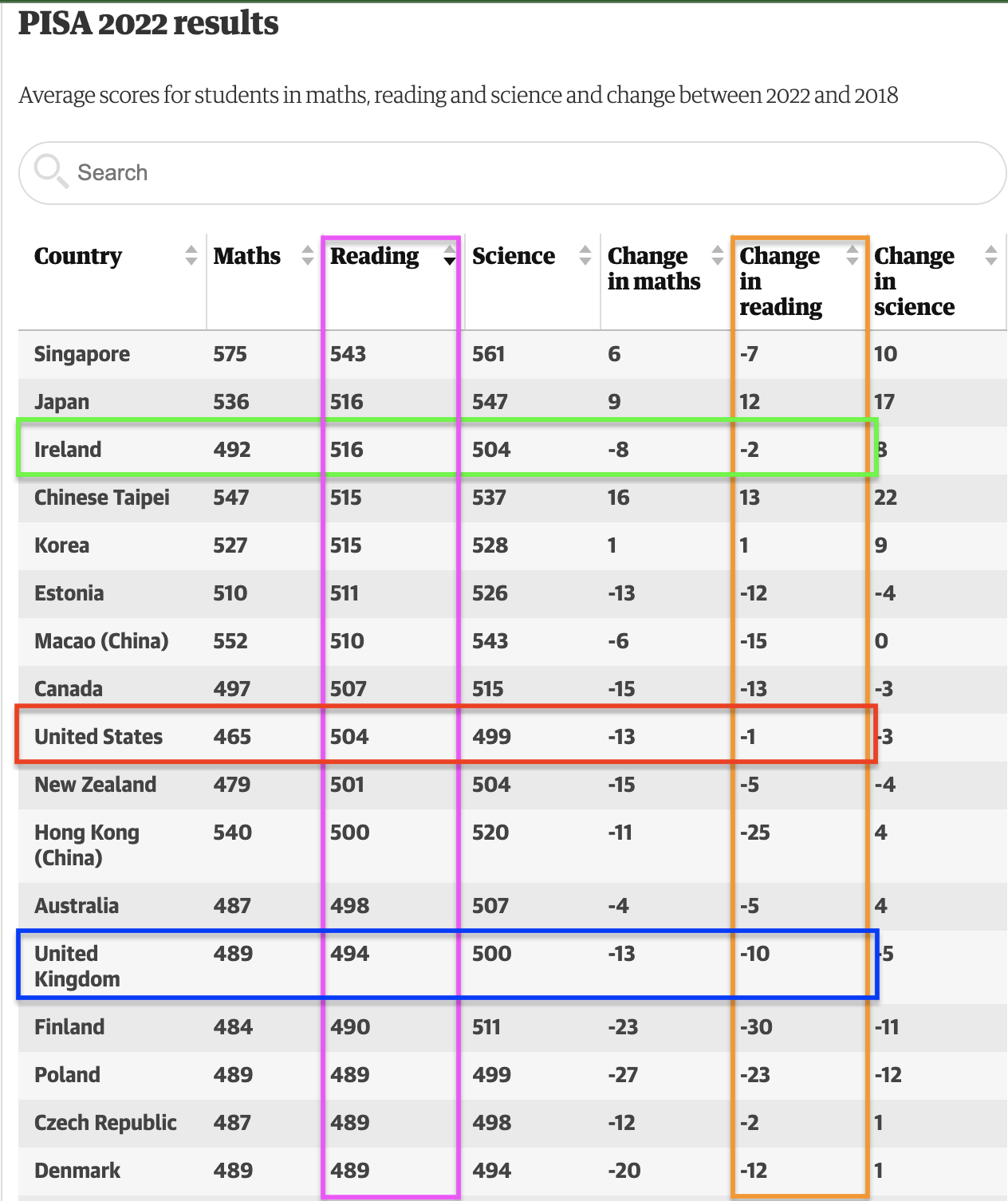
UK PISA 2022 Results Offer Cautionary Tale for US Reading Reform

From the SAT and National Assessment of Educational Progress (NAEP) in the US to Programme for International Student Assessment (PISA), student test scores tend to prompt over-reactions in the media and among political leaders.

Even Finland, recently the Golden Country for educational outcomes, now finds itself with the release of PISA 2022 facing headlines like this: PISA 2022: Performance in Finland collapses, but remains above average.

However, the best lesson from PISA 2022 for the US is England (UK), especially in the context of the “science of reading” (SOR) movement driving state-level reading legislation across the country:

First, for context, England implemented phonics-centered reading policy in 2006 that rejected balanced literacy and parallels in most ways the elements of SOR-based reading legislation in the US. Research on those policies shows that students have received systematic phonics for almost two decades now, but that outcomes have not produced the promises of that reform.

UK PISA scores in reading, none the less, rank below the US along with Australia, New Zealand, Canada, and Ireland; as well, the UK suffered a large score decrease in the wake of Covid:

While how reading is taught, what reading theory is embraced, and what reading programs are being implemented vary significantly across these countries, they all have one thing in common—perpetual reading crisis.

In fact, since A Nation at Risk, the US has endured several cycles of education crisis and reform that often hyper-focuses on reading (notably the impact of the National Reading Panel in No Child Left Behind).

Yet, none of these reforms have fulfilled promised outcomes, just as we are witnessing in the UK.

PISA 2022 and England’s reading results, then, offer some lessons we have refused to acknowledge about reading and education reform:

  • Education reform that exclusively implements in-school-only reform is guaranteed to fail. The value-added methods (VAM) era under Obama revealed that teacher impact on measurable student achievement is only 1-14%, and NAEP data show that the most successful schools in the country are Department of Defense (DoDEA) schools where the inequity of children’s lives are mitigated by access to healthcare, stable housing, food security, etc.
  • Media coverage and political rhetoric proclaiming “crisis” have repeatedly misidentified the barriers to reading proficiency and teaching reading, and thus, have resulted in policy that doesn’t address those roots causes. As the UK shows, making promises that are not fulfilled only further fuels cycles of crisis and reform. Currently in the US, SOR advocates are promising 90% of students will be at grade level proficiency; however, a recent working paper on reading reform in California show only about 1/3 of students as proficient after SOR implementation, the same percentage that media has used to claim a reading crisis and a far cry from 90%.
  • PISA is a measure of 15-years-old students (see also NAEP LTT data), which offers a way to evaluate misleading short-term score gains that are more mirage than miracle. In the US, states such as Florida and Mississippi demonstrate that while grade 4 scores in reading can be inflated, that learning isn’t real, and by middle and high school, the improvements have vanished. Thus, there are no miracles and no silver bullets in education reform.

Whether NAEP or PISA, standardized test scores are less about learning and teaching but more about the incredible inequity in the lives and schooling of children.

That inequity is no crisis; that inequity is a historical fact, especially in the US where we do not have the political will to confront both the out-of-school and in-school influences on teaching and learning.

If we are concerned about the disproportional vulnerable populations of students who routinely test well below the many different criteria for reading proficiency—and we should—reading and education reform must start with addressing inequity in the lives and education of all children.

Reading theories and reading programs are neither the problems nor the solutions to increasing student reading proficiency.

The real reading crisis in the US and internationally is the refusal by those with power to read what test scores actually show us—and the failure to act in ways that can and will make attainable gains in the best interest of children, teachers, and each nation.

Recent Publications on Reading [Open Access and Updated]

[Header Photo by Jess Bailey on Unsplash]

Thomas, P.L. (2025). Black Widow underestimated and hypersexualized: “I am what I am.” Brill.

Thomas, P.L. (TBD). Haruki Murakami’s 7 stories: “It’s quite easy to become Men Without Women.” In J. Milburn (ed.), Haruki Murakami and philosophical concepts (pp. TBD). Palgrave.

Thomas, P.L. (TBD). Crisis as distraction and erasure: How SOR fails diversity and urban students.  Journal of Literacy and Urban Schools.

Thomas, P.L. (2025). Navigating (another) reading crisis as an administrator: Rethinking the “science of reading” movement. Journal of School Administration, Research and Development, 10(1), 38-48. https://ojed.org/JSARD/article/view/6706

Thomas, P.L. (2024, November). We teach English in times of perpetual crisis: For all ELA teachers, “the time is always now.” English Journal, 114(2), 21-26. https://publicationsncte.org/content/journals/10.58680/ej2024114221

Thomas, P.L. (2024, September). We teach English in times of perpetual crisis: The media continue to misread teaching reading and literacy. English Journal, 114(1), 14-19. https://publicationsncte.org/content/journals/10.58680/ej2024114114

Thomas, P.L. (2024, May). Teaching English in the “science of reading” era: We teach English in times of perpetual crisis: Selling a story of reading. English Journal, 113(5), 16-22. https://publicationsncte.org/content/journals/10.58680/ej2024113516 [Open Access https://publicationsncte.org/content/journals/10.58680/ej202411342]

Thomas, P.L. (2024, March). We teach English in times of perpetual crisis: The long (and tedious) history of reading crisis. English Journal, 113(4), 21-26. https://publicationsncte.org/content/journals/10.58680/ej2024113421

Thomas, P.L. (2023, November). Everything you know is wrong: The “science of reading” era of reading legislation. Perspectives and Provocations, (11), 1-17. https://drive.google.com/file/d/12fAfLV1pCh7ZXV-UFsTftFd7y_MLSK-O/view

Compton-Lilly, C., Spence, L.K., Thomas, P.L. & Decker, S.L. (2023). Stories grounded in decades of research: What we truly know about the teaching of reading. Reading Teacher, 77(3), 392-400. https://doi.org/10.1002/trtr.2258

Thomas, P.L. (2023). The science of reading era: Seeking the “science” in yet another anti-teacher movement. Journal of Reading Recovery, 22(5), 5-17.

Thomas, P.L. (2023). The “science of reading,” education faddism, and the failure to honor the intellectual lives of all children: On deficit lenses and ignoring class and race stereotyping. Voices in the Middle, 30(3), 17-21.

How to End the Reading War and Serve the Literacy Needs of All Students: A Primer for Parents, Policy Makers, and People Who Care (2nd Edition) – IAP – [first edition]

The Science of Reading Movement: The Never-Ending Debate and the Need for a Different Approach to Reading Instruction (policy brief) – NEPC

A Critical Examination of Grade Retention as Reading Policy (white paper). Prepared for the Ohio Education Association in response to Ohio’s “Third Grade Reading Guarantee”, September 15, 2022

The Never-Ending Debate and the Need for a Different Approach to Reading Instruction – NCTE Blog

“Science of Reading” Media Advocacy Continues to MisleadRRC

A conversation with Paul Thomas. (2021). Talking Points, 32(2), 24-30.